
Christine Trent
Author of Lady of Ashes
Series
Works by Christine Trent
Hummingbird Lake 1 copy
Tagged
Common Knowledge
Members
Reviews
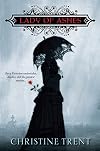
For some reason, I've always been fascinated by the Victorian traditions of mourning: black crepe, hair brooches, mourning jewellery, funeral etiquette and the list goes on. When I heard about the lead character in Christine Trent's Lady of Ashes, I just knew I had to read this book.
Set in London in 1861, Violet Morgan is married to Graham Morgan, of Morgan Undertaking. Contrary to the social expectations of the time, Violet performs all of the duties of an undertaker; a position usually show more performed by men alone.
There was plenty of funeral and mourning etiquette sprinkled throughout Lady of Ashes, but unfortunately I always 'noticed' when Trent was dropping more of her research into the tale. Having said that, I didn't mind so much because I couldn't get enough of it.
What I did mind was the storyline about the American Civil War. When immersing myself in Trent's gripping world of undertaking in misty London, I couldn't raise any interest in the American Civil War, which unfortunately became an important part of the plot. The Trent Affair is also significant to the plot regarding Graham Morgan, and I couldn't understand the relevance until it became clear that the author had personal ties to this event in history. Ultimately it explained Graham's behaviour in the novel but there could have been so many other ways to accomplish the same outcome and keep the entire story set in London.
The unexpected appearance of Queen Victoria was a very welcome addition and I was often prompted to research aspects of her life with Prince Albert (Prince Albert of Saxe-Coburg and Gotha), so interesting was her portrayal in the novel. The architecture was incredibly evocative and I was happy to lose myself in this time and place; researching the buildings and locations in my own time.
The scenes in Lady of Ashes featuring Violet preparing a corpse for funeral were tender and gripping at the same time, the highlight of the novel for me. (Oh, and her friend with the messy dressmaker shop). show less
Set in London in 1861, Violet Morgan is married to Graham Morgan, of Morgan Undertaking. Contrary to the social expectations of the time, Violet performs all of the duties of an undertaker; a position usually show more performed by men alone.
There was plenty of funeral and mourning etiquette sprinkled throughout Lady of Ashes, but unfortunately I always 'noticed' when Trent was dropping more of her research into the tale. Having said that, I didn't mind so much because I couldn't get enough of it.
What I did mind was the storyline about the American Civil War. When immersing myself in Trent's gripping world of undertaking in misty London, I couldn't raise any interest in the American Civil War, which unfortunately became an important part of the plot. The Trent Affair is also significant to the plot regarding Graham Morgan, and I couldn't understand the relevance until it became clear that the author had personal ties to this event in history. Ultimately it explained Graham's behaviour in the novel but there could have been so many other ways to accomplish the same outcome and keep the entire story set in London.
The unexpected appearance of Queen Victoria was a very welcome addition and I was often prompted to research aspects of her life with Prince Albert (Prince Albert of Saxe-Coburg and Gotha), so interesting was her portrayal in the novel. The architecture was incredibly evocative and I was happy to lose myself in this time and place; researching the buildings and locations in my own time.
The scenes in Lady of Ashes featuring Violet preparing a corpse for funeral were tender and gripping at the same time, the highlight of the novel for me. (Oh, and her friend with the messy dressmaker shop). show less
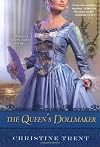
There are many positive reviews about Christine Trent's debut novel, and on websites and blogs which should know better, but after actually wasting time and money to read such an amateur and appallingly cliched story for myself, I can only assume that the author is better at marketing than writing.
The plot is Catherine Cookson on speed, cramming in personal tragedies and national events at a distracting rate, and the style is almost embarrassingly facile. After the first few chapters, I show more thought that maybe I had unwittingly bought a young adult novel, and was willing to put up with the modern dialogue and lack of character development. Thoroughly modern heroine Claudette, with her first love angst and lack of respect for authority, would probably appeal to adolescents, and the less than subtle chapters given over to simplifying the French Revolution are a canny way of sneaking history into unsuspecting young minds. But then I realised that not even YA novels are this naff, and the 'shocking' descriptions of Claudette's return to France would at least offend parents if not the kids.
So not even the intended demographic can excuse this novel, and I had such high hopes as well. I love reading about the French Revolution, and have tried everything from Dumas to DuMaurier, with all the contemporary pap in between, but nothing quite as poorly executed as The Queen's Dollmaker. Even aping Orczy's The Scarlet Pimpernel lets Mrs Trent down, humiliating her heroine as a 'damsel in distress' rather than the independent young woman of today's historical romances.
I did find it interesting to learn about the early manufacture of dolls, and the sympathetic representation of Marie Antoinette makes a refreshing change, but an essay on either subject (as indeed the chapters on the Revolution almost become) would have been far more entertaining than wading through a cast of flimsy characters and the formulaic conventions of romance novels. At one point, Claudette actually tells the hero: "You're an up and coming country gentleman without a care", and of course his 'kisses and masculine ways threatened to undo her'. Historical research is minimal, bar the technical manual on carving wood and moulding wax, and undermines the characters and story in places. The social-climbing Ashbys are more Victorian than Georgian, and Christine Trent seems to think that not only would servants be able to work all night and sleep for five hours, but being told what to do by the mistress of the house is equivalent to slave labour! The author - and her editor - are even conveniently vague about the heroine's age, shaving off five years to fit in the crucial historical dates. (And I love the mental image of lighting a workshop by placing 'candles in scones' around the room - an overlooked typing mistake which amused me greatly!)
Wooden dialogue ('I am an innocent woman being imprisoned on some trumped up charge'), an overdose of adjectives, stereotypes and caricatures abound, and every convention known to historical romances, from orphans to prince charming, make this an amusing read, but for all the wrong reasons. Now I would like to read the obviously revised edition which everyone else is raving about, please! show less
The plot is Catherine Cookson on speed, cramming in personal tragedies and national events at a distracting rate, and the style is almost embarrassingly facile. After the first few chapters, I show more thought that maybe I had unwittingly bought a young adult novel, and was willing to put up with the modern dialogue and lack of character development. Thoroughly modern heroine Claudette, with her first love angst and lack of respect for authority, would probably appeal to adolescents, and the less than subtle chapters given over to simplifying the French Revolution are a canny way of sneaking history into unsuspecting young minds. But then I realised that not even YA novels are this naff, and the 'shocking' descriptions of Claudette's return to France would at least offend parents if not the kids.
So not even the intended demographic can excuse this novel, and I had such high hopes as well. I love reading about the French Revolution, and have tried everything from Dumas to DuMaurier, with all the contemporary pap in between, but nothing quite as poorly executed as The Queen's Dollmaker. Even aping Orczy's The Scarlet Pimpernel lets Mrs Trent down, humiliating her heroine as a 'damsel in distress' rather than the independent young woman of today's historical romances.
I did find it interesting to learn about the early manufacture of dolls, and the sympathetic representation of Marie Antoinette makes a refreshing change, but an essay on either subject (as indeed the chapters on the Revolution almost become) would have been far more entertaining than wading through a cast of flimsy characters and the formulaic conventions of romance novels. At one point, Claudette actually tells the hero: "You're an up and coming country gentleman without a care", and of course his 'kisses and masculine ways threatened to undo her'. Historical research is minimal, bar the technical manual on carving wood and moulding wax, and undermines the characters and story in places. The social-climbing Ashbys are more Victorian than Georgian, and Christine Trent seems to think that not only would servants be able to work all night and sleep for five hours, but being told what to do by the mistress of the house is equivalent to slave labour! The author - and her editor - are even conveniently vague about the heroine's age, shaving off five years to fit in the crucial historical dates. (And I love the mental image of lighting a workshop by placing 'candles in scones' around the room - an overlooked typing mistake which amused me greatly!)
Wooden dialogue ('I am an innocent woman being imprisoned on some trumped up charge'), an overdose of adjectives, stereotypes and caricatures abound, and every convention known to historical romances, from orphans to prince charming, make this an amusing read, but for all the wrong reasons. Now I would like to read the obviously revised edition which everyone else is raving about, please! show less
Brilliant!
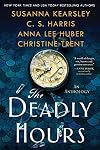
Four fabulous historical mystery writers have banded together to beguile us with the ominous story of a gold pocket watch. A mesmerizing piece with a siren engraved on it. Down through the ages it has garnered the name, La Sirène. This legendary object made from cursed gold can apparently affect many things including the weather. Greed, obsessiveness, maleficence and death on both a narrow and wide scale follow in its wake.
It was reputedly "first cursed by God when French show more buccaneers stole the gold from the holy altars as they sacked the city of Cartagena.” Doom is it's stamp.
There was so much packed into these novellas. Each was a sleek and deep read, with an overlay of the Gothic. I was entranced! I just loved the atmosphere and tension each writer brings to the overall premise. Characters we know from their novels are called to deal with the watch and its impact within their historical time frame. Each sequence adds a satisfying revelation about the watch as our known and loved characters battle La Sirène's cursed impact.
The miasma of evil hangs heavy and only the courage and intelligence of our beloved proponents are able to banish it from their time.
This had everything one could wish to make it a startling and satisfying read.
A Poisoned Pen ARC via NetGalley
Please note: Quotes taken from an advanced reading copy maybe subject to change show less
Four fabulous historical mystery writers have banded together to beguile us with the ominous story of a gold pocket watch. A mesmerizing piece with a siren engraved on it. Down through the ages it has garnered the name, La Sirène. This legendary object made from cursed gold can apparently affect many things including the weather. Greed, obsessiveness, maleficence and death on both a narrow and wide scale follow in its wake.
It was reputedly "first cursed by God when French show more buccaneers stole the gold from the holy altars as they sacked the city of Cartagena.” Doom is it's stamp.
There was so much packed into these novellas. Each was a sleek and deep read, with an overlay of the Gothic. I was entranced! I just loved the atmosphere and tension each writer brings to the overall premise. Characters we know from their novels are called to deal with the watch and its impact within their historical time frame. Each sequence adds a satisfying revelation about the watch as our known and loved characters battle La Sirène's cursed impact.
The miasma of evil hangs heavy and only the courage and intelligence of our beloved proponents are able to banish it from their time.
This had everything one could wish to make it a startling and satisfying read.
A Poisoned Pen ARC via NetGalley
Please note: Quotes taken from an advanced reading copy maybe subject to change show less
Florence Nightingale Intrigue. An Intelligent Victorian mystery!
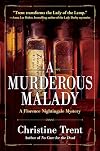
Once again a captivating Florence Nightingale mystery, embedded around the happenings of the First Anglo-Afghanistan War Disaster of 1839-1842 and the cholera epidemic, the Broad Street Outbreak. in 1854.
Florence's friend Liz à Court, wife of Sidney Herbert, the War Secretary and daughter to General Charles à Court-Repington has been shot at and her carriage driver killed whilst she and the General were on their way to the show more British museum. The question is who would want to harm Liz? For reasons not easily discernible, Sidney has chosen not to involve the police. Instead he asks Florence to find those responsible.
The chase leads Florence from Sidney's home to the desperate slums in the notorious Seven Dials area.
Florence investigations uncover a lady's maid obsessed with Liz's brother, a servant of Sidney's dying from cholera, a mad woman dying from the same disease and a mysterious set of dice, engraved with symbols and letters, "One was a “D,” the second a “G,” and the third a “5.”"
Throughout the investigation Florence's maid Mary is by her side, mostly reluctantly.
Florence also meets physician, John Snow and assistant curate in Soho, Henry Whitehead. Together they trace the progress of the cholera outbreak, eventually deciphering the cause.
We leave Florence, having solved the cause of the attack on Liz's carriage and murders along the way, on the eve of a decision to go to the Crimea to organize "medical care into something humane and competent."
Interestingly, as the plot thickens, we learn more of the British presence in Afghanastan and the resentments that are piled up against the British as their outré behaviours offend the Afghani religious and cultural practices.
Trent has based her writing in solid research of the times, which is flawlessly and competently included to give the novel a true sense of Victorian England and the challenges not only Florence, but many women faced. Of particular note is the inclusion of Mrs Caroline Elizabeth Sarah Sheridan Norton, Sydney's ex lover who is publicly fighting her own battles on the topic of divorce and the rights of women.
I thoroughly enjoyed this intelligent Victorian mystery, mixing fact and fiction, adeptly weaving its way through the political and social mores of the time giving solid background to an all encompassing and captivating read.
A Crooked Lane ARC via NetGalley show less
Once again a captivating Florence Nightingale mystery, embedded around the happenings of the First Anglo-Afghanistan War Disaster of 1839-1842 and the cholera epidemic, the Broad Street Outbreak. in 1854.
Florence's friend Liz à Court, wife of Sidney Herbert, the War Secretary and daughter to General Charles à Court-Repington has been shot at and her carriage driver killed whilst she and the General were on their way to the show more British museum. The question is who would want to harm Liz? For reasons not easily discernible, Sidney has chosen not to involve the police. Instead he asks Florence to find those responsible.
The chase leads Florence from Sidney's home to the desperate slums in the notorious Seven Dials area.
Florence investigations uncover a lady's maid obsessed with Liz's brother, a servant of Sidney's dying from cholera, a mad woman dying from the same disease and a mysterious set of dice, engraved with symbols and letters, "One was a “D,” the second a “G,” and the third a “5.”"
Throughout the investigation Florence's maid Mary is by her side, mostly reluctantly.
Florence also meets physician, John Snow and assistant curate in Soho, Henry Whitehead. Together they trace the progress of the cholera outbreak, eventually deciphering the cause.
We leave Florence, having solved the cause of the attack on Liz's carriage and murders along the way, on the eve of a decision to go to the Crimea to organize "medical care into something humane and competent."
Interestingly, as the plot thickens, we learn more of the British presence in Afghanastan and the resentments that are piled up against the British as their outré behaviours offend the Afghani religious and cultural practices.
Trent has based her writing in solid research of the times, which is flawlessly and competently included to give the novel a true sense of Victorian England and the challenges not only Florence, but many women faced. Of particular note is the inclusion of Mrs Caroline Elizabeth Sarah Sheridan Norton, Sydney's ex lover who is publicly fighting her own battles on the topic of divorce and the rights of women.
I thoroughly enjoyed this intelligent Victorian mystery, mixing fact and fiction, adeptly weaving its way through the political and social mores of the time giving solid background to an all encompassing and captivating read.
A Crooked Lane ARC via NetGalley show less
Lists
mom (1)
Awards

You May Also Like


Associated Authors
Statistics
- Works
- 20
- Members
- 1,287
- Popularity
- #19,915
- Rating
- 3.6
- Reviews
- 85
- ISBNs
- 69
- Favorited
- 2