
Jonathan M. Hall
Author of A History of the Archaic Greek World, ca. 1200-479 BCE
About the Author
Jonathan M. Hall is the Phyllis Fay Horton Distinguished Service Professor in the Humanities and Professor in the Departments of History and Classics and-the College at the University of Chicago. He is the author of Ethnic Identify in Greek Antiquity (1997), Hellenicity: Between Ethnicity and show more Culture (2002), and Artifact and Artifice: Classical Archaeology and the Ancient Historian (2014). show less
Image credit: Photo courtesy the
University of Chicago Experts Exchange (link)
University of Chicago Experts Exchange (link)
Works by Jonathan M. Hall
The Connected Iron Age: Interregional Networks in the Eastern Mediterranean, 900-600 BCE (2022) — Editor — 3 copies, 1 review
Associated Works
The Cambridge History of Greek and Roman Warfare (Volume 1) (2007) — Contributor — 73 copies, 1 review
Brill's Companion to Cicero: Oratory and Rhetoric (Brill's Companions to Classical Studies) (2002) — Contributor — 23 copies
Tokyo Totem - A Guide To Tokyo (English and Japanese Edition) (2015) — Contributor — 18 copies, 1 review
The Cultures within Ancient Greek Culture: Contact, Conflict, Collaboration (2003) — Contributor — 12 copies
Helots and Their Masters in Laconia and Messenia: Histories, Ideologies, Structures (2004) — Contributor — 11 copies
An Inventory of Archaic and Classical Poleis: An Investigation Conducted by The Copenhagen Polis Centre for the Danish National Research Foundation (2004) — Contributor — 11 copies
Greek Identity in the Western Mediterranean: Papers in Honour of Brian Shefton (Mnemosyne Supplements) (2003) — Contributor — 10 copies
Time, tradition and society in Greek archaeology bridging the 'great divide' (1995) — Contributor — 5 copies
A Companion to Greek Lyric (Blackwell Companions to the Ancient World) (2022) — Contributor — 4 copies
Introduction to an Inventory of 'Poleis': Symposium August, 23-26 1995 (1996) — Contributor — 2 copies
The theatre of justice : : aspects of performance in Greco-Roman oratory and rhetoric (2017) — Contributor — 1 copy
Tagged
Common Knowledge
Members
Reviews
The Connected Iron Age: Interregional Networks in the Eastern Mediterranean, 900-600 BCE by Jonathan M. Hall

A collection of 8 revised contributions to a conference at the University of Chicago, early 2018. Of course, this is very academic, and also very focused on methodology and interpretation models. But within those contours, this is all very solid and well-developed material. The baseline is that in the early Iron Age, roughly from 900 BCE to 600 BCE, there were many more interconnections in the eastern Mediterranean than previously thought. The role of the Greeks and Phoenicians is central to show more this, but a few contributions in this collection also include underexposed regions and peoples. I really liked the last chapter in which 6 provocative theses are put forward, to stimulate historians and archaeologists who study this period and to encourage them to reflect on their methodology and interpretation schemes. More in my HIstory account on Goodreads: https://www.goodreads.com/review/show/5787697699 show less
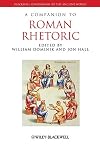
Publisher's description:
A Companion to Roman Rhetoric introduces the reader to the wide-ranging importance of rhetoric in Roman culture.
A Companion to Roman Rhetoric introduces the reader to the wide-ranging importance of rhetoric in Roman culture.
- A guide to Roman rhetoric from its origins to the Renaissance and beyond
- Comprises 32 original essays by leading international scholars
- Explores major figures Cicero and Quintilian in-depth
- Covers a broad range of topics such as rhetoric and politics, gender, status, self-identity, education, and literature
- Provides suggestions for further reading at the end of
- each chapter
- Includes a glossary of technical terms and an index of proper names and rhetorical concepts
Lists
Awards

You May Also Like


Associated Authors
Statistics
- Works
- 9
- Also by
- 24
- Members
- 226
- Popularity
- #99,469
- Rating
- 3.8
- Reviews
- 2
- ISBNs
- 30
- Languages
- 1