
Ron McLarty (1947–2020)
Author of The Memory of Running
About the Author
Works by Ron McLarty
The Millionares of the New South 2 copies
Stone Cold 1 copy
Associated Works
102 Minutes: The Untold Story of the Fight to Survive Inside the Twin Towers (2005) — Narrator, some editions — 1,512 copies, 50 reviews
The Man Who Flew the Memphis Belle: Memoir of a WWII Bomber Pilot (2001) — Narrator, some editions — 262 copies, 5 reviews
Restless Souls: The Sharon Tate Family's Account of Stardom, the Manson Murders, and a Crusade for Justice (2012) — Narrator, some editions — 134 copies
Chicka, Chicka, Boom, Boom...and Lots More Learning Fun [1999 film] (2002) — Narrator — 37 copies, 2 reviews
A Little Piece of Heaven [1991 TV movie] — Actor — 6 copies
Tagged
Common Knowledge
- Canonical name
- McLarty, Ron
- Legal name
- McLarty, Ronald William
- Birthdate
- 1947-04-26
- Date of death
- 2020-02-08
- Gender
- male
- Education
- Rhode Island College
- Occupations
- author
actor - Cause of death
- dementia
- Nationality
- USA
- Place of death
- New York, New York, USA
- Associated Place (for map)
- New York, USA
Members
Reviews
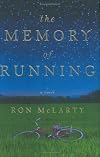
Nostalgia – the wistful yearning for something past, something irrecoverable. We spend the early, frenetic days of youth rushing towards an adult life, eager to see the world with mature eyes and taste it with a distinguished palate. At some point in the middle of our lives, we find that the youthful days, when we experienced the subtleties of life for the first time, stand out as the best days. Call it a mid-life crisis or a turning point or whatever, but what we seek is that show more irrecoverable feeling, that youthful quickening; we seek to overcome the numbness of experience and recapture an insatiable appetite for life; we seek to live as we lived then rather than to subsist on just the vague memory of those tender days.
In the evening after burying his parents, Smithson Ide, oiled up with liquor and still dressed in his funeral suit, climbs onto his boyhood bicycle for a ride on a once familiar route. Awakening the next morning in a field, hung over and bruised, Smithson decides not to return home but to ride across country, bound for Los Angeles and the funeral home which holds the body of his missing sister. Smithson’s last name itself, Ide, heralds his very place in time, a mid-point or a crossroads. Since returning home from service in Vietnam, he has gained 150 pounds and taken up a deadened existence, numb to everything around him, including the liquor and food he senseless consumes. As he travels, shedding weight, Smithson charts a new course for his life, rich in feeling and taste and experience, opening himself to the possibility of connecting with the world and with people again.
McLarty’s book starts off slow, but that was probably intended to match Smithson’s own pace and rhythm. I noted in reading a couple of other reviews that readers had a hard time with the passive and sluggish beginning. So, McLarty could probably have gotten to the meat of Smithson’s trek a bit quicker. But once Smithson is on his way, so are we, excited to find out about his next encounter and flesh out more of his past. The story rolls along, tinged with aching emotions, at once biting and pleasing.
The characters overflow with human inconsistency, well intentioned fallibility, and hope. Each person Smithson meets, in telling their own story, opens him up to the world around him, both bad and good. McLarty’s hero, Smithson, is the best of these characters, flawed and infuriating but endearing for his ability to reflect our own self loathe and craving for a better, more vital life; a life of which we may only have vague, nostalgic memories.
4 bones!!!!
Bottom Line: A solid, if somewhat slow starting, read. It is worth the trouble, so stick with it until Smithson starts his trek. McLarty’s other books warrant a try based on this first effort. show less
In the evening after burying his parents, Smithson Ide, oiled up with liquor and still dressed in his funeral suit, climbs onto his boyhood bicycle for a ride on a once familiar route. Awakening the next morning in a field, hung over and bruised, Smithson decides not to return home but to ride across country, bound for Los Angeles and the funeral home which holds the body of his missing sister. Smithson’s last name itself, Ide, heralds his very place in time, a mid-point or a crossroads. Since returning home from service in Vietnam, he has gained 150 pounds and taken up a deadened existence, numb to everything around him, including the liquor and food he senseless consumes. As he travels, shedding weight, Smithson charts a new course for his life, rich in feeling and taste and experience, opening himself to the possibility of connecting with the world and with people again.
McLarty’s book starts off slow, but that was probably intended to match Smithson’s own pace and rhythm. I noted in reading a couple of other reviews that readers had a hard time with the passive and sluggish beginning. So, McLarty could probably have gotten to the meat of Smithson’s trek a bit quicker. But once Smithson is on his way, so are we, excited to find out about his next encounter and flesh out more of his past. The story rolls along, tinged with aching emotions, at once biting and pleasing.
The characters overflow with human inconsistency, well intentioned fallibility, and hope. Each person Smithson meets, in telling their own story, opens him up to the world around him, both bad and good. McLarty’s hero, Smithson, is the best of these characters, flawed and infuriating but endearing for his ability to reflect our own self loathe and craving for a better, more vital life; a life of which we may only have vague, nostalgic memories.
4 bones!!!!
Bottom Line: A solid, if somewhat slow starting, read. It is worth the trouble, so stick with it until Smithson starts his trek. McLarty’s other books warrant a try based on this first effort. show less
”Salem’s Lot’ was the first book in my Stephen King 2026 Reading Challenge. It was published in 1975 and was his second novel. I was fascinated to see how his writing has progressed since then.
When Stephen King published ''Salem's Lot’ in 1975, Vampire novels were not yet back in fashion. It appeared six months before Anne Rice's 'Interview With The Vampire', three years ahead of Chelsea Quinn Yarbro's 'Hôtel Transylvania' and four years before John Badham's star-studded ' Dracula' show more movie with Frank Langella as Dracula, Laurence Olivier as Van Helsing, Trevor Eve as Harker. Jan Francis as Mina, and Kate Nelligan as Lucy).
Yet, even though Stephen King in some senses led the charge on the rehabilitation of the vampire novel ‘’Salem’s Lot’ is more Lit Fic than horror flick. It starts with a prologue, but not the usual kind, designed to reassure readers that the long novel they’re about to begin will deliver moments of terrifying horror, but rather to establish the scale of the impact of the unpleasantness in ‘’Salem’s Lot’. I read this slow, low-key start as a declaration that this was a book focused on what it would be like if a real vampire came to a remote village in modern-day Maine, rather than on delivering a string of increasingly improbable Jump Scare scenes.
‘’Salem’s Lot’ explores the nature of evil rather than the nature of vampires. Stephen King displays the lives of the residents of ’Salem’s Lot in unforgiving detail, revealing a taint of vulgarity, venality, weakness and pain that, although banal, has the potential to be catalysed into overwhelming evil. There are two reagents of evil in ‘Salem’s Lot, the new-in-town vampire and the Marsten House, which drew him to the town. The violent acts committed in the Marsten House have made it a locus of evil. As a prelude to our first sight of the Marsten House, Stephen King shares a long quote from Shirley Jackson's 'The Haunting Of Hill House’, signalling that this haunted house on the hill will cast a long shadow over the residents of the Lot. Relatively little time is spent on the vampire at the heart of the story. More attention is paid to those who enable him, either by their willing actions on his behalf, or their refusal to recognise or respond to the early signs that evil is at work.
Although Salem’s Lot has many strengths, for me, it was a book that didn’t realise its potential. I felt that Stephen King couldn’t make up his mind whether he wanted this book to be THE GREAT AMERICAN NOVEL à la ‘Empire Falls‘ or whether he wanted it to make the case for evil as something lying latent in a small town, just waiting for the right reagent to activate it.
Much of the writing was very fine, if sometimes a little self-consciously so. I thought Chapter 10, which started: ”The town knew about darkness” and treated the Lot as if it were sentient, was an impressive piece of prose , but it was also a demonstration of the uneven pacing of the storytelling. I often felt that I was wading through a book that I might lose the desire to finish. It had the self-indulgent lack of discipline and arrogantly slow pace of a late John Irving novel.
The power of the book came from how vividly it described life in a small town in rural Maine and how the character of the people and the isolation of the place left it ripe for being suborned by a vampire.
Surprisingly, it was the horror parts of the book that left me untouched. They lacked emotional impact. The scene where the only woman in the stop-the-vampire team finally goes to the Marsten House alone to confront the bad guys gave a clinical description of fear that I recognised as accurate, but that didn’t make me share her emotions.
I listened to the audiobook version of ‘’Salem’s Lot’ narrated by Ron McLarty. I thought he got the tone right and delivered convincing voices for the main characters. Click on the YouTube link below to hear a sample.
https://www.youtube.com/watch?v=Mnqt_xoAsFw show less
When Stephen King published ''Salem's Lot’ in 1975, Vampire novels were not yet back in fashion. It appeared six months before Anne Rice's 'Interview With The Vampire', three years ahead of Chelsea Quinn Yarbro's 'Hôtel Transylvania' and four years before John Badham's star-studded ' Dracula' show more movie with Frank Langella as Dracula, Laurence Olivier as Van Helsing, Trevor Eve as Harker. Jan Francis as Mina, and Kate Nelligan as Lucy).
Yet, even though Stephen King in some senses led the charge on the rehabilitation of the vampire novel ‘’Salem’s Lot’ is more Lit Fic than horror flick. It starts with a prologue, but not the usual kind, designed to reassure readers that the long novel they’re about to begin will deliver moments of terrifying horror, but rather to establish the scale of the impact of the unpleasantness in ‘’Salem’s Lot’. I read this slow, low-key start as a declaration that this was a book focused on what it would be like if a real vampire came to a remote village in modern-day Maine, rather than on delivering a string of increasingly improbable Jump Scare scenes.
‘’Salem’s Lot’ explores the nature of evil rather than the nature of vampires. Stephen King displays the lives of the residents of ’Salem’s Lot in unforgiving detail, revealing a taint of vulgarity, venality, weakness and pain that, although banal, has the potential to be catalysed into overwhelming evil. There are two reagents of evil in ‘Salem’s Lot, the new-in-town vampire and the Marsten House, which drew him to the town. The violent acts committed in the Marsten House have made it a locus of evil. As a prelude to our first sight of the Marsten House, Stephen King shares a long quote from Shirley Jackson's 'The Haunting Of Hill House’, signalling that this haunted house on the hill will cast a long shadow over the residents of the Lot. Relatively little time is spent on the vampire at the heart of the story. More attention is paid to those who enable him, either by their willing actions on his behalf, or their refusal to recognise or respond to the early signs that evil is at work.
Although Salem’s Lot has many strengths, for me, it was a book that didn’t realise its potential. I felt that Stephen King couldn’t make up his mind whether he wanted this book to be THE GREAT AMERICAN NOVEL à la ‘Empire Falls‘ or whether he wanted it to make the case for evil as something lying latent in a small town, just waiting for the right reagent to activate it.
Much of the writing was very fine, if sometimes a little self-consciously so. I thought Chapter 10, which started: ”The town knew about darkness” and treated the Lot as if it were sentient, was an impressive piece of prose , but it was also a demonstration of the uneven pacing of the storytelling. I often felt that I was wading through a book that I might lose the desire to finish. It had the self-indulgent lack of discipline and arrogantly slow pace of a late John Irving novel.
The power of the book came from how vividly it described life in a small town in rural Maine and how the character of the people and the isolation of the place left it ripe for being suborned by a vampire.
Surprisingly, it was the horror parts of the book that left me untouched. They lacked emotional impact. The scene where the only woman in the stop-the-vampire team finally goes to the Marsten House alone to confront the bad guys gave a clinical description of fear that I recognised as accurate, but that didn’t make me share her emotions.
I listened to the audiobook version of ‘’Salem’s Lot’ narrated by Ron McLarty. I thought he got the tone right and delivered convincing voices for the main characters. Click on the YouTube link below to hear a sample.
https://www.youtube.com/watch?v=Mnqt_xoAsFw show less
READ IT - It resonates
I don’t remember where I picked up this book, and when I finally started reading, I was a bit put off by the constant derogatory remarks on Smithy Ide’s weight. Even Smithy gets into the act.
But as I read on, I realized that Smithy is full of self-loathing but doesn’t seem to realize where that self-destructive attitude originates. As circumstances start off horribly wrong for him, he begins a journey that he doesn’t understand. Just a need to propel himself show more across the street on his old bicycle, a once beloved object of his young mastery. It’s a rough start but as he awkwardly progresses, memories of his youth return and in the quiet recesses of his mind, he comes to terms with the terrible consequences of growing up in a “damaged” family. Where all the focus is set upon his beloved and mentally ill sister.
How much can a family give of themselves to try to save someone so troubled? Apparently, if you’re not careful, you can lose it all and still not make a difference.
I read this book some 3 months back and it lingers with me still. I believe it to be one of the most loving, confusing, life-affirming novels I have read in a very long time. Quite worth the bumpy bike ride! show less
I don’t remember where I picked up this book, and when I finally started reading, I was a bit put off by the constant derogatory remarks on Smithy Ide’s weight. Even Smithy gets into the act.
But as I read on, I realized that Smithy is full of self-loathing but doesn’t seem to realize where that self-destructive attitude originates. As circumstances start off horribly wrong for him, he begins a journey that he doesn’t understand. Just a need to propel himself show more across the street on his old bicycle, a once beloved object of his young mastery. It’s a rough start but as he awkwardly progresses, memories of his youth return and in the quiet recesses of his mind, he comes to terms with the terrible consequences of growing up in a “damaged” family. Where all the focus is set upon his beloved and mentally ill sister.
How much can a family give of themselves to try to save someone so troubled? Apparently, if you’re not careful, you can lose it all and still not make a difference.
I read this book some 3 months back and it lingers with me still. I believe it to be one of the most loving, confusing, life-affirming novels I have read in a very long time. Quite worth the bumpy bike ride! show less

Smithy Ide is 43 years old, obese, a smoker, a drunk, never been married, and has a job at a toy factory. After his parents pass away, Smithy finds his old bike in their garage, which he used to ride when he was young and skinny. On impulse, Smithy takes off across the United States, from Rhode Island to L.A., to take care of business having to do with his schizophrenic sister Bethany. The story goes back and forth between the present and the 60s and 70s. It is so beautifully written, show more though, that it is a pain-free experience for the reader. Smithy's bike ride across the country is sometimes beautiful, sometimes scary, and sometimes downright painful, but Smithy also begins to lose weight, quits smoking and drinking, meets quite a few very interesting people, does a lot of thinking and starts some long overdue healing from the many blows dealt to him from having a mentally ill sister to his stint in Vietnam. He also finally finds love from a most surprising source. Wonderful book from start to finish. show less
Lists
Awards


You May Also Like


Associated Authors
Statistics
- Works
- 7
- Also by
- 35
- Members
- 2,617
- Popularity
- #9,806
- Rating
- 3.9
- Reviews
- 91
- ISBNs
- 76
- Languages
- 11
- Favorited
- 5
