

Laurie Lico Albanese
Author of Hester
About the Author
Works by Laurie Lico Albanese
Tagged
Common Knowledge
- Legal name
- Lico Albanese, Laurie E.
- Birthdate
- 1959
- Gender
- female
- Education
- New York University (BA|Jounalism)
University of Southern Maine ( MFA|Creative Writing) - Occupations
- publicist
- Short biography
- I’ve worked in book publishing and journalism, and my travel and general-interest stories have appeared in The New York Times, the Chicago Tribune, and elsewhere. I’ve taught creative and formal writing to all ages, from elementary schoolchildren to adults, and currently run a workshop for aspiring and journeying writers..I adore libraries and bookstores, and each of my books has been chosen for the IndieBound list by independent booksellers. Other awards include a Hadassah-Brandeis Institute Research Grant, NJ State Council in the Arts Fellowship in Fiction Writing, and Catherine R. Dodge Foundation Fellowship to the Virginia Center for the Creative Arts...I grew up on Long Island, and I graduated from New York University with a degree in journalism. I earned my MFA in Creative Writing from Stonecoast at the University of Southern Maine in 2016.
I’m lucky to live with my husband in Montclair, NJ, where we raised our two grown children and enjoy spending lots of time with book people and writers. - Nationality
- USA
- Associated Place (for map)
- USA
Members
Reviews

This book has been on my TBR since its publication. When it came up as a read-along on Book Cougars, I jumped it up to the top. So glad I did. This is a retelling of A Scarlet Letter. However, the protagonist in this story is a contemporary of Hawthorne c. 1930s. She is a talented needleworker with a special gift for bringing color to her work. The inclusion of what we now know as synesthesia was brilliant. Albanese brings life to the town of Salem filled with an array of characters that show more allows the reader to learn about 19th c fashion, cookery, religion, politics, and the dark topics of abuse and slavery. She paints a not so positive picture of young Hawthorne. Using him as a tortured soul, she moves her story forward. I found the characters rich and resonant of the times. Her research served her well as she looked at the whole community of fictional Salem. Her imagination took her the rest of the way. I was particularly drawn to her color descriptions and was able to visualize the embroidery as if I had seen it. This is top notch historical fiction told with a creative and imaginative voice. show less
I’d been in a serious reading slump when I picked up Hester. As a mood reader this is almost always me, not the book. I was cranky and needed a win, can you relate reader friends? I got into the bath with a glass of wine (highly recommend!) and started reading Hester. I was lured in immediately by the atmospheric, lyrical writing. I stopped only to think aloud “Oh, we ARE going to be friends. Do NOT let me down!”. She did not!
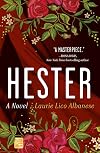
Hester by Laurie Lico Albanese is a reimagining of the show more inspiration for Nathanial Hawthorne’s Hester Prynne. It is the story of Isobel Gamble, a young seamstress, wife of an abusive, alcoholic, swindling husband Edward, who must flee Scotland for the New World in the early 1800’s. She brings with her secrets passed down generation to generation by women in her family. While Edward is at sea Isobel must survive anyway she can, finding work as a seamstress, and eventually meeting young Nathanial Hawthorne.
The author seamlessly sweeps us back to a time when anyone on the fringes of a community, who either can’t or doesn’t fall or adhere to societal norms, is ostracized and at extreme risk. Who do you trust with your story, who do you help or accept help from, and what do you do to simply exist out of view while in plain sight…and at what cost?
I felt such a connection to the women of the Gamble family, who experience the world in a way others do not. They are misunderstood, feared, diagnosed, learn to deny and hide their truths. I thought this aspect of the story was fascinating. #spoilerfree
I highly recommend Hester for fans of historical fiction, reimaginings and retellings, book clubs because there’s so much to discuss, and those loving stories featuring strong women telling #herstory ! Thank you to @netgalley @stmartinspress and @lauriealbanese for the digital review copy. show less
Hester by Laurie Lico Albanese is a reimagining of the show more inspiration for Nathanial Hawthorne’s Hester Prynne. It is the story of Isobel Gamble, a young seamstress, wife of an abusive, alcoholic, swindling husband Edward, who must flee Scotland for the New World in the early 1800’s. She brings with her secrets passed down generation to generation by women in her family. While Edward is at sea Isobel must survive anyway she can, finding work as a seamstress, and eventually meeting young Nathanial Hawthorne.
The author seamlessly sweeps us back to a time when anyone on the fringes of a community, who either can’t or doesn’t fall or adhere to societal norms, is ostracized and at extreme risk. Who do you trust with your story, who do you help or accept help from, and what do you do to simply exist out of view while in plain sight…and at what cost?
I felt such a connection to the women of the Gamble family, who experience the world in a way others do not. They are misunderstood, feared, diagnosed, learn to deny and hide their truths. I thought this aspect of the story was fascinating. #spoilerfree
I highly recommend Hester for fans of historical fiction, reimaginings and retellings, book clubs because there’s so much to discuss, and those loving stories featuring strong women telling #herstory ! Thank you to @netgalley @stmartinspress and @lauriealbanese for the digital review copy. show less
Isobel sails with her husband Edward from Scotland to Salem in the early 1800s, but before they are settled, he has agreed to leave again - and he steals all her savings, which she was planning to use to start her own dress shop. Furious at Edward, Isobel gets by as best she can, sewing gloves for Felicity Adams and watching her take an unfair cut. Isobel falls in love with Nat Hathorne, a writer haunted by his family's past; his ancestor was an unrepentant participant in the Salem witch show more trials. Isobel's own ancestor was accused of witchcraft back in Scotland in the 1600s, but escaped death. Isobel is sure that Edward won't return, but when he does, he is under the spell of poppy and rum, and has a scheme to catch runaway slaves for the reward, an idea abhorrent to Isobel, as she is friends with her Black neighbors. Isobel must decide, for herself and for her unborn baby, whether to stay in Salem or start over somewhere else.
Beautiful, deeply absorbing.
Quotes
This was the one good thing that came of losing the colors - I could read, and the words dropped away as they were meant to, leaving pictures, people, places, and tales in their stead. (14)
One expression of impatience and he says I have a temper! Why is it that men are not subject to the same quick judgments as women? (75)
Before we arrived, I thought the New World was made by and for new people. But here in Salem it seems there is a long requisite of what a person must do, say, and be, in order to be truly American. (98)
"What's true is often hidden from sight - religious fervor disguises cruelty, dark desires hide behind a mask of conformity." (Nat to Isobel, 98)
And yet I'm certain that my needlework is more than pleasantry and ornament. (102)
And yet silence doesn't protect us from the past, as I well know. When a legacy haunts a family the echoes reverberate even if no one hears them. (142)
"But there's another kind of strength we've got....It comes from knowing the difference between who you are and who they think you are." (Mercy to Isobel, 160)
Why do men bind themselves to a flag and a nation when women bind themselves to passion and love? Why do men fixate on the past when every woman I have ever known is trying to remedy the present while she builds hope for what is to come? (193)
I've told him my secrets and shown him my passion, and he's made a deep mark upon me. And still, he looks at me and sees only himself. (202)
Is Nat a cruel man or is he a weak man? ...Perhaps he is both. (252)
I've seen how justice and the law work for some and not for others. Even in Scotland there was rich man's law and poor man's law. (292)
It's not that we are witches or faeries or that we deny God. It is that we are more beautiful and strong together than apart. (299) show less
Beautiful, deeply absorbing.
Quotes
This was the one good thing that came of losing the colors - I could read, and the words dropped away as they were meant to, leaving pictures, people, places, and tales in their stead. (14)
One expression of impatience and he says I have a temper! Why is it that men are not subject to the same quick judgments as women? (75)
Before we arrived, I thought the New World was made by and for new people. But here in Salem it seems there is a long requisite of what a person must do, say, and be, in order to be truly American. (98)
"What's true is often hidden from sight - religious fervor disguises cruelty, dark desires hide behind a mask of conformity." (Nat to Isobel, 98)
And yet I'm certain that my needlework is more than pleasantry and ornament. (102)
And yet silence doesn't protect us from the past, as I well know. When a legacy haunts a family the echoes reverberate even if no one hears them. (142)
"But there's another kind of strength we've got....It comes from knowing the difference between who you are and who they think you are." (Mercy to Isobel, 160)
Why do men bind themselves to a flag and a nation when women bind themselves to passion and love? Why do men fixate on the past when every woman I have ever known is trying to remedy the present while she builds hope for what is to come? (193)
I've told him my secrets and shown him my passion, and he's made a deep mark upon me. And still, he looks at me and sees only himself. (202)
Is Nat a cruel man or is he a weak man? ...Perhaps he is both. (252)
I've seen how justice and the law work for some and not for others. Even in Scotland there was rich man's law and poor man's law. (292)
It's not that we are witches or faeries or that we deny God. It is that we are more beautiful and strong together than apart. (299) show less
"There's no New World anywhere on earth...no matter what we tell ourselves, men are all the same everywhere. We imagine a utopia, settle a new land, and declare that we're making something new and better. But it's folly, Isobel. Man's nature is full of shadows and dark desires. In every man's heart there is a coffin and a grave, that is what I know."
If you enjoy historical fiction with strong female protagonists, Hester delivers. While it follows a familiar formula for the genre, the writing show more was strong and some fresh insights kept me engaged. More than anything, I loved Isobel, the main character—her resilience, artistry, and survival instinct.
This novel portrays women’s struggles across centuries, particularly regarding accusations of witchcraft. The story moves between the 1600s and 1800s, showing how these allegations were often used to control and silence women. The relationships between women in the book were complex—some lifted each other up, while others betrayed or tore each other down. And, as is so often the case in history, the men surrounding these strong women were weak, needing control to feel powerful.
Though the supernatural elements were light, the book had a spellbinding quality, weaving historical reality with folklore and imagination. While it didn’t completely blow me away, it was a solid, engaging read with a fresh take on the legacy of The Scarlet Letter.
Laurie Lico Albanese was inspired by the idea that Nathaniel Hawthorne’s The Scarlet Letter could have been influenced by a real woman. Her research into synesthesia, Scottish history, and women’s hidden contributions to literature made this book a unique blend of fact and fiction. show less
If you enjoy historical fiction with strong female protagonists, Hester delivers. While it follows a familiar formula for the genre, the writing show more was strong and some fresh insights kept me engaged. More than anything, I loved Isobel, the main character—her resilience, artistry, and survival instinct.
This novel portrays women’s struggles across centuries, particularly regarding accusations of witchcraft. The story moves between the 1600s and 1800s, showing how these allegations were often used to control and silence women. The relationships between women in the book were complex—some lifted each other up, while others betrayed or tore each other down. And, as is so often the case in history, the men surrounding these strong women were weak, needing control to feel powerful.
Though the supernatural elements were light, the book had a spellbinding quality, weaving historical reality with folklore and imagination. While it didn’t completely blow me away, it was a solid, engaging read with a fresh take on the legacy of The Scarlet Letter.
Laurie Lico Albanese was inspired by the idea that Nathaniel Hawthorne’s The Scarlet Letter could have been influenced by a real woman. Her research into synesthesia, Scottish history, and women’s hidden contributions to literature made this book a unique blend of fact and fiction. show less
Lists
Awards


You May Also Like


Associated Authors
Statistics
- Works
- 9
- Members
- 1,650
- Popularity
- #15,572
- Rating
- 3.9
- Reviews
- 70
- ISBNs
- 45
- Languages
- 5
- Favorited
- 1