

Lynsey Hanley
Author of Estates: an intimate history
About the Author
Image credit: Lynsey Hanley outside the library in Liverpool. Photograph: Suki Dhanda/The Observer
Works by Lynsey Hanley
Tagged
Common Knowledge
- Birthdate
- 1976-04-12
- Gender
- female
- Education
- Queen Mary University of London (BA|English)
- Occupations
- writer
- Organizations
- Liverpool John Moores University (visiting fellow)
- Agent
- The Bent Agency (Nicola Barr)
- Nationality
- UK
- Birthplace
- Birmingham, West Midlands, England, UK
- Places of residence
- Liverpool, Merseyside, England, UK
- Associated Place (for map)
- England, UK
Members
Reviews
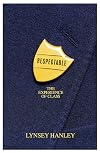
While reading ‘Respectable’, I couldn’t help contemplating how I would write my own version, as I’ve sometimes considered doing. Like Hanley, I spend quite a lot of time thinking about the British class system and its influence on my childhood and education. My background is markedly different to Hanley’s, but I have a similar sense of having experienced life in multiple parts of the class hierarchy while feeling slightly set apart from them. Unsurprisingly, I found her insights show more fascinating. She writes in a thoughtful, careful style that draws out subtle points about class that I hadn’t considered before. She is wary of simplistic solutions to entrenched inequalities and delicate in her analysis of politics. Perhaps the only flaw in the book is that it felt quite short - I wanted to hear more from her. Particularly acute insights included:
That’s as neat a description of how privilege plays out in 21st century Britain as I’ve ever come across. I also liked this concise explanation of class differences in speech:
In my experience, at the top of middle class and above speech becomes either very self-deprecating (with tacit subtext of superiority) or even more grandiose. Often both, varying by context and topic.
Hanley devotes quite a bit of the book to the school system and how it reproduces the class system. She considers the implications of various educational reforms of the 20th and 21st centuries, as well as the decrepit comprehensive school she attended until sixth form. This reminded me of a piece of serendipity that has profoundly shaped my life: in 1996 I got an assisted place that allowed me to attend a former-grammar, now-private, single-sex high school. A year later, Labour won the election and abolished assisted places. There is no way I could have attended a fee paying school without what was effectively a means-tested scholarship. At my local high school, I wouldn’t have been able to study German, Latin, or economics; my exam results would have been worse; I very much doubt I could have got into Cambridge. A lot seems to hang on being lucky enough to be born at the right time.
Of course, plenty of other Labour policies reduced educational inequalities and I feel ambivalent about assisted places despite benefiting hugely from one. I benefited because I already had the middle class speech patterns and enthusiasm for learning, without my family having financial resources to shop around for high schools. Intangible social capital exerts considerable influence, from childhood into work life. As Hanley puts it:
I’d add networks to this - losing money needn’t mean the loss of social contacts, who can provide invaluable signposts to jobs, housing, etc. And on the subject of working harder than they need to, I think visibly working hard for excessive hours has become a matter of pride and signifier of privilege in middle class Britain. It demonstrates aspiration, suggests that you find your work worthwhile and interesting, and in a weird way has become associated with independence via ostentatious self-discipline. Under late capitalism, you can exploit yourself for the benefit of international capital! Perhaps this fetishisation of hard work also reflects a very neoliberal perception that the richest people, those at the top of the hierarchy that we should be looking up to, work the hardest of all. Which is garbage - once you have a large enough pile of wealth, you can do nothing whatsoever and let the magic of compound interest take care of you and your descendants.
I think anything I write about class is likely to be angrier than Hanley’s book, as I seem to have more ungrateful resentment about the system's hypocrisies than she does. Most likely this is thanks to Cambridge, which inculcates a willingness to criticise and sense of entitlement to be heard like nowhere else (except Oxford). Since the British class system really needs qualitative analysis, I’d love to read more memoirs of this kind. Please recommend me any that you know of. For a more quantitative analysis of Britain’s class system, I suggest Mike Savage’s [b:Social Class in the 21st Century|25242087|Social Class in the 21st Century|Mike Savage|https://images.gr-assets.com/books/1447168646s/25242087.jpg|44961481]. show less
The interesting thing about entering the middle class is that everything you have known is turned on its head. You go from being invisible to society, and yet at the same time the object of constant scrutiny and mistrust, to being at once anonymous and in possession of a voice. You are trusted to get on with things, and encouraged to go on endlessly about the way in which you do them.
That’s as neat a description of how privilege plays out in 21st century Britain as I’ve ever come across. I also liked this concise explanation of class differences in speech:
Another quality that Bernstein identified in working-class speech is its fragmentary nature. By sticking with the description of individual events rather than unifying them into a larger narrative, you accept that contingency of things: after all, your circumstances may have changed by tomorrow, and in any case what you’ve said is likely to have significance only in the specific context in which you said it. Middle-class speech, by comparison, smacks of grandeur, because it seeks to place feelings and events in a universal context, with the inference that the individual speaker and his perceptions matter in the greater scheme of things.
In my experience, at the top of middle class and above speech becomes either very self-deprecating (with tacit subtext of superiority) or even more grandiose. Often both, varying by context and topic.
Hanley devotes quite a bit of the book to the school system and how it reproduces the class system. She considers the implications of various educational reforms of the 20th and 21st centuries, as well as the decrepit comprehensive school she attended until sixth form. This reminded me of a piece of serendipity that has profoundly shaped my life: in 1996 I got an assisted place that allowed me to attend a former-grammar, now-private, single-sex high school. A year later, Labour won the election and abolished assisted places. There is no way I could have attended a fee paying school without what was effectively a means-tested scholarship. At my local high school, I wouldn’t have been able to study German, Latin, or economics; my exam results would have been worse; I very much doubt I could have got into Cambridge. A lot seems to hang on being lucky enough to be born at the right time.
Of course, plenty of other Labour policies reduced educational inequalities and I feel ambivalent about assisted places despite benefiting hugely from one. I benefited because I already had the middle class speech patterns and enthusiasm for learning, without my family having financial resources to shop around for high schools. Intangible social capital exerts considerable influence, from childhood into work life. As Hanley puts it:
Upward social mobility is more common than downward because it is generationally harder to lose middle-class privileges, once you have them, than it is to gain them. A family may rapidly lose money - through repossession or bankruptcy, for instance - but its members can’t lose knowledge already gained, qualifications already earned, expectations already entrenched, half as quickly. This is something which members of the middle class tend to overlook or underestimate, and which causes them to work harder than they probably need in order to retain those privileges.
I’d add networks to this - losing money needn’t mean the loss of social contacts, who can provide invaluable signposts to jobs, housing, etc. And on the subject of working harder than they need to, I think visibly working hard for excessive hours has become a matter of pride and signifier of privilege in middle class Britain. It demonstrates aspiration, suggests that you find your work worthwhile and interesting, and in a weird way has become associated with independence via ostentatious self-discipline. Under late capitalism, you can exploit yourself for the benefit of international capital! Perhaps this fetishisation of hard work also reflects a very neoliberal perception that the richest people, those at the top of the hierarchy that we should be looking up to, work the hardest of all. Which is garbage - once you have a large enough pile of wealth, you can do nothing whatsoever and let the magic of compound interest take care of you and your descendants.
I think anything I write about class is likely to be angrier than Hanley’s book, as I seem to have more ungrateful resentment about the system's hypocrisies than she does. Most likely this is thanks to Cambridge, which inculcates a willingness to criticise and sense of entitlement to be heard like nowhere else (except Oxford). Since the British class system really needs qualitative analysis, I’d love to read more memoirs of this kind. Please recommend me any that you know of. For a more quantitative analysis of Britain’s class system, I suggest Mike Savage’s [b:Social Class in the 21st Century|25242087|Social Class in the 21st Century|Mike Savage|https://images.gr-assets.com/books/1447168646s/25242087.jpg|44961481]. show less
Very well written; part memoir, part cultural-studies investigation into class. Some keen parallels with what Hanley states and the recent US election coverage. Feel her emphasis on Bourdieu's concept of Cultural Capital is important too and often overlooked. Good read!
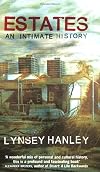
My guess is that most sociologists who observe and interpret the Council Estates in England have not actually lived on them, and have failed to grasp that underneath the almost Soviet-style drabness which they have acquired not least since the effects of Thatcherism, they are also places of extraordinary intimacy and homeliness and protectiveness. There is good in there with the bad - and the real picture is much more complex and nuanced than it looks. Lesley Hanley, whose roots are on one show more of these estates, writes with passion and sparkiness about the hopes and disappointments of the estate experience, with anger, when she needs it, at the way the estates have been messed around by planners who didn't understand them, and with an affection which will be recognised by anyone who has shared the experience of life in one of these places, and thought deeply about it. show less
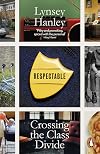
This is a book about class in the UK. It is about 'the way it [class] builds those walls in the head.' It is a national and a personal journey through class. Lynsey Hanley grew up certain she was working-class but also certain she didn't fit in. She has now successfully made the jump across the class divide and is now certainly middle-class. She writes about the working class life that she knew on a large council estate in the West Midlands and this gives the book a strength as well as show more limitations. There are many other working class stories that are different and varied versions of the respectability these groups seek. Lynsey Hanley dismisses interventions such as Sure Start as a middle-class judgement that people in poverty make poor parents. She seems to argue that a more level play-ground economically would be a good start for society, while arguing that for working-class young people there is also safety in conforming and not trying to have aspirations, be too clever and try and jump the class divide. There is plenty of interesting detail here but I found it a little rambling in its arrangement. show less
Lists
Awards


You May Also Like


Statistics
- Works
- 2
- Members
- 320
- Popularity
- #73,922
- Rating
- 3.9
- Reviews
- 11
- ISBNs
- 10
- Favorited
- 1