
Owen Jones (3) (1984–)
Author of The Establishment: And how they get away with it
For other authors named Owen Jones, see the disambiguation page.
Works by Owen Jones
Associated Works
We Can Do Better Than This: 35 Voices on the Future of LGBTQ+ Rights (2021) — Contributor — 48 copies
The Anti-Inauguration: Building Resistance in the Trump Era (2016) — Contributor — 33 copies, 1 review
Tagged
Common Knowledge
- Legal name
- Jones, Owen Peter
- Birthdate
- 1984-08-08
- Gender
- male
- Short biography
- Jones was born in Sheffield and grew up in Stockport, Greater Manchester, and briefly in Falkirk, Scotland. He is the son of a local authority worker and an IT lecturer and describes himself as a "fourth generation socialist"; his grandfather was involved with the Communist Party and his parents met as members of a Trotskyist group, the Militant tendency.
He attended Bramhall High School and Ridge Danyers Sixth Form college (now Cheadle and Marple Sixth Form College)before reading history at University College, Oxford, graduating with a BA in 2005 and a Master of Arts in US history in 2007.Prior to his media career, Jones worked as a trade union lobbyist and as a parliamentary researcher for the Labour Party.
Jones is a weekly columnist for The Independent newspaper and his work has previously appeared in The Guardian, the New Statesman, the Sunday Mirror, Le Monde diplomatique and several smaller publications.He has made a number of television appearances as a political commentator, including several BBC News shows, Sky News, Channel 4 News, ITV's Daybreak and BBC One's Question Time discussion programme. Jones tends to write from a left-wing perspective, with Andrew Neather citing Jones' Chavs: The Demonization of the Working Class as part of a resurgence of left-wing-themed ideas. Additionally, he is the Policy and Media Advisor for the Centre for Labour and Social Studies, a left-wing think tank.
In 2011 Jones published his first book, Chavs: The Demonization of the Working Class, which discusses issues surrounding stereotypes of sections of the British working class, and the use of the pejorative term 'chav'. The book received attention in both domestic and international media, including being selected by The New York Times as one of its top 10 non-fiction books of 2011 and being long-listed for the Guardian First Book Award. In addition, The Independent on Sunday newspaper named Jones as one of their top 50 Britons of 2011 for the manner in which the book raised the profile of class-based issues. Jones is currently working on a second book, due to be released in 2014, that will focus on issues concerning the British establishment.
Jones has received attention as a significant commentator of the left, with The Daily Telegraph placing him at 7th in their 2013 list of Britain's most influential left-wingers and readers of the Left Foot Forward blog voting him as the most influential left-wing thinker of 2013. In November 2012, Jones was awarded Journalist of the Year at the Stonewall Awards, along with The Times journalist Hugo Rifkind. In February 2013 Jones was awarded the Young Writer of the Year prize at the Political Book Award, donating half the prize money to support the campaign of Lisa Forbes, a Labour parliamentary candidate, and the other half to Disabled People Against Cuts. Jones commented in an interview with The Student Journals, that several people have made the accusation that he uses his politics only as a tool to raise his own profile, and that he risks being seen as a "lefty rent-a-gob".
Jones spoke at a press conference to launch the People's Assembly Against Austerity on 26 March 2013 and regional public meetings in the lead-up to a national meeting at Central Hall Westminster on 22 June 2013.
In November 2013 he delivered the Royal Television Society Huw Wheldon Memorial Lecture entitled 'Totally Shameless: How TV Portrays the Working Class'.
Jones is gay and lives in London.
http://en.wikipedia.org/wiki/Owen_Jon...) - Nationality
- UK
- Birthplace
- Sheffield, South Yorkshire, England, UK
- Places of residence
- Stockport, Cheshire, England, UK
Falkirk, Scotland, UK
Oxford, Oxfordshire, England, UK
London, England, UK - Map Location
- England, UK
Members
Reviews
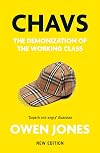
Chavs, despite coming out over a decade ago, is still prescient—though the author recycles the same argument often and reading may make you feel a bit of déjà-vu.
Jones (broadly, in my opinion) appropriately diagnoses the cause of working class denigration, both on a physical economic level but also on a cultural level, due to Thatcher-era policies breaking down trade unions and allowing council estates to be privately bought without new housing to replace it.
The book excels in the show more personal stories of working class Britons and is sympathetic to the realities of their lives, and is unafraid to cast appropriate blame on New Labour (and its middle-class liberal establishment) for their effective abandonment of the working class in the face of Thatcher's destructive policies. As someone who grew up working class as well (like free lunch, single parent, substance abuse blah blah blah), it is always refreshing to find an author who actually takes the time to understand our points of view, and why they do not always line up with the established "correct" leftist opinion.
I've rated 3 stars as it was a bit repetitive and just too much of a polemic if we're being honest. It won't necessarily convince those on the other side, if you know what I mean. If you're looking for a robust argument against the excesses of the wealthy, go read As Gods Among Men: A History of the Rich in the West. show less
Jones (broadly, in my opinion) appropriately diagnoses the cause of working class denigration, both on a physical economic level but also on a cultural level, due to Thatcher-era policies breaking down trade unions and allowing council estates to be privately bought without new housing to replace it.
The book excels in the show more personal stories of working class Britons and is sympathetic to the realities of their lives, and is unafraid to cast appropriate blame on New Labour (and its middle-class liberal establishment) for their effective abandonment of the working class in the face of Thatcher's destructive policies. As someone who grew up working class as well (like free lunch, single parent, substance abuse blah blah blah), it is always refreshing to find an author who actually takes the time to understand our points of view, and why they do not always line up with the established "correct" leftist opinion.
I've rated 3 stars as it was a bit repetitive and just too much of a polemic if we're being honest. It won't necessarily convince those on the other side, if you know what I mean. If you're looking for a robust argument against the excesses of the wealthy, go read As Gods Among Men: A History of the Rich in the West. show less

Where Chavs looks at how the people at the bottom of British society have suffered under recent governments, in this book Jones turns his focus on the other side of the same coin, the way that it has become effectively impossible for anyone with power and influence in Britain to argue for any other kind of policies than those which exacerbate inequalities in society, put money and power into the hands of the already wealthy and powerful, and leave the poor struggling to survive.
Jones looks show more at the development of neo-liberal free-market ideology, championed by intellectuals and think-tanks he calls "the outriders", mavericks who were mocked and despised in the post-war decades, but have found themselves in a robust position close to the centre of power since the rise of Reagan and Thatcher. He interviews several of the leading figures, and clearly has a lot of respect for them and the way they fought to promote their unfashionable ideas, even if he detests the ideas themselves. Whatever set of ideas eventually supplants the "tyranny of the markets", Jones suggests, will have to work its way into the mainstream the same sort of way, and we would do well to study how the neo-liberal think-tanks operated.
But the main part of the book is an analysis of the unhealthily close relationship between business, media, parliamentarians and government in Britain. The political class have almost no links with working-class people any more, and it is all but impossible for someone from a poor or even lower-middle-class background to get into politics, whilst wealthy business-people often become MPs, and MPs and government ministers frequently do consultancy work for business whilst serving, and move into well-paid senior posts as soon as they leave politics. Few MPs would have any motivation to vote for policies that might be considered disadvantageous to business or to people on high incomes: as Jones point out, successive governments have cut the top rate of income tax, a move the overwhelming majority of voters on all sides of the political spectrum disapprove of.
The free press is supposed to keep politicians under scrutiny, but almost all British newspapers and TV stations are the personal property of Rupert Murdoch and a handful of other wealthy individuals, and run stories that serve the interests of the oligarchs. The BBC has long ceased to be an independent voice, not least because the government holds its purse-strings. And of course there is also an active revolving door between politics and the press (vide Boris Johnson and George Osborne). Even the Observer isn't entirely free of that particular taint, it seems.
Jones argues strongly that the "small-state" ideology is inherently hypocritical: the same business people who call for the "rolling back of the state" rely on that same state to provide them with all kinds of things necessary for their businesses to function, including infrastructure like roads, police to protect their possessions, education to train their future workers and provide child-care for their current ones, and most especially social security benefits that allow them to get away with paying absurdly low wages as employers and charging ridiculously high rents as landlords.
Jones also talks about how the police have come to be seen as the enforcers of government policy, since the miners' strike, and are suffused with the idea that poor people, especially if black, are the major threat to the welfare of the nation. He also draws attention to the unhealthy relationship between the police and the media, where journalists have frequently been caught making payments to police officers for information, and officers caught feeding journalists false stories that serve the interests of the police. A relationship that must have caused some awkward moments when the police had to investigate the phone-hacking scandal that brought down the News of the world, and the same editors who were under investigation were taking senior police officers out for meals.
As he also pointed out repeatedly in Chavs, he reminds us that the amount of tax wealthy individuals and companies avoid paying is many times greater than the small amount estimated to be lost to benefit fraud by the poor, but somehow the tycoons never seem to end up in jail. Could this be because the same big accountancy firms that advise them on their tax strategies are also employed as consultants by the government when devising new tax law? Surely not.
As in Chavs, there isn't a huge amount here that will be new to anyone who regularly reads the Guardian, but it is quite impressive seeing it all assembled together in one place like this. I'm not sure how useful it is: even though Jones ends with a call to action of sorts, and has been involved in setting up various groups to fight back against the evils he discusses, it's difficult not to be pushed into despair and start feeling that the dominant ideology will always get you in the end. Especially if you look at what happened to Jeremy Corbyn. show less
Jones looks show more at the development of neo-liberal free-market ideology, championed by intellectuals and think-tanks he calls "the outriders", mavericks who were mocked and despised in the post-war decades, but have found themselves in a robust position close to the centre of power since the rise of Reagan and Thatcher. He interviews several of the leading figures, and clearly has a lot of respect for them and the way they fought to promote their unfashionable ideas, even if he detests the ideas themselves. Whatever set of ideas eventually supplants the "tyranny of the markets", Jones suggests, will have to work its way into the mainstream the same sort of way, and we would do well to study how the neo-liberal think-tanks operated.
But the main part of the book is an analysis of the unhealthily close relationship between business, media, parliamentarians and government in Britain. The political class have almost no links with working-class people any more, and it is all but impossible for someone from a poor or even lower-middle-class background to get into politics, whilst wealthy business-people often become MPs, and MPs and government ministers frequently do consultancy work for business whilst serving, and move into well-paid senior posts as soon as they leave politics. Few MPs would have any motivation to vote for policies that might be considered disadvantageous to business or to people on high incomes: as Jones point out, successive governments have cut the top rate of income tax, a move the overwhelming majority of voters on all sides of the political spectrum disapprove of.
The free press is supposed to keep politicians under scrutiny, but almost all British newspapers and TV stations are the personal property of Rupert Murdoch and a handful of other wealthy individuals, and run stories that serve the interests of the oligarchs. The BBC has long ceased to be an independent voice, not least because the government holds its purse-strings. And of course there is also an active revolving door between politics and the press (vide Boris Johnson and George Osborne). Even the Observer isn't entirely free of that particular taint, it seems.
Jones argues strongly that the "small-state" ideology is inherently hypocritical: the same business people who call for the "rolling back of the state" rely on that same state to provide them with all kinds of things necessary for their businesses to function, including infrastructure like roads, police to protect their possessions, education to train their future workers and provide child-care for their current ones, and most especially social security benefits that allow them to get away with paying absurdly low wages as employers and charging ridiculously high rents as landlords.
Jones also talks about how the police have come to be seen as the enforcers of government policy, since the miners' strike, and are suffused with the idea that poor people, especially if black, are the major threat to the welfare of the nation. He also draws attention to the unhealthy relationship between the police and the media, where journalists have frequently been caught making payments to police officers for information, and officers caught feeding journalists false stories that serve the interests of the police. A relationship that must have caused some awkward moments when the police had to investigate the phone-hacking scandal that brought down the News of the world, and the same editors who were under investigation were taking senior police officers out for meals.
As he also pointed out repeatedly in Chavs, he reminds us that the amount of tax wealthy individuals and companies avoid paying is many times greater than the small amount estimated to be lost to benefit fraud by the poor, but somehow the tycoons never seem to end up in jail. Could this be because the same big accountancy firms that advise them on their tax strategies are also employed as consultants by the government when devising new tax law? Surely not.
As in Chavs, there isn't a huge amount here that will be new to anyone who regularly reads the Guardian, but it is quite impressive seeing it all assembled together in one place like this. I'm not sure how useful it is: even though Jones ends with a call to action of sorts, and has been involved in setting up various groups to fight back against the evils he discusses, it's difficult not to be pushed into despair and start feeling that the dominant ideology will always get you in the end. Especially if you look at what happened to Jeremy Corbyn. show less

Jones documents how successive British governments, from Thatcher onwards, have pursued policies that had serious negative effects on the working class, by accelerating the shift away from manufacturing industry, enacting repressive measures against trade unions, cutting welfare benefits and support for public services (especially education), shifting from income tax to VAT, selling off most of the (council-owned) social housing stock, and so on. These policies have often been sold to the show more electorate on the back of patently untrue assertions that "we're all middle-class now" and accompanied by equally misleading propaganda about "welfare scroungers", "workshy single parents" and so on, echoing a negative stereotype of feckless working-class people as "chavs" propagated by right-wing newspapers, TV game-shows, and the rest.
In reality, of course, there is still a large section of British society that thinks of itself as "working-class". Since the annihilation of manufacturing, most of them work in retail, catering, call-centres, construction, agriculture and the like, often in jobs that are less fulfilling, less secure, and far less well-paid than the jobs their parents had in factories and mines. Those who are unemployed, Jones urges, are unemployed not because they are feckless and idle, but because there is a structural shortage of jobs, especially in former industrial towns. And most of them feel let down by the political establishment, which has less and less contact with them and their concerns. Even the Labour Party has few MPs with working-class roots these days, a result of the professionalisation of politics and the "unpaid intern" system, which effectively closes off political careers to those whose parents can't support them in unpaid jobs (in London!) whilst they gain experience. And the same goes for journalism and the law.
Jones also argues that social mobility in general is far less significant than it used to be (other people dispute this, and it's not easy to find an agreed definition of social mobility anyway). The education system is "rigged" by the middle classes to make sure their own kids have access to good schools and university places, leaving the schools most working-class kids attend marginalised; the cost of university education has become so high that few young people from working-class backgrounds can see the benefit of saddling themselves with student loans they won't necessarily ever be able to pay off.
All this demonization and exclusion of working-class people has created a political vacuum that right-wing nationalist parties have moved into. From the interviews and canvassing he's done in working-class neighbourhoods, Jones concludes that the people who vote for the likes of UKIP and the BNP usually don't support the explicitly racist parts of their platforms, but they do respond to the way those parties seem to be listening to their concerns, unlike Labour and the Conservatives. Worries about immigration (competition for housing and services, possible undercutting of pay rates) don't necessarily equate to racism, and Jones argues that the notion of an "embittered white working class" is both false and counter-productive: working-class districts (and working-class families) tend to be more mixed ethnically than elsewhere, and it's often second-generation immigrants who are most worried about the effect of newcomers.
It all sounds pretty convincing, even if it is quite at odds with my experience of British society. I grew up in an environment where the line between "working-class" and "middle-class" was fluid and hard to pin down, and where no-one would have dreamed of mocking the class, or the type of work, that most of their neighbours and relatives were associated with. Or of voting for anyone, under any circumstances, who didn't have "Labour" after their name on the polling card. Even at university, I don't remember anyone expressing disrespect for working-class people, and most people I knew were at most a couple of generations away from miners and factory workers. Except the drunken public-school prats we all laughed at, who are now running the country. But I moved away from the UK about the time Jones must have started primary school, so I've probably missed a lot. show less
In reality, of course, there is still a large section of British society that thinks of itself as "working-class". Since the annihilation of manufacturing, most of them work in retail, catering, call-centres, construction, agriculture and the like, often in jobs that are less fulfilling, less secure, and far less well-paid than the jobs their parents had in factories and mines. Those who are unemployed, Jones urges, are unemployed not because they are feckless and idle, but because there is a structural shortage of jobs, especially in former industrial towns. And most of them feel let down by the political establishment, which has less and less contact with them and their concerns. Even the Labour Party has few MPs with working-class roots these days, a result of the professionalisation of politics and the "unpaid intern" system, which effectively closes off political careers to those whose parents can't support them in unpaid jobs (in London!) whilst they gain experience. And the same goes for journalism and the law.
Jones also argues that social mobility in general is far less significant than it used to be (other people dispute this, and it's not easy to find an agreed definition of social mobility anyway). The education system is "rigged" by the middle classes to make sure their own kids have access to good schools and university places, leaving the schools most working-class kids attend marginalised; the cost of university education has become so high that few young people from working-class backgrounds can see the benefit of saddling themselves with student loans they won't necessarily ever be able to pay off.
All this demonization and exclusion of working-class people has created a political vacuum that right-wing nationalist parties have moved into. From the interviews and canvassing he's done in working-class neighbourhoods, Jones concludes that the people who vote for the likes of UKIP and the BNP usually don't support the explicitly racist parts of their platforms, but they do respond to the way those parties seem to be listening to their concerns, unlike Labour and the Conservatives. Worries about immigration (competition for housing and services, possible undercutting of pay rates) don't necessarily equate to racism, and Jones argues that the notion of an "embittered white working class" is both false and counter-productive: working-class districts (and working-class families) tend to be more mixed ethnically than elsewhere, and it's often second-generation immigrants who are most worried about the effect of newcomers.
It all sounds pretty convincing, even if it is quite at odds with my experience of British society. I grew up in an environment where the line between "working-class" and "middle-class" was fluid and hard to pin down, and where no-one would have dreamed of mocking the class, or the type of work, that most of their neighbours and relatives were associated with. Or of voting for anyone, under any circumstances, who didn't have "Labour" after their name on the polling card. Even at university, I don't remember anyone expressing disrespect for working-class people, and most people I knew were at most a couple of generations away from miners and factory workers. Except the drunken public-school prats we all laughed at, who are now running the country. But I moved away from the UK about the time Jones must have started primary school, so I've probably missed a lot. show less
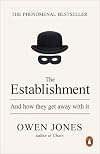
'And so, here is the reality of modern British politics. The views of millions of Britons are simply not represented.'
Ok, I admit: I despise politicians with a passion. Parasites and leeches all in for themselves, they are either greedily and selfishly interested, or, completely incompetent. No matter what political party, they all are the same, as groupthink remains a powerful thing. So, obviously, this book pointing to how our political system (for Owen Jones doesn't denounce individuals, show more but the system that had led them to power and helps shape their policies once there) was mostly music to my ears!
Bashing against the Establishment, though, can be too easy. Sure, the mess we're all in calls for scapegoats, and such a fleeting and elusive concept as 'Establishment', because it is so fleeting and elusive, fits the bill perfectly for whose at the bottom. It's easy, but not helpful. After all, what and who is this 'Establishment' exactly?
Well, I confess, the author being way more leftist than I am (I identify as centre right, anyway) I had braced myself for an attack upon the rich and successful, the corporate owners and politicians whose 'bad luck' would have been to come from privileged background; all the while victimising everybody else. In fact, because the author is such a staunch leftist, I had kept away from this book for quite a while, expecting the usual caricatural bashing against the rich. Well, I was damned wrong! And putting this off for so long had been my loss. I am glad I finally read it.
Owen Jones, in fact, is the first to denounce such narrow mindedness. For him, the Establishment is indeed everything but only filthy rich middle aged white men, a mistaken view which leads to completely miss the wider picture. As he rightly asserts, it's not about wealth. It's not about class. As a matter of fact, it's not about age nor gender nor race either. It's about a mindset, the mindset of people who think themselves self-entitled to their success, money and power, and, so, will do everything they can to get more money and power with utter contempt for whose not sharing their values -and, so, their part of the pie. Focusing on wealth only is, as he states, a perception that allows some members of the Establishment to convince themselves that they're not part of it at all. The point needs to be asserted, because, populist movements like UKIP or even some fringe of our dominant parties might claim they are anti-Establishment, but, as it turns out, they are everything but.
Have you ever wondered why, for instance, no matter who is in charge, no matter the political party, it's always the same difference? Well, there you go: the divide between Right and Left became meaningless, precisely because there is no divide to start with. Our politicians all abide to the same dogmas, the same ideologies, and all are in the same boat sharing the same interests with each others.
'there's little difference between the main political parties. By surrendering democratic powers to private interests, and by building a political elite that differs more on nuances than on substantive issues, the Establishment has committed untold damage to democracy.'
A threat to democracy it is indeed, for this goes way beyond politics. Here's a powerful expose which outlines in fact a whole culture, one of revolving doors and incestuous relationships between the medias, corporate businesses, financial gurus and politicians. The account is appallingly damaging..
Now, there is nothing wrong with a certain demographics sharing the same interests (free market radicalism, deregulations, tax cuts when not tax avoidance altogether...) and, so, lobbying to have their ideas spreading around if not politically adopted. The problem is, in here there is no balance. There is no debate. There is no alternative. There is no challenge to such interest being put forward, simply because, the demographics having opposite interests and goals have been systematically excluded from position of power and influences.
'those who benefit least from Britain's economic an social order are increasingly unlikely to penetrate the Westminster Bubble.'
Now, here, personally, I go far further than the author. I think that Britain is not really a democracy, but an oligarchy, serving corporatism and a financial market which contributes nothing to society as a whole but is just a playground for brats and bullies to gamble and speculate in the name of greed. Whatever your stance, though, there is no denying that the benefits of the financial sector ought to be questioned:
'A financial system is essential to nurture and sustain business. But Britain's financial system has increasingly moved away from this core function in favour of a casino operation focused on speculation and complex derivative products.'
The consequences, of course, have been disastrous as we all know...
But before tackling the financial crisis of 2008, Owen Jones reflects upon the particular history of Britain; an history which had seen the triumph of Thatcherism. Such triumph would have two consequences. First, whereas before that the partisans of such free market radicalism were perceived as marginal looney (let's call a spade a spade, should we) they now found themselves in charge. Then, they were not only in charge but went unchallenged, since the merciless war launched against potential opposition (e.g. trade unionism etc.) had been successful beyond every expectation. The triumph was in fact such that, even the Labour party accommodated the new ideology -New Labour owning as much to Thatcherism as the deregulated financial sector taking over. In this context, people not being part of the Establishment would not only find themselves excluded from a supposedly 'democratic' regime (again, I am way harsher than the author on that point) but they will also be ruthlessly dealt with! Tax avoidance might cost 25 times more to the state than benefit frauds, yet it's not the financial barons and corporate moguls which are in the cross hair when politicians get tough in recovering taxpayers money. The fate of the poor, the unemployed, the disabled are harrowing. Beyond the downtrodden, it's also the rest of us suffering through austerity while the culprits got away. It's a terrible state of affair, but there we go:
'Rather than rocking the Establishment's foundations, the financial crisis brought its values to the fore... Those who shared responsibility for plunging Britain into economic catastrophe faced no sanctions or punishments. They were not driven into poverty and hardship, nor forced to depend on food banks in order to eat.'
Indeed.
The irony is, the total free market paradigm itself is a fraud. It's a con. A scam. A lie. As we all know full well by now, the elites in charge might bash against the state and call for deregulations for capitalistic success, but, in the end, when things go awfully wrong it's always the state which has to intervene. Hence, what we have is in fact, as the author rightly puts it, 'socialism for the rich', or, 'state-subsidised capitalism'. The hypocrisy cannot but make you sick with anger.
Now, of course, this book is not perfect despite its powerful indictment. In fact, Owen Jones sometimes go too far for my liking, or, use easy targets. The medias might be echo of a political consensus, many, for example, turning prejudices and insecurities into sensationalists tools to serve crass political agenda; but not all. The Sun and The Daily Express might be rags experts in trashy sensationalism, but, overall, Britain still has a decent press, and, above all, I believe readers to have critical thinking. Same with the police. Police brutality is a reality, and so is racism (in the light of the BLM movement, his questioning of the stop-and-search policies are, about, strikingly relevant...). But, despite its at times bad policing, and, of course, corrupt behaviours (he recalls the Plebgate episode...) I think quite extreme to label it as the henchman of the Establishment. Maybe I am naïve, though? As for claiming we sold ourselves to the USA, hence the reason why civil liberties had to be attacked under New Labour, I find this way too simplistic. New Labour emerged from socialism, and socialism can be as much of a threat to liberties than the ultra-liberals governing us. On that topic, I personally prefer the analysis of Dominic Raab in The Assault on Liberty: What Went Wrong with Rights
Nevertheless, here is a powerful read, embracing a wide array of issues and topics, maybe repetitive at times, if not outrageous, but never failing to hit right on target. As they said, if you're not offended you're not paying attention. Read on, then, because this will not offend you but make you boil with resent and anger. Would that be a first step towards changing things? Let's hope so! show less
Ok, I admit: I despise politicians with a passion. Parasites and leeches all in for themselves, they are either greedily and selfishly interested, or, completely incompetent. No matter what political party, they all are the same, as groupthink remains a powerful thing. So, obviously, this book pointing to how our political system (for Owen Jones doesn't denounce individuals, show more but the system that had led them to power and helps shape their policies once there) was mostly music to my ears!
Bashing against the Establishment, though, can be too easy. Sure, the mess we're all in calls for scapegoats, and such a fleeting and elusive concept as 'Establishment', because it is so fleeting and elusive, fits the bill perfectly for whose at the bottom. It's easy, but not helpful. After all, what and who is this 'Establishment' exactly?
Well, I confess, the author being way more leftist than I am (I identify as centre right, anyway) I had braced myself for an attack upon the rich and successful, the corporate owners and politicians whose 'bad luck' would have been to come from privileged background; all the while victimising everybody else. In fact, because the author is such a staunch leftist, I had kept away from this book for quite a while, expecting the usual caricatural bashing against the rich. Well, I was damned wrong! And putting this off for so long had been my loss. I am glad I finally read it.
Owen Jones, in fact, is the first to denounce such narrow mindedness. For him, the Establishment is indeed everything but only filthy rich middle aged white men, a mistaken view which leads to completely miss the wider picture. As he rightly asserts, it's not about wealth. It's not about class. As a matter of fact, it's not about age nor gender nor race either. It's about a mindset, the mindset of people who think themselves self-entitled to their success, money and power, and, so, will do everything they can to get more money and power with utter contempt for whose not sharing their values -and, so, their part of the pie. Focusing on wealth only is, as he states, a perception that allows some members of the Establishment to convince themselves that they're not part of it at all. The point needs to be asserted, because, populist movements like UKIP or even some fringe of our dominant parties might claim they are anti-Establishment, but, as it turns out, they are everything but.
Have you ever wondered why, for instance, no matter who is in charge, no matter the political party, it's always the same difference? Well, there you go: the divide between Right and Left became meaningless, precisely because there is no divide to start with. Our politicians all abide to the same dogmas, the same ideologies, and all are in the same boat sharing the same interests with each others.
'there's little difference between the main political parties. By surrendering democratic powers to private interests, and by building a political elite that differs more on nuances than on substantive issues, the Establishment has committed untold damage to democracy.'
A threat to democracy it is indeed, for this goes way beyond politics. Here's a powerful expose which outlines in fact a whole culture, one of revolving doors and incestuous relationships between the medias, corporate businesses, financial gurus and politicians. The account is appallingly damaging..
Now, there is nothing wrong with a certain demographics sharing the same interests (free market radicalism, deregulations, tax cuts when not tax avoidance altogether...) and, so, lobbying to have their ideas spreading around if not politically adopted. The problem is, in here there is no balance. There is no debate. There is no alternative. There is no challenge to such interest being put forward, simply because, the demographics having opposite interests and goals have been systematically excluded from position of power and influences.
'those who benefit least from Britain's economic an social order are increasingly unlikely to penetrate the Westminster Bubble.'
Now, here, personally, I go far further than the author. I think that Britain is not really a democracy, but an oligarchy, serving corporatism and a financial market which contributes nothing to society as a whole but is just a playground for brats and bullies to gamble and speculate in the name of greed. Whatever your stance, though, there is no denying that the benefits of the financial sector ought to be questioned:
'A financial system is essential to nurture and sustain business. But Britain's financial system has increasingly moved away from this core function in favour of a casino operation focused on speculation and complex derivative products.'
The consequences, of course, have been disastrous as we all know...
But before tackling the financial crisis of 2008, Owen Jones reflects upon the particular history of Britain; an history which had seen the triumph of Thatcherism. Such triumph would have two consequences. First, whereas before that the partisans of such free market radicalism were perceived as marginal looney (let's call a spade a spade, should we) they now found themselves in charge. Then, they were not only in charge but went unchallenged, since the merciless war launched against potential opposition (e.g. trade unionism etc.) had been successful beyond every expectation. The triumph was in fact such that, even the Labour party accommodated the new ideology -New Labour owning as much to Thatcherism as the deregulated financial sector taking over. In this context, people not being part of the Establishment would not only find themselves excluded from a supposedly 'democratic' regime (again, I am way harsher than the author on that point) but they will also be ruthlessly dealt with! Tax avoidance might cost 25 times more to the state than benefit frauds, yet it's not the financial barons and corporate moguls which are in the cross hair when politicians get tough in recovering taxpayers money. The fate of the poor, the unemployed, the disabled are harrowing. Beyond the downtrodden, it's also the rest of us suffering through austerity while the culprits got away. It's a terrible state of affair, but there we go:
'Rather than rocking the Establishment's foundations, the financial crisis brought its values to the fore... Those who shared responsibility for plunging Britain into economic catastrophe faced no sanctions or punishments. They were not driven into poverty and hardship, nor forced to depend on food banks in order to eat.'
Indeed.
The irony is, the total free market paradigm itself is a fraud. It's a con. A scam. A lie. As we all know full well by now, the elites in charge might bash against the state and call for deregulations for capitalistic success, but, in the end, when things go awfully wrong it's always the state which has to intervene. Hence, what we have is in fact, as the author rightly puts it, 'socialism for the rich', or, 'state-subsidised capitalism'. The hypocrisy cannot but make you sick with anger.
Now, of course, this book is not perfect despite its powerful indictment. In fact, Owen Jones sometimes go too far for my liking, or, use easy targets. The medias might be echo of a political consensus, many, for example, turning prejudices and insecurities into sensationalists tools to serve crass political agenda; but not all. The Sun and The Daily Express might be rags experts in trashy sensationalism, but, overall, Britain still has a decent press, and, above all, I believe readers to have critical thinking. Same with the police. Police brutality is a reality, and so is racism (in the light of the BLM movement, his questioning of the stop-and-search policies are, about, strikingly relevant...). But, despite its at times bad policing, and, of course, corrupt behaviours (he recalls the Plebgate episode...) I think quite extreme to label it as the henchman of the Establishment. Maybe I am naïve, though? As for claiming we sold ourselves to the USA, hence the reason why civil liberties had to be attacked under New Labour, I find this way too simplistic. New Labour emerged from socialism, and socialism can be as much of a threat to liberties than the ultra-liberals governing us. On that topic, I personally prefer the analysis of Dominic Raab in The Assault on Liberty: What Went Wrong with Rights
Nevertheless, here is a powerful read, embracing a wide array of issues and topics, maybe repetitive at times, if not outrageous, but never failing to hit right on target. As they said, if you're not offended you're not paying attention. Read on, then, because this will not offend you but make you boil with resent and anger. Would that be a first step towards changing things? Let's hope so! show less
Lists
Awards


You May Also Like


Associated Authors
Statistics
- Works
- 5
- Also by
- 5
- Members
- 1,497
- Popularity
- #17,160
- Rating
- 3.9
- Reviews
- 32
- ISBNs
- 158
- Languages
- 9
- Favorited
- 1
