
James Meek
Author of The People's Act of Love
About the Author
Image credit: Marzena Pogorzaly
Works by James Meek
Associated Works
Freedom: Stories Celebrating the Universal Declaration of Human Rights (2009) — Contributor — 85 copies, 2 reviews
Boots on the Ground: Stories of American Soldiers from Iraq and Afghanistan (2004) — Contributor — 8 copies
Tagged
Common Knowledge
- Birthdate
- 1962-12-07
- Gender
- male
- Education
- University of Edinburgh (MA, 1984)
- Occupations
- author
journalist
publisher - Awards and honors
- British Press Awards foreign Reporter of the Year (2003)
Amnesty International Journalist of the Year (2004)
Orwell Prize (2015) - Agent
- AP Watt
- Nationality
- UK
- Birthplace
- London, England, UK
- Places of residence
- Nottingham, England, UK
Dundee, Scotland, UK
Northampton, England, UK
Edinburgh, Scotland, UK
Moscow, Russia - Associated Place (for map)
- UK
Members
Reviews
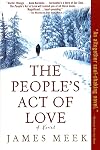
OK, this was indeed a fantastic book. Meek's intentions of writing a Great Russian Novel, as mentioned by Stewart above, certainly shine through - it has scope, multiple-character plot, ethical quandaries and satire that wouldn't be unworthy of ol' Fyodor D himself - while still modern (and postmodern) enough to make it a novel for today's age.
But the similarities I keep finding aren't as much to writers as to movies; Col mentioned Ravenous, the praising of which I would like to join, but I show more also found myself thinking of two others:
- Andrei Konchalovsky's Runaway Train - somewhat ironically an American movie made by a Russian, and in a sense the mirror image of Meek's book, tackling some of the same existential questions; that would be Samarin (not the Mohican) in Jon Voight's role.
- Werner Herzog's Aguirre - that's Klaus Kinski as Matula, leading his men on a hopeless quest, far beyond what is defensible or even sane. I kept expecting him to call himself the wrath of God, but of course the wrath of God - if indeed there is such a thing here - is much sneakier in Meek's world.
Yet for all its genre nods (it's something of a Wild East novel, isn't it? I'm sure we could find a role for a young Eastwood too) it's also something entirely its own. Meek's language is beautifully descriptive (I guess the fact that I keep seeing it as a movie is a testament to that) and the way he uses his realistic characters (of course, the Czechoslovak raids through Siberia is an actual historical event - and one I've always meant to read more about) to create a very personal drama out of The Big Questions is... again, the unwieldy adjective "Dostoevskyan" springs to mind. Or is it Dostoevskyesque? The book is just self-conscious enough to pull it off, despite - or perhaps thanks to - lines like this:
I don't serve. You know that. I'm a manifestation. Of the present anger and the future love.
How much can we be expected to sacrifice, and for what? How much can we demand that others sacrifice? The Czechoslovaks are, officially, fighting for a homeland they've never even set foot in. The Reds are fighting for a homeland they have barely even begun to imagine. Samarin has gone so far beyond idealism that he's passed into psychosis, and yet keeps going in the same direction. Balashov, the 19th century enlightened soldier, has stepped off the arena and the big industrial train comes down the track too fast to stop, dropping men and horses along the way as humanity eats itself to survive. show less
But the similarities I keep finding aren't as much to writers as to movies; Col mentioned Ravenous, the praising of which I would like to join, but I show more also found myself thinking of two others:
- Andrei Konchalovsky's Runaway Train - somewhat ironically an American movie made by a Russian, and in a sense the mirror image of Meek's book, tackling some of the same existential questions; that would be Samarin (not the Mohican) in Jon Voight's role.
- Werner Herzog's Aguirre - that's Klaus Kinski as Matula, leading his men on a hopeless quest, far beyond what is defensible or even sane. I kept expecting him to call himself the wrath of God, but of course the wrath of God - if indeed there is such a thing here - is much sneakier in Meek's world.
Yet for all its genre nods (it's something of a Wild East novel, isn't it? I'm sure we could find a role for a young Eastwood too) it's also something entirely its own. Meek's language is beautifully descriptive (I guess the fact that I keep seeing it as a movie is a testament to that) and the way he uses his realistic characters (of course, the Czechoslovak raids through Siberia is an actual historical event - and one I've always meant to read more about) to create a very personal drama out of The Big Questions is... again, the unwieldy adjective "Dostoevskyan" springs to mind. Or is it Dostoevskyesque? The book is just self-conscious enough to pull it off, despite - or perhaps thanks to - lines like this:
I don't serve. You know that. I'm a manifestation. Of the present anger and the future love.
How much can we be expected to sacrifice, and for what? How much can we demand that others sacrifice? The Czechoslovaks are, officially, fighting for a homeland they've never even set foot in. The Reds are fighting for a homeland they have barely even begun to imagine. Samarin has gone so far beyond idealism that he's passed into psychosis, and yet keeps going in the same direction. Balashov, the 19th century enlightened soldier, has stepped off the arena and the big industrial train comes down the track too fast to stop, dropping men and horses along the way as humanity eats itself to survive. show less
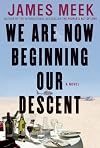
The events and effects of September 11 have proved endless fodder for non-fiction books and documentaries, but their impact on the world of fiction has taken longer to be felt. Lately a few movies such as Lions for Lambs and Rendition have dared to tentatively poke their heads out at the box office and comment on the state of the ‘war on terror’, but have by and large been greeted with apathy, and quickly forgotten.
Luckily, literature often gets a pass where cinema fears to tread, and show more opportunities to understand the war from alternative perspectives have begun to make themselves heard. Authors such as Jonathan Safran Foer, Jess Walter, and Don DeLillo have recently taken bold steps forward in using the events as a backdrop for intelligent examinations of the world as it now functions.
Latest to employ the aftermath of 9/11 as a literary device is British novelist James Meek, author of the critically-lauded The People’s Act of Love. Meek may be in a better position to comment on such issues than most; in addition to his sterling work as a novelist, he worked as a reporter in Afghanistan, and in 2004 was named Foreign Correspondent and Amnesty Journalist of the Year for his reporting on Iraq and Guantánamo Bay.
As such, the Afghanistan scenes in his new novel We Are Now Beginning Our Descent have the sting of authenticity. As his protagonist Kellas traverses through a war “scripted for an audience that knew as much about orcs and Sauron as it did about Iraqis and Saddam,” the moral quagmire of this new war has rarely felt more personal.
Far more than a blasted landscape travelogue, We Are Now Beginning Our Descent (a nicely ominous title) is a manic cry for truth in a world that has lost its moral bearings. And as Kellas undergoes a tragicomic mid-life crisis that takes him from Afghanistan to England to the U.S., it becomes readily apparent that truth is, and always has been, a nebulous and wholey subjective quality.
Kellas is a dispirited British war correspondent whose belief system has been sorely tested by the new warfare he is sent out to cover. Unlike the honourable reporting he once offered, Kellas was now forcibly compelled to take part in “a greater story, a baton-twirling lit-up marching parade of a story that belonged to a mighty nation of storytellers, mythmakers and newscryers, America, but which other, foreign storytellers might attach themselves to.”
Kellas himself is no saint, himself having written a superficial military thriller with the sole intent of making money, and is finding himself less and less capable of functioning without an ethical compass. And when a strange email arrives from Astrid, an American reporter he once knew, Kellas’ finds himself completely adrift, with Astrid the only lifeline he can see.
Through Kellas, Meek is interested in the search for the truth that underlies the fiction of our lives. We have become a society of surface, he implies, more content to watch and comment than actually participate.
“There was a cult of seeing without knowing and watching without touching,” Kellas notes about society’s understanding of the war, but this concept can be stretched over all aspects of modern life. The world has become enamoured with the superficial, the soundbite and the 30-second newspiece, preventing empathy and halting any hope of understanding one another, either in the arena of war or the domestic field of interpersonal relationships.
In an inspired scene of black comedic rage, Kellas rails at a dinner party hosted by liberal commentators who have never set foot outside their country, a scene as notable for its pointed observations as it is for the undercurrent of self-loathing that permeates Kellas’ every action. Meek’s novel is ostensibly about war, but as Kellas staggers from one set piece to another, Meek slowly unveils a quietly complicated love story, hinting that misunderstandings between countries are no more or less complicated than those of individuals.
Meek has a wonderfully sardonic way with words, exemplified in Kellas’ first reactions to the U.S.: “For foreigners arriving here, America was a marvel harder to believe, infinitely more wondrous: a real version of a notorious fake…[like] a long-lens paparazzi shot of Jesus on the beach, paler, flabbier, shorter, with less holy eyes than the icons had it, staggeringly real.”
However, as Meek throws Kellas about from one soul-shattering experience to another, it is hard to maintain a sense of believability about Descent as a whole. Kellas is a brilliant character, but his travails function better as separate stories than as a whole novel. There is a sense of incompleteness to Meek’s tale, which indeed may have been his ultimate point, that there is no ending to life’s miseries, but it causes subtle harm to the story.
We Are Now Beginning Our Descent may not be wholly successful, but it is always compelling, entertaining, and thought-provoking. Meek keeps a sure hand on the wheel, and while it may drift at times, the trip itself is worth taking. show less
Luckily, literature often gets a pass where cinema fears to tread, and show more opportunities to understand the war from alternative perspectives have begun to make themselves heard. Authors such as Jonathan Safran Foer, Jess Walter, and Don DeLillo have recently taken bold steps forward in using the events as a backdrop for intelligent examinations of the world as it now functions.
Latest to employ the aftermath of 9/11 as a literary device is British novelist James Meek, author of the critically-lauded The People’s Act of Love. Meek may be in a better position to comment on such issues than most; in addition to his sterling work as a novelist, he worked as a reporter in Afghanistan, and in 2004 was named Foreign Correspondent and Amnesty Journalist of the Year for his reporting on Iraq and Guantánamo Bay.
As such, the Afghanistan scenes in his new novel We Are Now Beginning Our Descent have the sting of authenticity. As his protagonist Kellas traverses through a war “scripted for an audience that knew as much about orcs and Sauron as it did about Iraqis and Saddam,” the moral quagmire of this new war has rarely felt more personal.
Far more than a blasted landscape travelogue, We Are Now Beginning Our Descent (a nicely ominous title) is a manic cry for truth in a world that has lost its moral bearings. And as Kellas undergoes a tragicomic mid-life crisis that takes him from Afghanistan to England to the U.S., it becomes readily apparent that truth is, and always has been, a nebulous and wholey subjective quality.
Kellas is a dispirited British war correspondent whose belief system has been sorely tested by the new warfare he is sent out to cover. Unlike the honourable reporting he once offered, Kellas was now forcibly compelled to take part in “a greater story, a baton-twirling lit-up marching parade of a story that belonged to a mighty nation of storytellers, mythmakers and newscryers, America, but which other, foreign storytellers might attach themselves to.”
Kellas himself is no saint, himself having written a superficial military thriller with the sole intent of making money, and is finding himself less and less capable of functioning without an ethical compass. And when a strange email arrives from Astrid, an American reporter he once knew, Kellas’ finds himself completely adrift, with Astrid the only lifeline he can see.
Through Kellas, Meek is interested in the search for the truth that underlies the fiction of our lives. We have become a society of surface, he implies, more content to watch and comment than actually participate.
“There was a cult of seeing without knowing and watching without touching,” Kellas notes about society’s understanding of the war, but this concept can be stretched over all aspects of modern life. The world has become enamoured with the superficial, the soundbite and the 30-second newspiece, preventing empathy and halting any hope of understanding one another, either in the arena of war or the domestic field of interpersonal relationships.
In an inspired scene of black comedic rage, Kellas rails at a dinner party hosted by liberal commentators who have never set foot outside their country, a scene as notable for its pointed observations as it is for the undercurrent of self-loathing that permeates Kellas’ every action. Meek’s novel is ostensibly about war, but as Kellas staggers from one set piece to another, Meek slowly unveils a quietly complicated love story, hinting that misunderstandings between countries are no more or less complicated than those of individuals.
Meek has a wonderfully sardonic way with words, exemplified in Kellas’ first reactions to the U.S.: “For foreigners arriving here, America was a marvel harder to believe, infinitely more wondrous: a real version of a notorious fake…[like] a long-lens paparazzi shot of Jesus on the beach, paler, flabbier, shorter, with less holy eyes than the icons had it, staggeringly real.”
However, as Meek throws Kellas about from one soul-shattering experience to another, it is hard to maintain a sense of believability about Descent as a whole. Kellas is a brilliant character, but his travails function better as separate stories than as a whole novel. There is a sense of incompleteness to Meek’s tale, which indeed may have been his ultimate point, that there is no ending to life’s miseries, but it causes subtle harm to the story.
We Are Now Beginning Our Descent may not be wholly successful, but it is always compelling, entertaining, and thought-provoking. Meek keeps a sure hand on the wheel, and while it may drift at times, the trip itself is worth taking. show less
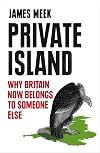
A depressing read but a book which everyone who cares about public services like health and education should read. We've had to suffer 40 years of the neo-liberal mantra of private enterprise good, state provided public services bad that it's about time we woke up to the truth of what has been happening. Meek does this by not blinding us with complex facts and statistics but allowing ordinary people, both consumers and managers of the services, to tell their stories. The ludicrousness of the show more situation we are now in is best summed up by the fact that successive governments can't seem to see the absurdity of taking our railways out of British state ownership so that they can be run by the Chinese and French state-owned railway companies instead. But the real tragedy is the total mess that has been made of such an essential to life as housing. And the disaster of selling off council housing (half of which has ended up in the hands of rapacious private landlords) is now to be compounded by the government selling off housing association properties! show less
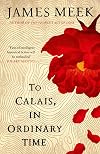
Fantastic, compelling account of medieval England under the threat of plague. A group of archers are travelling through southern England to meet a boat. They fought at Crècy but are barely clinging on to their status as a team, with the biggest split over one man's kidnapping of a young woman they met in France. A young man is sent to bolster their ranks, under the promise of freedom, whilst a young wealthy woman is also on the road running away from a forced marriage. The story alternates show more between narrators, reflecting the changing English language. There's frequent references to the "villains" not having a clue what the elite are saying in "French" (much more recognisable English).
Through the very different characters, the author weaves into the narrative understandings of courtly love, medieval Christianity, controls on rural workers and the horrific effects of such a devastating disease when there was no understanding of how it was caused or why some survived. I've never read anything like it, but would love to read more. show less
Through the very different characters, the author weaves into the narrative understandings of courtly love, medieval Christianity, controls on rural workers and the horrific effects of such a devastating disease when there was no understanding of how it was caused or why some survived. I've never read anything like it, but would love to read more. show less
Lists
Favourite Books (1)
Booker Prize (1)
Awards


You May Also Like


Associated Authors
Statistics
- Works
- 12
- Also by
- 7
- Members
- 2,212
- Popularity
- #11,593
- Rating
- 3.7
- Reviews
- 62
- ISBNs
- 113
- Languages
- 14
- Favorited
- 1

