
Arturo Escobar
Author of Encountering Development
About the Author
Arturo Escobar is Professor Emeritus of Anthropology at the University of North Carolina, Chapel Hill, and the author of several books, including Designs for the Pluriverse: Radical Interdependence, Autonomy, and the Making of Worlds and Territories of Difference: Place, Movements, Life, Redes, show more both also published by Duke University Tress. show less
Image credit: via Editora Elefante
Works by Arturo Escobar
Designs for the Pluriverse: Radical Interdependence, Autonomy, and the Making of Worlds (New Ecologies for the Twenty-First Century) (2018) 69 copies, 3 reviews
The Making Of Social Movements In Latin America: Identity, Strategy, And Democracy (Series in Political Economy and Economic Development in Latin Am) (1992) 25 copies
Pluriversal Politics: The Real and the Possible (Latin America in Translation) (2020) 19 copies, 1 review
Sentipensar con la tierra. Nuevas lecturas sobre desarrollo, territorio y diferencia (2014) 5 copies
Associated Works
Tagged
Common Knowledge
- Birthdate
- 1952
- Gender
- male
- Birthplace
- Manizales, Colombia
- Associated Place (for map)
- Manizales, Colombia
Members
Reviews
Designs for the Pluriverse. Radical Interdependence, Autonomy, and the Making of Worlds by Arturo Escobar

In Designs for the Pluriverse Arturo Escobar presents a new vision of design theory and practice aimed at channeling design's world-making capacity toward ways of being and doing that are deeply attuned to justice and the Earth. Noting that most design—from consumer goods and digital technologies to built environments—currently serves capitalist ends, Escobar argues for the development of an “autonomous design” that eschews commercial and modernizing aims in favor of more show more collaborative and placed-based approaches. Such design attends to questions of environment, experience, and politics while focusing on the production of human experience based on the radical interdependence of all beings. Mapping autonomous design’s principles to the history of decolonial efforts of indigenous and Afro-descended people in Latin America, Escobar shows how refiguring current design practices could lead to the creation of more just and sustainable social orders.
-------------------
In Designs for the Pluriverse stellt Arturo Escobar eine neue Vision von Designtheorie und -praxis vor, die darauf abzielt, die Fähigkeit des Designs, die Welt zu gestalten, in Richtung einer Art des Seins und Handelns zu lenken, die zutiefst auf Gerechtigkeit und die Erde ausgerichtet ist. Escobar stellt fest, dass das meiste Design - von Konsumgütern und digitalen Technologien bis hin zu gebauten Umgebungen - derzeit kapitalistischen Zwecken dient, und plädiert für die Entwicklung eines „autonomen Designs“, das kommerzielle und modernisierende Ziele zugunsten von kollaborativen und ortsbezogenen Ansätzen meidet. Ein solches Design befasst sich mit Fragen der Umwelt, der Erfahrung und der Politik und konzentriert sich auf die Produktion menschlicher Erfahrungen, die auf der radikalen Interdependenz aller Wesen basieren. Indem er die Prinzipien des autonomen Designs mit der Geschichte der dekolonialen Bemühungen indigener und afroamerikanischer Völker in Lateinamerika in Verbindung bringt, zeigt Escobar, wie die Neugestaltung aktueller Designpraktiken zur Schaffung gerechterer und nachhaltigerer Gesellschaftsordnungen führen könnte. show less
-------------------
In Designs for the Pluriverse stellt Arturo Escobar eine neue Vision von Designtheorie und -praxis vor, die darauf abzielt, die Fähigkeit des Designs, die Welt zu gestalten, in Richtung einer Art des Seins und Handelns zu lenken, die zutiefst auf Gerechtigkeit und die Erde ausgerichtet ist. Escobar stellt fest, dass das meiste Design - von Konsumgütern und digitalen Technologien bis hin zu gebauten Umgebungen - derzeit kapitalistischen Zwecken dient, und plädiert für die Entwicklung eines „autonomen Designs“, das kommerzielle und modernisierende Ziele zugunsten von kollaborativen und ortsbezogenen Ansätzen meidet. Ein solches Design befasst sich mit Fragen der Umwelt, der Erfahrung und der Politik und konzentriert sich auf die Produktion menschlicher Erfahrungen, die auf der radikalen Interdependenz aller Wesen basieren. Indem er die Prinzipien des autonomen Designs mit der Geschichte der dekolonialen Bemühungen indigener und afroamerikanischer Völker in Lateinamerika in Verbindung bringt, zeigt Escobar, wie die Neugestaltung aktueller Designpraktiken zur Schaffung gerechterer und nachhaltigerer Gesellschaftsordnungen führen könnte. show less
Designs for the Pluriverse: Radical Interdependence, Autonomy, and the Making of Worlds (New Ecologies for the Twenty-First Century) by Arturo Escobar
Within design, there is a growing discussion of the grand societal challenges and design's role in addressing them. Escobar, an anthropologist with a long-standing interest in design, provides an important contribution to that discussion. In his own words, one of the key issues addressed in this book is whether design can be "extricated from its embeddedness in modernist unsustainable and defuturing practices" and become part of a toolkit for societal transition. In my opinion, a great show more strength of the book is the broad foundation in contemporary social science, critical theory and philosophy that places design in a larger sociopolitical context. Another strength is the introduction to activist and transition approaches from the Global South, specifically Latin America, and the discussion of how they relate to discourses more familiar to the Global North. For a reader willing to devote some time to thinking and reflection, Escobar's book might stimulate some rather profound questions on who you want to be as a designer, what you need to do, and how to do it. show less
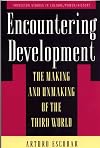
This book is for anyone interest in rethinking established views on 'development', and, even more so, by anyone who has not yet questioned them. The book has a message for all of us who want to take seriously not only the problems inherent in economistic development but also the imperial intervention of the West in cultures of rich traditions.

Lists
Good Life (1)
You May Also Like


Associated Authors
Statistics
- Works
- 23
- Also by
- 1
- Members
- 390
- Popularity
- #62,075
- Rating
- 4.2
- Reviews
- 5
- ISBNs
- 38
- Languages
- 2