
Elizabeth Harrower (1928–2020)
Author of The Watch Tower
About the Author
Elizabeth Harrower was born in 1928 in Sydney, Australia. She has worked as a reviewer for The Sydney Morning Herald, for the ABC, and in publishing. She is the author of In Certain Circles which won the 2015 Voss Literary Prize. Her other work includes Down in the City, The Long Prospect, The show more Catherine Wheel and The Watch Tower. She won the Steele Rudd Award for a Short Story Collection at the Queens Literary Awards 2016 with her title, A Few Days in the Country: And Other Stories. On July 7, 2020, she died at the age 92. (Bowker Author Biography) show less
Works by Elizabeth Harrower
Associated Works
Tagged
Common Knowledge
- Birthdate
- 1928-02-08
- Date of death
- 2020-07-07
- Gender
- female
- Occupations
- novelist
short story writer
reviewer - Nationality
- Australia
- Birthplace
- Sydney, New South Wales, Australia
- Places of residence
- Newcastle, New South Wales, Australia
London, England, UK
Cremorne, New South Wales, Australia - Place of death
- Sydney, New South Wales, Australia
- Associated Place (for map)
- New South Wales, Australia
Members
Reviews
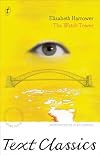
Between 1957 and 1966, Harrower published four novels and completed a fifth, which she withdrew from publication. Patrick White and Christina Stead were fans. The Watch Tower, reputedly Harrower's best book, has been republished by the small Australian publisher, Text Classics, which has also published for the first time, forty years after its withdrawal, In Certain Circles.
The Watch Tower is set in the forties. It begins in the principal's office, at an expensive Sydney girls'school. The show more father of Laura and Clare Vaizey has just died, so their mother is withdrawing the girls and sending the older, Laura, who had wanted to be a doctor like her father, to secretarial college. "Called on for understanding, her daughters looked at Mrs. Vaizey with a probing uncertainty. She cared for them so little they were awed." Once Laura is working, Mrs Vaizey returns to England, leaving the girls behind.
Felix Shaw, Laura's boss, a man in his forties, offers to marry Laura and look after Clare. For the sake of security and Clare's education, Laura accepts, but Felix lied. Clare has to leave school to work in the box factory. Felix turns out to be a misogynistic monster, a violent alcoholic riven with resentment, who is jealous of any sign of happiness, optimism or independence, which must be punished. The girls' lives are devoted to placating Felix, who has made them complicit in causing their own misery. This is a devastating portrait of an abuser and his victims.
Harrower doesn't waste words. She never writes a hackneyed phrase. She's dry, witty and subtle. The sophistication of her writing is a counterpoint to the brutality of her theme, and highlights it. I'd like to read more of Harrower's books, but this one was agonising. I felt I was inside it. show less
The Watch Tower is set in the forties. It begins in the principal's office, at an expensive Sydney girls'school. The show more father of Laura and Clare Vaizey has just died, so their mother is withdrawing the girls and sending the older, Laura, who had wanted to be a doctor like her father, to secretarial college. "Called on for understanding, her daughters looked at Mrs. Vaizey with a probing uncertainty. She cared for them so little they were awed." Once Laura is working, Mrs Vaizey returns to England, leaving the girls behind.
Felix Shaw, Laura's boss, a man in his forties, offers to marry Laura and look after Clare. For the sake of security and Clare's education, Laura accepts, but Felix lied. Clare has to leave school to work in the box factory. Felix turns out to be a misogynistic monster, a violent alcoholic riven with resentment, who is jealous of any sign of happiness, optimism or independence, which must be punished. The girls' lives are devoted to placating Felix, who has made them complicit in causing their own misery. This is a devastating portrait of an abuser and his victims.
Harrower doesn't waste words. She never writes a hackneyed phrase. She's dry, witty and subtle. The sophistication of her writing is a counterpoint to the brutality of her theme, and highlights it. I'd like to read more of Harrower's books, but this one was agonising. I felt I was inside it. show less

With the '60s now fondly remembered as a time of fast-paced reform and social liberalisation, it is easy to forget that when The Watch Tower was first published in 1966, it was still perfectly acceptable for Australian men to speak to and about women with withering contempt. And, part of what makes this taut psychological drama so disturbing is how familiar and contemporary its undercurrent of misogyny feels.
Sisters Laura and Clare are forced by changed economic circumstances to abandon show more their professional ambitions and move to Sydney suburbia with Laura's cruel new husband, Felix Shaw. His impetuous business dealings and relentless emotional manipulation soon have the two young women's lives in chaos. Tensions between the trio quickly escalate, building steadily towards a surprising climax.
The Watch Tower is not a particularly pleasant read, but it does showcase Elizabeth Harrower as a highly skilled writer. I am glad that she has lived to see her novel enjoy a well-deserved revival. show less
Sisters Laura and Clare are forced by changed economic circumstances to abandon show more their professional ambitions and move to Sydney suburbia with Laura's cruel new husband, Felix Shaw. His impetuous business dealings and relentless emotional manipulation soon have the two young women's lives in chaos. Tensions between the trio quickly escalate, building steadily towards a surprising climax.
The Watch Tower is not a particularly pleasant read, but it does showcase Elizabeth Harrower as a highly skilled writer. I am glad that she has lived to see her novel enjoy a well-deserved revival. show less
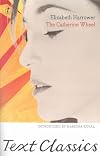
A Catherine Wheel, so named for the 4th century saint who refused to renounce her religious belief, was a form of torture used for execution used as recently as the 19th century, but it's also the name of a spectacular firework that spins high in the sky, emitting dazzling sparks and flame but fizzling out into smoke and acrid ash. It's a very apt title for Elizabeth Harrower's third novel about the toxic relationship between two needy characters, Clemency James and Chris Roland.
Published in show more 1960 after Harrower's return from eight years in London, The Catherine Wheel is written in a claustrophobic first person narrative, from Clem's perspective. She's a young woman studying Law by correspondence, and though she received a small inheritance from her father, money is tight so she's living in a London bed-sit run by Miss Evans, and she takes in students for French lessons in the evenings. She's a very private person with only two friends, Helen and her brother Lewis, and when she's not studying, she's reading books and minding her own business. She's not interested in the other 'inmates', and is mildly snooty towards Jan, a bubbly 30-year-old who works in a bank, and she's standoffish towards Mrs Parry, a widow from South Africa who rues not having any qualifications now that she has to earn a living.
The reader is alerted to Clem's character early on. Her name is ironic, there's no clemency about her at all. If she does anything for anybody else, whatever she says to justify it, it's not out of mercy or kindness, it's because it suits her to do it. We're told in Chapter One that her facial appearance had disguised her all her life as a nice quiet girl. She had learned to play a role back in Sydney: she is acutely conscious of class and is peeved that her strategy for dressing beyond her social class doesn't work in Britain.
Unintentional? I don't think so. Best not to trust this narrator...
The arrival of an out-of-work actor changes everything. Chris Roland has been hired to clean the windows, and from time to time, he and his common-law wife Olive house-sit in Miss Evans' absence. He's excessively good looking even though the couple are so poor that they each have only one outfit, and he's excessively charming too. So is he the Prince Charming who will break through her reserve, as the unlikely friendship with Helen and Lewis Grenville did? Clem doesn't have a promising track record:
All she had wanted, was to be left alone, so the friendship with Helen and Lewis had surprised her.
She fears emotional snares, yet walks right into one with Chris.
TO read the rest of my review please visit https://anzlitlovers.com/2025/11/20/the-catherine-wheel-1960-by-elizabeth-harrow... show less
Published in show more 1960 after Harrower's return from eight years in London, The Catherine Wheel is written in a claustrophobic first person narrative, from Clem's perspective. She's a young woman studying Law by correspondence, and though she received a small inheritance from her father, money is tight so she's living in a London bed-sit run by Miss Evans, and she takes in students for French lessons in the evenings. She's a very private person with only two friends, Helen and her brother Lewis, and when she's not studying, she's reading books and minding her own business. She's not interested in the other 'inmates', and is mildly snooty towards Jan, a bubbly 30-year-old who works in a bank, and she's standoffish towards Mrs Parry, a widow from South Africa who rues not having any qualifications now that she has to earn a living.
The reader is alerted to Clem's character early on. Her name is ironic, there's no clemency about her at all. If she does anything for anybody else, whatever she says to justify it, it's not out of mercy or kindness, it's because it suits her to do it. We're told in Chapter One that her facial appearance had disguised her all her life as a nice quiet girl. She had learned to play a role back in Sydney: she is acutely conscious of class and is peeved that her strategy for dressing beyond her social class doesn't work in Britain.
Even about my overcoat, I noticed, there was something unintentionally deceitful. The look of discreet simplicity advertised to knowing eyes its considerable cost. True, it was now three years since I had bought it in Sydney, but it had a boring monumental resistance to time and still contrived to seem subtly out of place in the local shops, as my other clothes did in Miss Evans's.
At home the single aim was to present a front of expensive elegance, whereas in London it was obligatory to show what one was and did: this uniform for genuine socialists, this for hereditary shoppers in Harrods, and so on... (p.4)
Unintentional? I don't think so. Best not to trust this narrator...
The arrival of an out-of-work actor changes everything. Chris Roland has been hired to clean the windows, and from time to time, he and his common-law wife Olive house-sit in Miss Evans' absence. He's excessively good looking even though the couple are so poor that they each have only one outfit, and he's excessively charming too. So is he the Prince Charming who will break through her reserve, as the unlikely friendship with Helen and Lewis Grenville did? Clem doesn't have a promising track record:
I'd known few men of principle, and none who combined integrity with intellect. I had respected almost no one, and felt the lack.
Then, all my life I had been ill of emotion. (p.26_
All she had wanted, was to be left alone, so the friendship with Helen and Lewis had surprised her.
Not to have people or things, not to be had by them. My very survival, it seemed, had hinged on the absence of feeling from my life. How pure was freedom and isolation! (p.26-7)
She fears emotional snares, yet walks right into one with Chris.
TO read the rest of my review please visit https://anzlitlovers.com/2025/11/20/the-catherine-wheel-1960-by-elizabeth-harrow... show less

“Lilian was not subtle and hid nothing of herself. It could often be placed no higher than sadism [ . . . ]Living with her was practice in bloodless warfare.”
This is an incisive, finely observed piece of psychological fiction, both a coming-of-age narrative and a credible study of a cruel and destructive woman, who revels in creating dramas that damage others. The novel follows a young child, Emily, over a period of six years from the age of seven to thirteen. She lives with her show more forty-seven-year-old grandmother, the twice-widowed Lilian, who has been left well-off but who has little to do but party, toy with men, and bet on horses. Emily’s parents are alive but separated—her mother is in Sydney; her father, in the outback. They married young and never grew up. Passive and irresponsible, both are perfectly comfortable with Lilian’s taking charge of their daughter. Neither gives a thought to the neglectful and emotionally abusive situation the child has been left in.
Lilian takes in boarders, not because she has any need for the income, but because she requires an audience for the cruel dramas she instigates. One boarder, Thea, has fairly recently left Lilian’s house in the suburbs for a flat of her own, but she occasionally visits and takes Emily on outings. Eventually, Thea leaves the city of Ballowra (based on industrial Newcastle, Australia), and Lilian takes in another boarder: Thea’s former lover, Max. Lilian recognizes the potential for cruelty that such a situation promises. By having another, younger man in the house, she can make her current live-in fancy man, Rosen, jealous, and look a bit more respectable to the neighbours at the same time. She can also invite Thea to come for a visit from Sydney and then enjoy the fireworks that ensue when the former lovers encounter each other. Lilian’s timing is off, however, and things don’t develop quite as she plans. Max is sensitive and kind, and a special relationship develops between him and Emily, whom he feels he must protect from the ruthless and uncaring Lilian and her swinging friends, who resent him for his refusal to party with them. There are repercussions for this.
The reader must be willing to suspend a certain degree of disbelief about the plot. It’s difficult to accept that any reasonable adult, never mind two, would board with Lilian for any duration of time. However, Thea’s, then Max’s concern for Emily’s welfare is certainly credible, and the dilemma of leaving a child in a destructive environment rings entirely true.
Harrower’s characters are superbly drawn. Emily is sensitively, not sentimentally, depicted, and the author’s portrait of the scheming, domineering, sarcastic, and sadistic Lilian is brilliant.
It’s many years since I read another Elizabeth’s—Elizabeth Bowen’s—The Death of the Heart. I don’t recall that earlier book well, but its title would certainly suit this Australian novel: a study of the effect of a destructive personality on everyone she comes into contact with, including an impressionable child. show less
This is an incisive, finely observed piece of psychological fiction, both a coming-of-age narrative and a credible study of a cruel and destructive woman, who revels in creating dramas that damage others. The novel follows a young child, Emily, over a period of six years from the age of seven to thirteen. She lives with her show more forty-seven-year-old grandmother, the twice-widowed Lilian, who has been left well-off but who has little to do but party, toy with men, and bet on horses. Emily’s parents are alive but separated—her mother is in Sydney; her father, in the outback. They married young and never grew up. Passive and irresponsible, both are perfectly comfortable with Lilian’s taking charge of their daughter. Neither gives a thought to the neglectful and emotionally abusive situation the child has been left in.
Lilian takes in boarders, not because she has any need for the income, but because she requires an audience for the cruel dramas she instigates. One boarder, Thea, has fairly recently left Lilian’s house in the suburbs for a flat of her own, but she occasionally visits and takes Emily on outings. Eventually, Thea leaves the city of Ballowra (based on industrial Newcastle, Australia), and Lilian takes in another boarder: Thea’s former lover, Max. Lilian recognizes the potential for cruelty that such a situation promises. By having another, younger man in the house, she can make her current live-in fancy man, Rosen, jealous, and look a bit more respectable to the neighbours at the same time. She can also invite Thea to come for a visit from Sydney and then enjoy the fireworks that ensue when the former lovers encounter each other. Lilian’s timing is off, however, and things don’t develop quite as she plans. Max is sensitive and kind, and a special relationship develops between him and Emily, whom he feels he must protect from the ruthless and uncaring Lilian and her swinging friends, who resent him for his refusal to party with them. There are repercussions for this.
The reader must be willing to suspend a certain degree of disbelief about the plot. It’s difficult to accept that any reasonable adult, never mind two, would board with Lilian for any duration of time. However, Thea’s, then Max’s concern for Emily’s welfare is certainly credible, and the dilemma of leaving a child in a destructive environment rings entirely true.
Harrower’s characters are superbly drawn. Emily is sensitively, not sentimentally, depicted, and the author’s portrait of the scheming, domineering, sarcastic, and sadistic Lilian is brilliant.
It’s many years since I read another Elizabeth’s—Elizabeth Bowen’s—The Death of the Heart. I don’t recall that earlier book well, but its title would certainly suit this Australian novel: a study of the effect of a destructive personality on everyone she comes into contact with, including an impressionable child. show less
Lists
Schwob Nederland (1)
Netgalley Reads (1)
Awards


You May Also Like


Associated Authors
Statistics
- Works
- 6
- Also by
- 3
- Members
- 554
- Popularity
- #45,049
- Rating
- 3.8
- Reviews
- 32
- ISBNs
- 57
- Languages
- 6
- Favorited
- 1