
Louis Pergaud (1882–1915)
Author of The War of the Buttons
About the Author
Image credit: Louis Pergaud
Series
Works by Louis Pergaud
La guerre des boutons: suivi de Les petits gars des champs et de: La vie de Louis Pergaud: Louis Pergaud écrivain: roman de ma douzième année (2011) — Author — 4 copies
Oeuvres de Louis Pergaud : 1. De Goupil à Margot 2. La Revanche du corbeau 3. Le Miracle de Saint-Hubert (1948) 2 copies
Associated Works
Tagged
Common Knowledge
- Canonical name
- Pergaud, Louis
- Legal name
- Pergaud, Louis
- Birthdate
- 1882-01-22
- Date of death
- 1915-08-03
- Gender
- male
- Education
- Ecole Normale (1898|1901)
- Occupations
- teacher
- Organizations
- Armée française (WW1, Sergent puis Sous-lieutenant ,19 14 | 19 15)
Ecole communale de Maisons-Alfort (Instituteur)
Ecole communale d'Arcueil (Instituteur)
Ecole de Landresse, Doubs (Instituteur, 19 05 | 19 07)
Ecole de Durnes, Doubs (Instituteur, 19 01 | 19 05) - Awards and honors
- Mort pour la France (1921)
- Cause of death
- Mort au combat (WW1)
- Nationality
- France
- Birthplace
- Belmont, Doubs, France
- Places of residence
- Montesson, Yvelines, Île-de-France, France (1907)
- Place of death
- Marchéville, Meuse, France (KIA during WW1)
- Burial location
- Pas de sépulture (Corps non retrouvé)
- Map Location
- France
- Associated Place (for map)
- France
Members
Reviews
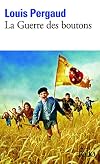
A French classic of children's literature that can also has much to offer to adult readers, The War of the Buttons chronicles the war-like conflict between the boys of two rival villages, in rural France at the beginning of the 20th century. It's a war fought with sticks and stones, and when a boy is unfortunate enough to be captured by the enemy, among other indignities all the buttons from his clothes are removed and stolen which, in poor communities such as those, will ensure that he show more receives further punishment at home.
It's one of those stories told exclusively from the point of view of the children, alien to the adult way of thinking but, at the same time, not so different from adults as they may at first seem. It's a homage to the freedom and imagination of childhood, but also a reminder that children are not innocent angels themselves. In some ways it reminded me of Lord of the Flies, in its depictions of the cruelty of children, and to the William Brown series by Richmal Crompton and the Little Nicholas series by René Goscinny and Jean-Jacques Sempé, in its use of the children's point of view and rejection and criticism of adult society.
It also has some very funny moments, like the fight between the adults of the two towns when both of them organized religious parades, one town asking for more rain and the other asking for less rain.
Highly recommended. show less
It's one of those stories told exclusively from the point of view of the children, alien to the adult way of thinking but, at the same time, not so different from adults as they may at first seem. It's a homage to the freedom and imagination of childhood, but also a reminder that children are not innocent angels themselves. In some ways it reminded me of Lord of the Flies, in its depictions of the cruelty of children, and to the William Brown series by Richmal Crompton and the Little Nicholas series by René Goscinny and Jean-Jacques Sempé, in its use of the children's point of view and rejection and criticism of adult society.
It also has some very funny moments, like the fight between the adults of the two towns when both of them organized religious parades, one town asking for more rain and the other asking for less rain.
Highly recommended. show less
La Guerre des boutons (Edition Intégrale - Version Entièrement Illustrée) (French Edition) by Louis Pergaud
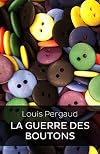
em>La Guerre des boutons (The War of the Buttons) is the story of two rival gangs of children, from villages separated by a river. The victors tear the buttons from the losers' clothing so that they get into trouble with their mothers. This classic French story was first made into a film in 1937, then again in 1962, in 1994, and (inexplicably) twice in 2011, one directed by Christophe Barratier, and the other, the version I saw, was directed by Yann Samuell.
The original novel was first show more published in France in 1912. Pergaud warns in the preface, that despite its title, it's not a story for children, because it's an assertion that such savagery could be heroic.
Louis Pergaud was born in 1882 and died in August 1915 aged only 33. Following in his father's footsteps, he had become a schoolteacher by profession, and was appointed to the village of Durnes (Doubs), in 1901. In 1903 after the death of both his parents in 1900, he married Marthe Caffot, who was also a teacher at a neighbouring village.
Pergaud had published his first poems in 1904. The following year he was transferred from his school because of religious issues when the Third French Republic enacted separation of Church and State, and this was the catalyst for him to move to Paris in 1907 where he worked first as a clerk, and then as a schoolmaster while also pursuing his passion for writing.
He was serving as a second lieutenant in the infantry on the Western Front when he became trapped in barbed wire behind German lines and was killed by French fire. Some of his work was published posthumously.
La Guerre des boutons begins in the melancholy of autumn, the children returning to school after working on the harvest in the fields. Father Simon at the door of the school is surprised at the punctual entrance of two boys who are usually late: he is not to know that there is an urgent meeting to deal with an insult from the boys of the neighbouring school. Lebrac quickly establishes himself as the leader who will restore their dignity!
As in Enid Blyton's stories decades later, the local policeman is a figure of fun and easily outwitted. However, it is harder to deal with the suspicions of their parents and teacher.
There is an innocence about this tale that charmed me. While the conflict between the gangs is really about nothing other than some insulting words, they fight with rotten apples, marbles, pieces of vine and branches, and the threat of a mother's rage at the state of their clothes. They have no access to any serious weaponry and the cruelty of social media is a long way off. But there is still jealousy and treachery culminating in Bacaillé's act of betrayal. (The brutality of their vengeance isn't a feature of the film, BTW, and there's no mushy boy-girl romance with La Crique and Lebrac either).
To read the rest of my review please visit https://anzlitlovers.com/2020/12/30/la-guerre-des-boutons-by-louis-pergaud/ show less
The original novel was first show more published in France in 1912. Pergaud warns in the preface, that despite its title, it's not a story for children, because it's an assertion that such savagery could be heroic.
Louis Pergaud was born in 1882 and died in August 1915 aged only 33. Following in his father's footsteps, he had become a schoolteacher by profession, and was appointed to the village of Durnes (Doubs), in 1901. In 1903 after the death of both his parents in 1900, he married Marthe Caffot, who was also a teacher at a neighbouring village.
Pergaud had published his first poems in 1904. The following year he was transferred from his school because of religious issues when the Third French Republic enacted separation of Church and State, and this was the catalyst for him to move to Paris in 1907 where he worked first as a clerk, and then as a schoolmaster while also pursuing his passion for writing.
He was serving as a second lieutenant in the infantry on the Western Front when he became trapped in barbed wire behind German lines and was killed by French fire. Some of his work was published posthumously.
La Guerre des boutons begins in the melancholy of autumn, the children returning to school after working on the harvest in the fields. Father Simon at the door of the school is surprised at the punctual entrance of two boys who are usually late: he is not to know that there is an urgent meeting to deal with an insult from the boys of the neighbouring school. Lebrac quickly establishes himself as the leader who will restore their dignity!
As in Enid Blyton's stories decades later, the local policeman is a figure of fun and easily outwitted. However, it is harder to deal with the suspicions of their parents and teacher.
There is an innocence about this tale that charmed me. While the conflict between the gangs is really about nothing other than some insulting words, they fight with rotten apples, marbles, pieces of vine and branches, and the threat of a mother's rage at the state of their clothes. They have no access to any serious weaponry and the cruelty of social media is a long way off. But there is still jealousy and treachery culminating in Bacaillé's act of betrayal. (The brutality of their vengeance isn't a feature of the film, BTW, and there's no mushy boy-girl romance with La Crique and Lebrac either).
To read the rest of my review please visit https://anzlitlovers.com/2020/12/30/la-guerre-des-boutons-by-louis-pergaud/ show less

Adolescents, playing in woods and meadows, realise the usenessless of war

Skvělá kniha, o níž si v rozporu ze všeobecným míněním (alespoň zdejším) troufám tvrdit, že se ji ve třiceti nebo čtyřiceti člověk užije ještě o poznání víc než ve dvanácti. On to totiž rozhodně není jen popis bojů dvou klukovských part, ale dá se to velmi úspěšně číst i jako pacifistický román (sice není vůbec jasné, proč se válčí, ale vální se nemilosrdně a krutě, nepřátelé jsou nejen cizí, ale i "zlí, podlí a proradní", show more vítězové svým vítězství reálně nic nezískávají, agresí se pouze stupňuje agrese protivníka), jako sociální sonda do tehdejší francouzské vesnice (i v lépe situovaných rodinách dosti citelná bída) i jako sžíravá kritika tehdejších výchovných metod (nesmyslně trestající učitel, naprosto nechápaví rodiče, kteří si vůbec nejsou vědomi toho, co děti celé dny dělají a prožívají). Pokud jde o film, kniha je opět rozhodně o poznání lepší. Mnohé tam chybí nebo je potlačena o překvapivě jiný je i závěr filmu. Celkový dojem: 90% show less
Lists
Awards


You May Also Like


Associated Authors
Statistics
- Works
- 37
- Also by
- 3
- Members
- 709
- Popularity
- #35,751
- Rating
- 3.8
- Reviews
- 10
- ISBNs
- 134
- Languages
- 12
- Favorited
- 1


