
Bernard Heldmann (1857–1915)
Author of The Beetle
About the Author
Disambiguation Notice:
Richard Bernard Heldman (1857 - 1915) published works using the names 'Bernard Heldmann' and 'Richard Marsh'.
Works by Bernard Heldmann
Under One Cover. Eleven Stories by S. Baring-Gould, Richard Marsh, Ernest G. Henham, Fergus Hume, Andrew Merry, and a. St. John Adcock, Etc. (2011) 5 copies
Collected Works of Richard Marsh 3 copies
The adventures of Judith Lee 2 copies
An aristocratic detective 2 copies
Who killed Lady Poynder? 1 copy
A master of deception 1 copy
Associated Works
The Penguin Book of Victorian Women in Crime: Forgotten Cops and Private Eyes from the Time of Sherlock Holmes (2011) — Contributor — 217 copies, 3 reviews
The Mammoth Book of Victorian and Edwardian Ghost Stories (1995) — Contributor — 174 copies, 4 reviews
The Rivals of Sherlock Holmes: A Collection of Victorian Detective Tales (2008) — Contributor — 140 copies, 1 review
The Female Hypnotist: Stories from the Victorian and Edwardian Eras (2025) — Contributor — 25 copies, 14 reviews
The Rivals of Dracula: Stories from the Golden Age of Gothic Horror (2016) — Contributor — 25 copies, 2 reviews
Ugoszczone Duchy 1 copy
Tagged
Common Knowledge
- Legal name
- Heldman, Richard Bernard
- Other names
- Marsh, Richard
- Birthdate
- 1857-10-12
- Date of death
- 1915-08-09
- Gender
- male
- Relationships
- Aickman, Robert (grandson)
- Nationality
- UK
- Place of death
- Haywards Heath, Sussex, England, UK
- Disambiguation notice
- Richard Bernard Heldman (1857 - 1915) published works using the names 'Bernard Heldmann' and 'Richard Marsh'.
- Associated Place (for map)
- England, UK
Members
Reviews
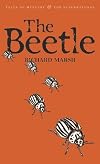
It is easy to see how Richard Marsh’s The Beetle: A Mystery was so wildly popular upon its publication in 1897, as it was quite different, in its horror and supernatural elements, than anything that had come before. Also, the public fascination with mesmerism (and its characteristic theories of mind control and animal magnetism), which is central to the action, was in full bloom at that time. This bizarre story of a repulsive man (or perhaps a woman?)/creature who can suddenly change show more into a giant beetle, control minds, and reduce his victims to zombie-like slaves, is told in four parts, each with a series of events from a different character’s point of view. While Marsh can get a little wordy in his narrative and a bit repetitive with dialogue, The Beetle still manages to move at a fairly brisk pace, though the story’s central love triangle inevitably slows things down occasionally. That said, the climax is perhaps a bit too melodramatic, a la “ The Perils of Pauline”, and Marsh doesn’t offer much of an explanation of the creature’s origin or motives, but overall it’s an entertaining book, and remains a classic of early weird fiction. show less
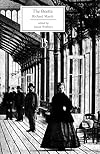
Strange little horror that starts out truly creepy but unfortunately devolves into a Victorian chase-about with the evil "Harab" racing about London and southern Britain with an enormous bundle on his head and two hypnotized victims in tow (I'm not exaggerating). Full of the wonderful gender and racial stereotypes that make this sort of fiction so much fun.
The beginning is so bizarre you feel like this has to be great. In fact the entire Holt narrative is exquisitely weird. It is pretty show more obvious that Marsh didn't know where to go at this point so he introduced the narratives of Atherton, Lindon, and Chennell as different perspectives that each take us each a little further towards the truth. The entire thing becomes overlong and what should have been a short story or novella gets led astray with unnecessary weird military science and hazy British politics that have nothing to do with the plot.
The entire menace remains hazy enough that it stays pretty weird but we are all along sure the good guys are going to sort this out and everything is going to be okay except for the clearly expendable Holt. Unfortunately Holt is the most interesting character and the one I cared most about but he pretty much disappears after the first quarter of the novel until he gets thrown back in to tie the various strands together.
Marsh does have some interwoven plot devices that tie together nicely between the narratives but eventually it becomes clear that he doesn't know how to end the thing so we get a lot of colorful cockney characters wasting time. Finally we get the convenient train collision that takes care of all the problems. And they all live happily ever after, except for the dead Holt.
BTW, I think Richard Marsh, a pseudonym I believe, was Robert Aickman's maternal grandfather. show less
The beginning is so bizarre you feel like this has to be great. In fact the entire Holt narrative is exquisitely weird. It is pretty show more obvious that Marsh didn't know where to go at this point so he introduced the narratives of Atherton, Lindon, and Chennell as different perspectives that each take us each a little further towards the truth. The entire thing becomes overlong and what should have been a short story or novella gets led astray with unnecessary weird military science and hazy British politics that have nothing to do with the plot.
The entire menace remains hazy enough that it stays pretty weird but we are all along sure the good guys are going to sort this out and everything is going to be okay except for the clearly expendable Holt. Unfortunately Holt is the most interesting character and the one I cared most about but he pretty much disappears after the first quarter of the novel until he gets thrown back in to tie the various strands together.
Marsh does have some interwoven plot devices that tie together nicely between the narratives but eventually it becomes clear that he doesn't know how to end the thing so we get a lot of colorful cockney characters wasting time. Finally we get the convenient train collision that takes care of all the problems. And they all live happily ever after, except for the dead Holt.
BTW, I think Richard Marsh, a pseudonym I believe, was Robert Aickman's maternal grandfather. show less
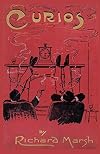
Well-written, sharp and witty. The author's sentences are perfectly stretched for comic effect, with just the right amount of repetition and contrast. Written straight, most of these stories would probably fall flat. Truly, he's is at his best when he is comical (and at his worst when he is seriously brooding about the Other in terms of a patronizing anti-Semitism, which fortunately only happens in one story).
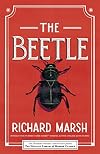
As he came on, something entered into me, and forced itself from between my lips, so that I said, in a low, hissing voice, which I vow was never mine, “THE BEETLE!”
***
Paul Lessingham! Beware! THE BEETLE!
Poisoned Pen Press is an American publisher of (primarily) crime and detection novels, including the US editions of the highly successful British Library Crime Classics series which is resurrecting many forgotten classics of the Golden Age of crime fiction. Poisoned Pen has recently show more embarked on a new project which promises to be just as exciting Together with the Horror Writers Association, it is launching The Haunted Library of Horror Classics, a collection of classic horror novels presented in new editions, with commentaries and notes to introduce the contemporary reader to the historical and cultural context of the featured works.
One of the first publications in the series is The Beetle by Richard Bernard Heldmann, better known by his pen-name Richard Marsh. The novel was originally issued as “The Beetle: A Mystery” in 1897. This was the same year which saw the publication of Bram Stoker’s Dracula and it may come as a surprise that The Beetle initially outsold Stoker’s cult vampire novel, going into no less than 15 editions before the Great War. Like Dracula, Marsh imagines a supernatural entity unleashed in Victorian London, except that the monster here is no vampire, but an entity rather more difficult to pin down: a “Nameless Thing” which, although vaguely bearing the features of a hideous man, scarcely seems to be human and, if it is, is of indeterminate sex. This Being, which calls itself one of the “Children of Isis”, and I therefore, presumably, of Egyptian origin, appears to have mesmeric powers and the magical ability to turn into a beetle – or rather THE BEETLE. Indeed, the characters who come across this infernal monster tend to lose their composure as soon as they hear the said two words, which Marsh generally expresses in GARISH CAPITAL LETTERS whenever they appear in the text. Although it is not clear how THE eponymous BEETLE ended up in Kensington, it seems that the main purposes of its City sojourn is to haunt one Paul Lessingham, an upcoming politician who, in younger days, made the fatal mistake of visiting a dubious Egyptian establishment, ending up a prisoner of an ancient esoteric cult. Lessingham’s past has caught up with him with a vengeance and threatens to put his and his fiancée’s life in mortal danger.
As is common in many Gothic and sensation novels of the era, each one of The Beetle’s four “books” features a different first-person narrator. In “The House with the Open Window”, unemployed clerk Robert Holt seeks shelter in a seemingly abandoned house, only to fall under the mesmeric powers of the Egyptian fiend. In “The Haunted Man”, the story is taken up by eccentric, hyperactive inventor Sydney Atherton, an acquaintance of Lessingham and his rival in love. The object of their attention is Miss Marjorie Lindon, who seems to be the most wanted young woman in London and is also being pursued by the monster him/her/itself. Marjorie is also the narrator of the third Book: “The Terror by Night and the Terror by Day”. The novel ends with notes “extracted from the Case-Book of the Hon. Augustus Champnell, Confidential Agent”, a Sherlock-Holmes-like figure who tries to bring his detective skills to bear on the lurid mystery of THE BEETLE and leads a feverish hunt all over London for the elusive Egyptian insectoid.
This edition opens with a rather convoluted warning that THE BEETLE and novels of its ilk might “exemplify ideas that are no longer current, attitudes and behaviours that are no longer tolerated, standards that are no longer judged valid”. You don’t say so! Like most examples of “Egyptian Gothic”, Marsh’s novel relies for its effect on racist and xenophobic fears, much as first and second-wave Gothic was often decidedly prejudiced against Southern Europeans and Roman Catholics. Knowing the cultural context helps one to turn a blind eye on ideas which are past their sell-by date. Even so, the constant references to “that Arab” and “diabolical Asiatic” and the idea that the civilised Western world is under threat from a creature hailing from the “dirty streets and evil smells” of Egypt starts to become jarring. And, frankly, the very thought that an ancient cult favours as choice cuts for human sacrifice, not just “white women” but, more specifically, fine examples of English maidenhood, is frankly ludicrous.
Marsh’s attitudes to women and the working classes are not much better. In that respect, however, the narrative has several redeeming features, not least the strong character of Marjorie Lindon (so much more than just a demure “damsel in distress) and the fact that he lampoons all sectors of society (the farcical figure of Marjorie’s politician father is a case in point).
This brings me to another aspect of Marsh’s novel which might be puzzling to a modern reader. Horrific though it is, THE BEETLE has an underlying comedic streak, which is particularly evident in Atherton’s narrative segment. This ambivalence might not be to everyone’s taste and, to be honest, I found that the changes in tone dampened the more horrific aspects of the novel and sometimes hovered towards self-parody. To a generation used to explicit horror or, on the other hand, to subtly unsettling psychological thrills, THE BEETLE might seem like a madcap roller-coaster ride.
There’s no doubt however that at its best, as in Holt’s encounter with the fiend, or the final, thrilling chapters, THE BEETLE still packs a punch and is a worthy addition to The Horror Library. This edition features an introduction by Chelsea Quinn Yarbro, together with biographical details about Richard Marsh (including the fact that he is the grandfather of Robert Aickman, celebrated author of ‘weird fiction’), questions for discussion and suggestions for further “horrific reading”. show less
***
Paul Lessingham! Beware! THE BEETLE!
Poisoned Pen Press is an American publisher of (primarily) crime and detection novels, including the US editions of the highly successful British Library Crime Classics series which is resurrecting many forgotten classics of the Golden Age of crime fiction. Poisoned Pen has recently show more embarked on a new project which promises to be just as exciting Together with the Horror Writers Association, it is launching The Haunted Library of Horror Classics, a collection of classic horror novels presented in new editions, with commentaries and notes to introduce the contemporary reader to the historical and cultural context of the featured works.
One of the first publications in the series is The Beetle by Richard Bernard Heldmann, better known by his pen-name Richard Marsh. The novel was originally issued as “The Beetle: A Mystery” in 1897. This was the same year which saw the publication of Bram Stoker’s Dracula and it may come as a surprise that The Beetle initially outsold Stoker’s cult vampire novel, going into no less than 15 editions before the Great War. Like Dracula, Marsh imagines a supernatural entity unleashed in Victorian London, except that the monster here is no vampire, but an entity rather more difficult to pin down: a “Nameless Thing” which, although vaguely bearing the features of a hideous man, scarcely seems to be human and, if it is, is of indeterminate sex. This Being, which calls itself one of the “Children of Isis”, and I therefore, presumably, of Egyptian origin, appears to have mesmeric powers and the magical ability to turn into a beetle – or rather THE BEETLE. Indeed, the characters who come across this infernal monster tend to lose their composure as soon as they hear the said two words, which Marsh generally expresses in GARISH CAPITAL LETTERS whenever they appear in the text. Although it is not clear how THE eponymous BEETLE ended up in Kensington, it seems that the main purposes of its City sojourn is to haunt one Paul Lessingham, an upcoming politician who, in younger days, made the fatal mistake of visiting a dubious Egyptian establishment, ending up a prisoner of an ancient esoteric cult. Lessingham’s past has caught up with him with a vengeance and threatens to put his and his fiancée’s life in mortal danger.
As is common in many Gothic and sensation novels of the era, each one of The Beetle’s four “books” features a different first-person narrator. In “The House with the Open Window”, unemployed clerk Robert Holt seeks shelter in a seemingly abandoned house, only to fall under the mesmeric powers of the Egyptian fiend. In “The Haunted Man”, the story is taken up by eccentric, hyperactive inventor Sydney Atherton, an acquaintance of Lessingham and his rival in love. The object of their attention is Miss Marjorie Lindon, who seems to be the most wanted young woman in London and is also being pursued by the monster him/her/itself. Marjorie is also the narrator of the third Book: “The Terror by Night and the Terror by Day”. The novel ends with notes “extracted from the Case-Book of the Hon. Augustus Champnell, Confidential Agent”, a Sherlock-Holmes-like figure who tries to bring his detective skills to bear on the lurid mystery of THE BEETLE and leads a feverish hunt all over London for the elusive Egyptian insectoid.
This edition opens with a rather convoluted warning that THE BEETLE and novels of its ilk might “exemplify ideas that are no longer current, attitudes and behaviours that are no longer tolerated, standards that are no longer judged valid”. You don’t say so! Like most examples of “Egyptian Gothic”, Marsh’s novel relies for its effect on racist and xenophobic fears, much as first and second-wave Gothic was often decidedly prejudiced against Southern Europeans and Roman Catholics. Knowing the cultural context helps one to turn a blind eye on ideas which are past their sell-by date. Even so, the constant references to “that Arab” and “diabolical Asiatic” and the idea that the civilised Western world is under threat from a creature hailing from the “dirty streets and evil smells” of Egypt starts to become jarring. And, frankly, the very thought that an ancient cult favours as choice cuts for human sacrifice, not just “white women” but, more specifically, fine examples of English maidenhood, is frankly ludicrous.
Marsh’s attitudes to women and the working classes are not much better. In that respect, however, the narrative has several redeeming features, not least the strong character of Marjorie Lindon (so much more than just a demure “damsel in distress) and the fact that he lampoons all sectors of society (the farcical figure of Marjorie’s politician father is a case in point).
This brings me to another aspect of Marsh’s novel which might be puzzling to a modern reader. Horrific though it is, THE BEETLE has an underlying comedic streak, which is particularly evident in Atherton’s narrative segment. This ambivalence might not be to everyone’s taste and, to be honest, I found that the changes in tone dampened the more horrific aspects of the novel and sometimes hovered towards self-parody. To a generation used to explicit horror or, on the other hand, to subtly unsettling psychological thrills, THE BEETLE might seem like a madcap roller-coaster ride.
There’s no doubt however that at its best, as in Holt’s encounter with the fiend, or the final, thrilling chapters, THE BEETLE still packs a punch and is a worthy addition to The Horror Library. This edition features an introduction by Chelsea Quinn Yarbro, together with biographical details about Richard Marsh (including the fact that he is the grandfather of Robert Aickman, celebrated author of ‘weird fiction’), questions for discussion and suggestions for further “horrific reading”. show less
Lists
Awards

You May Also Like


Associated Authors
Statistics
- Works
- 65
- Also by
- 30
- Members
- 1,007
- Popularity
- #25,603
- Rating
- 3.6
- Reviews
- 39
- ISBNs
- 225
- Languages
- 8