
Robert Aickman (1914–1981)
Author of Cold Hand in Mine: Strange Stories
About the Author
Disambiguation Notice:
(swe) Robert Aickman the horror writer and Robert Aickman the waterway conservationist are the same person.
Series
Works by Robert Aickman
Pages from a Young Girl's Journal 7 copies
The collected short fiction 4 copies
The Hospice 4 copies
Ringing the Changes 3 copies
Dunkle Pforten — Author — 2 copies
Mark Ingestre: The Customer's Tale 2 copies
W Głębi Lasu 1 copy
Larger Than Oneself 1 copy
Letters to the Postman 1 copy
Growing Boys 1 copy
Kräfte der Finsternis 1 copy
Bind Your Hair 1 copy
Marriage 1 copy
Repique Macabro 1 copy
Never visit Venice 1 copy
The Fetch 1 copy
Associated Works
Sunless Solstice: Strange Christmas Tales for the Longest Nights (2021) — Contributor — 95 copies, 3 reviews
Celtic Weird: Tales of Wicked Folklore and Dark Mythology (British Library Hardback Classics) (2022) — Contributor — 84 copies
The Best Fantasy Stories from the Magazine of Fantasy & Science Fiction (1985) — Contributor — 77 copies, 2 reviews
Chamber of Horrors: Great Tales of Terror and the Supernatural (1984) — Contributor — 71 copies, 1 review
To Sleep, Perchance to Dream...Nightmare: 30 Terrifying Tales (1993) — Contributor — 54 copies, 1 review
The Moons at Your Door: An Anthology of Hallucinatory Tales (Strange Attractor Press) (2016) — Contributor — 53 copies, 1 review
The Best Horror Stories from The Magazine of Fantasy & Science Fiction (1988) — Contributor — 52 copies, 1 review
Spores of Doom: Dank Tales of the Fungal Weird: 59 (British Library Tales of the Weird) (2025) — Contributor — 38 copies, 2 reviews
Deadly Dolls: Midnight Tales of Uncanny Playthings: 50 (British Library Tales of the Weird) (2024) — Contributor — 33 copies, 1 review
All the Fear of the Fair: Uncanny Tales of Circus and Sideshow (2025) — Contributor — 22 copies, 1 review
The Best Horror Stories from the Magazine of Fantasy & Science Fiction, Vol. II (1990) — Contributor — 20 copies
The Magazine of Fantasy and Science Fiction June 1974, Vol. 46, No. 6 (1974) — Contributor — 17 copies
The Magazine of Fantasy and Science Fiction December 1974, Vol. 47, No. 6 (1974) — Contributor — 17 copies
Tagged
Common Knowledge
- Legal name
- Aickman, Robert Fordyce
- Birthdate
- 1914-06-27
- Date of death
- 1981-02-26
- Gender
- male
- Occupations
- conservationist
writer - Organizations
- Inland Waterways Association (co-founder)
- Relationships
- Marsh, Richard (grandfather)
Howard, Elizabeth Jane (lover) - Nationality
- UK
- Birthplace
- London, Middlesex, England, UK
- Places of residence
- London, Middlesex, England, UK
- Place of death
- London, Middlesex, England, UK
- Map Location
- England, UK
- Disambiguation notice
- Robert Aickman the horror writer and Robert Aickman the waterway conservationist are the same person.
Members
Discussions
THE DEEP ONES: "The Hospice" by Robert Aickman in The Weird Tradition (February 2022)
Reviews
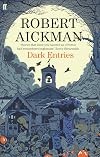
My second collection of Aickman's "strange tales" (I've also enjoyed his novel The Model) and I'm now convinced of his genius for the uncanny. I love the way his precise, controlled sentences work to open up dense, foetid regions of the psyche. He's like a dapper surgeon ministering to our ugliest internal maladies. I loved all six of these, but the standout was The View, in which a mid-life civil servant and amateur painter boards a ferry in Liverpool (as I used to, and bound presumably for show more the Isle of Man) and finds himself on a version of Circe's island, time liquefying and the days accumulating blurrily like impasto — and all the fuckedupnesses of life, work, love, creation, and the basic question of what gives our days meaning somehow leach out of the gauzy, indeterminate atmosphere. But there are true ghost stories here, too: I think Aickman is the worthiest inheritor of M.R. James in his understanding that ghost stories are stories of place, of the semantic range of the word "haunt". Immaculately spooky and suggestive. show less
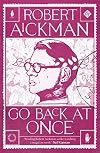
Real Rating: 3.75* of five
I RECEIVED A DRC FROM THE PUBLISHER VIA EDELWEISS+. THANK YOU.
My Review: I'm quite sure a lot of people will not like this book very much.
Sad, but inevitable; Aickman's work, when outside the unsettling norm of it, is quite an ask. You're going to meet Types, not characters, ones whose existence is actual, but susceptible to change in the century since the story...here based on the Free State of Fiume...is set. There are the expected players, if you've been reading show more British literature a long time, or are enamored of E.F. Benson or Ronald Firbank. There are the stock situations, eg the defended virtue of one of the leads. There is a tone of facetious, in fact malicious, judgment of those who express any notion of Idealism or Utopian thought.
Am I putting you off? I don't mean to; I want, though, there to be no misunderstanding about the book you're going to read: This is not ghost-story unease-inducing Aickman; this is sharply observant, unsparingly opinionated Aickman. It's not like we don't see this Aickman in his other works (or in his life, just read about how viciously he treated his co-founder of the Inland Waterways Association!); but this novel, centered on Cressida and Vivien as they leave school and move in with Vivienne's Aunt Agnes the free-spirited divorcée, shoves the mean-girl pedal to the floor.
The bitchiness of Aickman's observations is *epic* and unsparing and unerring. His trademark ambiguity is largely absent, in that he's unambiguously making the most savage sport of the people on these pages. It does become rather one-note as time passes in their company. If that note is to one's taste, that's all right. If it isn't, stop reading immediately because it won't change.
I was deeply enmeshed in this story despite its waspish tone. I am, perhaps, a touch on the waspish side, so I empathized with Aickman's desire to bat away the cigarette smoke of Fame and Adulation that surround those whose life-choices make no sense seen face-on. The Great Revolutionaries whose Ideas are Noble, but whose grasp of governance and finance is wanting, are a dime a dozen. D'Annunzio, whose life makes excellent reading, clearly fell into that category. (Though I think the judgment of modern people that he's a stalking goat for fascism is a great deal too harsh.) His treatment here, at the very end of the story, was hilarious if savage. No less savage was Aickman's invented future for Vivien and Cressida, whose identities I am not familiar enough with the literati of the period to tease out...though I hoped for Ivy Compton-Burnett and that Jourdain woman, they're entirely too old...a descent into what was a marriage in all but name, without a single sexual suggestion being made by the author.
Given his own repressed gayness, that can't come as a surprise. Merely being married to a woman (called "Ray" for heavens' sake!) for seventeen years didn't prevent him from being (discreetly!) known to have had liaisons with like-minded men. It was the way of that world, that time. It shows up in this story with lots of queer-coding, the way "foreign" people simply appear naked or are...touchy-feely, shall we say. Given that he died in 1981, one would've thought he'd've made a bit better peace with his gayness; this, however, did not occur. I suspect that he'd be a closet case even had he been born in 1964 not 1914. Some people just are.
One of the great pleasures of this kind of story is its structure. It reminded me a great deal of Candide, shorter journeys but just as much to-in and fro-ing where we are. There's also a lot of wetness, dunkings in the sea, raining, all the cold, clammy feels that brings up; lots of clothes-being-changed, shared, in general a sense of the instability of each character's presentation of self that Voltaire gloried in. Also Candidely is the sexual innocence of the young leads, their almost preternatural resistance to (and embattled saving of in one case) losing their innocent insensitivity to the Charybdis-level undercurrents flowing around them.
It won't be for everyone, but those it's for will batten upon its high-calorie low-nutrition richness. show less
I RECEIVED A DRC FROM THE PUBLISHER VIA EDELWEISS+. THANK YOU.
My Review: I'm quite sure a lot of people will not like this book very much.
Sad, but inevitable; Aickman's work, when outside the unsettling norm of it, is quite an ask. You're going to meet Types, not characters, ones whose existence is actual, but susceptible to change in the century since the story...here based on the Free State of Fiume...is set. There are the expected players, if you've been reading show more British literature a long time, or are enamored of E.F. Benson or Ronald Firbank. There are the stock situations, eg the defended virtue of one of the leads. There is a tone of facetious, in fact malicious, judgment of those who express any notion of Idealism or Utopian thought.
Am I putting you off? I don't mean to; I want, though, there to be no misunderstanding about the book you're going to read: This is not ghost-story unease-inducing Aickman; this is sharply observant, unsparingly opinionated Aickman. It's not like we don't see this Aickman in his other works (or in his life, just read about how viciously he treated his co-founder of the Inland Waterways Association!); but this novel, centered on Cressida and Vivien as they leave school and move in with Vivienne's Aunt Agnes the free-spirited divorcée, shoves the mean-girl pedal to the floor.
The bitchiness of Aickman's observations is *epic* and unsparing and unerring. His trademark ambiguity is largely absent, in that he's unambiguously making the most savage sport of the people on these pages. It does become rather one-note as time passes in their company. If that note is to one's taste, that's all right. If it isn't, stop reading immediately because it won't change.
I was deeply enmeshed in this story despite its waspish tone. I am, perhaps, a touch on the waspish side, so I empathized with Aickman's desire to bat away the cigarette smoke of Fame and Adulation that surround those whose life-choices make no sense seen face-on. The Great Revolutionaries whose Ideas are Noble, but whose grasp of governance and finance is wanting, are a dime a dozen. D'Annunzio, whose life makes excellent reading, clearly fell into that category. (Though I think the judgment of modern people that he's a stalking goat for fascism is a great deal too harsh.) His treatment here, at the very end of the story, was hilarious if savage. No less savage was Aickman's invented future for Vivien and Cressida, whose identities I am not familiar enough with the literati of the period to tease out...though I hoped for Ivy Compton-Burnett and that Jourdain woman, they're entirely too old...a descent into what was a marriage in all but name, without a single sexual suggestion being made by the author.
Given his own repressed gayness, that can't come as a surprise. Merely being married to a woman (called "Ray" for heavens' sake!) for seventeen years didn't prevent him from being (discreetly!) known to have had liaisons with like-minded men. It was the way of that world, that time. It shows up in this story with lots of queer-coding, the way "foreign" people simply appear naked or are...touchy-feely, shall we say. Given that he died in 1981, one would've thought he'd've made a bit better peace with his gayness; this, however, did not occur. I suspect that he'd be a closet case even had he been born in 1964 not 1914. Some people just are.
One of the great pleasures of this kind of story is its structure. It reminded me a great deal of Candide, shorter journeys but just as much to-in and fro-ing where we are. There's also a lot of wetness, dunkings in the sea, raining, all the cold, clammy feels that brings up; lots of clothes-being-changed, shared, in general a sense of the instability of each character's presentation of self that Voltaire gloried in. Also Candidely is the sexual innocence of the young leads, their almost preternatural resistance to (and embattled saving of in one case) losing their innocent insensitivity to the Charybdis-level undercurrents flowing around them.
It won't be for everyone, but those it's for will batten upon its high-calorie low-nutrition richness. show less
*Partial spoilers ahead*
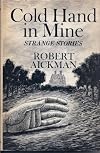
I like Robert Aickman, but I'm not a huge fan. (I prefer him to Walter de la Mare, whose mantle he obviously inherited.) He's the kind of writer whose stories you read one or two at a time, savoring them, and Cold Hand in Mine contains eight mostly fine examples of his style. You won't feel the urge to consume them back to back--I didn't, anyway--but if you've just finished one long novel and are about to tackle another, Aickman's stories make for interesting show more palate-cleansers.
Several of the tales in this 1975 collection have been widely anthologized: "The Swords," "Pages from a Young Girl's Journal" and overwhelming fan favorite "The Hospice." The two stories I've found myself rereading most frequently are "Niemandswasser" and "The Same Dog," which address similar themes (families with a military background; mothers who died young; awkward, somewhat unconventional male-female relationships) while producing distinctly different effects. The former is an overtly dark meditation on death and the inescapable collapse of all human endeavor, disguised as a monster-in-the-lake yarn; the latter is a surreal account of what happens to two children who witness a strange, disquieting phenomenon after wandering away from their school one afternoon. Aickman hints at explanations (the moldering grimoire that Elmo discovers in the family library in "Niemandswasser"; the apparently regenerative effect that Mary has on the haunted house in "The Same Dog") without actually offering them, and this is what readers will find either fascinating or offputting. Like de la Mare in his classic tale "All Hallows," Aickman aimed to create a sense of unease: not to provide resolutions. show less
I like Robert Aickman, but I'm not a huge fan. (I prefer him to Walter de la Mare, whose mantle he obviously inherited.) He's the kind of writer whose stories you read one or two at a time, savoring them, and Cold Hand in Mine contains eight mostly fine examples of his style. You won't feel the urge to consume them back to back--I didn't, anyway--but if you've just finished one long novel and are about to tackle another, Aickman's stories make for interesting show more palate-cleansers.
Several of the tales in this 1975 collection have been widely anthologized: "The Swords," "Pages from a Young Girl's Journal" and overwhelming fan favorite "The Hospice." The two stories I've found myself rereading most frequently are "Niemandswasser" and "The Same Dog," which address similar themes (families with a military background; mothers who died young; awkward, somewhat unconventional male-female relationships) while producing distinctly different effects. The former is an overtly dark meditation on death and the inescapable collapse of all human endeavor, disguised as a monster-in-the-lake yarn; the latter is a surreal account of what happens to two children who witness a strange, disquieting phenomenon after wandering away from their school one afternoon. Aickman hints at explanations (the moldering grimoire that Elmo discovers in the family library in "Niemandswasser"; the apparently regenerative effect that Mary has on the haunted house in "The Same Dog") without actually offering them, and this is what readers will find either fascinating or offputting. Like de la Mare in his classic tale "All Hallows," Aickman aimed to create a sense of unease: not to provide resolutions. show less

Was it overheard in that dingy freight elevator in the Shoreditch Arms that lost weekend back in November? Was it mentioned in that disjointed conversation with Aunt Betty shortly before she disappeared for six weeks? Was it in that diaphanous lucid dream whose fragments I reassembled into an erroneous epiphany that led me to an ill-fated excursion to Crete? Or maybe it was at the absurdly crowded marketplace in Crete? Frankly, I can't remember exactly when or how I first heard of Robert show more Aickman and his Wine-Dark Sea anthology of horror stories. Though ostensibly held in my e-reader, Aickman's stories are more accurately within me now. When I prematurely wake from my nightly fitful sleep, generally around 3 AM, snippets of these stories flutter in the haze and perch resolute in my semiconscious state...
Here lie eight brilliantly sly tales, often in mundane yet ominous settings, served understated in a unique and compelling style:
(1) The strange amalgam of heaven and hell that Grigg encounters in the title story. (2) The secrets of the isolated farmhouse that hikers Mimi and Margaret discover in "The Trains". (3) The telephone's unrelenting torment of Edmund St Jude in "Your Tiny Hand Is Frozen". (4) Millie's uncontrollable twins rampaging across the bizarre Grimm's fairy tale landscape of "Growing Boys". (5) The justifiably fearful Brodick Leith, forever haunted by a wraith in "The Fetch". (6) "The Inner Room" featuring Lene's most peculiar dollhouse, which her father described as "the most depressing-looking plaything I ever saw." (7) A crabwise turn of events enables Henry Fern to reach his destiny in "Never Visit Venice". (8) Accompanying her husband on a business trip to Sweden, forewarned Margaret Sawyer nevertheless decides to spend a night at the scenic Kurhus sanatorium with an unforeseen consequence in "In the Wood".
Here there are unsettling clouds of doom gathering just in sight at the periphery, but encroaching ever closer; and curious events and odd pathways that lead all travellers, whether ever-watchful or blithely unsuspecting, into an enveloping shroud of unease. show less
Here lie eight brilliantly sly tales, often in mundane yet ominous settings, served understated in a unique and compelling style:
(1) The strange amalgam of heaven and hell that Grigg encounters in the title story. (2) The secrets of the isolated farmhouse that hikers Mimi and Margaret discover in "The Trains". (3) The telephone's unrelenting torment of Edmund St Jude in "Your Tiny Hand Is Frozen". (4) Millie's uncontrollable twins rampaging across the bizarre Grimm's fairy tale landscape of "Growing Boys". (5) The justifiably fearful Brodick Leith, forever haunted by a wraith in "The Fetch". (6) "The Inner Room" featuring Lene's most peculiar dollhouse, which her father described as "the most depressing-looking plaything I ever saw." (7) A crabwise turn of events enables Henry Fern to reach his destiny in "Never Visit Venice". (8) Accompanying her husband on a business trip to Sweden, forewarned Margaret Sawyer nevertheless decides to spend a night at the scenic Kurhus sanatorium with an unforeseen consequence in "In the Wood".
Here there are unsettling clouds of doom gathering just in sight at the periphery, but encroaching ever closer; and curious events and odd pathways that lead all travellers, whether ever-watchful or blithely unsuspecting, into an enveloping shroud of unease. show less
Lists
Awards


You May Also Like


Associated Authors
Statistics
- Works
- 66
- Also by
- 69
- Members
- 3,581
- Popularity
- #7,075
- Rating
- 3.9
- Reviews
- 73
- ISBNs
- 105
- Languages
- 4
- Favorited
- 44


