
Reginald Arkell (1882–1959)
Author of Old Herbaceous
About the Author
Image credit: Reginald Arkell
Works by Reginald Arkell
Associated Works
Readers Digest Condensed Books: The Dragon Tree • Trumpets over Merriford • Dunbar's Cove • The Big X (1955) 5 copies
Reader's Digest Condensed Books: Adventures In Two Worlds • The Bridges At Toko-Ri • Old Herbaceous • Operation Cicero • Digby (1954) 2 copies
Eves without Leaves — Foreword — 1 copy
Tagged
Common Knowledge
- Canonical name
- Arkell, Reginald
- Birthdate
- 1882-10-14
- Date of death
- 1959-05-01
- Gender
- male
- Nationality
- UK
- Birthplace
- Lechlade, Gloucestershire, England, UK
- Places of residence
- Lechlade, Gloucestershire, England, UK (birth)
Cricklade, Wiltshire, England, UK (death) - Place of death
- Cricklade, Wiltshire, England, UK
- Associated Place (for map)
- England, UK
Members
Reviews

This is a gem from James Mustich’s 1000 Books to Read Before You Die. Thanks to a kind teacher who took him under her wing, foundling Herbert Pinnegar developed a love for flowers as a young child. Through a bit of luck and a lot of persistence, young Herbert secured a job in the gardens of a country estate, where over the years he worked his way up the ranks to become head gardener. It’s a sweet, gentle read that spans the years from the late Victorian era to post-World War II, and it show more will appeal to gardeners and Anglophiles. Warmly recommended. show less
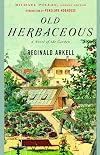
Well this one is just a cozy read that hit me in just the right way.
Spanning from the late 1800's through the end of WWII, this is the story of a manor house's head gardener, from his inauspicious beginnings as a foundling through to his last days.
I'm left confused about the narrator: for much of the story it feels like you're listening to Old Herbaceous himself telling his story as he looks back; in fact I'm sure it is him. But there are moments of omniscient third person: the narrator show more lets the reader in on conversations and the internal dialogues of secondary characters that Old Herbaceous couldn't know about. It flows well if you don't focus too hard on it; it didn't throw me out of the story so much as just slow me down a little bit.
This was the perfect book for a cold, rainy do-nothing kind of day, and I closed the book smiling. show less
Spanning from the late 1800's through the end of WWII, this is the story of a manor house's head gardener, from his inauspicious beginnings as a foundling through to his last days.
I'm left confused about the narrator: for much of the story it feels like you're listening to Old Herbaceous himself telling his story as he looks back; in fact I'm sure it is him. But there are moments of omniscient third person: the narrator show more lets the reader in on conversations and the internal dialogues of secondary characters that Old Herbaceous couldn't know about. It flows well if you don't focus too hard on it; it didn't throw me out of the story so much as just slow me down a little bit.
This was the perfect book for a cold, rainy do-nothing kind of day, and I closed the book smiling. show less

It is several years post-World War II, and the tiny English village of Merriford has subsided back into its centuries-old peace. But world affairs keep moving right along, and to prove it Merriford is unexpectedly invaded by a military force from another country. An American Air Force base, strategically located within striking distance of those increasingly pesky Russians, is erected with stunning speed, wiping out farm fields and ancient common grounds with no advance warning.
No more show more mushroom patch, no more wildflower meadow, just acres of runway and a small city of rambunctious young airmen. Needless to say, the locals are shocked to the core, and react in their various ways. Most find some degree of acceptance, some few are deeply hostile, while others predictably haunt the base gates, hoping to catch the attention of lonely (and well-paid) young men far from home and missing feminine company.
The elderly vicar of Merriford takes it all in stride – for he takes the long view, back through the centuries, and an enthusiastic American or two in the here-and-now is no cause for undue alarm – until he is informed by the American work party affixing a warning light to the church steeple that there is something of an emergency concerning the venerable church bells. Or, rather, the bell tower. The support beams are rotten – riddled with wood-worm! – and could tumble down at any time, with dire results to any unlucky congregants in the church below. The vicar orders the bells silenced and the bell tower off limits, and casts about for some way to raise the substantial funds required for repairs, a dauntingly difficult prospect in cash-strapped post-war England.
Meanwhile the vicar’s lovely young housekeeper, the war-orphaned Mary, has caught the eye of one Johnny Fedora, lately of Texas. Mary is much too busy mothering her beloved employer to dally with anyone, let alone one of the forward Americans cheekily camped on her very doorstep, but Johnny is well smitten despite his initial resistance to the charms of rural Britain. He woos the fair Mary with a certain individual style and a noteworthy persistence which eventually brings the vicar round to his side, even if Mary is primly accomplished at keeping her feelings to herself.
Of course there is a charming happy ending, all full of Anglo-American goodwill. Very nice, very sweet. Almost too nice. (But not quite.)
This reminded me quite a lot of similar efforts by Miss Read, though Reginald Arkell writes with considerably more dash, and much more obvious humour. The two also share an illustrator, which served to highlight the resemblance, and I felt that the cheerful line drawings by J.S. Goodall were a marvelous embellishment of a very light sort of village tale.
Full Review Here: http://leavesandpages.com/2014/10/06/from-the-bottom-of-the-book-pile-reginald-a... show less
No more show more mushroom patch, no more wildflower meadow, just acres of runway and a small city of rambunctious young airmen. Needless to say, the locals are shocked to the core, and react in their various ways. Most find some degree of acceptance, some few are deeply hostile, while others predictably haunt the base gates, hoping to catch the attention of lonely (and well-paid) young men far from home and missing feminine company.
The elderly vicar of Merriford takes it all in stride – for he takes the long view, back through the centuries, and an enthusiastic American or two in the here-and-now is no cause for undue alarm – until he is informed by the American work party affixing a warning light to the church steeple that there is something of an emergency concerning the venerable church bells. Or, rather, the bell tower. The support beams are rotten – riddled with wood-worm! – and could tumble down at any time, with dire results to any unlucky congregants in the church below. The vicar orders the bells silenced and the bell tower off limits, and casts about for some way to raise the substantial funds required for repairs, a dauntingly difficult prospect in cash-strapped post-war England.
Meanwhile the vicar’s lovely young housekeeper, the war-orphaned Mary, has caught the eye of one Johnny Fedora, lately of Texas. Mary is much too busy mothering her beloved employer to dally with anyone, let alone one of the forward Americans cheekily camped on her very doorstep, but Johnny is well smitten despite his initial resistance to the charms of rural Britain. He woos the fair Mary with a certain individual style and a noteworthy persistence which eventually brings the vicar round to his side, even if Mary is primly accomplished at keeping her feelings to herself.
Of course there is a charming happy ending, all full of Anglo-American goodwill. Very nice, very sweet. Almost too nice. (But not quite.)
This reminded me quite a lot of similar efforts by Miss Read, though Reginald Arkell writes with considerably more dash, and much more obvious humour. The two also share an illustrator, which served to highlight the resemblance, and I felt that the cheerful line drawings by J.S. Goodall were a marvelous embellishment of a very light sort of village tale.
Full Review Here: http://leavesandpages.com/2014/10/06/from-the-bottom-of-the-book-pile-reginald-a... show less
Herbert Pinnegar reminisces about his life as gardener at the Manor, starting as a 14 year old and ending as head gardener. An orphan left on the doorstep of a kindly village woman with 6 children and possessing one slightly shortened leg, Bert was always a bit of a loner. He was taken under the wing of the local school teacher who was somewhat an authority on wildflowers. At 10 he drew the attention of a local well to do young lady with his exhibit at the flower show. Later when the vicar show more was giving the boys advice on their future as they graduated mostly sending them into the farming community, the Lady was again present and heard him say he wanted to work with flowers not farm. She was to marry shortly and move to the Manor and she told him to go there.
So begins the story of a friendship and a life in gardening, filled with poignant and humorous anecdotes. Since it takes place from 1870 to about 1950 it covers major social changes, 2 wars and technological changes in agriculture, all seen in the microcosm of the Manor. Beautifully written with great characters. show less
So begins the story of a friendship and a life in gardening, filled with poignant and humorous anecdotes. Since it takes place from 1870 to about 1950 it covers major social changes, 2 wars and technological changes in agriculture, all seen in the microcosm of the Manor. Beautifully written with great characters. show less
Lists
Awards


You May Also Like


Associated Authors
Statistics
- Works
- 21
- Also by
- 8
- Members
- 411
- Popularity
- #59,240
- Rating
- 3.8
- Reviews
- 11
- ISBNs
- 29
- Languages
- 3