
Jean Shepherd (1921–1999)
Author of In God We Trust: All Others Pay Cash
About the Author
Jean Shepherd is a multitalented author and actor. He created the popular MGM film A Christmas Story, along with Ollie Hopnoodle's Haven of Bliss, The Phantom of the Open Hearth, The Great American Fourth of July, and Other Disasters, and The Star-Crossed Romance of Josephine Cosnowski. His books show more include In God We Trust (All Others Pay Cash), Wanda Hickey's Night of Golden Memories, and Other Disasters, and The Ferrari in the Bedroom. Shepherd has been called "America's leading satirist of the underground." show less
Image credit: Ofindsen
Works by Jean Shepherd
The Night People's Guide To New York — Introduction — 1 copy
Associated Works
The 50 Funniest American Writers: An Anthology of Humor from Mark Twain to The Onion (2011) — Contributor — 286 copies, 3 reviews
Adaptations: From Short Story to Big Screen: 35 Great Stories That Have Inspired Great Films (2005) — Contributor — 136 copies, 1 review
The Village Voice Reader: A Mixed Bag from the Greenwich Village Newspaper (1963) — Contributor — 29 copies, 1 review
Tagged
Common Knowledge
- Legal name
- Shepherd, Jean Parker, Jr. (birth name)
- Other names
- Ewing, Frederick R.
- Birthdate
- 1921-07-26
- Date of death
- 1999-10-16
- Gender
- male
- Occupations
- radio announcer
humorist
writer - Organizations
- WOR Radio
- Awards and honors
- National Radio Hall of Fame (2005)
Playboy Humor Award (1965 ∙ '67 ∙ '68 ∙ '69) - Short biography
- Jean Shepherd had a successful career that spanned decades, and is probably best-known for his semi-autobiographical stories. He co-scripted and narrated a collection of these in the film A Christmas Story (1983).
- Nationality
- USA
- Birthplace
- Chicago, Illinois, USA
- Places of residence
- Hammond, Indiana, USA
New York, New York, USA
Sanibel Island, Florida, USA - Place of death
- Fort Myers, Florida, USA
- Associated Place (for map)
- USA
Members
Reviews
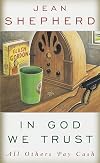
I actually started reading this just before Christmas, but kept putting it down to read/finish other things. In case you’re not at all familiar with it, this is the book that the movie The Christmas Story is based on. My advice: If you like that movie, avoid this book. If you don’t like that movie, forget this book exists.
The cover blurb says that Shepherd bridges the gap between James Thurber and David Sedaris. But he’s neither as concise as Thurber nor as interesting as Sedaris. show more Neither is he as funny nor original as either one of them. Basically, Shepherd has maybe a half-dozen humorist tricks that he uses over and over again. If you’ve seen the movie, you’ll recognize them. There’s the “stuff of legend” trick, for example, where he remarks in one way or another that a particular event is still part of the lore of Cleveland Street to this day. Funny in the movie, not so much in the book—especially by the seventh time he uses it. There are a very few others, and these are the devices he turns to over and over again throughout the book.
And don’t even get me started on the frame. I’m not a big fan of frames as a storytelling device anyway, but (a) Shepherd’s particular frame is a really lame one, and (2) he’s not satisfied with just one frame, so most of the book exists within a double frame. Basically, the premise of the book is that he’s going back to his hometown and hooking up with an old friend (Flick, who’s in the movie) for drinks. They are bullshitting and Shepherd completely dominates the conversation with wistful stories from their youth. But he begins most of these stories for Flick by talking about some event that’s happened to him recently in his Life in the Big City. This is the double frame I’m referring to. You can imagine how annoying this gets.
I could go on and on, but I won’t. It’s a crappy book, and I only bothered finishing about 3/4 of it. It’s pretty rare that I consciously give up on a book, but I just can’t waste any more time with this one. Obviously, if I could have given it less than 1 star, I would have. show less
The cover blurb says that Shepherd bridges the gap between James Thurber and David Sedaris. But he’s neither as concise as Thurber nor as interesting as Sedaris. show more Neither is he as funny nor original as either one of them. Basically, Shepherd has maybe a half-dozen humorist tricks that he uses over and over again. If you’ve seen the movie, you’ll recognize them. There’s the “stuff of legend” trick, for example, where he remarks in one way or another that a particular event is still part of the lore of Cleveland Street to this day. Funny in the movie, not so much in the book—especially by the seventh time he uses it. There are a very few others, and these are the devices he turns to over and over again throughout the book.
And don’t even get me started on the frame. I’m not a big fan of frames as a storytelling device anyway, but (a) Shepherd’s particular frame is a really lame one, and (2) he’s not satisfied with just one frame, so most of the book exists within a double frame. Basically, the premise of the book is that he’s going back to his hometown and hooking up with an old friend (Flick, who’s in the movie) for drinks. They are bullshitting and Shepherd completely dominates the conversation with wistful stories from their youth. But he begins most of these stories for Flick by talking about some event that’s happened to him recently in his Life in the Big City. This is the double frame I’m referring to. You can imagine how annoying this gets.
I could go on and on, but I won’t. It’s a crappy book, and I only bothered finishing about 3/4 of it. It’s pretty rare that I consciously give up on a book, but I just can’t waste any more time with this one. Obviously, if I could have given it less than 1 star, I would have. show less
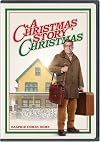
This movie was a truly awful, awful idea…both on the part of the people who decided to make it, and on the part of those of us who decided to watch it.
The original Christmas Story is one of the best movies ever made and represents the upper echelon of film making. This lame turkey is so far at the other end of the film-making spectrum it should inspire a federal law banning all film sequels—permanently.
The nicest thing I can say about it is that it will easily be forgotten…Thank Heaven show more for small favors!
Watch the original and bask in the glory of its warm, happy glow; ignore the fact that this abomination even exists & you’ll have a very Merry Christmas! show less
The original Christmas Story is one of the best movies ever made and represents the upper echelon of film making. This lame turkey is so far at the other end of the film-making spectrum it should inspire a federal law banning all film sequels—permanently.
The nicest thing I can say about it is that it will easily be forgotten…Thank Heaven show more for small favors!
Watch the original and bask in the glory of its warm, happy glow; ignore the fact that this abomination even exists & you’ll have a very Merry Christmas! show less

This book is a compilation of the five short stories that were used to create the 1983 Christmas classic “A Christmas Story”. The tales of Jean Shepherd are semi-autobiographical as he drew heavily from his youth, even though it is officially fiction. In the fictional Indiana town of Hohman (vs. Shepherd’s Hammond, Indiana), Ralph Parker and his family embarked on these five tales that will become the beloved movie:
- Ralphie’s unwavering Christmas gift wish of the Red Ryder Carbine show more Action 200-shot Range BB gun
- Ralphie’s desire to be in the Orphan Annie Secret Decoder Ring club
- Mr. Parker winning a contest where the major award is a lascivious leg lamp
- Ralphie discovers his Tasmanian devil inner self after being bullied
- The Parker family being tormented by the neighbors, the Bumpus family, and having their Easter ham stolen by their dogs (in the movie, it’s the Christmas turkey)
I have watched the movie and the musical, and the book is just as wonderful. I recall much of the words used verbatim in the shows, but reading the original words, published 17 years before the movie, brings about a more potent image – a childhood through the lens of an articulate adult who understood the circumstances and implications. I felt the innocence of youth but wrapped in the intellect and appreciation of the adult. The writing is excellent prose that depicted warmth, humor, and nostalgia for a past that was less-than-ideal but well-loved nonetheless. Despite the BB gun being the main story which depicted the best childhood Christmas angst, I drew little hearts next to the lamp story and the bully story; those touched me.
In the lamp story, I was so amused:
“Before us in the heavy, fragrant air of our cabbage-scented kitchen stood a life-size lady’s leg, in true blushing-pink flesh tones and wearing a modish black patent leather pump with spike heel. When I say life-size I am referring to a rather large lady who obviously had dined well and had matured nicely. It was a well filled-out leg!”
“A monstrous, barrel-shaped bulging tube of a shade, a striking Lingerie pink in color, topped by a glittering cut-crystal orb, was lifted reverently up and put onto the table. Never had shade so beautifully matched base”
“From ankle to thigh the translucent flesh radiated a vibrant, sensual, luminous orang-yellow-pinkish nimbus of Pagan fire… It was alive!... The living room was bathed through the long, still, silent hours with the soft glow of electric Sex.”
“He was almost overcome by Art. ‘What a great lamp! Wow! This is exactly what we need for the front window. Wow!’” (In the book, the adult Ralph identifies his dad as the first Pop Art fanatic.)
“…the lamp itself had attracted a considerable personal following among cruising prides of pimply-faced Adolescents who night after night could hardly wait for darkness to fall and the soft, sinuous radiation of Passion to light up the drab, dark corners of Cleveland Street.”
In the bully story, I felt for him and all who has been bullied and cheered for his inner devil:
“I was an accomplished Alley Runner who did not wear sneakers to school from choice but to get off the mark quicker. I was well qualified to endorse Kids Champions… ‘Yes, our new Bully-Beater model has been endorsed by skinny kids with glasses from coast to coast. That extra six feet may mean the difference between making the porch and you-know-what!’”
“All I knew is that I was tearing and ripping and smashing at Grover Dill, who fought back like a fiend! But I guess it was the first time he had ever met face to face with an unleashed Tasmanian Devil. I continued to swear fantastically, as though I had no control over it. I was conscious of it and yet it was as though it was coming from something or someone outside of me.”
“I learned then that Bravery does not exist. Just a kind of latent Nuttiness. If I had thought about attacking Dill for ten seconds before I had done it, I’d have been four blocks away in a minute flat. But something had happened. A wire broke. A fuse blew. And I had gone out of my skull.” show less
- Ralphie’s unwavering Christmas gift wish of the Red Ryder Carbine show more Action 200-shot Range BB gun
- Ralphie’s desire to be in the Orphan Annie Secret Decoder Ring club
- Mr. Parker winning a contest where the major award is a lascivious leg lamp
- Ralphie discovers his Tasmanian devil inner self after being bullied
- The Parker family being tormented by the neighbors, the Bumpus family, and having their Easter ham stolen by their dogs (in the movie, it’s the Christmas turkey)
I have watched the movie and the musical, and the book is just as wonderful. I recall much of the words used verbatim in the shows, but reading the original words, published 17 years before the movie, brings about a more potent image – a childhood through the lens of an articulate adult who understood the circumstances and implications. I felt the innocence of youth but wrapped in the intellect and appreciation of the adult. The writing is excellent prose that depicted warmth, humor, and nostalgia for a past that was less-than-ideal but well-loved nonetheless. Despite the BB gun being the main story which depicted the best childhood Christmas angst, I drew little hearts next to the lamp story and the bully story; those touched me.
In the lamp story, I was so amused:
“Before us in the heavy, fragrant air of our cabbage-scented kitchen stood a life-size lady’s leg, in true blushing-pink flesh tones and wearing a modish black patent leather pump with spike heel. When I say life-size I am referring to a rather large lady who obviously had dined well and had matured nicely. It was a well filled-out leg!”
“A monstrous, barrel-shaped bulging tube of a shade, a striking Lingerie pink in color, topped by a glittering cut-crystal orb, was lifted reverently up and put onto the table. Never had shade so beautifully matched base”
“From ankle to thigh the translucent flesh radiated a vibrant, sensual, luminous orang-yellow-pinkish nimbus of Pagan fire… It was alive!... The living room was bathed through the long, still, silent hours with the soft glow of electric Sex.”
“He was almost overcome by Art. ‘What a great lamp! Wow! This is exactly what we need for the front window. Wow!’” (In the book, the adult Ralph identifies his dad as the first Pop Art fanatic.)
“…the lamp itself had attracted a considerable personal following among cruising prides of pimply-faced Adolescents who night after night could hardly wait for darkness to fall and the soft, sinuous radiation of Passion to light up the drab, dark corners of Cleveland Street.”
In the bully story, I felt for him and all who has been bullied and cheered for his inner devil:
“I was an accomplished Alley Runner who did not wear sneakers to school from choice but to get off the mark quicker. I was well qualified to endorse Kids Champions… ‘Yes, our new Bully-Beater model has been endorsed by skinny kids with glasses from coast to coast. That extra six feet may mean the difference between making the porch and you-know-what!’”
“All I knew is that I was tearing and ripping and smashing at Grover Dill, who fought back like a fiend! But I guess it was the first time he had ever met face to face with an unleashed Tasmanian Devil. I continued to swear fantastically, as though I had no control over it. I was conscious of it and yet it was as though it was coming from something or someone outside of me.”
“I learned then that Bravery does not exist. Just a kind of latent Nuttiness. If I had thought about attacking Dill for ten seconds before I had done it, I’d have been four blocks away in a minute flat. But something had happened. A wire broke. A fuse blew. And I had gone out of my skull.” show less
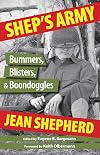
The truly remarkable thing about Jean Shepherd’s writing is that it is totally believable. It doesn’t matter that he contradicts himself from one story to another. It doesn’t matter that you know in advance it’s not true. It doesn’t matter that he talks about soldiers listening to Elvis hits in 1942. The story is so conversational, so matter of fact, so believable, so human, you put everything aside and enjoy. This is an artist.
This book is a collection of his WWII army show more experiences, from basic training to deployment – a train ride away. (He never made it overseas.) They are adapted from radio stories, which Shepherd wisely thought was a bad thing to do – it took him ten years to refine his written storytelling style into the masterful art it is. The editor also wisely chooses not to second guess the master.
The stories grow in sophistication, much as the raw recruit grows in experience. At first, he calls his unit Company K, the 362 Airborne Mess Kit Repair Battalion. The sergeant calls his charges mens. But by the time we get to the story of the fourth of July parade, Shepard is getting bolder. He describes a four star general as having “campaign ribbons from his collarbone all the way down to his waist…. He just looked like a gigantic fruitcake” on the reviewing stand. Or army food: “Tremendous bowls of potato chips, the rubber potato chips the army used for amphibious work.” I’ll leave you to imagine what he meant by Rectal Cranial Inversion. By the time he’s in Code School, the total absurdity of it all is plainly on display.
My own favorite is USO Hospitality, the story of a family that invited him to Sunday dinner in Missouri. From their overstuffed, overformal home to their rigid politeness, it looked for all the world to be the most uneventful of all his stories. But after the pre-dinner sherry (his first alcohol) and the White Lightning (his second), and the lady of the house literally under the table, stewed pink, the whole thing is a joy to read and remember. It’s a turning point. It ushers in a funnier, sharper style of story that deepens as you read further into Shep’s Army. And you should. show less
This book is a collection of his WWII army show more experiences, from basic training to deployment – a train ride away. (He never made it overseas.) They are adapted from radio stories, which Shepherd wisely thought was a bad thing to do – it took him ten years to refine his written storytelling style into the masterful art it is. The editor also wisely chooses not to second guess the master.
The stories grow in sophistication, much as the raw recruit grows in experience. At first, he calls his unit Company K, the 362 Airborne Mess Kit Repair Battalion. The sergeant calls his charges mens. But by the time we get to the story of the fourth of July parade, Shepard is getting bolder. He describes a four star general as having “campaign ribbons from his collarbone all the way down to his waist…. He just looked like a gigantic fruitcake” on the reviewing stand. Or army food: “Tremendous bowls of potato chips, the rubber potato chips the army used for amphibious work.” I’ll leave you to imagine what he meant by Rectal Cranial Inversion. By the time he’s in Code School, the total absurdity of it all is plainly on display.
My own favorite is USO Hospitality, the story of a family that invited him to Sunday dinner in Missouri. From their overstuffed, overformal home to their rigid politeness, it looked for all the world to be the most uneventful of all his stories. But after the pre-dinner sherry (his first alcohol) and the White Lightning (his second), and the lady of the house literally under the table, stewed pink, the whole thing is a joy to read and remember. It’s a turning point. It ushers in a funnier, sharper style of story that deepens as you read further into Shep’s Army. And you should. show less
Lists
Awards

You May Also Like


Associated Authors
Statistics
- Works
- 29
- Also by
- 7
- Members
- 3,267
- Popularity
- #7,829
- Rating
- 4.0
- Reviews
- 88
- ISBNs
- 69
- Favorited
- 16