
Marco Balzano
Author of I'm Staying Here
Works by Marco Balzano
Balzano Marco 1 copy
Tagged
Common Knowledge
- Birthdate
- 1978
- Gender
- male
- Occupations
- Dozent
- Nationality
- Italy
- Birthplace
- Milan, Italy
- Places of residence
- Mailand, Lombardei, Italien
- Associated Place (for map)
- Milan, Italy
Members
Reviews
It's an old story. Governments just won't leave you alone.
In “I'm Staying Here” (2018), Italian writer Marco Balzano lets a woman named Trina tell her story. Her people live in Curon, a tiny and seemingly isolated mountain village so far north in Italy that everyone speaks German. Trina, a teacher, is among the few who can actually understand their own country's language.
Trina addresses her story to Marica, her beloved daughter, whose disappearance seems to trigger all the trials that show more follow, almost as if it were all her fault. In the 1930s the people of Curon are being pulled in two different directions — by Mussolini and the Fascists in the south and by Hitler and the Nazis in the north. Some of the people are lured north, where at least others speak their language. Some of Trina's relatives are among them, and they secretly take Marica with them.
While the Nazis prepare for war, the Fascists talk of building a dam and flooding the valley in which Curon sets. When war breaks out it swallows up Erich, Trina's husband, who is forced to fight for the Fascists, while their son, Michael, idolizes Hitler and eventually joins the German army. When Erich returns from combat with injuries, he vows never to fight again when he recovers. Yet his war isn't over.
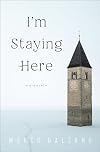
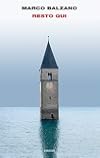
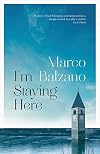
To escape both the Fascists and the Nazis, the two of them flee into the Alps to wait out the war with a few others. When the war ends and they are finally able to return to their farm, however, they find that the dam project remains very much alive. The novel is based on reality, and the cover illustration shows the church's bell tower that still today juts out of the lake covering Curon.
Even translated into English, Bolzano's graceful prose shines through. This is both a beautiful novel and a powerful one with a message so many of us can identify with: Why can't they just leave us alone? show less
In “I'm Staying Here” (2018), Italian writer Marco Balzano lets a woman named Trina tell her story. Her people live in Curon, a tiny and seemingly isolated mountain village so far north in Italy that everyone speaks German. Trina, a teacher, is among the few who can actually understand their own country's language.
Trina addresses her story to Marica, her beloved daughter, whose disappearance seems to trigger all the trials that show more follow, almost as if it were all her fault. In the 1930s the people of Curon are being pulled in two different directions — by Mussolini and the Fascists in the south and by Hitler and the Nazis in the north. Some of the people are lured north, where at least others speak their language. Some of Trina's relatives are among them, and they secretly take Marica with them.
While the Nazis prepare for war, the Fascists talk of building a dam and flooding the valley in which Curon sets. When war breaks out it swallows up Erich, Trina's husband, who is forced to fight for the Fascists, while their son, Michael, idolizes Hitler and eventually joins the German army. When Erich returns from combat with injuries, he vows never to fight again when he recovers. Yet his war isn't over.
To escape both the Fascists and the Nazis, the two of them flee into the Alps to wait out the war with a few others. When the war ends and they are finally able to return to their farm, however, they find that the dam project remains very much alive. The novel is based on reality, and the cover illustration shows the church's bell tower that still today juts out of the lake covering Curon.
Even translated into English, Bolzano's graceful prose shines through. This is both a beautiful novel and a powerful one with a message so many of us can identify with: Why can't they just leave us alone? show less
A first-person story told to a daughter who left makes the title somewhat ironic. A woman who is a native German speaker in the South Tyrol adds income to her traditional farming life by teaching. When Fascism arrives in Italy, it claims the South Tyrol by trying to wipe out German language and culture there. She teaches Italian, but in secret continues to teach German stubbornly. Then Nazi Germany makes a claim for the region, and residents are forced to choose whether to be fascists or show more Nazis, which seems a limited set of choices! Her husband just wants to stay put, living the life they've lived there for generations, but he is conscripted. He eventually returns home, but they can't stay: they have to flee into the mountains to (barely) survive during the war. When they get word the war has ended, they finally can return home, but that homecoming is short-lived. A dam, being considered since the early 20th century, is suddenly under construction in earnest, and eventually they are forced to leave their valley as their homes are blown up and the town is submerged under an artificial lake. Nobody can stay there; even the dead are exhumed from the cemetery and reburied. It's a short book inspired by the sight of a church steeple that still rises above the lake. show less
Per conoscere parti della nostra storia poco nota (almeno per me), niente di meglio che un romanzo di questo tipo, che racconta la storia da dentro, per voce dei protagonisti.
Il paese di Curon, in Trentino, è tra le mete dei miei viaggi italiani: la curiosità di vedere un campanile che emerge da un lago. Leggendo la storia che ha portato a questo ormai frequentato luogo turistico, se ne percepisce il dolore, lo sradicamento, la rabbia e l'impotenza di chi questo lago artificiale lo ha show more vissuto sulla propria pelle.
In un tempo di guerra, terrore si somma a terrore, rabbia si somma a rabbia, e sia in un caso (la guerra) sia nell'altro (il riempimento di un bacino artificiale), nulla sarà più come prima.
Il racconto di una vita che attraversa la storia, locale, nazionale e mondiale, narrato dal punto di vista di una donna (ma è scritto da un uomo) che nonostante tutto si fa colonna granitica di memoria.
Un bel libro coinvolgente. show less
Il paese di Curon, in Trentino, è tra le mete dei miei viaggi italiani: la curiosità di vedere un campanile che emerge da un lago. Leggendo la storia che ha portato a questo ormai frequentato luogo turistico, se ne percepisce il dolore, lo sradicamento, la rabbia e l'impotenza di chi questo lago artificiale lo ha show more vissuto sulla propria pelle.
In un tempo di guerra, terrore si somma a terrore, rabbia si somma a rabbia, e sia in un caso (la guerra) sia nell'altro (il riempimento di un bacino artificiale), nulla sarà più come prima.
Il racconto di una vita che attraversa la storia, locale, nazionale e mondiale, narrato dal punto di vista di una donna (ma è scritto da un uomo) che nonostante tutto si fa colonna granitica di memoria.
Un bel libro coinvolgente. show less
A powerful, understated novel sweeping us through much of the twentieth century. Trina tells her story to her daughter, who's missing, and stays missing. She lives in Curon, in the German-speaking Italian Tyrol, and witnesses Mussolini's attempts to Italianise it and stifle its German heritage; the impact of the Nazis and war on their lives; and finally sees their community destroyed by the building of a - it turns out - inefficient dam which drowns Curon and surrounding villages. Important show more moments of history are told here through the lives of ordinary people, few of whom are described, other than as, for instance 'the fat woman', 'the old man' - they become ciphers for us all.. That is what makes this book, so simply told, so potent. show less
Lists
Awards


You May Also Like


Associated Authors
Statistics
- Works
- 14
- Members
- 461
- Popularity
- #53,307
- Rating
- 3.7
- Reviews
- 31
- ISBNs
- 79
- Languages
- 10