
Paolo Cognetti
Author of The Eight Mountains
About the Author
Works by Paolo Cognetti
A pesca nelle pozze più profonde. Meditazioni sull'arte di scrivere racconti (2014) 15 copies, 1 review
Mein Jahr in den Bergen: Vom Abenteuer des einfachen Lebens (German Edition) (2019) 3 copies, 1 review
De acht bergen 1 copy
Cognetti Paolo 1 copy
Tagged
Common Knowledge
- Birthdate
- 1978-01-27
- Gender
- male
- Awards and honors
- Premio Strega (2017)
- Nationality
- Italy
- Birthplace
- Milan, Italy
- Associated Place (for map)
- Milan, Italy
Members
Reviews
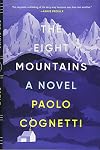
As I finished the book, I watched the movie again. The movie is largely faithful to the text but some of its changes struck me as significant, changing the meaning of the book. In the end, as good as the movie is at depicting the complicated, nuanced relationship between the two main characters, I found the book far more compelling and resonant. Cognetti is a very talented writer who has a gift for presenting profound questions in a compelling and accessible way. Two boys, one from the city show more and one from a small village in the mountains, meet as pre-teens. Each has a troubled relationship with his own father and the book follows their relationship as they embark on their own lives and grow into their 30s. The story is not so much about either one as about the nature of love, loss, and self-knowledge (or, dare I say, wisdom). Each has difficulties coming to grips with who he is and how to grow. Indeed, the power of the book comes from Cognetti’s ability to show each one as he challenges himself to understand who he—and his friend—is, notwithstanding their deep and lasting bond. Mountains, where most of the action occurs, represent not only something different for the boys and their parents—an escape, a religion, a way of life—the title of the book represents Cognetti’s gloss on Buddhist cosmology. Who knows himself: the one who has seen the eight lesser peaks or the one who climbs to the top of the tallest peak? Is it the one who travels to understand himself or the one who grows roots and stays at home, creating and building his identity where he was born? show less
Cognetti riesce a volte a dare suono ai silenzi con le descrizioni dell'ambiente montano. Ambiente che spesso fa da contrappunto alle vite umane che ruotano intorno alle vette. Un libro denso di silenzi, non sempre solo contemplativi. E' un libro che parla di dicotomie: la solitudine come scelta ma anche come rifugio dall'impegno; il silenzio come contemplazione ma anche come incomunicabilità; la città contro la natura; il villeggiante contro il montanaro; l'uomo di cultura contro show more l'ignorante; il lavoro alienante della fabbrica contro la povertà di mezzi in cambio della libertà del pastore; le Alpi contro l'Himalaya, forse più bella ma non è "casa". Tutto finisce: arriva la morte dei propri cari, la crisi economica che stronca le attività sia del casaro che del documentarista freelance, l'amore che qualcuno preferisce fuggire senza mai prenderlo sul serio e qualcuno che invece ci prova ma non riuscirà a trattenerlo... Rimane però l'amicizia, e la montagna, madre e matrigna, perché difende e nello stesso tempo può uccidere. L'amicizia come la cosa più preziosa. Ambigue le figure femminili. Ce ne sono tre rilevanti, tutte e tre madri. La madre montanara, che resisterà salda come la roccia da cui pare nata, ma che da roccia offre poco rifugio al proprio ragazzo, se non consigli pratici. La madre che tenta di divenire montanara ma non riesce ad andare oltre le complicazioni economiche e sentimentali e preferisce alla fine ritrovare la propria via lavorando per i turisti invece che in alpeggio, quasi una resa alle necessità moderne, un realismo che si nutre del sogno ma senza volare quando è pericoloso, forse anche per difendere la figlia dal futuro; e infine l'unica figura salda di donna, che è moglie di un pessimo comunicatore e che per questo tenta di fare da tramite, che ama la montagna ma senza farsene travolgere, e che mette sempre e ancora al primo posto il rapporto umano, la comprensione, la parola, gli affetti, la cultura del dare. Unica grande figura a mio parere, circondata da una generazione di giovani (maschi soprattutto) senza punti di riferimento, nella gran parte dei casi bisognosi di qualcuno che traduca in parole i sentimenti del cuore. La madre del protagonista è una sorta di interprete. Ma non sempre, nonostante gli sforzi, si può essere salvati. IL libro si apre con le prime due parti che sono un autentico capolavoro. La terza parte l'ho trovata più triste, meno incisiva, come se si dovesse arrivare a una fine e si faticasse comunque a trovarne un filo conduttore. Filo conduttore che comunque c'è: il mito nepalese delle Otto Montagne, per cui ci sono persone che scalano le otto cime e persone che invece scalando direttamente la montagna più alta senza intermediari o intermezzi, senza deviazioni. Da una parte Bruno e Giovanni, gli scalatori intrepidi, dall'altra Pietro, Lara e la madre, che fanno il giro lungo e denso di compromessi. Ognuno ha da scegliere la sua via, per arrivare in cima. Bellissimo testo, commovente, denso, non banale, mai moralista, con il grosso pregio di non voler per forza dare ragioni e torti. Anche se a volte la provvisorietà in cui siamo per forza immersi non deve sempre giustificare il ricorso alla strada più diretta: non sempre il mediare è vigliaccheria o il non voltarsi mai coraggio. show less
Ho letto questo capolavoro nell'estate del 2017 mentre ero in vacanza in Puglia, durante una settimana caldissima, con il condizionatore del bungalow che non funzionava. I paesaggi e le atmosfere montane mi hanno probabilmente salvato dal collasso e mai contesto per la lettura di questo libro avrebbe potuto essere più distante.
Io sono un amante della montagna, ma come turista, dentro di me sono cittadino e penso non potrei mai adattarmi al tipo di vita dei protagonisti del romanzo. La prosa show more di Cognetti permette di fuggire totalmente dal proprio contesto e calarsi in una montagna che diventa evasione ben sapendo che nella realtà dei fatti per il 99% delle persone quello sarebbe un incubo.
Intenso ed emozionante il rapporto del protagonista con il padre e con la montagna in tutto il libro mi sembra che luoghi e personaggi si incastrino sempre alla perfezione.
Mentre scrivo questa recensione ripensando alla lettura di questo libro sento che per stare bene mi mancano almeno 1700m in più sul livello del mare. show less
Io sono un amante della montagna, ma come turista, dentro di me sono cittadino e penso non potrei mai adattarmi al tipo di vita dei protagonisti del romanzo. La prosa show more di Cognetti permette di fuggire totalmente dal proprio contesto e calarsi in una montagna che diventa evasione ben sapendo che nella realtà dei fatti per il 99% delle persone quello sarebbe un incubo.
Intenso ed emozionante il rapporto del protagonista con il padre e con la montagna in tutto il libro mi sembra che luoghi e personaggi si incastrino sempre alla perfezione.
Mentre scrivo questa recensione ripensando alla lettura di questo libro sento che per stare bene mi mancano almeno 1700m in più sul livello del mare. show less
As a young boy Pietro spends his childhood summers with his mother, in a small village in a secluded valley in the Italian Alps, escaping the city heat of Milan. His father Giovanni, a rather introverted man and a keen mountaineer, joins them for weekends and part of the holiday, always eager to pit himself against the unforgiving mountain terrain. Whenever Pietro joins him on these expeditions Giovanni expects his son to be equally obsessional about “keeping going”, about always taking show more the uphill route whenever there is a fork in the path. As Pietro is a more reflective character, happy to explore the valleys as well as the mountains, but in a less obsessional way, their relationship is never easy, and Pietro is often relieved when his father returns to the city. He strikes up a friendship with Bruno, the cowherd son of a local stonemason, and the two boys gradually forge a firm friendship, getting to know each other as they explore together the landscape Bruno knows so intimately. As a teenager Pietro begins to avoid the long, arduous climbs with his father and their relationship becomes even more strained, eventually bringing an end to their shared expeditions. However, Bruno continues to accompany Giovanni, often seeming to Pietro to be more like his natural “heir”.
As they grow up, with Bruno never leaving the valley and Pietro’s job taking him to cities across the world, as well as to other mountain ranges, they see each other infrequently but retain a closeness which is important to each of them. This is intensified when Giovanni dies unexpectedly, when Pietro is in early middle-age, and discovering that his father has left him a plot of land, he returns to the mountains for a more extended stay. As he and Bruno build an alpine chalet together and re-explore the mountain walks they did with Giovanni, as well as new ones, the bonds of their friendship are strengthened, and through his friend he gains new and important insights into the person his father was.
This is a powerful and moving coming of age story which captivated me from the very first page. I loved the main character’s gentle, reflective exploration of his troubled, ambivalent relationship with his father, his friendship with Bruno and his struggles to find a direction and purpose in life. Bruno too is struggling, not only with trying to make his farm financially viable but also with his failing marriage. The author very powerfully evoked the contrasts between the hardships and poverty endured by people who live and work in the mountains, the hazards of the terrain as well as the beauty of the landscape. This meant that I always felt conscious of the fact that, although beautiful, this could be an unforgiving environment.
I found that each of the characters was well-developed and convincing, so I felt that I got to know them well and to care about what happened to them. The exploration of male friendship and, more generally, how friendships survive frequent absences, was central to the story’s development and added a rich dimension to the relationship between the main characters. Love, loss, regret, reparation, hope, resignation and disappointment were all themes which ran throughout the story, lending a convincing credibility to the development of each of the characters. Despite the intense emotions which underlay Pietro’s reflections, there was no mawkish sentimentality in the story-telling, something which increased the impact it had on me.
Paolo Cognetti captures not only the stunningly beautiful landscape of the mountains and valleys, and the variety of flora and fauna to be found there, but also the domestic landscape of home, both urban and rural. Using breathtakingly exquisite language, his descriptions were so evocative, that I felt I was experiencing the sights, sounds and smells he was describing; these were not just a background to the story-telling, but were central to it. His deep-seated love of the mountains was clear in every sentence and, as I too fell in love with mountains when I was a young teenager, a love which has grown ever deeper over the decades, this was something with which I could viscerally identify.
I found this an outstanding, unforgettable story. When I had read the final sentence, I wanted to go back to the beginning to immerse myself again in its beautiful, sensual language and thought-provoking themes – I just wish I could give it more than a 5* rating! show less
As they grow up, with Bruno never leaving the valley and Pietro’s job taking him to cities across the world, as well as to other mountain ranges, they see each other infrequently but retain a closeness which is important to each of them. This is intensified when Giovanni dies unexpectedly, when Pietro is in early middle-age, and discovering that his father has left him a plot of land, he returns to the mountains for a more extended stay. As he and Bruno build an alpine chalet together and re-explore the mountain walks they did with Giovanni, as well as new ones, the bonds of their friendship are strengthened, and through his friend he gains new and important insights into the person his father was.
This is a powerful and moving coming of age story which captivated me from the very first page. I loved the main character’s gentle, reflective exploration of his troubled, ambivalent relationship with his father, his friendship with Bruno and his struggles to find a direction and purpose in life. Bruno too is struggling, not only with trying to make his farm financially viable but also with his failing marriage. The author very powerfully evoked the contrasts between the hardships and poverty endured by people who live and work in the mountains, the hazards of the terrain as well as the beauty of the landscape. This meant that I always felt conscious of the fact that, although beautiful, this could be an unforgiving environment.
I found that each of the characters was well-developed and convincing, so I felt that I got to know them well and to care about what happened to them. The exploration of male friendship and, more generally, how friendships survive frequent absences, was central to the story’s development and added a rich dimension to the relationship between the main characters. Love, loss, regret, reparation, hope, resignation and disappointment were all themes which ran throughout the story, lending a convincing credibility to the development of each of the characters. Despite the intense emotions which underlay Pietro’s reflections, there was no mawkish sentimentality in the story-telling, something which increased the impact it had on me.
Paolo Cognetti captures not only the stunningly beautiful landscape of the mountains and valleys, and the variety of flora and fauna to be found there, but also the domestic landscape of home, both urban and rural. Using breathtakingly exquisite language, his descriptions were so evocative, that I felt I was experiencing the sights, sounds and smells he was describing; these were not just a background to the story-telling, but were central to it. His deep-seated love of the mountains was clear in every sentence and, as I too fell in love with mountains when I was a young teenager, a love which has grown ever deeper over the decades, this was something with which I could viscerally identify.
I found this an outstanding, unforgettable story. When I had read the final sentence, I wanted to go back to the beginning to immerse myself again in its beautiful, sensual language and thought-provoking themes – I just wish I could give it more than a 5* rating! show less
Lists
Awards


You May Also Like


Associated Authors
Statistics
- Works
- 19
- Members
- 1,934
- Popularity
- #13,313
- Rating
- 3.7
- Reviews
- 95
- ISBNs
- 175
- Languages
- 19