
Paolo Giordano
Author of The Solitude of Prime Numbers
About the Author
Image credit: Elena Torre
Works by Paolo Giordano
How Contagion Works: Science, Awareness, and Community in Times of Global Crises (2020) 102 copies, 7 reviews
Da vicino: Raccontare la guerra oggi 2 copies
Ferdinando Fuga a Napoli : l'Albergo dei Poveri, il Cimitero delle 366 fosse, i Granili (1997) 1 copy
Associated Works
The Decameron Project: 29 New Stories from the Pandemic (2020) — Contributor — 157 copies, 5 reviews
Tagged
Common Knowledge
- Birthdate
- 1982-12-19
- Gender
- male
- Education
- University of Turin, Italy
- Occupations
- writer
- Nationality
- Italy
- Birthplace
- Turin, Italy
- Places of residence
- San Mauro Torinese, Italy
- Map Location
- Italy
Members
Discussions
The solitude of prime numbers in Book talk (March 2016)
Reviews
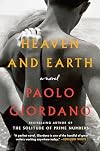
'It all belonged to us. The trees and the stone walls. The heavens. Even the heavens belonged to us, Teresa.'
In Paolo Giordano's new novel - in Italian entitled 'Divorare il cielo', roughly translated as Devouring Heaven - a group of youngsters (brothers, half-brothers, cousins) in the masseria next to her family's summer retreat accept Teresa into their group, and so begins an intense and emotionally damaging story. Giordano weaves the narrative backwards and forwards in time, and slowly we show more start to see the tragic consequences of being involved with these 3 young men and others who become part of the group.
Whilst Teresa is the central character, she is, is some ways, always the outsider, and indeed much of the narrative comes from her conversation with one of the boys, Tomasso, one Christmas Eve much later in time. By this time she now owns the masseria, a commune-cum-farm in which the group had tried to be self-sustaining and pesticide-free. Living in such a tight community there are frictions, romances and a power struggle which ultimately tears the group apart and leads to one tragic event in which Teresa, unwittingly, is the driving force.
There is much made of the biblical aspect of a return to Nature, as the group try to (re)create their own Eden. And as such the story of Adam and Eve, and their sons, provides much of the undertone of the book. The eco message is very strong also, and the book ends with a quest-like journey as Teresa heads to Iceland for one last meeting with her ex-husband - in a cave!
Whilst some elements of the novel are slightly loopy, and the characters slightly unbelievable, there is here a truly absorbing study of family, friendship and love, and the damage we do to ourselves and others around us. For all of its slight faults, I really enjoyed this, and would recommend it to anyone looking for a literary novel with a decent plot. As far as I can tell, the translation is done well and Giordano is clearly a talented writer. I just don't know why the change of title in the English translation - the original Italian of 'Devouring Heaven' is much more true to the book. show less
In Paolo Giordano's new novel - in Italian entitled 'Divorare il cielo', roughly translated as Devouring Heaven - a group of youngsters (brothers, half-brothers, cousins) in the masseria next to her family's summer retreat accept Teresa into their group, and so begins an intense and emotionally damaging story. Giordano weaves the narrative backwards and forwards in time, and slowly we show more start to see the tragic consequences of being involved with these 3 young men and others who become part of the group.
Whilst Teresa is the central character, she is, is some ways, always the outsider, and indeed much of the narrative comes from her conversation with one of the boys, Tomasso, one Christmas Eve much later in time. By this time she now owns the masseria, a commune-cum-farm in which the group had tried to be self-sustaining and pesticide-free. Living in such a tight community there are frictions, romances and a power struggle which ultimately tears the group apart and leads to one tragic event in which Teresa, unwittingly, is the driving force.
There is much made of the biblical aspect of a return to Nature, as the group try to (re)create their own Eden. And as such the story of Adam and Eve, and their sons, provides much of the undertone of the book. The eco message is very strong also, and the book ends with a quest-like journey as Teresa heads to Iceland for one last meeting with her ex-husband - in a cave!
Whilst some elements of the novel are slightly loopy, and the characters slightly unbelievable, there is here a truly absorbing study of family, friendship and love, and the damage we do to ourselves and others around us. For all of its slight faults, I really enjoyed this, and would recommend it to anyone looking for a literary novel with a decent plot. As far as I can tell, the translation is done well and Giordano is clearly a talented writer. I just don't know why the change of title in the English translation - the original Italian of 'Devouring Heaven' is much more true to the book. show less
This wonderful book follows the lives of two uniquely different characters, Mattia and Alice, she’s anorexic, he’s a cutter. Tragic accidents, resulting from foolish decisions, Mattia’s own when he leaves his twin alone in a park and Alice’s own when she decides to ski down a mountain alone, in the fog, after being forced by her domineering father to participate in the sport, shape their lives. Both characters continued to help create their own unhappiness and isolation, as they show more matured, further paving the dysfunctional path of their futures. Neither one fit comfortably into the world, in the space they occupied, and their own impetuous decisions, as they grew older, were just as foolish as those that originally caused their lives to veer into the unusual, rather than the ordinary.
Alice and Mattia are indeed prime numbers, divisible only by one, because they can’t abide close relationships with others. As they matured, they both continued to help shape their own unhappiness and life of solitude, a life they seemed, eventually, to grow to prefer. Their own idiosyncratic behavior discouraged healthy interactions as much as the way others treated them created that unhealthy behavior, that very behavior which turned them away from personal contact.
The book explored the consequences of decisions and the interaction of the characters with others, as they developed. They were needy and they met needy people. They were lonely and lonely people gravitated toward them. Dysfunction followed them, and often it was the key to their survival, as others, in spite of their shortcomings and their oddness, were drawn to them, precisely because of their deficiencies.
The book is uncomfortable to read because it is a sad commentary on the lives of the characters that never seemed to move on and grow. The book examines characters that are so called, “normal” characters who preyed on those that were not, who bullied them mercilessly, and yet, those characters managed to have more successful lives than those they bullied, and left to wither. All of the characters seemed flawed in some way, all seemed to have trouble communicating with each other, but the two main characters were uniquely flawed.
It was another audio book for me and I am becoming quite fond of this format. If the reader is good, the experience is exhilarating because I think it helps you become a part of the narrative with the narrator, feeling the excitement, fear, tension of the voice and suffering the whole range of emotions of the characters, as they do. Although I found it to be a sad little book, I also found it to be quite credible and recognized some of the characters in other people I have known through my lifetime. Reactions were plausible. I never had to suspend disbelief. It examined the ordinary and extraordinary reactions our experiences and environment sometimes unwittingly, precipitate. show less
Alice and Mattia are indeed prime numbers, divisible only by one, because they can’t abide close relationships with others. As they matured, they both continued to help shape their own unhappiness and life of solitude, a life they seemed, eventually, to grow to prefer. Their own idiosyncratic behavior discouraged healthy interactions as much as the way others treated them created that unhealthy behavior, that very behavior which turned them away from personal contact.
The book explored the consequences of decisions and the interaction of the characters with others, as they developed. They were needy and they met needy people. They were lonely and lonely people gravitated toward them. Dysfunction followed them, and often it was the key to their survival, as others, in spite of their shortcomings and their oddness, were drawn to them, precisely because of their deficiencies.
The book is uncomfortable to read because it is a sad commentary on the lives of the characters that never seemed to move on and grow. The book examines characters that are so called, “normal” characters who preyed on those that were not, who bullied them mercilessly, and yet, those characters managed to have more successful lives than those they bullied, and left to wither. All of the characters seemed flawed in some way, all seemed to have trouble communicating with each other, but the two main characters were uniquely flawed.
It was another audio book for me and I am becoming quite fond of this format. If the reader is good, the experience is exhilarating because I think it helps you become a part of the narrative with the narrator, feeling the excitement, fear, tension of the voice and suffering the whole range of emotions of the characters, as they do. Although I found it to be a sad little book, I also found it to be quite credible and recognized some of the characters in other people I have known through my lifetime. Reactions were plausible. I never had to suspend disbelief. It examined the ordinary and extraordinary reactions our experiences and environment sometimes unwittingly, precipitate. show less
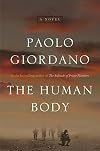
The Human Body is not a war novel. It neither glorifies nor disparages the Afghanistan conflict. Rather, it is a novel about people – people who just so happen to be in Afghanistan trained as soldiers and prepared to combat insurgents. It is about their lives before, during, and after their tour of duty. It is about the ways they combat the boredom, the danger, and the scars left by what they face. Mostly, it is about the ongoing battle of being human and surviving not just a war zone but show more also family, friends, and oneself.
It must be said that The Human Body is extremely well-written. Its sentences are crisp and efficient without sacrificing meaning, emotion, or description. There is a poetic quality to the narrative which readers will find soothing. This quality manages to make even the most gruesome scenes beautiful. The Afghan countryside takes on a tragic note as its practically indescribable grandeur hosts scenes of utmost horror.
In spite of all of this, the story is lacking. The narrative jumps from third person to first person and back again without warning. One chapter may be Egitto’s story told through third-person omniscience, but the next time readers see Egitto, it is via first person narration. It is a most unusual experience and one that can be quite jarring for readers.
While the characters themselves are interesting and varied, there are so many of them that not only is it challenging to keep them all straight, most of them remain flat and one-dimensional. There is little to no character development for most of the characters within the story. This lack of development undermines the character-driven plot of the novel.
One gets the distinct impression that in The Human Body, Paolo Giordano was a bit too ambitious in scope or did not write a long enough novel to achieve what he was trying to achieve. The cast of characters is just too big to be able develop them fully so that they not only help drive the plot but also so that readers can bond with them. There is also an unsettling feeling that one should have more than a rudimentary knowledge of the military, any military before starting the novel. So little of military life gets an explanation that those readers with no familiarity with or exposure to the unique acronyms and lifestyle of professional soldiers will be lost. It is a shame, really, because the potential greatness of The Human Body is so very near to the surface. All of the elements for this to be an amazing novel are there; they just need more page space to take root and to blossom – something they did not get. show less
It must be said that The Human Body is extremely well-written. Its sentences are crisp and efficient without sacrificing meaning, emotion, or description. There is a poetic quality to the narrative which readers will find soothing. This quality manages to make even the most gruesome scenes beautiful. The Afghan countryside takes on a tragic note as its practically indescribable grandeur hosts scenes of utmost horror.
In spite of all of this, the story is lacking. The narrative jumps from third person to first person and back again without warning. One chapter may be Egitto’s story told through third-person omniscience, but the next time readers see Egitto, it is via first person narration. It is a most unusual experience and one that can be quite jarring for readers.
While the characters themselves are interesting and varied, there are so many of them that not only is it challenging to keep them all straight, most of them remain flat and one-dimensional. There is little to no character development for most of the characters within the story. This lack of development undermines the character-driven plot of the novel.
One gets the distinct impression that in The Human Body, Paolo Giordano was a bit too ambitious in scope or did not write a long enough novel to achieve what he was trying to achieve. The cast of characters is just too big to be able develop them fully so that they not only help drive the plot but also so that readers can bond with them. There is also an unsettling feeling that one should have more than a rudimentary knowledge of the military, any military before starting the novel. So little of military life gets an explanation that those readers with no familiarity with or exposure to the unique acronyms and lifestyle of professional soldiers will be lost. It is a shame, really, because the potential greatness of The Human Body is so very near to the surface. All of the elements for this to be an amazing novel are there; they just need more page space to take root and to blossom – something they did not get. show less
Did you ever stand on the edge of the crowd, unbelonging and unable to turn away? If you did, you’ll see something of yourself hidden in Alice or Mattia, both wounded by their childhood attempts to escape. Calming the mind with numbers, soothing the body with pain, starving their thoughts and their feelings, they suddenly find themselves thrown together, with each’s dark unbalance harmonizing the other, and childhood ends.
Of course, childhood’s end is messy, inconvenient, and fraught show more with conflicting purpose. But Paulo Giordano tells the tale of his misfits with beautifully well-fitted words, complex turns of phrase that fly from the page and soar, and fragile emotions aching to be seen instead of ignored.
As plans fail and lives flail, growing apart replaces growing together for these two stranded characters. A chance encounter might restore what’s lost, but there’s a core of genuine, unpredictable feeling underneath the mathematical precisions of separation. The novel slowly opens to reveal a view wider than mountainscapes, deeper than rivers, and more honest than fiction is usually allowed to be. If you want glib and easy, this isn’t the book for you. If you want gritty, broken, and quietly healed, it is.
Disclosure: A friend loaned me her copy, correctly guessing I would really enjoy it. show less
Of course, childhood’s end is messy, inconvenient, and fraught show more with conflicting purpose. But Paulo Giordano tells the tale of his misfits with beautifully well-fitted words, complex turns of phrase that fly from the page and soar, and fragile emotions aching to be seen instead of ignored.
As plans fail and lives flail, growing apart replaces growing together for these two stranded characters. A chance encounter might restore what’s lost, but there’s a core of genuine, unpredictable feeling underneath the mathematical precisions of separation. The novel slowly opens to reveal a view wider than mountainscapes, deeper than rivers, and more honest than fiction is usually allowed to be. If you want glib and easy, this isn’t the book for you. If you want gritty, broken, and quietly healed, it is.
Disclosure: A friend loaned me her copy, correctly guessing I would really enjoy it. show less
Lists
Awards


You May Also Like


Associated Authors
Statistics
- Works
- 19
- Also by
- 4
- Members
- 5,284
- Popularity
- #4,710
- Rating
- 3.5
- Reviews
- 261
- ISBNs
- 249
- Languages
- 28
- Favorited
- 4