
Mary Mapes Dodge (1831–1905)
Author of Hans Brinker, or The Silver Skates
About the Author
Image credit: Mary Elizabeth Mapes Dodge (1831-1905) Buffalo Electrotype and Engraving Co., Buffalo, N.Y.
Series
Works by Mary Mapes Dodge
Hans Brinker or The Silver Skates: A Story of Life in Holland (Illustrated Junior Library) (1945) 210 copies
Hans Brinker or the Silver Skates [adapted - Troll Illustrated Classics] (1988) 110 copies, 1 review
Hans Brinker : or, The silver skates 3 copies
Irvington stories 2 copies
St. Nicholas: An Illustrated Magazine for Young Folks Volume XV Part 1. Nov. 1887 to April, 1888 (1888) 2 copies
The golden gate 1 copy
St. Nicholas, Vol. 39: An Illustrated Magazine for Young Folks; Part II., May to October, 1912 (Classic Reprint) (2018) 1 copy
St Nicholas (magazine) 1 copy
St. Nicholas Volume VII 1 copy
Theophilus and Others 1 copy
St. Nicholas Scribner's Illustrated Magazine for Girls and Boys; November, 1874, to November 1875 Volume 2 (2017) 1 copy
St. Nicholas, Vol. 21: An Illustrated Magazine for Young Folks; Part I., November, 1893, to April, 1894 (Classic Reprint) (2017) 1 copy
St. Nicholas, Vol. 4: Scribner's Illustrated Magazine for Girls and Boys; November, 1876, to November, 1877 (Classic Reprint) (2017) 1 copy
Hans Brinker 1 copy
Associated Works
Call of the Wild • Grimms' Fairy Tales • Hans Brinker • Robinson Crusoe • Swiss Family Robinson (1963) — Contributor — 2 copies
Tagged
Common Knowledge
- Canonical name
- Dodge, Mary Mapes
- Legal name
- Mapes, Mary Elizabeth (birth)
- Birthdate
- 1831-01-26
- Date of death
- 1905-08-21
- Gender
- female
- Education
- private tutors
- Occupations
- children's writer
magazine editor - Organizations
- St. Nicholas Magazine
Hearth and Home - Awards and honors
- Prix Montyon (1876)
- Relationships
- Dodge, William (husband)
Mapes, James J. (father)
Dodge, James Mapes (son) - Short biography
- Born in New York City, she married lawyer William Dodge at the age of twenty. Widowed seven years later, she began writing children's stories to support herself and her two sons. "Hans Brinker; or, The Silver Skates," her most famous book, was published in 1865. She became an associate editor of "Hearth and Home" in 1868 and in 1873 became the editor of "St. Nicholas," a new illustrated children's magazine to which she also contributed stories. Many of those stories were later published as collections. She continued as editor and contributor to "St. Nicholas" until her death at Onteora Park, New York.
- Nationality
- USA
- Birthplace
- New York, New York, USA
- Places of residence
- New York, New York, USA (birth)
Newark, New Jersey, USA
Onteora Park, Tannersville, Greene County, New York, USA (death) - Place of death
- Onteora Park, Tannersville, Greene County, New York, USA
- Burial location
- Evergreen Cemetery and Crematory, Hillside, Union County, New Jersey, USA
- Associated Place (for map)
- New York, USA
Members
Reviews
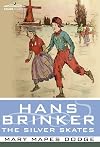
Mary Mapes Dodge tried to make a Holland sandwich with this book, and in my opinion, it's a culinary failure. Wanting to educate American children in the 1800's about life in Holland, she wrote a part fiction, part non fiction account of village children living near Amsterdam. Then she shoved it in the middle of a story about Hans Brinker and his troubled family, and added in some extra non fiction for good measure. This really spoiled the book for me. I liked Hans and his family, but I was show more frustrated by the diversions into other plot lines, and bored by the non fiction sections.
I was willing, as some reviewers suggested, to skip the non-Hans chapters, until realised that I'd be skipping half the book. So I decided not to bother. show less
I was willing, as some reviewers suggested, to skip the non-Hans chapters, until realised that I'd be skipping half the book. So I decided not to bother. show less
What a delightful book this is. I am generally disappointed by children’s books, but Mary Mapes Dodge did not talk down to her audience, and as a result the read is enjoyable, even for an adult.
Interestingly enough, I had thought this book was written by a Hollander, but it was written by an American. She obviously wanted her young readers to learn something about a nation that she so clearly admired, so she included a great deal of history, descriptions of customs and well-drawn images show more of the countryside and the cities. The history was interwoven into the story as a group of boys showed off their land to a visiting English lad. It was done deftly, so that you could learn a great deal without feeling you had just sat through a lecture, and it did not subtract from, but rather added to, the boy’s adventures.
The story at the heart of the book, a tale of a poor but proud family with a seriously ailing father and a race in which the two children, Gretel and Hans compete to win a pair of silver skates, was nothing like the idea that I had harbored over the years. I never read the book as a child, so somewhere along the way I had adopted an erroneous idea of the plot. The actual story was much more complex and far more interesting than the one had imagined.
I’m sure modern children might find this a little old-fashioned, but it was sweet, had a good moral purpose, and would make a worthwhile read for them all the same. show less
Interestingly enough, I had thought this book was written by a Hollander, but it was written by an American. She obviously wanted her young readers to learn something about a nation that she so clearly admired, so she included a great deal of history, descriptions of customs and well-drawn images show more of the countryside and the cities. The history was interwoven into the story as a group of boys showed off their land to a visiting English lad. It was done deftly, so that you could learn a great deal without feeling you had just sat through a lecture, and it did not subtract from, but rather added to, the boy’s adventures.
The story at the heart of the book, a tale of a poor but proud family with a seriously ailing father and a race in which the two children, Gretel and Hans compete to win a pair of silver skates, was nothing like the idea that I had harbored over the years. I never read the book as a child, so somewhere along the way I had adopted an erroneous idea of the plot. The actual story was much more complex and far more interesting than the one had imagined.
I’m sure modern children might find this a little old-fashioned, but it was sweet, had a good moral purpose, and would make a worthwhile read for them all the same. show less

I never read this is a child but it's just the sort of book I would have loved. Reading it now, as an adult, some 155 years after it was first published, a few character attitudes and plot features do stand as out as not the sort of thing you would say today. It is of its time. That aside, it's still a really enjoyable classic work of children's fiction and sits side by side with other great children's classics like Little Women, the Little House books, The Secret Garden, and so on.
Set in show more nineteenth-century Holland, brother and sister Hans (15) and Gretel (12) live with their parents in a run-down cottage. Their mother, Dame Brinker, Hans and Gretel, just about scrape enough of a living together to get by and keep from starvation. Their father needs constant care and watching and so they take it in turns to be with him. He suffered a head injury in an industrial accident some 10 years previously, so Hans and Gretel have never really known their father. He has no memory and is prone to fits, so has to be carefully watched around the fireplace.
It's winter time, Holland is frozen over and all of the local children, rich and poor alike, spend as much time as they can out on their ice skates. Hans and Gretel are both talented skaters, despite struggling along on wooden skates which Hans has made for them. When they hear of the great ice-skating race, in which one boy and one girl will each win a pair of silver ice skates, both children are excited but how could they hope to win on their homemade wooden skates...? And what can be done about the worsening condition of their father? Perhaps the famous Dr Boekman can help?
Despite never having visited Holland, and basing all of her historical information on two nineteenth century histories of the Netherlands by John Lothrop Motley, Mary Mapes Dodge interweaves a good amount of Dutch history into her story, which I found really interesting but which children today might skip over as some passages could be seen as a bit laborious. Examples include the Leiden gunpowder disaster of 1807 which I had never heard of before.
The story was a great success in its day and a piece at the back of my edition claims that it out-sold everything (presumably in America only) except Charles Dickens's Our Mutual Friend, when it was first published. It's a wonderfully warm and fuzzy story, with the usual moralising and 'good child' message of its time (though to a lesser extent than SPCK and similar Victorian children's literature), there's a typical array of nineteenth-century characters and personalities (kind, charitable to self-aggrandising and disdainful of the poor). If you haven't read it before, I can highly recommend this classic as the ideal wintry read. show less
Set in show more nineteenth-century Holland, brother and sister Hans (15) and Gretel (12) live with their parents in a run-down cottage. Their mother, Dame Brinker, Hans and Gretel, just about scrape enough of a living together to get by and keep from starvation. Their father needs constant care and watching and so they take it in turns to be with him. He suffered a head injury in an industrial accident some 10 years previously, so Hans and Gretel have never really known their father. He has no memory and is prone to fits, so has to be carefully watched around the fireplace.
It's winter time, Holland is frozen over and all of the local children, rich and poor alike, spend as much time as they can out on their ice skates. Hans and Gretel are both talented skaters, despite struggling along on wooden skates which Hans has made for them. When they hear of the great ice-skating race, in which one boy and one girl will each win a pair of silver ice skates, both children are excited but how could they hope to win on their homemade wooden skates...? And what can be done about the worsening condition of their father? Perhaps the famous Dr Boekman can help?
Despite never having visited Holland, and basing all of her historical information on two nineteenth century histories of the Netherlands by John Lothrop Motley, Mary Mapes Dodge interweaves a good amount of Dutch history into her story, which I found really interesting but which children today might skip over as some passages could be seen as a bit laborious. Examples include the Leiden gunpowder disaster of 1807 which I had never heard of before.
The story was a great success in its day and a piece at the back of my edition claims that it out-sold everything (presumably in America only) except Charles Dickens's Our Mutual Friend, when it was first published. It's a wonderfully warm and fuzzy story, with the usual moralising and 'good child' message of its time (though to a lesser extent than SPCK and similar Victorian children's literature), there's a typical array of nineteenth-century characters and personalities (kind, charitable to self-aggrandising and disdainful of the poor). If you haven't read it before, I can highly recommend this classic as the ideal wintry read. show less
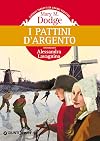
Uno dei libri per l'infanzia che mi piace di più. Ogni tanto lo rileggo.
Per certi versi buonista (difficile trovare un personaggio totalmente negativo), per certi versi crudo (la povertà raccontata senza sconti).
Ma dà da sognare e soprattutto involgia ai buoni sentimenti.
Sarà la prima storia complessa che farò leggere ai miei figli.
E' stato anche il primo libro che mi ha fatto conoscere l'Olanda e che me l'ha fatta amare.
Per certi versi buonista (difficile trovare un personaggio totalmente negativo), per certi versi crudo (la povertà raccontata senza sconti).
Ma dà da sognare e soprattutto involgia ai buoni sentimenti.
Sarà la prima storia complessa che farò leggere ai miei figli.
E' stato anche il primo libro che mi ha fatto conoscere l'Olanda e che me l'ha fatta amare.
Lists
1970s (1)
Sonlight Books (1)
Ambleside Year 5 (1)
Awards


You May Also Like


Associated Authors
Statistics
- Works
- 108
- Also by
- 12
- Members
- 6,210
- Popularity
- #3,949
- Rating
- 3.8
- Reviews
- 47
- ISBNs
- 220
- Languages
- 9
- Favorited
- 2