
Jenny Holzer
Author of Jenny Holzer
About the Author
Image credit: Ralph Ueltzhoeffer
Works by Jenny Holzer
The Venice installation : United States Pavilion, the 44th Venice Biennale, May 27-September 30, 1990 (1990) 51 copies, 1 review
Jenny Holzer : Neue Nationalgalerie, Staatliche Museen zu Berlin--Preussischer Kulturbesitz (2001) 3 copies
[Inflammatory posters 1 copy
Exhibitions 1 copy
[Inflammatory essays] 1 copy
Survival Stories 1 copy
Jenny Holzer: War Paintings 1 copy
Associated Works
Theories and Documents of Contemporary Art: A Sourcebook of Artists' Writings (1995) — Contributor — 420 copies, 1 review
Tagged
Common Knowledge
- Gender
- female
Members
Reviews

I really tried to get into this artist but I failed utterly - or is it me who failed? Produced to accompany a travelling exhibition that I saw at the ICA in London in the mid-1980s, Holzer's work mimics the late capitalist shallowness of an era well satirised in 'American Psycho'.
The book is not short of material - many images, an interview with the artist which is far from pompous and an 'appreciation' as well as the list of exhibitions which are startling in their number. She seems like a show more very nice lady. The book plays the story straight.
Unfortunately, the work itself is one extended gimmick, the very essence of conceptualism - ideas of exquisite shallowness performed in the to-hand media of the day. A surface sheen on a smooth-running system in which the cogs created meaning where they could. A market.
I suspect she will be 'historically referenced' because her work was important at the time but I just saw nothing there - again and again. There was not even the hackneyed excuse that this was irony or perhaps that some lucky sign expressed some zen mystery. The banality was staggering.
There is not much to add except that I know what troubles me about her work restrospectively in the year of Trump and the collapse of New York liberal pretensions. Not the shallowness (since shallowness can amuse) but the talking at and down to people to 'raise awareness'.
I still think raising awareness is a matter of dialogue and argument, concepts not conceptualism, between equals and that art is interesting only when it speaks of things that cannot be spoken in texts. These texts of Holzer's say nothing, imply nothing, make a virtue of the platitudinous.
Perhaps they amuse. Perhaps they cast a light on the mental attitudes of the creative middle classes of a certain era digging their own grave as they pretended to care or rather emote over the world. But they do not enlighten and they do not engage. Worse, they preach slyly and poorly. show less
The book is not short of material - many images, an interview with the artist which is far from pompous and an 'appreciation' as well as the list of exhibitions which are startling in their number. She seems like a show more very nice lady. The book plays the story straight.
Unfortunately, the work itself is one extended gimmick, the very essence of conceptualism - ideas of exquisite shallowness performed in the to-hand media of the day. A surface sheen on a smooth-running system in which the cogs created meaning where they could. A market.
I suspect she will be 'historically referenced' because her work was important at the time but I just saw nothing there - again and again. There was not even the hackneyed excuse that this was irony or perhaps that some lucky sign expressed some zen mystery. The banality was staggering.
There is not much to add except that I know what troubles me about her work restrospectively in the year of Trump and the collapse of New York liberal pretensions. Not the shallowness (since shallowness can amuse) but the talking at and down to people to 'raise awareness'.
I still think raising awareness is a matter of dialogue and argument, concepts not conceptualism, between equals and that art is interesting only when it speaks of things that cannot be spoken in texts. These texts of Holzer's say nothing, imply nothing, make a virtue of the platitudinous.
Perhaps they amuse. Perhaps they cast a light on the mental attitudes of the creative middle classes of a certain era digging their own grave as they pretended to care or rather emote over the world. But they do not enlighten and they do not engage. Worse, they preach slyly and poorly. show less
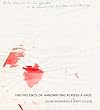
Two of the most original artists of the postwar period, Louise Bourgeois (1911–2010) and Jenny Holzer (b. 1950), meet in this exceptional artist’s book conceived and designed by Holzer to accompany the Bourgeois exhibition she has curated at the Kunstmuseum Basel.
Holzer is internationally renowned for her exploration and subversion of public language in a wide variety of media and formats. Despite their formal differences, both artists share a strong interest in psychological and show more emotional states, such as love, desire, sexuality, rejection, jealousy, murder, suicide, dependency, and abandonment. Where Holzer approaches these subjects from a more sociopolitical angle, Bourgeois derives them from her own psychic life.
Holzer’s book is not a document of her Bourgeois exhibition but rather a parallel work that further mines the dynamic interplay between text and image in Bourgeois’ art. Working in a sumptuous oversize format, she has set up a nonlinear narrative through juxtapositions of Bourgeois’ works and writings, deploying extreme close-ups, dramatic croppings, full-page bleeds, and other devices to startle and refocus our attention on Bourgeois’ preoccupations and obsessions. At times these juxtapositions are enriched with works chosen from the historical collections of the Kunstmuseum Basel. The resultant confrontations are unexpected, jarring, and inspiring.
A fascinating montage of images and writings, this volume offers a unique perspective on Bourgeois’ extraordinary oeuvre as filtered through Holzer’s gaze.
The artist’s book is accompanied by a booklet with texts by Kunstmuseum Basel director Josef Helfenstein and curator Anita Haldemann.
Published with the Kunstmuseum Basel on the occasion of the exhibition Louise Bourgeois x Jenny Holzer: The Violence of Handwriting Across a Page, February 19–May 15, 2022. show less
Holzer is internationally renowned for her exploration and subversion of public language in a wide variety of media and formats. Despite their formal differences, both artists share a strong interest in psychological and show more emotional states, such as love, desire, sexuality, rejection, jealousy, murder, suicide, dependency, and abandonment. Where Holzer approaches these subjects from a more sociopolitical angle, Bourgeois derives them from her own psychic life.
Holzer’s book is not a document of her Bourgeois exhibition but rather a parallel work that further mines the dynamic interplay between text and image in Bourgeois’ art. Working in a sumptuous oversize format, she has set up a nonlinear narrative through juxtapositions of Bourgeois’ works and writings, deploying extreme close-ups, dramatic croppings, full-page bleeds, and other devices to startle and refocus our attention on Bourgeois’ preoccupations and obsessions. At times these juxtapositions are enriched with works chosen from the historical collections of the Kunstmuseum Basel. The resultant confrontations are unexpected, jarring, and inspiring.
A fascinating montage of images and writings, this volume offers a unique perspective on Bourgeois’ extraordinary oeuvre as filtered through Holzer’s gaze.
The artist’s book is accompanied by a booklet with texts by Kunstmuseum Basel director Josef Helfenstein and curator Anita Haldemann.
Published with the Kunstmuseum Basel on the occasion of the exhibition Louise Bourgeois x Jenny Holzer: The Violence of Handwriting Across a Page, February 19–May 15, 2022. show less

Jenny Holzer’s Belligerent is the latest title in the LiberArs series. While the book shares a format with the others in the collection, a closer look reveals that this is not a traditional book but a box with a magnetic closure. The box opens to reveal seven original works by Holzer that unfold into 60 x 79 cm posters, which can be kept in the box or even framed and displayed. In Belligerent, Holzer has found the fingerprints of an idle consciousness in redacted reports of detainee abuse show more in American military prisons, revealing it with precision while daring the reader to look. In his introduction, Joshua Craze says ‘There is a double violence in the redacted documents that Holzer paints: the violence done to the detainees, meted out in secret, and the violence done to the truth, visible in the redactions of the documents. The truth does not simply disappear, but appears as an absence.’ - ivorypress show less

Jenny Holzer (b.1950) is one of the most significant artists to work in the public realm since the 1980s. Starting on the streets of New York with simple fly-posters, she has gone on to disseminate her truisms, slogans, memorials and poems through a variety of media. They are enunciated by an unstable register of personae, be it ad-man, stand-up comedian, torturer, victim or evangelist. The sites for her work range from T-shirts and golf balls to dazzling electronic signboards at baseball show more stadiums.
Her work uses language to investigate the nature of ideologies as conscious and unconscious formations about identity and experience. Her complex and poetic texts can be shocking, humorous and intriguing in content. At the same time she draws on Minimalism's use of industrial materials and deploys scale, movement and light to create art of great formal power and beauty.
In the Survey, art critic and academic David Joselit surveys Holzer's changing oeuvre, from the first appearance of the streetwise Truisms in the late 1970 to her large-scale installations in museums worldwide. Joan Simon, curator of Holzer's first solo US museum exhibition, discusses with the artist her use of language and its relationship to visual form. In the Focus, Slovenian cultural theorist and philosopher Renata Salecl takes an in-depth look at Holzer's Lustmord series, which was precipitated by the events in the former Yugoslavia and boldly addresses the atrocities committed in war. For the Artist's Choice, the artist's fragmented, unexpected language is mirrored in Samuel Beckett's Ill Seen Ill Said, which the artist has chosen alongside extracts from Crowds and Power by Elias Canetti. A text by the artist on her literary influences accompanies a selection of her signature texts in the Artist's Writings section. show less
Her work uses language to investigate the nature of ideologies as conscious and unconscious formations about identity and experience. Her complex and poetic texts can be shocking, humorous and intriguing in content. At the same time she draws on Minimalism's use of industrial materials and deploys scale, movement and light to create art of great formal power and beauty.
In the Survey, art critic and academic David Joselit surveys Holzer's changing oeuvre, from the first appearance of the streetwise Truisms in the late 1970 to her large-scale installations in museums worldwide. Joan Simon, curator of Holzer's first solo US museum exhibition, discusses with the artist her use of language and its relationship to visual form. In the Focus, Slovenian cultural theorist and philosopher Renata Salecl takes an in-depth look at Holzer's Lustmord series, which was precipitated by the events in the former Yugoslavia and boldly addresses the atrocities committed in war. For the Artist's Choice, the artist's fragmented, unexpected language is mirrored in Samuel Beckett's Ill Seen Ill Said, which the artist has chosen alongside extracts from Crowds and Power by Elias Canetti. A text by the artist on her literary influences accompanies a selection of her signature texts in the Artist's Writings section. show less
You May Also Like


Associated Authors
Statistics
- Works
- 42
- Also by
- 3
- Members
- 341
- Popularity
- #69,902
- Rating
- 3.6
- Reviews
- 10
- ISBNs
- 33
- Languages
- 1
- Favorited
- 1