
W.L. Idema
Author of Mulan: Five Versions of a Classic Chinese Legend, With Related Texts
About the Author
Wilt L. Idema is professor of Chinese literature at Harvard University. He is the translator of Meng Jiangnu Brings Down the Great Wall: Ten Versions of a Chinese Legend and the author (with Beata Grant) of The Red Brush: Writing Women of Imperial China.
Works by W.L. Idema
Mulan: Five Versions of a Classic Chinese Legend, With Related Texts (2010) — Translator — 43 copies, 2 reviews
Spiegel van de klassieke Chinese poëzie van het Boek der Oden tot de Qing-dynastie (1991) 39 copies, 2 reviews
The White Snake and Her Son: A Translation of The Precious Scroll of Thunder Peak with Related Texts (2009) 13 copies
The Butterfly Lovers: The Legend of Liang Shanbo and Zhu Yingtai: Four Versions with Related Texts (2010) 12 copies, 1 review
The Resurrected Skeleton: From Zhuangzi to Lu Xun (Translations from the Asian Classics) (2014) 9 copies
Personal Salvation and Filial Piety: Two Precious Scroll Narratives of Guanyin and Her Acolytes (2008) 8 copies
Text, Performance and Gender in Chinese Literature and Music: Essays in Honor of Wilt Idema (2009) 7 copies
Prinses Miaoshan en andere Chinese legenden van Guanyin, de bodhisattva van barmhartigheid (2000) 7 copies, 1 review
Vermaning door een dode hond : vijf chinese komedies uit het eind van de dertiende eeuw (1975) 4 copies
Vijfhonderd opzichters van vijfhonderd bibliotheken doven de lichten gedichten uit China, Taiwan, Korea en Japan vertaald voor Hans Bleyerveld (1997) 4 copies
Filial Piety and Its Divine Rewards: The Legend of Dong Yong and Weaving Maiden, With Related Texts (2009) 3 copies
Feesten : verhalen over feesten uit de Chinese, Joodse, Nederlandse, Indiase, Turkse, Surinaamse, Marokkaanse en Indonesische verteltraditie (1990) 2 copies
Dertig eeuwen Chinese poëzie: Van 'Het boek der Oden' tot het einde van het keizerrijk (2021) 2 copies
The Patriarch of Empty Lies 1 copy
A Topsy-Turvy World: Short Plays and Farces from the Ming and Qing Dynasties (Translations from the Asian Classics) (2023) 1 copy
Associated Works
Authority, Participation and Cultural Change in China: Essays by a European Study Group (1973) — Contributor — 12 copies
Het hoogste genot / Bai Xingjian. Gevolgd door: De genoegens van de liefde (1996) — Translator, some editions — 2 copies
The butterfly dream — Translator, some editions — 2 copies
Rescued by a coquette — Translator, some editions — 2 copies
Regen op de plataan — Translator, some editions — 2 copies
Li Kui draagt dorens — Translator, some editions — 1 copy
Vermaning door een dode hond — Translator, some editions — 1 copy
Tagged
Common Knowledge
- Legal name
- Idema, Wilt Lukas
- Birthdate
- 1944-11-12
- Gender
- male
- Education
- University of Leiden (Chinese Languages and Cultures)
- Occupations
- professor
- Organizations
- Harvard University
University of Leiden - Awards and honors
- Martinus Nijhoff-prijs (1992, translation award)
- Nationality
- Netherlands
- Birthplace
- Dalen, Netherlands
- Associated Place (for map)
- Dalen, Netherlands
Members
Reviews
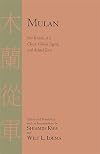
While tedious at times, overall this was pretty interesting. Mulan is my favorite Disney leading lady, and so I loved experiencing these real, un-Disneyfied versions of her story. Seeing the changing perspectives on and adaptations of her story has allowed me to see the far ranging implications of her character and her legend. My only major complaint about this book is the introduction. I would have benefited more from individual introductions to each of the five works than from being show more bombarded with relevant information about each version plus the appendices in the beginning. But this is just a personal preference. show less
The Butterfly Lovers: The Legend of Liang Shanbo and Zhu Yingtai, Four Versions With Related Texts by Wilt L. Idema
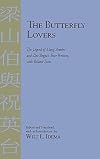
The Butterfly Lovers, one of the great stories in Chinese tradition, is often compared to Romeo and Juliet, which this story predates by at least 700 years. The tale of Zhu Yingtai, who disguises herself as a young man in order to study, and Liang Shanbo, her "sworn brother" until he learns the truth too late, is one of the world's great tragic love stories, kept alive through the centuries in the most popular forms of Chinese traditional storytelling: ballads and operas.
This show more scholarly/literary study of the narrative begins with a fascinating survey of the various forms the story has taken, followed by four complete translations of different versions from the 13th Century onwards, followed by another five brief or incomplete versions. It's fascinating to see how many elements remain in common through the various retellings, as well as to compare embellishments. While in every version Shanbo doesn't learn the truth of Yingtai's identity until too late, the circumstances of his arrival in her village and his subsequent death from a broken heart vary from version to version. Later, when Yingtai throws herself into Shanbo's open grave, some tales have shred from her garments transform into butterflies, while in others, the butterflies emerge from the crypt. The most interesting embellishment appears in "The Account of the Peony" in Appendix 4, in which a lengthy epilogue follows the lovers through purgatory and resurrection.
This book is recommended for scholars and those like me, fascinated by the story after having seen full-length opera versions many times. The translations are clear and readable, poetic and occasionally humorous. The main disappointment for me is that all the featured versions are short, around 30 pages each, while the version with the most literary appeal, "The Account of the Peony" is a translation of only the final act. I'm still wishing for a proper translation of a full-length libretto of one of the many Chinese opera versions. show less
This show more scholarly/literary study of the narrative begins with a fascinating survey of the various forms the story has taken, followed by four complete translations of different versions from the 13th Century onwards, followed by another five brief or incomplete versions. It's fascinating to see how many elements remain in common through the various retellings, as well as to compare embellishments. While in every version Shanbo doesn't learn the truth of Yingtai's identity until too late, the circumstances of his arrival in her village and his subsequent death from a broken heart vary from version to version. Later, when Yingtai throws herself into Shanbo's open grave, some tales have shred from her garments transform into butterflies, while in others, the butterflies emerge from the crypt. The most interesting embellishment appears in "The Account of the Peony" in Appendix 4, in which a lengthy epilogue follows the lovers through purgatory and resurrection.
This book is recommended for scholars and those like me, fascinated by the story after having seen full-length opera versions many times. The translations are clear and readable, poetic and occasionally humorous. The main disappointment for me is that all the featured versions are short, around 30 pages each, while the version with the most literary appeal, "The Account of the Peony" is a translation of only the final act. I'm still wishing for a proper translation of a full-length libretto of one of the many Chinese opera versions. show less
Fascinating look at the different retellings of the story, along with some interesting commentary on gender and the shifting themes of the story (from filial piety to proto-feminist patriotism)
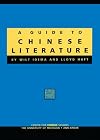
Idema is a well-renowned scholar of Chinese literature, and with his fellow author Haft, presents a detailed and comprehensive overview of the state of Chinese literature, from the pre-Qin era to the modern day, including works written in Taiwan. After an introductory section discussing the concept of literature and other features of traditional Chinese society crucial to understanding its writings, the second part is broken into five major time periods and discusses the key literature found show more therein. show less
You May Also Like


Associated Authors
Statistics
- Works
- 51
- Also by
- 16
- Members
- 342
- Popularity
- #69,720
- Rating
- 4.1
- Reviews
- 9
- ISBNs
- 97
- Languages
- 2