
Elyse Schein
Author of Identical Strangers: A Memoir of Twins Separated and Reunited
About the Author
Image credit: Paula Bernstein & Elyse Schein (credit: Elena Seibert)
Works by Elyse Schein
Tagged
Common Knowledge
- Birthdate
- 1968
- Gender
- female
- Agent
- Peter Steinberg
- Relationships
- Bernstein, Paula (sister)
- Nationality
- USA
- Associated Place (for map)
- USA
Members
Reviews
I watched the roller-coaster ride which is 'Three Identical Strangers', the story of triplets separated by the Louise Wise adoption agency, and so had to follow up with the written account of twins who suffered the same fate. Elyse Schein and Paula Bernstein were born in New York, 1968, to a formerly bright and promising young woman with mental health issues. Named Jean and Marian by their mother, they were given up for adoption through the prestigious Louise Wise agency, which was partaking show more in an 'experiment' to separate and study multiple identical siblings. The girls' adoptive parents were not told that their daughters had twins, so Elyse and Paula only discovered each other years later, when the Louise Wise scandal hit the headlines.
Told by both twins, this is an open and interesting account of what it's like to suddenly find a biological relative, and one who shares 100% of your DNA. They go through the stages of learning how closely their lives have followed each other to wishing, at least in Paula's case, that their lives were still their own. They also go on a quest to find out more about the twin research which separated them, and about their birth mother, which I found most compelling. The meeting with their 'uncle' is like a scene out of a true life TV movie! The many facts about twins - padding, I suspect - are interesting but not really what I wanted to read about (I laughed when the Wakefield twins got a mention, though!)
A shocking story with a happy ending, I think the film about the triplets tells the same tale with more impact. show less
Told by both twins, this is an open and interesting account of what it's like to suddenly find a biological relative, and one who shares 100% of your DNA. They go through the stages of learning how closely their lives have followed each other to wishing, at least in Paula's case, that their lives were still their own. They also go on a quest to find out more about the twin research which separated them, and about their birth mother, which I found most compelling. The meeting with their 'uncle' is like a scene out of a true life TV movie! The many facts about twins - padding, I suspect - are interesting but not really what I wanted to read about (I laughed when the Wakefield twins got a mention, though!)
A shocking story with a happy ending, I think the film about the triplets tells the same tale with more impact. show less
An intriguing book, told in their own words, of a pair of identical twins placed in separate adoptive homes without the adoptive parents being told that they had a living twin sibling. Through a series of almost accidental events they discovered that fact when they were in their thirties. As you can imagine, they each experience a range of strong emotions as they try to understand what happened to them and to tentatively approach establishing a relationship with each other. In addtion to show more their well told, difficult stories, they include a great deal of pertinent research on the societal and psychological issues that their situation raises. I was particularly taken by the fact that they quoted from two books that I have recently read; "The Girls Who Went Away" by Anne Fessler and "Reunited: An Investigative Genealogist Unlocks Some of Life's Greatest Mysteries" by Pamela Slaton. They didn't need to use much in the way of genealogical methods to find each other but they did as they searched for answers about their birth parents. It is also an important book as we currently struggle as a society with issues of closed vs. open adoption and separation of siblings, particularly when children are removed from their birth parents for neglect or abuse. show less
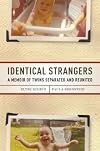
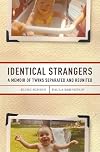
Identical Strangers: A Memoir of Twins Separated and Reunited: A Memoir of Twins Seperated and Reunited by Elyse Schein
Last summer, I went to see Three Identical Strangers, a documentary about identical triplets who were separated at birth and adopted into three different families. There’s a little summary of this story in one of the ESL readers at school, a fun story about college-age boys discovering identical triplets, but the full story is a lot darker. The babies weren’t split up by accident, instead they were part of a secret sociological study on genetically identical babies raised in different show more homes. The data is sealed until 2066, and none of the researchers are talking, but it’s kind of implied that the triplets had a predisposition to depression, and the researchers wanted to see how different parenting styles in different socio-economical classes would affect that.
There were some other multiples who’d been separated through the same shady adoption agency/secret study and later found each other, including twins Paula and Elyse. (There are probably also other twins who’ve never found each other.) Paula and Elyse wrote a memoir about their experiences, Identical Strangers.
I knew the book would have a reasonably happy ending, since the sisters had enough to share to fill a book, and they obviously liked each other enough to complete a creative project together.
But the twin study is even darker in this novel. I mean, the part about people growing up without knowing their twin, or even that they had a twin, is already pretty dark. Elyse and Paula discover that their birth mother was mentally ill, and was even institutionalized while pregnant. In the documentary, it’s implied that the birth parents may gave been mentally unstable, but in this memoir, it’s clear. The birth mothers were all mentally ill, and it seems like the twin research was really on how much parenting and life experiences can affect a genetic predisposition for mental illness. How much can nurture compensate for nature? Are we doomed to our genetics?
When legitimate researchers study inherited trauma, it must be difficult to prove what comes from genetics (or epigenetics, I think?) and what comes from being raised by traumatized parents. This seems to be the central question of the twin study’s research, although, again, all of the data is sealed for decades, and no one at the adoption agency would tell Elyse and Paula the whole story. The sisters struggle with this question of what they’ve inherited too, and it’s never really resolved.
This doesn’t feel like a memoir, more like a dark scifi setting, with unwitting subjects of sinister mental experiments trying to discover what was done to them. Pregnant women with mental illness were needed for this “study”. I wonder if the adoption agency, that lied to adoptive families and to separated twins, really obtained consent from mentally ill mothers or just pressured women with mental instability into giving up their children. show less
There were some other multiples who’d been separated through the same shady adoption agency/secret study and later found each other, including twins Paula and Elyse. (There are probably also other twins who’ve never found each other.) Paula and Elyse wrote a memoir about their experiences, Identical Strangers.
I knew the book would have a reasonably happy ending, since the sisters had enough to share to fill a book, and they obviously liked each other enough to complete a creative project together.
But the twin study is even darker in this novel. I mean, the part about people growing up without knowing their twin, or even that they had a twin, is already pretty dark. Elyse and Paula discover that their birth mother was mentally ill, and was even institutionalized while pregnant. In the documentary, it’s implied that the birth parents may gave been mentally unstable, but in this memoir, it’s clear. The birth mothers were all mentally ill, and it seems like the twin research was really on how much parenting and life experiences can affect a genetic predisposition for mental illness. How much can nurture compensate for nature? Are we doomed to our genetics?
When legitimate researchers study inherited trauma, it must be difficult to prove what comes from genetics (or epigenetics, I think?) and what comes from being raised by traumatized parents. This seems to be the central question of the twin study’s research, although, again, all of the data is sealed for decades, and no one at the adoption agency would tell Elyse and Paula the whole story. The sisters struggle with this question of what they’ve inherited too, and it’s never really resolved.
This doesn’t feel like a memoir, more like a dark scifi setting, with unwitting subjects of sinister mental experiments trying to discover what was done to them. Pregnant women with mental illness were needed for this “study”. I wonder if the adoption agency, that lied to adoptive families and to separated twins, really obtained consent from mentally ill mothers or just pressured women with mental instability into giving up their children. show less
Elyse Schein and Paula Bernstein each knew she was adopted. Each had created a life with which she was satisfied: Elyse living the life of a film student and aficionado in Prague, then Paris; Paula, a film critic and happily married with a toddler daughter in Brooklyn. Yet, each of them has carried a faint twinge of longing for “the other” throughout her life. In their mid-thirties, as they separately begin to search for information about their birth (natural) mother, they learn of the show more other’s existence. Finding out that they are twins is shocking, exciting, disrupting and comforting in turns. Even more confusing, they learn that they had been separated as infants as part of a twin study.
This memoir starts just before the revelation of learning that they are twins. The story is told in alternating voices. This allows Elyse and Paula to explore the multitude of feelings raised by meeting an identical sibling – their voices are honest, strong and clear. As they come to know each other, they realize that there is value in learning about their birth family, and begin to piece together their mother’s life. Simultaneously, they want to know more about why they were separated, and what their early lives were like. They explore the historical and contemporary ideas of twins, and share stories of other separated and reunited twins. These discussions evoke questions about nature versus nurture, and give plenty of food for thought.
I enjoyed the book, mostly because the story is so unusual. As much as I wanted to feel emotionally connected to the 2 writers, I felt a little bit distanced by their writing. However, it is a really interesting, noteworthy memoir, told with candor and strength. Definitely recommended. show less
This memoir starts just before the revelation of learning that they are twins. The story is told in alternating voices. This allows Elyse and Paula to explore the multitude of feelings raised by meeting an identical sibling – their voices are honest, strong and clear. As they come to know each other, they realize that there is value in learning about their birth family, and begin to piece together their mother’s life. Simultaneously, they want to know more about why they were separated, and what their early lives were like. They explore the historical and contemporary ideas of twins, and share stories of other separated and reunited twins. These discussions evoke questions about nature versus nurture, and give plenty of food for thought.
I enjoyed the book, mostly because the story is so unusual. As much as I wanted to feel emotionally connected to the 2 writers, I felt a little bit distanced by their writing. However, it is a really interesting, noteworthy memoir, told with candor and strength. Definitely recommended. show less
 This review was written for LibraryThing Early Reviewers.
You May Also Like


Associated Authors
Statistics
- Works
- 1
- Members
- 534
- Popularity
- #46,619
- Rating
- 3.5
- Reviews
- 56
- ISBNs
- 14
- Languages
- 2
