
Meredith Hall
Author of Without a Map: A Memoir
About the Author
Image credit: Meredith Hall
Works by Meredith Hall
Handel : Partenope {sound recording} {2001 McGegan/Philharmonia Baroque Orchestra} (2001) — Soprano vocals [Partenope] — 2 copies
Associated Works
True Stories, Well Told: From the First 20 Years of Creative Nonfiction Magazine (2014) — Contributor — 56 copies, 10 reviews
Tagged
Common Knowledge
- Birthdate
- 1949
- Gender
- female
- Agent
- Jennifer Gates
- Nationality
- USA
- Associated Place (for map)
- USA
Members
Reviews
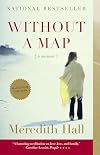
Wow! And that's a very soft wow, filled with wonderment at this book so bursting with truth and filled with pain, anger and forgiveness. On the surface, this could simply be viewed as a book about a woman who got pregnant at sixteen, gave up her baby, and had a very difficult time of things for the next twenty-five years or more. But, if you dig just a ltlle deeper, this is simply a story of what it means to be fully human, to live a life warts and all and finally try to understand what it show more all means. Meredith Hall does all this in her wonderful memoir,Without a Map. She presents herself as child, as daughter, as a mother. This is a truly "examined life," and anyone who reads it will relate and will feel richer for having read Hall's story. Here is a tiny sample of what glitters in this story, something that, when I read it, I recognized, as will anyone who has ever lost a parent without having the chance to verify something - that love went both ways. She speaks of a meeting with her father.
"He is eighty-four years old. I have a startling need to unburden my father of whatever guilt or regret he may carry, to say good-bye to him, to tell him I love him. I am afraid that he will die and I will be left with the unending conversation that has hung in the lost time between us all these years. There are many, many things I wish I could say to him ..."
Hall got to have that conversation, the one I never did have with my father. When I read these lines - and others - I wept. For this is a book about family ties - the ones that held and the ones that didn't. It will make you weep. This is a beautiful book, by a woman who has learned things about life the hard way. If Meredith Hall never writes another book, she will be remembered. This one is enough. show less
"He is eighty-four years old. I have a startling need to unburden my father of whatever guilt or regret he may carry, to say good-bye to him, to tell him I love him. I am afraid that he will die and I will be left with the unending conversation that has hung in the lost time between us all these years. There are many, many things I wish I could say to him ..."
Hall got to have that conversation, the one I never did have with my father. When I read these lines - and others - I wept. For this is a book about family ties - the ones that held and the ones that didn't. It will make you weep. This is a beautiful book, by a woman who has learned things about life the hard way. If Meredith Hall never writes another book, she will be remembered. This one is enough. show less
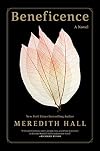
In the late 1940s, the Senter family enjoys an idyllic, if isolated, life in rural Maine. Parents Tup and Doris love each other and dote on their three children, all of them laboring together to keep their farm running, the family fed, and to still have time for occasional respite. As Tup says, “The farm is a bulwark…This world, and then the world outside. We are safe on this land, in this home.”
The novel is crafted in three parts: Before, During, and After, and the story is told show more alternately by three members of the family over nearly twenty years time. Before: Life on a working farm is hard: the work is unending, physical, demanding. In a time before television, the family entertains itself in quiet ways: reading aloud in the evenings, telling stories, playing piano. Death is often nearby: “There are rhythms here and we are part of them. You never take a life needlessly. But if a deer is eating my apples and trampling my hay, I have a natural right to protect what’s mine.”
During is when tragedy strikes and the family shatters, splinters, spirals into individual eddies of grief and guilt. “To everything now, there is the before and the after. The before feels like a dream, the now and the tomorrow demanding something we don’t yet possess.” It seems impossible for the Senters to overcome this burden but author Meredith Hall carefully leads them—and us—to a new future in which forgiveness is possible, and grace is still available. As Dodie, the daughter, says, “While I stood at the kitchen sink looking out on our land, I felt for the first time in a very long time the simple and perfect beauty of our lands, its beneficence, and I said yes…”
Beneficence is one of the best novels I’ve read all year, the perfect antidote to troubled times, beautifully composed and lyrically told. I cannot recommend it strongly enough.
[this review originally published at Manhattan Book Review] show less
The novel is crafted in three parts: Before, During, and After, and the story is told show more alternately by three members of the family over nearly twenty years time. Before: Life on a working farm is hard: the work is unending, physical, demanding. In a time before television, the family entertains itself in quiet ways: reading aloud in the evenings, telling stories, playing piano. Death is often nearby: “There are rhythms here and we are part of them. You never take a life needlessly. But if a deer is eating my apples and trampling my hay, I have a natural right to protect what’s mine.”
During is when tragedy strikes and the family shatters, splinters, spirals into individual eddies of grief and guilt. “To everything now, there is the before and the after. The before feels like a dream, the now and the tomorrow demanding something we don’t yet possess.” It seems impossible for the Senters to overcome this burden but author Meredith Hall carefully leads them—and us—to a new future in which forgiveness is possible, and grace is still available. As Dodie, the daughter, says, “While I stood at the kitchen sink looking out on our land, I felt for the first time in a very long time the simple and perfect beauty of our lands, its beneficence, and I said yes…”
Beneficence is one of the best novels I’ve read all year, the perfect antidote to troubled times, beautifully composed and lyrically told. I cannot recommend it strongly enough.
[this review originally published at Manhattan Book Review] show less
Meredith Hall's intriguing memoir "Without a Map" is a singularly poignant and interesting book from a literary point of view and both heart-wrenching and affirming from an emotional point. At first, the non-linear aspect of her story touched on the annoying but then it all came together; in many ways, the absence of chronology added to its uniqueness among memoirs. It was as if in the telling, she suddenly remembered something that made her go back and then move forward again.
As a story of show more society's reaction to young girls "who got in trouble", it brought back the horrible lack of compassion and empathy so rampant in the fifties and early sixties, when I was also growing up. Boys were understood to have no sexual control and girls were held solely responsible for keeping themselves "pure". Combining this with the lack of full sexual education, a phenomenon that has come back to reality under Bush's "Abstinence only" sex ed, could lead only to what it did in Meredith's life. Pregnant girls were shunned as tramps and sent away to have their babies in hiding and to give them up without ever seeing them. The professionals believed these young girls would easily forget their pasts and go on with their lives. No one except the young girls themselves ever imagined that they would remember their babies in stark detail every single day of their lives. Adoption itself was usually held in privacy between the obstetrician and whomever he deemed worthy of having a baby, often to disastrous consequences, as in this instance.
We don't often hear from these young women again except in what are portrayed as happily-ever-after reunion shows on TV so Meredith's memoir fills an extreme gap in our knowledge. She courageously shows us that the horror of being turned away by the very people invested with the responsibility for loving us unconditionally never goes away, that it permanently and pervasively marks every aspect of one's life forever. In the face of all that, however, the one thing that so stands out about Meredith is her unending capacity for understanding and forgiveness of the very people who least deserve it, her parents and siblings. From her early attempts to completely dissociate herself from her very essence before pregnancy through roaming the Middle East by herself to her years as a middle-aged mother of three grown sons and college writing teacher, who comes to love and embrace living by herself no longer mourning what was so brutally taken from her, Meredith's memoir is beautifully written, beseeching compassion, and determined to stay with the reader for a long long time.
In response to one reviewer who gave this book only one star and claimed Meredith was selfish and whiny and let her father off with no pain, I'm not sure you read this book in its entirety. There was not one instance "poor me". She bravely lived a life none of us should ever have to. She did not let her father off at all. She gave him two choices - to tell her he loved her all along and ask for forgiveness for his mistakes or to do what he ultimately did, to believe Meredith understands what he did and why and beg her to love him anyway. She realized that his cruelty to her and inability to apologize was all about him and would remain that way. He never looks good and never will. And Meredith finds she and her children don't need him after all.
If I have one complaint, it is a small one. Meredith tells us nothing about the father of her later children, the father she divorced after ten years of marriage. Although missing in his entirety, he is not really missed. I am merely curious about the one man who enabled Meredith to find love and the strength to have more children.
I strongly recommend reading Meredith's story and suggest that you will not easily find another as original and inspiring. show less
As a story of show more society's reaction to young girls "who got in trouble", it brought back the horrible lack of compassion and empathy so rampant in the fifties and early sixties, when I was also growing up. Boys were understood to have no sexual control and girls were held solely responsible for keeping themselves "pure". Combining this with the lack of full sexual education, a phenomenon that has come back to reality under Bush's "Abstinence only" sex ed, could lead only to what it did in Meredith's life. Pregnant girls were shunned as tramps and sent away to have their babies in hiding and to give them up without ever seeing them. The professionals believed these young girls would easily forget their pasts and go on with their lives. No one except the young girls themselves ever imagined that they would remember their babies in stark detail every single day of their lives. Adoption itself was usually held in privacy between the obstetrician and whomever he deemed worthy of having a baby, often to disastrous consequences, as in this instance.
We don't often hear from these young women again except in what are portrayed as happily-ever-after reunion shows on TV so Meredith's memoir fills an extreme gap in our knowledge. She courageously shows us that the horror of being turned away by the very people invested with the responsibility for loving us unconditionally never goes away, that it permanently and pervasively marks every aspect of one's life forever. In the face of all that, however, the one thing that so stands out about Meredith is her unending capacity for understanding and forgiveness of the very people who least deserve it, her parents and siblings. From her early attempts to completely dissociate herself from her very essence before pregnancy through roaming the Middle East by herself to her years as a middle-aged mother of three grown sons and college writing teacher, who comes to love and embrace living by herself no longer mourning what was so brutally taken from her, Meredith's memoir is beautifully written, beseeching compassion, and determined to stay with the reader for a long long time.
In response to one reviewer who gave this book only one star and claimed Meredith was selfish and whiny and let her father off with no pain, I'm not sure you read this book in its entirety. There was not one instance "poor me". She bravely lived a life none of us should ever have to. She did not let her father off at all. She gave him two choices - to tell her he loved her all along and ask for forgiveness for his mistakes or to do what he ultimately did, to believe Meredith understands what he did and why and beg her to love him anyway. She realized that his cruelty to her and inability to apologize was all about him and would remain that way. He never looks good and never will. And Meredith finds she and her children don't need him after all.
If I have one complaint, it is a small one. Meredith tells us nothing about the father of her later children, the father she divorced after ten years of marriage. Although missing in his entirety, he is not really missed. I am merely curious about the one man who enabled Meredith to find love and the strength to have more children.
I strongly recommend reading Meredith's story and suggest that you will not easily find another as original and inspiring. show less
This is a heartbreaking, entrancing force of nature. I read it in one sitting because I literally couldn't tear myself away. Others I know, on the other hand, could only take it in small doses since it is so depressing. There are so many holes and so many unanswered questions but you are grateful for what you are given.
Lists
Awards


You May Also Like


Associated Authors
Statistics
- Works
- 6
- Also by
- 1
- Members
- 529
- Popularity
- #47,054
- Rating
- 3.7
- Reviews
- 21
- ISBNs
- 15
- Languages
- 1