
Terry McDermott
Author of Perfect Soldiers: The 9/11 Hijackers: Who They Were, Why They Did It
About the Author
Works by Terry McDermott
The Hunt for KSM: Inside the Pursuit and Takedown of the Real 9/11 Mastermind, Khalid Sheikh Mohammed (2012) 53 copies, 1 review
Tagged
Common Knowledge
- Gender
- male
Members
Reviews

Los Angeles Times correspondent Terry McDermott has written an engrossing account of the group members who planned, abetted, and carried out the 9/11 attacks. Their stories are integrally connected with the spread of radical Islam.
McDermott describes several problems in the Muslim world that created a surplus of young men with nothing to do and no hope for the future. Muslim countries, particularly Egypt, encouraged and subsidized professional degrees, but had nothing for graduates to do show more once they obtained them. Radical Muslim clerics were not only unhindered but encouraged in their efforts to turn the frustration and anger of these young men to targets outside of their own countries. The Iranian Revolution in 1979 showed believers that an Islamic republic was a real possibility. The proxy fights between the Soviet and American regimes (in Afghanistan, Somalia, Yemen) left the region “flooded with weapons, hatreds, and instability.” In particular the Afghan war created a large number of trained terrorists ready to fight but nowhere to go when the Soviets pulled out in February 1989.
Training for jihad in the Afghanistan camps was a popular and even accepted activity: it was exciting, and gave the participants a raison d’etre. In the camps they met other like-minded men, and heard daily exhortations on the obligation “to march out for jihad.” The enemies identified in their nightly lectures were the unfaithful; apostate Muslim regimes; and the U.S., which was “occupying the lands of Islam in the holiest of places, the Arabian Peninsula” and serving Israel and diverting attention from “its occupation of Jerusalem and murder of Muslims.” A special hatred was reserved for the Jews (not just Israelis) and was characteristically felt by the 9/11 group members as well.
The author provides us with as many fascinating details as he can about the planning and execution of the 9/11 plot. Part of the reason it took so long to put into effect was due to the ineptness of the plotters. Yet, ironically, “Al Qaeda was not a slick, professional outfit that didn’t get caught because it didn’t make mistakes. It made mistakes all the time. It didn’t get caught because the government with which it was dealing made more of them.”
“In the end,” McDermott writes, “this is a story about the power of belief to remake ordinary men; it is a story about the dangerous power of ideas wrongly wielded.” It is also the story of a country – the U.S., that could not generate good intelligence about the Muslim world, nor get its disparate government agencies coordinated to piece together the few clues it had. The author hopes, by telling this story, to increase awareness and understanding: “Until we do understand, we have no chance at all.”
(JAF) show less
McDermott describes several problems in the Muslim world that created a surplus of young men with nothing to do and no hope for the future. Muslim countries, particularly Egypt, encouraged and subsidized professional degrees, but had nothing for graduates to do show more once they obtained them. Radical Muslim clerics were not only unhindered but encouraged in their efforts to turn the frustration and anger of these young men to targets outside of their own countries. The Iranian Revolution in 1979 showed believers that an Islamic republic was a real possibility. The proxy fights between the Soviet and American regimes (in Afghanistan, Somalia, Yemen) left the region “flooded with weapons, hatreds, and instability.” In particular the Afghan war created a large number of trained terrorists ready to fight but nowhere to go when the Soviets pulled out in February 1989.
Training for jihad in the Afghanistan camps was a popular and even accepted activity: it was exciting, and gave the participants a raison d’etre. In the camps they met other like-minded men, and heard daily exhortations on the obligation “to march out for jihad.” The enemies identified in their nightly lectures were the unfaithful; apostate Muslim regimes; and the U.S., which was “occupying the lands of Islam in the holiest of places, the Arabian Peninsula” and serving Israel and diverting attention from “its occupation of Jerusalem and murder of Muslims.” A special hatred was reserved for the Jews (not just Israelis) and was characteristically felt by the 9/11 group members as well.
The author provides us with as many fascinating details as he can about the planning and execution of the 9/11 plot. Part of the reason it took so long to put into effect was due to the ineptness of the plotters. Yet, ironically, “Al Qaeda was not a slick, professional outfit that didn’t get caught because it didn’t make mistakes. It made mistakes all the time. It didn’t get caught because the government with which it was dealing made more of them.”
“In the end,” McDermott writes, “this is a story about the power of belief to remake ordinary men; it is a story about the dangerous power of ideas wrongly wielded.” It is also the story of a country – the U.S., that could not generate good intelligence about the Muslim world, nor get its disparate government agencies coordinated to piece together the few clues it had. The author hopes, by telling this story, to increase awareness and understanding: “Until we do understand, we have no chance at all.”
(JAF) show less
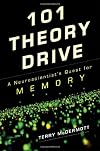
This is the amazing tale of Gary Lynch, am obsessive, driven, Scotch-loving neuroscientist at UC-Irvine. His lab studies memory and, apparently, has made important discoveries. This book covers his research into long-term potentiation in memory; a persistent strengthening of synapses based on recent patterns of activity. It is both exciting and some-what disheartening to learn of the awesome potential of human memory identified in intracellular calcium transients left over from primitive show more olfactory evolution. This science history work seems to fit along with theoretical physics advances where the actual underpinnings are more complex than expected (the hippocampus directing memory tasks to various brain areas), the "there" there being so seemingly insignificant (phosphorylation; a chemical reaction in which a small phosphate group is added to another molecule to change that molecule's activity). show less
An illuminating look at one scientist's decades-long quest to find the actual physical indication of memory in the brain. It's written relatively clearly, but you have to sit down with it for extended periods of time if you want to engage the theta rhythm and activate long-term potentiation (LTP), both of which are discussed in this book, thereby retaining what you learn from its pages.
The titular neuroscientist, Gary Lynch, is a colourful character. He came to neuroscience fro...more
An show more illuminating look at one scientist's decades-long quest to find the actual physical indication of memory in the brain. It's written relatively clearly, but you have to sit down with it for extended periods of time if you want to engage the theta rhythm and activate long-term potentiation (LTP), both of which are discussed in this book, thereby retaining what you learn from its pages.
The titular neuroscientist, Gary Lynch, is a colourful character. He came to neuroscience from a completely different academic background and essentially taught himself biology. His lab is filled with a multidisciplinary team that I think really brings home the benefits of having a wide-ranging education. For example, one of the lab members was a computer programmer before turning to neuroscience. Later on, the team needed a computer program to sort through mounds and mounds of data on rat hippocampi, and commercially available software wasn't cutting it, so this guy wrote his own program to do the job. Very impressive, not to mention handy.
The team's successes and failures are interesting to read about, and you really appreciate just how much work goes into all of those experiments, and how gratifying it is to see one's experiments turn out successfully. Even so, the scientists of Lynch Lab are very pragmatic, usually refusing to believe what they see until they've repeated the experiment umpteen times. Because their goal is to be able to point at a spot in the brain and say, "There. That's memory," they don't want to get carried away with themselves and pin too much false hope on a result.
One of the most fascinating things I learned from this book was that the brain has a built-in forgetting process that erases most of what you experience. Makes sense, because you don't want to remember literally every single detail of every single day. If you did, and the Lynch team were able to make all of those memories physically visible in your cerebral cortex, it would look like the synapse version of the show "Hoarders". So essentially what the researchers have discovered is that aging and the memory decline associated therewith is basically the forgetting process being stronger than LTP, so they just need to find a way to block the forgetting process and/or boost the remembering process, and they'll have made great strides in the fight against Alzheimer's, Parkinson's, Huntington's, and other cognitive decline diseases. There are even diseases that don't necessarily have a cognitive component but exhibit the same problems with LTP.
I've also learned that memory research is a cruel mistress, especially for the poor rats sacrificed to the cause... the image of a headless rat twitching in a garbage can is rather horrifying. So if you're an animal lover, be warned. The description doesn't really go beyond that; it's just more thinking about the sheer number of rats that have been killed over the years for these studies.
As I stated earlier, this book is fairly accessible, and the author draws some very clever comparisons (e.g. that humans are PCs... see Chapter 13) and uses other common subjects such as baseball to illustrate the memory concepts at work. The book also includes a glossary of terms and a selected bibliography of the actual papers if you're interested. I would recommend this book to well-informed laymen and those with a specialized interest in this kind of field. show less
The titular neuroscientist, Gary Lynch, is a colourful character. He came to neuroscience fro...more
An show more illuminating look at one scientist's decades-long quest to find the actual physical indication of memory in the brain. It's written relatively clearly, but you have to sit down with it for extended periods of time if you want to engage the theta rhythm and activate long-term potentiation (LTP), both of which are discussed in this book, thereby retaining what you learn from its pages.
The titular neuroscientist, Gary Lynch, is a colourful character. He came to neuroscience from a completely different academic background and essentially taught himself biology. His lab is filled with a multidisciplinary team that I think really brings home the benefits of having a wide-ranging education. For example, one of the lab members was a computer programmer before turning to neuroscience. Later on, the team needed a computer program to sort through mounds and mounds of data on rat hippocampi, and commercially available software wasn't cutting it, so this guy wrote his own program to do the job. Very impressive, not to mention handy.
The team's successes and failures are interesting to read about, and you really appreciate just how much work goes into all of those experiments, and how gratifying it is to see one's experiments turn out successfully. Even so, the scientists of Lynch Lab are very pragmatic, usually refusing to believe what they see until they've repeated the experiment umpteen times. Because their goal is to be able to point at a spot in the brain and say, "There. That's memory," they don't want to get carried away with themselves and pin too much false hope on a result.
One of the most fascinating things I learned from this book was that the brain has a built-in forgetting process that erases most of what you experience. Makes sense, because you don't want to remember literally every single detail of every single day. If you did, and the Lynch team were able to make all of those memories physically visible in your cerebral cortex, it would look like the synapse version of the show "Hoarders". So essentially what the researchers have discovered is that aging and the memory decline associated therewith is basically the forgetting process being stronger than LTP, so they just need to find a way to block the forgetting process and/or boost the remembering process, and they'll have made great strides in the fight against Alzheimer's, Parkinson's, Huntington's, and other cognitive decline diseases. There are even diseases that don't necessarily have a cognitive component but exhibit the same problems with LTP.
I've also learned that memory research is a cruel mistress, especially for the poor rats sacrificed to the cause... the image of a headless rat twitching in a garbage can is rather horrifying. So if you're an animal lover, be warned. The description doesn't really go beyond that; it's just more thinking about the sheer number of rats that have been killed over the years for these studies.
As I stated earlier, this book is fairly accessible, and the author draws some very clever comparisons (e.g. that humans are PCs... see Chapter 13) and uses other common subjects such as baseball to illustrate the memory concepts at work. The book also includes a glossary of terms and a selected bibliography of the actual papers if you're interested. I would recommend this book to well-informed laymen and those with a specialized interest in this kind of field. show less
The Hunt for KSM: Inside the Pursuit and Takedown of the Real 9/11 Mastermind, Khalid Sheikh Mohammed by Terry McDermott
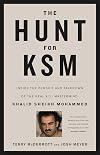
The Hunt for KSM gives us a chronological, detailed, and carefully researched account of the investigation into the characters that planned, financed, and executed the 9/11 attacks. McDermott and Meyer give us anecdotes, conversations, and small details that must have come from extensive interviews. The authors are quick to give credit to individual investigators and are not afraid to mention mistakes and lost opportunities when discussing earlier attempts to pinpoint the planners and actors show more in the terrorist attacks.
For those of us who are not familiar with the main characters, geography or the politics of the region, the details can be confusing. Fortunately, the writers are careful to repeat the names and to make the story accessible and comprehensible to the lay person.
The discussion differentiating the CIA and the FBI was particularly interesting as the authors explained why and how the CIA became the prime mover in the fight against terror. In the detailed description of the investigations, I learned that so many seemingly disparate events that were going on around me, whether in the Philippines or in the US, were significant. There are detailed accounts of KSM and his colleagues escapades in the Philippines - and the investigators' reconstruction of KSM's trail - that involve bar girls, an apartment in Greenhills, pretty dentists, and visits into the slums of Manila - that I personally found fascinating.
Overall, The Hunt for KSM is an engrossing read. It teaches us about geopolitics and current events and gives us greater insight into the debate about torture, civil rights versus emergency measures and national security. Not all the US characters are heroes, but we certainly appreciate the dedication and sacrifices of the American and Pakistani investigators.
ISBN-10: 0316186597 - Hardcover $27.99
Publisher: Little, Brown and Company (March 26, 2012), 368 pages.
Review copy courtesy of the publisher. show less
For those of us who are not familiar with the main characters, geography or the politics of the region, the details can be confusing. Fortunately, the writers are careful to repeat the names and to make the story accessible and comprehensible to the lay person.
The discussion differentiating the CIA and the FBI was particularly interesting as the authors explained why and how the CIA became the prime mover in the fight against terror. In the detailed description of the investigations, I learned that so many seemingly disparate events that were going on around me, whether in the Philippines or in the US, were significant. There are detailed accounts of KSM and his colleagues escapades in the Philippines - and the investigators' reconstruction of KSM's trail - that involve bar girls, an apartment in Greenhills, pretty dentists, and visits into the slums of Manila - that I personally found fascinating.
Overall, The Hunt for KSM is an engrossing read. It teaches us about geopolitics and current events and gives us greater insight into the debate about torture, civil rights versus emergency measures and national security. Not all the US characters are heroes, but we certainly appreciate the dedication and sacrifices of the American and Pakistani investigators.
ISBN-10: 0316186597 - Hardcover $27.99
Publisher: Little, Brown and Company (March 26, 2012), 368 pages.
Review copy courtesy of the publisher. show less
Awards


You May Also Like


Statistics
- Works
- 6
- Members
- 347
- Popularity
- #68,852
- Rating
- 3.6
- Reviews
- 12
- ISBNs
- 22