
Jeanne Walker Harvey
Author of Maya Lin: Artist-Architect of Light and Lines
Works by Jeanne Walker Harvey
Tagged
Common Knowledge
There is no Common Knowledge data for this author yet. You can help.
Members
Reviews

This book about the painter Alma Thomas begins with one of her quotes:
“Through color, I have sought to concentrate on beauty and happiness, rather than on man’s inhumanity to man.” (1970)
Growing up in Georgia in the early 1900s, Alma’s house was full of color and creativity. Her mother designed dresses and her aunts painted. But outside the house it was different: Alma and her sisters couldn’t enter the museums or the town library, or even attend the school just two doors away, show more because of segregation against Blacks. So Alma’s parents brought culture to their house, inviting speakers to tell them about people and places around the world. When Alma was 15, her family moved North, to Washington, D.C., “away from the injustices of the South.”
Alma retained her love for artistic pursuits, studying art in college and teaching at the local school. But as Harvey writes, “even in the nation’s capital, schools were still segregated and access to art limited.”
Following the example of her parents, Alma made her home a haven of art and learning and brought in local children.
Not until she was almost 70 years old did Alma begin to focus on her own art. Galleries took an interest in her work, and in 1972 the Whitney Museum in New York City featured her paintings - it was the first solo show by a Black woman. Other museums around the country followed. Alma died in 1978 at the age of 86, but her work continued to attract notice.
When the Obamas moved into the White House, they chose a painting by Alma to be the first artwork by a Black woman to be displayed there and to become part of the White House’s permanent collection. The author writes of the painting that it was “a painting of hope and joy. Ablaze with glorious color. Alma’s colors.”
Back matter includes notes by both the author and the illustrator, a photo of her painting in the White House, timeline and references.
Loveis Wise illustrated the book using vibrant colors and mosaic-like patterns in a reflection of Alma Thomas’s style and her emphasis on color.
Evaluation: I find Alma Thomas’s story interesting, but I felt the author spent too much text enthusing about the bright colors and patterns in Thomas’s painting. I felt she also downplayed the racism that affected so much of Thomas’s life. It almost felt like the book was “cleansed” to be acceptable to the new sanitized white-washed standards of the South. On the other hand, perhaps the focus on the positive and uplifting aspects of Thomas's art will appeal to children more. show less
“Through color, I have sought to concentrate on beauty and happiness, rather than on man’s inhumanity to man.” (1970)
Growing up in Georgia in the early 1900s, Alma’s house was full of color and creativity. Her mother designed dresses and her aunts painted. But outside the house it was different: Alma and her sisters couldn’t enter the museums or the town library, or even attend the school just two doors away, show more because of segregation against Blacks. So Alma’s parents brought culture to their house, inviting speakers to tell them about people and places around the world. When Alma was 15, her family moved North, to Washington, D.C., “away from the injustices of the South.”
Alma retained her love for artistic pursuits, studying art in college and teaching at the local school. But as Harvey writes, “even in the nation’s capital, schools were still segregated and access to art limited.”
Following the example of her parents, Alma made her home a haven of art and learning and brought in local children.
Not until she was almost 70 years old did Alma begin to focus on her own art. Galleries took an interest in her work, and in 1972 the Whitney Museum in New York City featured her paintings - it was the first solo show by a Black woman. Other museums around the country followed. Alma died in 1978 at the age of 86, but her work continued to attract notice.
When the Obamas moved into the White House, they chose a painting by Alma to be the first artwork by a Black woman to be displayed there and to become part of the White House’s permanent collection. The author writes of the painting that it was “a painting of hope and joy. Ablaze with glorious color. Alma’s colors.”
Back matter includes notes by both the author and the illustrator, a photo of her painting in the White House, timeline and references.
Loveis Wise illustrated the book using vibrant colors and mosaic-like patterns in a reflection of Alma Thomas’s style and her emphasis on color.
Evaluation: I find Alma Thomas’s story interesting, but I felt the author spent too much text enthusing about the bright colors and patterns in Thomas’s painting. I felt she also downplayed the racism that affected so much of Thomas’s life. It almost felt like the book was “cleansed” to be acceptable to the new sanitized white-washed standards of the South. On the other hand, perhaps the focus on the positive and uplifting aspects of Thomas's art will appeal to children more. show less
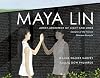
I was so pleased to find a book introducing young readers to the architect Maya Lin.
Maya was born in 1959 in Athens, Ohio. Her parents were both artists who encouraged Maya to be whatever she wanted. When Maya was a little girl, she liked to build tiny towns out of paper and scraps. She decided to be an architect, and studied overseas, looking at all the different buildings and learning all she could.
In 1981, her last year of college, she entered a contest to design a memorial honoring the show more American soldiers who died in the Vietnam War. She imagined a polished edge covered with names, reflecting the sky, the grass, and the the people who came to see the memorial. The names of the nearly 58,000 American servicemen who died would be listed in chronological order of their loss, etched in a V-shaped wall of polished black granite sunken into the ground.
As she later recalled, while studying at Yale, whenever Maya walked through the university’s Memorial Rotunda, she was so impressed by the engraving of the names of those alumni who died in service of their country: “I think it left a lasting impression on me,” Lin wrote, “the sense of the power of a name.”
As the author tells us, Maya sculpted a model first out of mashed potatoes, then with clay. She sent in sketches for her entry along with an essay explaining her vision. Out of 1,421 entries, Maya’s design was chosen. (Somewhat humorously, since her design only earned her a B in her architecture seminar at Yale, she had no expectations of winning the contest.)
The Vietnam Veterans Memorial was the first of her many works. The author writes:
“Each piece is different, but all share Maya’s vision. She wants people to be a part of her art. Look. Touch. Read. Walk around. Sit by. Think about.”
An Author’s Note at the back of the book adds that Maya has received many awards, and in 2005, she was inducted into the National Women’s Hall of Fame. The author also provides some website addresses for more information. At Maya Lin’s own website for example (which has incredible design features), you will learn that Maya considers herself not only an artist and designer, but an environmentalist as well: “Her works merge the physical and psychological environment, presenting a new way of seeing the world around us.”
Lovely artwork by Dow Phumiruk features a muted palette and crisp illustrations done by using Photoshop. As a bonus, in the margins around the page containing the Author’s Note, the illustrator has depicted labeled tools of an architect.
Evaluation: I have always been impressed with the Vietnam War Memorial. It seems to me to be the quintessential expression of postmodernism, which posits that knowledge and truth are products of social, historical or political discourses or interpretations. When you look at the monument, you see yourself reflected, along with the names of those who died. It suggests to me we all are responsible for the war, and we are all its victims. show less
Maya was born in 1959 in Athens, Ohio. Her parents were both artists who encouraged Maya to be whatever she wanted. When Maya was a little girl, she liked to build tiny towns out of paper and scraps. She decided to be an architect, and studied overseas, looking at all the different buildings and learning all she could.
In 1981, her last year of college, she entered a contest to design a memorial honoring the show more American soldiers who died in the Vietnam War. She imagined a polished edge covered with names, reflecting the sky, the grass, and the the people who came to see the memorial. The names of the nearly 58,000 American servicemen who died would be listed in chronological order of their loss, etched in a V-shaped wall of polished black granite sunken into the ground.
As she later recalled, while studying at Yale, whenever Maya walked through the university’s Memorial Rotunda, she was so impressed by the engraving of the names of those alumni who died in service of their country: “I think it left a lasting impression on me,” Lin wrote, “the sense of the power of a name.”
As the author tells us, Maya sculpted a model first out of mashed potatoes, then with clay. She sent in sketches for her entry along with an essay explaining her vision. Out of 1,421 entries, Maya’s design was chosen. (Somewhat humorously, since her design only earned her a B in her architecture seminar at Yale, she had no expectations of winning the contest.)
The Vietnam Veterans Memorial was the first of her many works. The author writes:
“Each piece is different, but all share Maya’s vision. She wants people to be a part of her art. Look. Touch. Read. Walk around. Sit by. Think about.”
An Author’s Note at the back of the book adds that Maya has received many awards, and in 2005, she was inducted into the National Women’s Hall of Fame. The author also provides some website addresses for more information. At Maya Lin’s own website for example (which has incredible design features), you will learn that Maya considers herself not only an artist and designer, but an environmentalist as well: “Her works merge the physical and psychological environment, presenting a new way of seeing the world around us.”
Lovely artwork by Dow Phumiruk features a muted palette and crisp illustrations done by using Photoshop. As a bonus, in the margins around the page containing the Author’s Note, the illustrator has depicted labeled tools of an architect.
Evaluation: I have always been impressed with the Vietnam War Memorial. It seems to me to be the quintessential expression of postmodernism, which posits that knowledge and truth are products of social, historical or political discourses or interpretations. When you look at the monument, you see yourself reflected, along with the names of those who died. It suggests to me we all are responsible for the war, and we are all its victims. show less
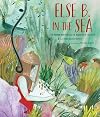
This is a lovely book. The illustrations accurately convey the muted colours below the water's surface. The scientific explanations of underwater colour and bioluminescence in the back matter of the book were valuable, as was the list of sources.
However, the blank verse was perhaps too limiting to both the tone of the book (lack of excitement; Else doesn't seem as vibrant or interesting a person as she must have been) and to the writer's ability to convey technical information. "She found show more that oil paint didn't mix with salt water" is ambiguous and confusing; perhaps Jeanne Harvey wanted to keep the language simple for hypothetical child readers (but three pages later she talks about photophores, a word so rare that autocorrect mangled it and forced me to edit this review! and later, "ascended the ramp of a steamship" with a "passel of paintings") so refusing to say "Salt water doesn't contaminate oil paint" for purposes of simplicity seems unlikely. In any case, to say that two things don't mix could, in vernacular speech, mean that they should not be paired -- don't take your oil paint into the sea, kids. In fact I read it as such the first two times. Oops. There was no section on technique in the back matter (first thing I looked for). "At first, she plopped dollops of paint inside a metal washtub" -- what? why? how did that paint get used? Then she found a better way, "attaching her canvas to an iron music stand". What? There's no canvas in the washtub pictures -- I still don't understand how these sentences relate.
Given the information provided in the back matter, I was able to track down Else Bostelmann's paintings in the two National Geographic issues listed, and one other as well, thanks to the Toronto Public Library deaccessioning its leather-bound Geographics around the turn of the 21st century. The coral paintings, which she did to illustrate an article by Roy Waldo Miner in 1934 (not for Beebe, apparently), are echoed in Melodie Stacey's illustrations. Stacey simplified the diving helmet and it was enlightening to see the actual helmet modelled by Mr Miner. The man writes with patronizing affection about his wife, describing her in diving gear as a "mermaid with the head of a hobgoblin", and warmly about his male chief artist Chris Olson "ingenious and resourceful ...always my right-hand man." He describes the process of oil painting underwater as practiced by Mr Olson, similar but not identical to Else B.'s techniques. Else, who provided 8 paintings to accompany the article, isn't mentioned. Beebe, the bathysphere pioneer, published articles in 1931 and 1934 each with 8 colour plates painted by Else Bostelmann, and he includes in his article a portrait photograph of her in her workspace and another group photo including his other collaborators both male and female, at work. I formed a positive opinion of Mr Beebe.
I still want to know more about the technique of underwater painting, a thing I had never heard of before, and the book has slightly disappointed me on this count. Also a little bit about her life above water would have been welcome. Her "young daughter" gets a single mention on the third page and then disappears forever. Oops. The book is still a keeper but perhaps not destined to become a beloved classic. show less
However, the blank verse was perhaps too limiting to both the tone of the book (lack of excitement; Else doesn't seem as vibrant or interesting a person as she must have been) and to the writer's ability to convey technical information. "She found show more that oil paint didn't mix with salt water" is ambiguous and confusing; perhaps Jeanne Harvey wanted to keep the language simple for hypothetical child readers (but three pages later she talks about photophores, a word so rare that autocorrect mangled it and forced me to edit this review! and later, "ascended the ramp of a steamship" with a "passel of paintings") so refusing to say "Salt water doesn't contaminate oil paint" for purposes of simplicity seems unlikely. In any case, to say that two things don't mix could, in vernacular speech, mean that they should not be paired -- don't take your oil paint into the sea, kids. In fact I read it as such the first two times. Oops. There was no section on technique in the back matter (first thing I looked for). "At first, she plopped dollops of paint inside a metal washtub" -- what? why? how did that paint get used? Then she found a better way, "attaching her canvas to an iron music stand". What? There's no canvas in the washtub pictures -- I still don't understand how these sentences relate.
Given the information provided in the back matter, I was able to track down Else Bostelmann's paintings in the two National Geographic issues listed, and one other as well, thanks to the Toronto Public Library deaccessioning its leather-bound Geographics around the turn of the 21st century. The coral paintings, which she did to illustrate an article by Roy Waldo Miner in 1934 (not for Beebe, apparently), are echoed in Melodie Stacey's illustrations. Stacey simplified the diving helmet and it was enlightening to see the actual helmet modelled by Mr Miner. The man writes with patronizing affection about his wife, describing her in diving gear as a "mermaid with the head of a hobgoblin", and warmly about his male chief artist Chris Olson "ingenious and resourceful ...always my right-hand man." He describes the process of oil painting underwater as practiced by Mr Olson, similar but not identical to Else B.'s techniques. Else, who provided 8 paintings to accompany the article, isn't mentioned. Beebe, the bathysphere pioneer, published articles in 1931 and 1934 each with 8 colour plates painted by Else Bostelmann, and he includes in his article a portrait photograph of her in her workspace and another group photo including his other collaborators both male and female, at work. I formed a positive opinion of Mr Beebe.
I still want to know more about the technique of underwater painting, a thing I had never heard of before, and the book has slightly disappointed me on this count. Also a little bit about her life above water would have been welcome. Her "young daughter" gets a single mention on the third page and then disappears forever. Oops. The book is still a keeper but perhaps not destined to become a beloved classic. show less
Ablaze with Color: A Story of Painter Alma Thomas: An Inspiring Art Story About Creativity and Bold Expression for Children (Ages 4–8) by Jeanne Walker Harvey
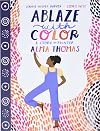
A lovely biography of one of my favorite artists. The author did a great job of capturing Thomas' style as well as tying her life story to historical events. Includes helpful backmatter.
Lists
Awards


You May Also Like


Associated Authors
Statistics
- Works
- 9
- Members
- 851
- Popularity
- #30,066
- Rating
- 4.1
- Reviews
- 25
- ISBNs
- 41
- Languages
- 1