
Richard Bangs
Author of Mystery of the Nile: The Epic Story of the First Descent of the World's Deadliest River
About the Author
Richard Bangs is the author of thirteen books, including the award winning The Lost River: A Memoir of Life, Death, and Transformation on Wild Water, and is currently the president of Outward Bound USA
Image credit: Richard Bangs rafting By Richard Bangs - Own work, CC0, https://commons.wikimedia.org/w/index.php?curid=30467676
Works by Richard Bangs
Mystery of the Nile: The Epic Story of the First Descent of the World's Deadliest River (2006) 102 copies, 2 reviews
Richard Bangs' Adventures with Purpose: Dispatches from the Front Lines of Earth (2007) 29 copies, 8 reviews
The Quest for Kaitiakitanga: The Ancient Maori Secret from New Zealand that Could Save the Earth (Adventures with Purpose) (2008) 14 copies, 2 reviews
Quest for the Sublime: Finding Nature's Secret in Switzerland (Adventures with Purpose) (2008) 3 copies
Adventure Vacations: From Trekking in New Guinea to Swimming in Siberia (Adventure Vacation) (1990) 2 copies
Associated Works
I Should Have Stayed Home: The Worst Trips of the Great Writers (1994) — Contributor — 188 copies, 5 reviews
Tagged
Common Knowledge
- Birthdate
- 1950-08-24
- Gender
- male
- Education
- Northwestern University (BA, 1972)
University of Southern California (MA) - Organizations
- Explorers Club
Sierra Club
Sobek's International Explorers Society - Nationality
- USA
- Places of residence
- New Haven, Connecticut, USA (birthplace)
Marina del Rey, California, USA - Associated Place (for map)
- USA
Members
Reviews
Richard Bangs' Adventures with Purpose: Dispatches from the Front Lines of Earth (Adventures with Purpose) by Richard Bangs
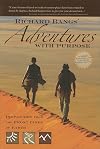
This is a wonderful book, with "adventures" that take you to some incredibly remote (and very interesting) parts of the globe. There were so many favorites, I'm hard pressed to pick one. What I really liked though is Mr. Bangs' eco-friendly approach to his tours and also, he just lets the native people, animals and areas shine in their own right. He doesn't try to make them "be" an one ideal or preconceived notion we might have of the areas and what is within. In a way, he lets you think for show more yourself. There is immense tragedy here, in the expansive destruction of our world, but even so, most of the stories had a hopeful tone to them. I learned more in this book of stories about say, Macedonia, than I have in my prior 40 years of life. All are fascinating. I did not give it five full stars because I did not care for the chapters on mountianeering. They seemed misplaced in an eco-focused book. They were stories about a couple of guys climbing their "demon" mountains (Eiger and Annapurna). Okay, but certainly not on a par with the other stories, where he just goes to explore and report on the land(s) he finds. On some areas he offers unique insights having gone years prior ~ and he reflects on the degradation and demise of the areas, but also the success stories. Great book. Highly recommended for both the armchair adventurer and those who might want to go out there and make a difference. Mr. Bangs is your average Joe and if he can do it, I felt many times, wow, so can I. Time to get off the beaten path and leave only footprints; and maybe even give back to our ailing planet too. show less
 This review was written for LibraryThing Early Reviewers.
(I received a copy of the second printing of this book via the LibraryThing EarlyReviewers Program.)
Richard Bangs' "Adventures with Purposes: Dispatches From the Front Lines of Earth" is a series of travelogues, 16 stories about his travels to remote and often wild areas of the earth. The areas are obviously beautiful, but this doesn't always show through in Bangs' somewhat inconsistent writing. The inconsistency extends to the handling of social and political issues as well - conservatism show more is fraught with good intentions and imperfect payoff, and the issues surrounding both wildlife and ancient tribal cultures can be tricky to handle.
Occasionally, it all works well - in "The Digital Village", his trip to Papua New Guinea, he evokes the jungle and the culture he runs into well. The result of the cameras he brings for the tribespeople are happy ones, too; and help provide a little window into the culture. The violence from the old culture is acknowledged too, a shadow over the visit to a long-remote area. Elsewhere it's handled less well; "Down the River Jordan" is disjointed, and you never get a feel for the passage down and alongside the river; even given the political mess and the pollution, it's a disappointing passage.
Mostly it's in between these two extremes, though; not all the voyages dip into such disputed issues, and in most of the travelogues he can hit at least a few good notes, even when the journey never becomes a coherent whole. It really is a book of dispatches, little vignettes even within the 16 longer stories, and perhaps would be better read piecemeal than all at once.
He also never deals with his mixed attitude towards tourism -it's touted as an answer to preserving many of the threatened places and wildlife, but he share the common disdain for the same resorts and crowds he wishes would save the areas he loves. Still, the book has perked my interest in some of the places he's visited, and the view of places I've never been can be fascinating when Bangs is at his best. show less
Richard Bangs' "Adventures with Purposes: Dispatches From the Front Lines of Earth" is a series of travelogues, 16 stories about his travels to remote and often wild areas of the earth. The areas are obviously beautiful, but this doesn't always show through in Bangs' somewhat inconsistent writing. The inconsistency extends to the handling of social and political issues as well - conservatism show more is fraught with good intentions and imperfect payoff, and the issues surrounding both wildlife and ancient tribal cultures can be tricky to handle.
Occasionally, it all works well - in "The Digital Village", his trip to Papua New Guinea, he evokes the jungle and the culture he runs into well. The result of the cameras he brings for the tribespeople are happy ones, too; and help provide a little window into the culture. The violence from the old culture is acknowledged too, a shadow over the visit to a long-remote area. Elsewhere it's handled less well; "Down the River Jordan" is disjointed, and you never get a feel for the passage down and alongside the river; even given the political mess and the pollution, it's a disappointing passage.
Mostly it's in between these two extremes, though; not all the voyages dip into such disputed issues, and in most of the travelogues he can hit at least a few good notes, even when the journey never becomes a coherent whole. It really is a book of dispatches, little vignettes even within the 16 longer stories, and perhaps would be better read piecemeal than all at once.
He also never deals with his mixed attitude towards tourism -it's touted as an answer to preserving many of the threatened places and wildlife, but he share the common disdain for the same resorts and crowds he wishes would save the areas he loves. Still, the book has perked my interest in some of the places he's visited, and the view of places I've never been can be fascinating when Bangs is at his best. show less
This review was written for LibraryThing Early Reviewers.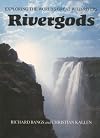
Rivergods balances adventurous text from Bangs and Kallen with gorgeous photography. Christian Kallen and Richard Bangs bring many of the most powerful, yet mostly unheard of, rivers to life as they describe trying to raft or kayak each one. By traveling all corners of the globe, they are able to meet indigenous peoples in South America, Australia, Africa, and Asia. By studying their anthropologies, they learn a little about each culture including head hunting and cannibalism. Each river show more teaches them about the power of Mother Nature and the real dangers of trying to tame her.
As an aside, when I started running with Dr. Tommy Rivs, one of the things he taught me early on was about Islamic religion. In accordance with the beliefs of Islam, no humans or animals can be portrayed or duplicated by man. All art such as tile work, tapestries, and carpets must be of geometric shapes and flowers. It was cool to see Bangs and Kallen talk about it in Rivergods. show less
As an aside, when I started running with Dr. Tommy Rivs, one of the things he taught me early on was about Islamic religion. In accordance with the beliefs of Islam, no humans or animals can be portrayed or duplicated by man. All art such as tile work, tapestries, and carpets must be of geometric shapes and flowers. It was cool to see Bangs and Kallen talk about it in Rivergods. show less
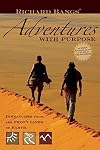
If you read the author's introduction to the book, you will find yourself expecting a collection of travel essays all focused on man's destruction of a particularly magnificent piece of nature, or the prevention thereof and, indeed, the first few are just that. Shortly, the thrust of the essays changes and they become simply essays about extreme adventures the author has had, with little or no "conservation" bend to them. This is, perhaps, for the best...had all 300+ pages recounted stories show more like the first couple, the reader would have been in despair by the end of the book.
Bangs has certainly had more than his share of exciting and colorful adventures and, even vicariously, they are quite thrilling. Due to their essay format, they are recounted at a fairly broad level. I would have liked a bit more depth to a few of them but they were all interesting. Even those that were too lightweight were descriptive enough to convince me that trying to get to Annapurna Base Camp or a camel expedition to the Akakus Mountains in Libya after the temperate season are absolutely not things I want to experience in my life.
This book will present you with a wide variety of settings, ranging across five continents and everything from hellish desert to hellish rain forest to hellish alpine locales. Along the way, you will meet a wide variety of amusing, idiosyncratic, committed, adventurous and colorful characters.
The author does have a dry way of playing with words, such as mentioning positively the prophet Muhammed and negatively the profit Wynne.
The book does have two flaws, in my opinon—one minor and one major. The minor flaw is simply that I got a bit tired of Mr. Bangs' self-promotion. At first, I was a bit amused at his constant (any essay involving a river was guaranteed to mention it at least once) reminder to the reader that he had been the first to traverse this river or that, and his taking the time to make sure that you knew he had more scars than the other crusty fellow he met but, after a while, it just became a bit annoying. However, this was relatively small potatoes and didn't really interfere with the book.
What causes this book to miss a recommendation (3 or more stars) from me is simply that the author is far, far too in love with his own vocabulary. He never uses a 5¢ word when a $20 one can be squeezed in. Thus we have "aperçu" instead of "glimpse", "horripilation" instead of "goosebumps" and "agrestic" rather than "rural". I don't mind...in fact, enjoy...adding to my vocabulary a bit when reading a book. However, if I have to stop every few pages throughout the entire book to look something up, the flow of reading is destroyed. After I got past fetial, feculence, fuscous, heteroclite, quondam, fissiparous, proceleusmatic, entrepôts, synecdoche, irredentism, apologues and tardigrade, I simply stopped looking up words unless a sentence made absolutely no sense to me without a definition.
If you are lucky enough to possess a world-class vocabulary, you may find it a good book. For me, it was simply OK. I wish the author had spent a little less time searching for big words and little more time filling out the stories a bit more. show less
Bangs has certainly had more than his share of exciting and colorful adventures and, even vicariously, they are quite thrilling. Due to their essay format, they are recounted at a fairly broad level. I would have liked a bit more depth to a few of them but they were all interesting. Even those that were too lightweight were descriptive enough to convince me that trying to get to Annapurna Base Camp or a camel expedition to the Akakus Mountains in Libya after the temperate season are absolutely not things I want to experience in my life.
This book will present you with a wide variety of settings, ranging across five continents and everything from hellish desert to hellish rain forest to hellish alpine locales. Along the way, you will meet a wide variety of amusing, idiosyncratic, committed, adventurous and colorful characters.
The author does have a dry way of playing with words, such as mentioning positively the prophet Muhammed and negatively the profit Wynne.
The book does have two flaws, in my opinon—one minor and one major. The minor flaw is simply that I got a bit tired of Mr. Bangs' self-promotion. At first, I was a bit amused at his constant (any essay involving a river was guaranteed to mention it at least once) reminder to the reader that he had been the first to traverse this river or that, and his taking the time to make sure that you knew he had more scars than the other crusty fellow he met but, after a while, it just became a bit annoying. However, this was relatively small potatoes and didn't really interfere with the book.
What causes this book to miss a recommendation (3 or more stars) from me is simply that the author is far, far too in love with his own vocabulary. He never uses a 5¢ word when a $20 one can be squeezed in. Thus we have "aperçu" instead of "glimpse", "horripilation" instead of "goosebumps" and "agrestic" rather than "rural". I don't mind...in fact, enjoy...adding to my vocabulary a bit when reading a book. However, if I have to stop every few pages throughout the entire book to look something up, the flow of reading is destroyed. After I got past fetial, feculence, fuscous, heteroclite, quondam, fissiparous, proceleusmatic, entrepôts, synecdoche, irredentism, apologues and tardigrade, I simply stopped looking up words unless a sentence made absolutely no sense to me without a definition.
If you are lucky enough to possess a world-class vocabulary, you may find it a good book. For me, it was simply OK. I wish the author had spent a little less time searching for big words and little more time filling out the stories a bit more. show less
This review was written for LibraryThing Early Reviewers.Awards


You May Also Like


Associated Authors
Statistics
- Works
- 24
- Also by
- 1
- Members
- 323
- Popularity
- #73,308
- Rating
- 3.4
- Reviews
- 17
- ISBNs
- 40
- Languages
- 2
- Favorited
- 1

