
Joe Kane (1) (1953–)
Author of Running the Amazon
For other authors named Joe Kane, see the disambiguation page.
Works by Joe Kane
Associated Works
Wild: Stories of Survival from the World's Most Dangerous Places (Adrenaline) (1999) — Contributor — 65 copies, 1 review
Tagged
Common Knowledge
- Birthdate
- 1953-12-28
- Gender
- male
- Occupations
- journalist
- Nationality
- USA
- Places of residence
- Olympia, Washington, USA
- Associated Place (for map)
- Washington, USA
Members
Reviews
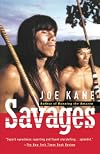
You might have recently heard recently of that an Ecuador court ordered Chevron Co. pay an $8.6 billion fine for polluting the Amazon for Texaco’s oil-drilling activities of the 70s and 80s.
In 1991, Joe Kane was working at a Rainforest Action Network, one of many environmental organizations squabbling over the expansion of oil drilling by Dupont-Conoco within the protected lands of native Huaorani in the Ecuadorian Amazon. But despite the Ecuadorian government and all these organizations show more claiming to protect the interests of the Huaorani, none had actually spoken to these natives, until a mysterious letter convinced Joe Kane to go find the voice of the Huaorani himself… and found him deeply involved with their brave and ingenious battle to stop the complete destruction of their very society.
When Joe Kane sticks to speaking about the shocking negligence of oil drilling in the Ecudaorian Amazon, the effects of this mass pollution on the Huaorani culture, and the struggle of the natives to stop this Conoco plan is when Savages works best:
- of people hanging laundry upon the omnipresent pipelines, of gushing leaks in said pipelines that remain undiscovered for weeks before they’re mended, of sludgy pits where oil byproducts were disposed
- how whole villages are poisoned by the river or suffer low birthrates
- how this ecological destruction has only further degraded a lifestyle already weakened by missionary colonialism
- the attempts of corrupt bureaucracy and greedy oil companies to further prevent the Huaorani from having a political voice
- & the counter-attempts of certain individuals of the Huaorani to mobilize against the “cannibals” who would cripple their native way of life using their unique know-how of both cultures.
But Kane often loses this thread in the confusion of his intention: Is he mere reporting these politics or is he involved in helping the Huaorani? Is he studying them anthropologically fairly (on their own terms) or is he casting them into roles of the “savage”—noble or child-like? Is his book intended to be informative ecological expose or is it a colorful travelogue about a white man’s foibles in the jungle among hunter-gatherers? Kane doesn’t really seem to know, either in the present moment or in looking back upon the experience, and the resulting book is rather jagged and unfocused as a result. He frequently jabbers on, forgetting to place important events in context and merely spews forth a mountain of names, dates, and meetings that occurred without generally explaining their significance… that is when he’s speaking about something with significance at all (and not pondering his foot rot or his friendships or making some ponderous sweeping statement… with touches of ethnocentrism).
I can see why this was a text in my Cultural Anthropology class: it presents a riveting real-life case study of globalism, cultural clash, and the desperate need in this world for applied anthropology (even if it is only through the example of a fiasco). However, I can’t really recommend it as a primary read—both because of Kane’s flimsy reporting and unchecked bias, the lack of scope, and its general outdated-ness. show less
In 1991, Joe Kane was working at a Rainforest Action Network, one of many environmental organizations squabbling over the expansion of oil drilling by Dupont-Conoco within the protected lands of native Huaorani in the Ecuadorian Amazon. But despite the Ecuadorian government and all these organizations show more claiming to protect the interests of the Huaorani, none had actually spoken to these natives, until a mysterious letter convinced Joe Kane to go find the voice of the Huaorani himself… and found him deeply involved with their brave and ingenious battle to stop the complete destruction of their very society.
When Joe Kane sticks to speaking about the shocking negligence of oil drilling in the Ecudaorian Amazon, the effects of this mass pollution on the Huaorani culture, and the struggle of the natives to stop this Conoco plan is when Savages works best:
- of people hanging laundry upon the omnipresent pipelines, of gushing leaks in said pipelines that remain undiscovered for weeks before they’re mended, of sludgy pits where oil byproducts were disposed
- how whole villages are poisoned by the river or suffer low birthrates
- how this ecological destruction has only further degraded a lifestyle already weakened by missionary colonialism
- the attempts of corrupt bureaucracy and greedy oil companies to further prevent the Huaorani from having a political voice
- & the counter-attempts of certain individuals of the Huaorani to mobilize against the “cannibals” who would cripple their native way of life using their unique know-how of both cultures.
But Kane often loses this thread in the confusion of his intention: Is he mere reporting these politics or is he involved in helping the Huaorani? Is he studying them anthropologically fairly (on their own terms) or is he casting them into roles of the “savage”—noble or child-like? Is his book intended to be informative ecological expose or is it a colorful travelogue about a white man’s foibles in the jungle among hunter-gatherers? Kane doesn’t really seem to know, either in the present moment or in looking back upon the experience, and the resulting book is rather jagged and unfocused as a result. He frequently jabbers on, forgetting to place important events in context and merely spews forth a mountain of names, dates, and meetings that occurred without generally explaining their significance… that is when he’s speaking about something with significance at all (and not pondering his foot rot or his friendships or making some ponderous sweeping statement… with touches of ethnocentrism).
I can see why this was a text in my Cultural Anthropology class: it presents a riveting real-life case study of globalism, cultural clash, and the desperate need in this world for applied anthropology (even if it is only through the example of a fiasco). However, I can’t really recommend it as a primary read—both because of Kane’s flimsy reporting and unchecked bias, the lack of scope, and its general outdated-ness. show less
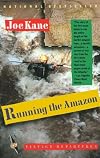
An insane challenge issued, the author accepts an offer to join a kayaking expedition that was determined to be the first to travel the entire distance from the source of the Amazon River high in the Peruvian Andes all the way to Belem, Brazil and the Atlantic Ocean. Kane, the author, was to be the team's documentarian, with an invitation to write up an account of the voyage for publication. He discovers early that this oddly-assembled, multinational group of men and one woman would struggle show more on the trip, leaving only four of the original team to complete the journey. Instead of observing and logging from the sidelines, Kane becomes an integral part of the team, first as a key member of one of the white water rafts used early on the rivers, and later, as one of two men to complete the trip in kayaks.
Kane's writing is excellent, his narrative very easily read, and the story of their struggles, their interaction with both welcoming and dangerous native populations, and Kane's own soul searching, which included two episodes where he was certain on leaving the expedition only to be drawn back into the quest, made this book tough to put down. My only major complaint is the way the book ends, literally with the first indication that the kayakers had hit the Atlantic, salt water. There is no follow up, no reconcilation of the emotions and struggles, no 'where are they now' sort of summary, just a dead stop once the kayakers had reached their goal. This is sort of a natural end which Kane sets up throughout, but a short epilogue would have been a nice addition to wrap up the narrative. That said, Running was an excellent adventure expedition book that went way beyond kayaking a river. Four stars. show less
Kane's writing is excellent, his narrative very easily read, and the story of their struggles, their interaction with both welcoming and dangerous native populations, and Kane's own soul searching, which included two episodes where he was certain on leaving the expedition only to be drawn back into the quest, made this book tough to put down. My only major complaint is the way the book ends, literally with the first indication that the kayakers had hit the Atlantic, salt water. There is no follow up, no reconcilation of the emotions and struggles, no 'where are they now' sort of summary, just a dead stop once the kayakers had reached their goal. This is sort of a natural end which Kane sets up throughout, but a short epilogue would have been a nice addition to wrap up the narrative. That said, Running was an excellent adventure expedition book that went way beyond kayaking a river. Four stars. show less
My only complaint is the standard....better maps! Otherwise, the book is filled to the rim with humor, good insight, and a great deal of empathy. I worked for minerals companies for some years and, generally, I found that the were unsympathetic to the problems the create. Also, tis a shame that consumers are quick to jump on the bandwagon of anti-exploitation, but continue to overuse resources for their individual benefit.
Back to the book....Kane's description of how Moi and the rest see the show more world was humorous, sad, enlightening, and just plain wonderful. Currently in Bolivia, but ma be going to Ecuador next ear. This is superb background material. show less
Back to the book....Kane's description of how Moi and the rest see the show more world was humorous, sad, enlightening, and just plain wonderful. Currently in Bolivia, but ma be going to Ecuador next ear. This is superb background material. show less

Adventure literature classic. National Geographic ranked it #57 in its top 100 Adventure Books of all-time. Outdoor Magazine included it in its top-25 list of best outdoor books for the last 100-years.
A team of nine, mostly strangers, attempts to be the first to traverse the Amazon river--from its source in Peru down to the Atlantic--the longest river in the world. Joe Kane is invited as a journalist to document the journey, but who has no boating or adventure experience. Crisis among the show more team leadership leads to a breakdown and in the end things don't turn out as expected. Reads like a novel.
The question is, why among the thousands of adventure and outdoor books is this one ranked so highly. I believe for a number of reasons: for one it is extremely well-written, Kane is a professional journalist who has written articles in The New Yorker, National Geographic and the like. But unlike most outdoor books written by journalists, Kane is also an active participant, indeed in the end he is one of the few to actually make it all the way. The journey was indeed epic in scope, comparable to traveling the length of the Nile, the holy grail for 19th C explorers. It contains a love story. Narco-trafficing and Shining Path guerrilla's. Multiple-near-death experiences from man and nature. All these things combine to make it a classic of the genre. show less
A team of nine, mostly strangers, attempts to be the first to traverse the Amazon river--from its source in Peru down to the Atlantic--the longest river in the world. Joe Kane is invited as a journalist to document the journey, but who has no boating or adventure experience. Crisis among the show more team leadership leads to a breakdown and in the end things don't turn out as expected. Reads like a novel.
The question is, why among the thousands of adventure and outdoor books is this one ranked so highly. I believe for a number of reasons: for one it is extremely well-written, Kane is a professional journalist who has written articles in The New Yorker, National Geographic and the like. But unlike most outdoor books written by journalists, Kane is also an active participant, indeed in the end he is one of the few to actually make it all the way. The journey was indeed epic in scope, comparable to traveling the length of the Nile, the holy grail for 19th C explorers. It contains a love story. Narco-trafficing and Shining Path guerrilla's. Multiple-near-death experiences from man and nature. All these things combine to make it a classic of the genre. show less
Awards


You May Also Like


Associated Authors
Statistics
- Works
- 3
- Also by
- 2
- Members
- 631
- Popularity
- #39,928
- Rating
- 4.0
- Reviews
- 11
- ISBNs
- 34
- Languages
- 6