
James West Davidson
Author of After The Fact: The Art of Historical Detection
About the Author
Historian and writer James West Davidson received his B.A. from Haverford College and his Ph.D. from Yale University. He currently lives in New York's Hudson Valley. (Bowker Author Biography)
Series
Works by James West Davidson
Nation of Nations: A Narrative History of the American Republic {complete} (1989) 116 copies, 1 review
Nation of Nations: A Narrative History of the American Republic, Vol. 2, since 1865 (1990) 57 copies
The Complete Home Lighting Book: Contemporary Interior and Exterior Lighting for the Home (1997) 8 copies
Study Guide to Accompany Nation of Nations: A Narrative History of the American Republic : Since 1865 (1990) 6 copies
Study Guide to Accompany Nations of Nations a Narratie History of the American Republic Second Edition Vol. 1: To 1877 (1994) 3 copies
Nation of Nations Concise Volume I w/ After the Fact Interactive Salem Witch Trials, MP: A Concise Narrative History of the American Republic (2001) 3 copies
Complete Wilderness Paddler 2 copies
Nation of Nations 2 copies
Krótka historia USA 1 copy
Material Witness 1 copy
Tagged
Common Knowledge
- Legal name
- Davidson, James West
- Birthdate
- 1946-12-21
- Gender
- male
- Education
- Haverford College (BA)
Yale University (PhD) - Occupations
- historian
- Nationality
- USA
- Places of residence
- Rhinebeck, New York, USA
- Associated Place (for map)
- New York, USA
Members
Reviews
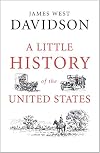
I received a copy of this book for free through the GoodReads first-reads program in exchange for an honest review.
[b: A Little History of the United States|25074731|A Little History of the United States|James West Davidson|https://d.gr-assets.com/books/1435617915s/25074731.jpg|44760093] had many aspects that I absolutely loved.
First: From the very outset the book made clear that history books are inevitably biased. Anytime you read a history book you are reading history through the lens of show more a certain theme. In this case, the theme was that of equality and inequality, which they made exceptionally clear from the introduction and through the book itself. I appreciated how up front they were.
Second: The book was divided into very short chapters, allowing this book to be a quick read. Although the chapters were short each had a very clear focus and was surprisingly in depth. Quotes were used often, and I'm a glutton for primary sources. I loved how much attention was given.
Third: Maps! Well labeled maps of famous battlefields, as well as the way the territories were originally divided. Excellent!
The book did a very good job of highlighting the diversity of the United States through the ages. It explained the slave trade exceptionally well, bringing up points that I'd never even considered before. I appreciated the vast scope of the project, and how neutral the tone was up through Reconstruction. It was only as the book got closer to modern day that it began to rush through events rather more quickly than I'd like, but I can understand the need to do so given the scope of the project and the limited space available.
I think this is a good introductory history book. It whets the appetite and would allow a reader more ease of access to figure out what time period and topic they'd like to read about in US history. show less
[b: A Little History of the United States|25074731|A Little History of the United States|James West Davidson|https://d.gr-assets.com/books/1435617915s/25074731.jpg|44760093] had many aspects that I absolutely loved.
First: From the very outset the book made clear that history books are inevitably biased. Anytime you read a history book you are reading history through the lens of show more a certain theme. In this case, the theme was that of equality and inequality, which they made exceptionally clear from the introduction and through the book itself. I appreciated how up front they were.
Second: The book was divided into very short chapters, allowing this book to be a quick read. Although the chapters were short each had a very clear focus and was surprisingly in depth. Quotes were used often, and I'm a glutton for primary sources. I loved how much attention was given.
Third: Maps! Well labeled maps of famous battlefields, as well as the way the territories were originally divided. Excellent!
The book did a very good job of highlighting the diversity of the United States through the ages. It explained the slave trade exceptionally well, bringing up points that I'd never even considered before. I appreciated the vast scope of the project, and how neutral the tone was up through Reconstruction. It was only as the book got closer to modern day that it began to rush through events rather more quickly than I'd like, but I can understand the need to do so given the scope of the project and the limited space available.
I think this is a good introductory history book. It whets the appetite and would allow a reader more ease of access to figure out what time period and topic they'd like to read about in US history. show less
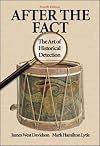
I am reasonably sure this is a college textbook, but it's shameful something which ought to be the foundation of an education of history seems to be tucked away and forgotten by our education system until you become a history major. Or possibly minor.
The basic goal of the text is to illuminate how history is deciphered, it's limitations and ultimately that it is an epic mistake to treat history and the past interchangeably. Each chapter approaches a particular way of studying the past show more through a specific historical event highlighting how the type of data available inherently limits and focuses the history that can be constructed. The characteristics of the resources historians have availible may have been consciously curated to tell a certain story at the time of it's creation as in a photograph, public political speech, or literary activism, or their character may be shaped without intent by virtue of documentation being limited to certain classes, the fact than any human documentation is limited by the experience of those documenting it or simply that time passes swiftly and is unconcerned with leaving proper documentation.
The authors intentionally choose to look beyond the common-knowledge assessment of the history they discuss to show how history can be misleading or how it is impossible to strip the past down to a single point of view or rigid chain of cause and effect. This is not to say that there is no such thing as an authentic past, but that history is incabable of reproducing it. It is simply too big, complicated and messy. It explodes outward exponentially from a single event in the actions and beliefs of people colliding into still more events each hopelessly and unconsciously interconnected in their immediacy. The ultimate message seems to be, we should all study the past, but understand that no single person owns it. Which is probably why you're unlikely to face such an approach in the usual education. It fundamentally undermines the idea that there is such a thing orthodox history, and instead points out that the past is only seen from where it's witnesses are standing. show less
The basic goal of the text is to illuminate how history is deciphered, it's limitations and ultimately that it is an epic mistake to treat history and the past interchangeably. Each chapter approaches a particular way of studying the past show more through a specific historical event highlighting how the type of data available inherently limits and focuses the history that can be constructed. The characteristics of the resources historians have availible may have been consciously curated to tell a certain story at the time of it's creation as in a photograph, public political speech, or literary activism, or their character may be shaped without intent by virtue of documentation being limited to certain classes, the fact than any human documentation is limited by the experience of those documenting it or simply that time passes swiftly and is unconcerned with leaving proper documentation.
The authors intentionally choose to look beyond the common-knowledge assessment of the history they discuss to show how history can be misleading or how it is impossible to strip the past down to a single point of view or rigid chain of cause and effect. This is not to say that there is no such thing as an authentic past, but that history is incabable of reproducing it. It is simply too big, complicated and messy. It explodes outward exponentially from a single event in the actions and beliefs of people colliding into still more events each hopelessly and unconsciously interconnected in their immediacy. The ultimate message seems to be, we should all study the past, but understand that no single person owns it. Which is probably why you're unlikely to face such an approach in the usual education. It fundamentally undermines the idea that there is such a thing orthodox history, and instead points out that the past is only seen from where it's witnesses are standing. show less

I enjoyed this book about using historical documents to figure out what really happened. Reading between the lines, so to speak, the authors illuminate a multitude of historical instances, including the first slaves at Jamestown, Watergate, and the meat packing scandal during Roosevelt's presidency. Some of the events I was familiar with, some not.
My only quibble with this book was that it was slightly ponderous and pedantic occasionally. Otherwise, well worth reading.
My only quibble with this book was that it was slightly ponderous and pedantic occasionally. Otherwise, well worth reading.

Great Heart is well researched, it's neat someone found old diaries and retold the 1903 and 1905 Hubbard/Wallace/Elson expeditions in Labrador, mostly forgotten today but better known in the first half of the 20th century. I recommend this modern retelling but first read the original book that started it all, The Lure of the Labrador Wild (1905), which is the best introduction. In its day it was a best seller that went through 20-some printings, Teddy Roosevelt and Earnest Hemingway were show more fans. Great Heart has a reverent melancholy feel of history, Lure is more immediate and alive in the first person. The complex relationships between Mina Hubbard, her husband Leonidas, Dillon Wallace and George Elson the Indian half-breed is sort of like a Victorian episode of Survivor with shifting loyalties, betrayals, loves, enemies, friendships. It's an interesting story with human heart that goes beyond the typical exploration book.
--Review by Stephen Balbach, via CoolReading (c) 2011 cc-by-nd show less
--Review by Stephen Balbach, via CoolReading (c) 2011 cc-by-nd show less
Awards

You May Also Like


Associated Authors
Statistics
- Works
- 51
- Members
- 1,925
- Popularity
- #13,370
- Rating
- 3.9
- Reviews
- 14
- ISBNs
- 196
- Languages
- 3