
James F. Dunnigan
Author of How to Make War: a Comprehensive Guide to Modern Warfare in the 21st Century
About the Author
James F. Dunnigan has written more than 100 books and articles about warfare and diplomacy. A resident of New York City, he is a military analyst for MSNBC and has been a consultant to the State Department, the CIA, and the Army War College. (Bowker Author Biography)
Series
Works by James F. Dunnigan
How to Make War: a Comprehensive Guide to Modern Warfare in the 21st Century (1982) 481 copies, 4 reviews
Dirty Little Secrets of World War II: Military Information No One Told You... (1994) 307 copies, 5 reviews
A Quick and Dirty Guide to War: Briefings on Present and Potential Wars (1985) — Author — 148 copies, 1 review
From Shield to Storm: High-Tech Weapons, Military Strategy, and Coalition Warfare in the Persian Gulf (1992) — Author — 56 copies
Digital Soldiers: The Evolution of High-Tech Weaponry and Tomorrow's Brave New Battlefield (1996) 36 copies
Getting It Right: American Military Reforms After Vietnam to the Gulf War and Beyond (1993) 32 copies, 2 reviews
The Way of the Warrior: Business Tactics & Techniques From History's Twelve Greatest Generals (1997) 32 copies
Wargames Handbook, Third Edition: How to Play and Design Commercial and Professional Wargames (2000) 21 copies
The Next War Zone: Confronting the Global Threat of Cyberterrorism (Consumer One-Off) (2002) 19 copies
Conquistador : The Age of Exploration : 1495-1600 — Editor — 2 copies
Napoleon at Waterloo — Designer — 1 copy
War in Europe 1 copy
1914 1 copy
Blitzkrieg Module System 1 copy
Origins of World War II 1 copy
Firefight 1 copy
Associated Works
Wargame Design: The History, Production, and Use of Conflict Simulation Games (Strategy & tactics staff study) (1977) — Contributor — 36 copies, 1 review
Tagged
Common Knowledge
- Birthdate
- 1943-08-08
- Gender
- male
- Education
- Pace University
Columbia University (history, 1970) - Occupations
- game designer
publisher (S&T magazine and SPI games)
military consultant (US) - Organizations
- United States Army
- Nationality
- USA
- Associated Place (for map)
- USA
Members
Reviews
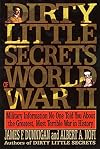
Absolutely awful. I made it through 188 pages before giving up. I'd not even stick it in my bathroom. The introduction pretty much sums it up with:
"This is not a history of World War II , but revelations about many of the lesser-known details. Because it is a book of facts, you don't read it from beginning to end, but rather you jump in wherever it srikes your fancy."
This book is badly written and heavily biased towards the US. For instance the chapter entitled 'The Road to War' includes show more events all the way up to December 1941...clearly a lot of the rest of the world had been at war for a couple of years prior to this. Rather this chapter should be entitled 'The Road to the American Involvement in War'.
If the author had employed a decent editor, then a lot of the facts presented in this book would have been far more interesting and better presented than page long tables of numbers or rambling snippets of information that have no structure.
Unfortunately my fancy was not struck for very long. I was expecting a book on secret weapon manufacture or delving into mind control techniques or clandestine operations. It seems to me that the reason 'no one told you' about the little secrets in this book is that they would have dropped dead from boredom or astonishment at the overinflated opinion the author has of Americans.
Anyway, enough said, I would not recommend this book. show less
"This is not a history of World War II , but revelations about many of the lesser-known details. Because it is a book of facts, you don't read it from beginning to end, but rather you jump in wherever it srikes your fancy."
This book is badly written and heavily biased towards the US. For instance the chapter entitled 'The Road to War' includes show more events all the way up to December 1941...clearly a lot of the rest of the world had been at war for a couple of years prior to this. Rather this chapter should be entitled 'The Road to the American Involvement in War'.
If the author had employed a decent editor, then a lot of the facts presented in this book would have been far more interesting and better presented than page long tables of numbers or rambling snippets of information that have no structure.
Unfortunately my fancy was not struck for very long. I was expecting a book on secret weapon manufacture or delving into mind control techniques or clandestine operations. It seems to me that the reason 'no one told you' about the little secrets in this book is that they would have dropped dead from boredom or astonishment at the overinflated opinion the author has of Americans.
Anyway, enough said, I would not recommend this book. show less
How to Make War: A Comprehensive Guide to Modern Warfare for the Post-Cold War Era (3rd Edition) by James F. Dunnigan
This book was one of the first books I read by James Dunnigan. I purchased it during my days as an officer in the Army. It helped to put a lot things I was doing in uniform in perspective. Lots of information comparing military equipment, ships and fighting abilities of countries and militaries around the world. The author takes a numerical perspective by assigning relative numbers to the effectiveness of equipment and forces then comparing them.
Dunnigan's background is wargaming so this show more method of viewing military facts and forces makes sense. Go to Wikipedia to read up on Dunnigan. Interesting guy and experiences.
The book provides some good discussions of how certain types of warfare has evolved and lessons learned of past conflicts.
The book has gone through several revisions over time to adjust to new realities of military forces and world politics... WWII, Vietnam, the cold war, fall of the USSR, smaller conflicts of the 80's and 90's, desert warfare and growth of terrorism. Unfortunately my acquisition and reading of Dunnigan's revised books has not kept pace. Eventually I will catch up. This 3rd Edition represents the time period I served in the military up to 1991. With my son about a year away from commissioning as an officer in the Army, I should look at getting the latest revised book. show less
Dunnigan's background is wargaming so this show more method of viewing military facts and forces makes sense. Go to Wikipedia to read up on Dunnigan. Interesting guy and experiences.
The book provides some good discussions of how certain types of warfare has evolved and lessons learned of past conflicts.
The book has gone through several revisions over time to adjust to new realities of military forces and world politics... WWII, Vietnam, the cold war, fall of the USSR, smaller conflicts of the 80's and 90's, desert warfare and growth of terrorism. Unfortunately my acquisition and reading of Dunnigan's revised books has not kept pace. Eventually I will catch up. This 3rd Edition represents the time period I served in the military up to 1991. With my son about a year away from commissioning as an officer in the Army, I should look at getting the latest revised book. show less
I was grossly disappointed in this book. World War II was a world war, not a project run by the United States. Yet, most everything here is American centric. Not a bad idea if advertised as such, but frankly the Soviets won the war, and on the western side the Canadians, British and Australians helped.
Patton was not the great strategic commander painted in the book. He was a barely controlled man who commanded - and commanded well - one of a dozen western armies. On the Soviet side army show more commanders were a dime a dozen, as they were on the German side.
Nothing on the Chinese part in the war except a book by a (highly competent) amateur historian (Tuchman - Stilwell and the American Experience in China).
Nothing on the Australian's administering the first land defeat on the Japs in Papua New Guinea, nothing on Bill Slim and the wonderful Fourteenth Army. In a Slim-Patton contest, Slim wins hands down, including for ability to take risks for the main chance.
Waste of money. show less
Patton was not the great strategic commander painted in the book. He was a barely controlled man who commanded - and commanded well - one of a dozen western armies. On the Soviet side army show more commanders were a dime a dozen, as they were on the German side.
Nothing on the Chinese part in the war except a book by a (highly competent) amateur historian (Tuchman - Stilwell and the American Experience in China).
Nothing on the Australian's administering the first land defeat on the Japs in Papua New Guinea, nothing on Bill Slim and the wonderful Fourteenth Army. In a Slim-Patton contest, Slim wins hands down, including for ability to take risks for the main chance.
Waste of money. show less
Even though this book is 26 years old, and it's title is a misnomer (there's nothing dirty or secret in the book), it's a very interesting look at the military world in 1990. I really would like to read an up-to-date version of this book. It does a great job of comparing the various world militaries (focusing on the US and Russia) at the time, and is a great summary of the various military forces in 1990.
You May Also Like


Associated Authors
Statistics
- Works
- 54
- Also by
- 6
- Members
- 1,894
- Popularity
- #13,587
- Rating
- 3.5
- Reviews
- 20
- ISBNs
- 61
- Languages
- 2
- Favorited
- 3