
J. F. Bone (1916–2006)
Author of The Lani People
About the Author
Disambiguation Notice:
J.F. Bone (1916-2006), full name was Jesse Franklin Bone, sometimes published as Jesse Bone
Works by J. F. Bone
Never In This World 4 copies
Short Science Fiction Collection 057 2 copies
Founding Father 1 copy
Cultural Exchange 1 copy
For Service Rendered 1 copy
Cultural Exchange 1 copy
The Missionary 1 copy
Weapon 1 copy
Special effect 1 copy
Founding Father 1 copy
Piece De Resistance 1 copy
Tween 1 copy
Gamesman 1 copy
Associated Works
Isaac Asimov's Magical Worlds of Fantasy, Volume 7: Magical Wishes (1891) — Contributor — 96 copies, 1 review
SF: The Year's Greatest Science Fiction and Fantasy: 4th Annual Volume (1959) — Contributor — 78 copies, 1 review
The Science Fiction Megapack: 25 Classic Science Fiction Stories by Masters (2011) — Author — 65 copies, 3 reviews
Great Science Fiction Stories By the World's Greatest Scientists (1985) — Author — 56 copies, 2 reviews
Van Jules Verne tot Isaac Asimov de vijftig beste science fiction verhalen (1981) — Contributor — 17 copies, 1 review
Analog Science Fact/Science Fiction: Vol. LXVIII, No. 6 (February 1962) (1962) — Contributor — 12 copies
Short Science Fiction Collection 040 — Contributor — 1 copy
Tagged
Common Knowledge
- Legal name
- Bone, Jesse Franklin
- Birthdate
- 1916-06-15
- Date of death
- 2006-01-06
- Gender
- male
- Occupations
- veterinarian
- Nationality
- USA
- Birthplace
- Tacoma, Washington, USA
- Place of death
- Sierra Vista, Arizona, USA
- Disambiguation notice
- J.F. Bone (1916-2006), full name was Jesse Franklin Bone, sometimes published as Jesse Bone
- Associated Place (for map)
- USA
Members
Reviews

The central idea is interesting - that humanity has solved the problem of conflict within its own kind as it spreads throughout the galaxy by defining itself as a Brotherhood based on its own nature that then lets each component do what they will so long as they do not war with each other.
The problem is that everything is dependent on how you define humanity. What do you do with other borderline species who start to emerge as exploration and acquisition proceeds? They are legalistically show more classified as either human or animal and treated accordingly.
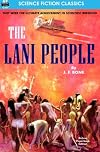
The Lani appear to be human in most respects although they have tails but a legal ruling has placed them on the wrong side. They are thus ripe for exploitation as a commodity under a family that long since seized their territory and has created a corporation out of their acquisition.
In fact, the corporation is quite responsible - at least, by the time of its third generation - with an appropriate approach to animal rights (the Lani are not going to be eaten if that's what you fear) with proper veterinary services (rather than medical services) and nutrition.
They are, however, slaves. As a didactic piece of science fiction the author is not stupid in working through the logic of the situation rationally and introducing intriguing complications centred on the tension between the rule of law and human feeling.
One of the disturbing (and very American) aspects of the novella is that the humanity of the Lani depends entirely on correct legal procedure (modelled perhaps on changes to the civil status of African-Americans over time). If classed as a commodity in law, you are a commodity.
Bones proves intellectually highly ambiguous on questions of right and wrong, accountability and transparency. Most modern readers (the book was published in 1962) may be not a little shocked by its working assumptions in places. The past is another country.
Unfortunately, all this interesting speculation is embedded in a not very interesting pulp story line that is devoid of psychological credibility at multiple levels. It is not badly written in places but the whole is pulp writing and characterisation unworthy of the thesis.
Many readers might be drawn to the fact that the Lani are a female race who walk around naked and are totally compliant with the wishes of their masters (there is a male element to the race but I won't go into that to avoid a spoiler). This might seem to be the sort of thing published in Playboy.
In fact, despite the moral ambiguities involved in what amounts to bestiality according to the laws of the Brotherhood, Bone does not seek to titillate in the least. The nature of the Lani is just a fact on the ground to be dealt with but also another aspect of the book that lacks credibility.
This is, overall, not a particularly good bit of science fiction - old-fashioned even when it was published - and its ideas might have been better explored in an article or book on philosophical ethics (where they might have some value).
However, it provides an unusual insight into how Americans thought in the early 1960s about commercial exploitation, imperialism and the role of the law of property in maintaining order and the difference of law and natural justice. The galactic justice system is certainly American.
Other than a weak member of the exploitative family, even the capitalist villains are not presented as particularly villainous because they can plead ignorance. They can plead ignorance because they have a legal ruling that means that they do not have to answer further moral questions.
If there is a moral force to the book, it is that it is necessary to ask over time certain questions even of the forces that hold society together although, in this case, the questioning does not come from moral commitment but from the dialectic between desire (the love bit) and racial moral bias.
Although it is a pulp novel about morality, it is hard to say exactly what morality emerges out of it. The final mood is one of pragmatic optimism American-style yet no one seems to come out of this with a strong sense of absolute right and wrong. The Lani are to be saved by lawyers in the end.
It is hard not to see this slight novel as something indirectly struggling with the emergent civil rights problem in America and with the role of American capitalism in commercially-based imperial exploitation but the author wants his cake and to eat it.
The implication is that he wants changes in behaviour but he wants it to come slowly, driven from above by enlightened progressive people who must work hard to keep the core framework of free enterprise, limited government and democracy in place. All very Cold War, in fact.
I would love to have seen a Marxist take the same problem and produce his or her version of the story given Marxism's equally ambiguous approach to ethics. I suspect the outcome would have been a lot more bloody as the Lani tried to liberate themselves and were crushed under foot. show less
The problem is that everything is dependent on how you define humanity. What do you do with other borderline species who start to emerge as exploration and acquisition proceeds? They are legalistically show more classified as either human or animal and treated accordingly.
The Lani appear to be human in most respects although they have tails but a legal ruling has placed them on the wrong side. They are thus ripe for exploitation as a commodity under a family that long since seized their territory and has created a corporation out of their acquisition.
In fact, the corporation is quite responsible - at least, by the time of its third generation - with an appropriate approach to animal rights (the Lani are not going to be eaten if that's what you fear) with proper veterinary services (rather than medical services) and nutrition.
They are, however, slaves. As a didactic piece of science fiction the author is not stupid in working through the logic of the situation rationally and introducing intriguing complications centred on the tension between the rule of law and human feeling.
One of the disturbing (and very American) aspects of the novella is that the humanity of the Lani depends entirely on correct legal procedure (modelled perhaps on changes to the civil status of African-Americans over time). If classed as a commodity in law, you are a commodity.
Bones proves intellectually highly ambiguous on questions of right and wrong, accountability and transparency. Most modern readers (the book was published in 1962) may be not a little shocked by its working assumptions in places. The past is another country.
Unfortunately, all this interesting speculation is embedded in a not very interesting pulp story line that is devoid of psychological credibility at multiple levels. It is not badly written in places but the whole is pulp writing and characterisation unworthy of the thesis.
Many readers might be drawn to the fact that the Lani are a female race who walk around naked and are totally compliant with the wishes of their masters (there is a male element to the race but I won't go into that to avoid a spoiler). This might seem to be the sort of thing published in Playboy.
In fact, despite the moral ambiguities involved in what amounts to bestiality according to the laws of the Brotherhood, Bone does not seek to titillate in the least. The nature of the Lani is just a fact on the ground to be dealt with but also another aspect of the book that lacks credibility.
This is, overall, not a particularly good bit of science fiction - old-fashioned even when it was published - and its ideas might have been better explored in an article or book on philosophical ethics (where they might have some value).
However, it provides an unusual insight into how Americans thought in the early 1960s about commercial exploitation, imperialism and the role of the law of property in maintaining order and the difference of law and natural justice. The galactic justice system is certainly American.
Other than a weak member of the exploitative family, even the capitalist villains are not presented as particularly villainous because they can plead ignorance. They can plead ignorance because they have a legal ruling that means that they do not have to answer further moral questions.
If there is a moral force to the book, it is that it is necessary to ask over time certain questions even of the forces that hold society together although, in this case, the questioning does not come from moral commitment but from the dialectic between desire (the love bit) and racial moral bias.
Although it is a pulp novel about morality, it is hard to say exactly what morality emerges out of it. The final mood is one of pragmatic optimism American-style yet no one seems to come out of this with a strong sense of absolute right and wrong. The Lani are to be saved by lawyers in the end.
It is hard not to see this slight novel as something indirectly struggling with the emergent civil rights problem in America and with the role of American capitalism in commercially-based imperial exploitation but the author wants his cake and to eat it.
The implication is that he wants changes in behaviour but he wants it to come slowly, driven from above by enlightened progressive people who must work hard to keep the core framework of free enterprise, limited government and democracy in place. All very Cold War, in fact.
I would love to have seen a Marxist take the same problem and produce his or her version of the story given Marxism's equally ambiguous approach to ethics. I suspect the outcome would have been a lot more bloody as the Lani tried to liberate themselves and were crushed under foot. show less

This is mostly the story from Frasier's The Golden Bough set in the future. However, there is a nice twist towards the end.

Awards

You May Also Like


Associated Authors
Statistics
- Works
- 38
- Also by
- 27
- Members
- 348
- Popularity
- #68,678
- Rating
- 3.5
- Reviews
- 4
- ISBNs
- 63
- Languages
- 2