
Nadine Cohodas
Author of Princess Noire: The Tumultuous Reign of Nina Simone
About the Author
Nadine Cohodas is the author of, among other books, Queen: The Life and Music of Dinah Washington.
Works by Nadine Cohodas
Spinning Blues into Gold: The Chess Brothers and the Legendary Chess Records (2000) 79 copies, 2 reviews
Tagged
Common Knowledge
- Gender
- female
- Places of residence
- Washington, D.C., USA
- Associated Place (for map)
- D.C., USA
Members
Reviews

Nina Simone, the "High Priestess of Soul", is undoubtedly one of the greatest 20th century musicians in American history, and an immensely talented artist who was impossible to place in a single category. She was demanding of herself, her sidemen and audiences who failed to give her sufficient attention and praise, and unforgiving of anyone who took advantage of her work, or did not love her unconditionally. She was plagued throughout her adult life by mental illness, her race and gender in show more a country that viewed African American women with hostility and disrespect, and vulnerability due to failures early in life that superseded her successful career.
Nina Simone was born Eunice Waymon in Tryon, North Carolina, a small town that was segregated yet more tolerant than most others in the Jim Crow South. Recognized as a musical genius at an early age, she was influenced and nurtured by her family, the black church and local communities, and a white British piano teacher, who gave her classical music training on the piano with the support of two white women who respected the Waymon family and Eunice's musical gift. After high school she spent the better part of a year at Juillard, in order to hone her skills as a classical pianist and to prepare her for admittance to the Curtis Institute of Music in Philadelphia. Unfortunately, she was not accepted to the prestigious conservatory, a decision that may have been based on her unfavorable race. This failure, and the loss of her first and truest love, haunted her throughout the rest of her life.
Simone gave classic music lessons in Philadelphia, added popular music to her repertoire, and gained local attention when she spent a summer performing at a club in Atlantic City as a pianist, where she first began to sing. She began to perform in Philadelphia, playing popular tunes and songs she wrote, and then moved to New York to gain wider attention. Her career peaked in the mid 1960s, with standing room only performances at Carnegie Hall, and other venues throughout the United States, the Caribbean, Europe and Africa. She made several critically acclaimed albums on the Philips label, which garnered only modest commercial success. Inspired by close friendships with Lorraine Hansberry, Miriam Makeba, James Baldwin and Langston Hughes, she became an active participant in the civil rights movement, performing at numerous concerts to benefit local and national organizations including Stokely Carmichael's Student Nonviolent Coordinating Committee (SNCC) and the Mississippi Freedom Summer volunteers.
After she divorced her second husband, who served as her business manager, confidant and stabilizing force, Simone's career began a slow decline, as mental illness, the stress of performing and traveling, and financial difficulties took their toll. She became progressively more hostile towards her audiences, berating them for not being engaged with her increasingly erratic and tardy performances, and shouting at those who interrupted her attention. She became estranged from her family, including her parents and her only child, and sought escape in Switzerland and France toward the end of her career and life. Mood stabilizing medications and the support of those closest to her permitted Simone to make a brief comeback, but she died in 2003 at the age of 70, after suffering two major strokes.
Nadine Cohodas provides the reader with an extensively researched biography of Nina Simone, which shines in its analysis of her early life and influences, the slow rise and more rapid decline of her career, details about her involvement in the civil rights movement, and descriptions of her performances through quotes from her husband, sidemen, audience members, and promoters. The book's major weaknesses are its seemingly interminable descriptions of Simone's erratic behaviors at concerts and in various settings, and its lack of personal analysis of Eunice Waymon, the complex and troubled woman within the performer. As a result, I was unable to connect with, understand and appreciate Nina Simone as much as I would have liked, which left me with a sense of dissatisfaction at the end of the book, which ended abruptly with her death, as if the author wanted to be done with Simone and the book.
I would recommend Princess Noire to fellow fans of Nina Simone, but not to casual readers or those who are unfamiliar with her work. show less
Nina Simone was born Eunice Waymon in Tryon, North Carolina, a small town that was segregated yet more tolerant than most others in the Jim Crow South. Recognized as a musical genius at an early age, she was influenced and nurtured by her family, the black church and local communities, and a white British piano teacher, who gave her classical music training on the piano with the support of two white women who respected the Waymon family and Eunice's musical gift. After high school she spent the better part of a year at Juillard, in order to hone her skills as a classical pianist and to prepare her for admittance to the Curtis Institute of Music in Philadelphia. Unfortunately, she was not accepted to the prestigious conservatory, a decision that may have been based on her unfavorable race. This failure, and the loss of her first and truest love, haunted her throughout the rest of her life.
Simone gave classic music lessons in Philadelphia, added popular music to her repertoire, and gained local attention when she spent a summer performing at a club in Atlantic City as a pianist, where she first began to sing. She began to perform in Philadelphia, playing popular tunes and songs she wrote, and then moved to New York to gain wider attention. Her career peaked in the mid 1960s, with standing room only performances at Carnegie Hall, and other venues throughout the United States, the Caribbean, Europe and Africa. She made several critically acclaimed albums on the Philips label, which garnered only modest commercial success. Inspired by close friendships with Lorraine Hansberry, Miriam Makeba, James Baldwin and Langston Hughes, she became an active participant in the civil rights movement, performing at numerous concerts to benefit local and national organizations including Stokely Carmichael's Student Nonviolent Coordinating Committee (SNCC) and the Mississippi Freedom Summer volunteers.
After she divorced her second husband, who served as her business manager, confidant and stabilizing force, Simone's career began a slow decline, as mental illness, the stress of performing and traveling, and financial difficulties took their toll. She became progressively more hostile towards her audiences, berating them for not being engaged with her increasingly erratic and tardy performances, and shouting at those who interrupted her attention. She became estranged from her family, including her parents and her only child, and sought escape in Switzerland and France toward the end of her career and life. Mood stabilizing medications and the support of those closest to her permitted Simone to make a brief comeback, but she died in 2003 at the age of 70, after suffering two major strokes.
Nadine Cohodas provides the reader with an extensively researched biography of Nina Simone, which shines in its analysis of her early life and influences, the slow rise and more rapid decline of her career, details about her involvement in the civil rights movement, and descriptions of her performances through quotes from her husband, sidemen, audience members, and promoters. The book's major weaknesses are its seemingly interminable descriptions of Simone's erratic behaviors at concerts and in various settings, and its lack of personal analysis of Eunice Waymon, the complex and troubled woman within the performer. As a result, I was unable to connect with, understand and appreciate Nina Simone as much as I would have liked, which left me with a sense of dissatisfaction at the end of the book, which ended abruptly with her death, as if the author wanted to be done with Simone and the book.
I would recommend Princess Noire to fellow fans of Nina Simone, but not to casual readers or those who are unfamiliar with her work. show less

Sun Records gave us rock and roll, Motown Records gave us pop soul, and Chess Records gave us the blues. Chess was THE label for Muddy Waters, Howlin' Wolf, Chuck Berry, Etta James, and Bo Diddley--and in this critically acclaimed history we learn the full story of this legendary label. The greatest artists who sang and played the blues made their mark with Leonard and Phil Chess, whose Chicago-based record company was synonymous with the sound that swept up from the South, embraced the show more Windy City, and spread out like wildfire into mid-century America. Spinning Blues into Gold is the impeccably researched story of the men behind the music and the remarkable company they created.
Chess Records--and later Checker, Argo, and Cadet Records--was built by Polish immigrant Jews, brothers who saw the blues as a unique business opportunity. From their first ventures, a liquor store and then a nightclub, they promoted live entertainment. And parlayed that into the first pressings sold out of car trunks on long junkets through the midsection of the country, ultimately expanding their empire to include influential radio stations. The story of the Chess brothers is a very American story of commerce in the service of culture. Long on chutzpah, Leonard and Phil Chess went far beyond their childhoods as the sons of a scrap-metal dealer. They changed what America listened to; the artists they promoted planted the seeds of rock 'n' roll--and are still influencing music today.
In this illustrated eBook, Cohodas expertly captures the rich and volatile mix of race, money, and recorded music. She also takes us deep into the world of independent record producers, sometimes abrasive and always aggressive men striving to succeed. Leonard and Phil Chess worked hand-in-glove with disenfranchised black artists, the intermittent charges of exploitation balanced by the reality of a common purpose that eventually brought fame to many if not most of the parties concerned. From beginning to end, as we find in these pages, the lives of the Chess brothers were socially, financially, and creatively entwined with those of the artists they believed in.
Includes active links for all songs and albums still in-print, giving the reader the ability to sample and purchase some of the most important music of 20th century America. show less
Chess Records--and later Checker, Argo, and Cadet Records--was built by Polish immigrant Jews, brothers who saw the blues as a unique business opportunity. From their first ventures, a liquor store and then a nightclub, they promoted live entertainment. And parlayed that into the first pressings sold out of car trunks on long junkets through the midsection of the country, ultimately expanding their empire to include influential radio stations. The story of the Chess brothers is a very American story of commerce in the service of culture. Long on chutzpah, Leonard and Phil Chess went far beyond their childhoods as the sons of a scrap-metal dealer. They changed what America listened to; the artists they promoted planted the seeds of rock 'n' roll--and are still influencing music today.
In this illustrated eBook, Cohodas expertly captures the rich and volatile mix of race, money, and recorded music. She also takes us deep into the world of independent record producers, sometimes abrasive and always aggressive men striving to succeed. Leonard and Phil Chess worked hand-in-glove with disenfranchised black artists, the intermittent charges of exploitation balanced by the reality of a common purpose that eventually brought fame to many if not most of the parties concerned. From beginning to end, as we find in these pages, the lives of the Chess brothers were socially, financially, and creatively entwined with those of the artists they believed in.
Includes active links for all songs and albums still in-print, giving the reader the ability to sample and purchase some of the most important music of 20th century America. show less

Mississippi, with its rich and dramatic history, holds a special place in the civil rights movement. Perhaps no other institution in that state, or in the South as a whole, has been more of a battleground for race relations or a barometer for progress than the University of Mississippi. Even the school's affectionate nickname - Ole Miss - bespeaks its place in the legacy of the South: now used as short for Old Mississippi, "Ole Miss" was once a term of respect used by slaves for the wife of show more a plantation owner. Throughout the first part of this century, the state's "Boll Weevil" legislators presented the most implacable hostility to black enrollment.
The campus itself - with its stately white columns and field of Confederate flags at sporting events - seemed almost frozen in time. With the civil rights movement and the arrival of the first black student in 1962, the quietly determined James Meredith, violence and hatred erupted with regularity on the verdant campus. Even following years of progress, when a young black man and young white woman were elected "Colonel Rebel" and "Miss Ole Miss, " the highest campus honors, the pair appeared in the traditional yearbook photograph separated by a picket fence, still suggesting old taboos. Once an unrepentant enclave of educational separatism in the South, the history of Ole Miss has paralleled the nation's own in race relations: the rocky beginnings of integration following Meredith's admission; the discord of the sixties and seventies, when activist black students eschewed crew cuts and varsity sweaters for Afros and clenched fists; to the delicate reconciliation of recent years. A drastically changed campus today, Ole Miss continues to wrestle with its controversial mascot, "Colonel Rebel, " and questions of whether the emotional chords of "Dixie" should still be heard at its football games.
The Band Played Dixie is a penetrating look at the University of Mississippi - ‘Ole Miss’. Nadine Cohodas (author of Spinning Blues Into Gold) covers the institution’s tumultuous racial history, with emphasis on how Ole Miss moved forward from the riot that erupted after James Meredith, the first African-American student, enrolled September 30, 1962.
Updated in 2012 for the 50th Anniversary of the integration of Ole Miss. show less
The campus itself - with its stately white columns and field of Confederate flags at sporting events - seemed almost frozen in time. With the civil rights movement and the arrival of the first black student in 1962, the quietly determined James Meredith, violence and hatred erupted with regularity on the verdant campus. Even following years of progress, when a young black man and young white woman were elected "Colonel Rebel" and "Miss Ole Miss, " the highest campus honors, the pair appeared in the traditional yearbook photograph separated by a picket fence, still suggesting old taboos. Once an unrepentant enclave of educational separatism in the South, the history of Ole Miss has paralleled the nation's own in race relations: the rocky beginnings of integration following Meredith's admission; the discord of the sixties and seventies, when activist black students eschewed crew cuts and varsity sweaters for Afros and clenched fists; to the delicate reconciliation of recent years. A drastically changed campus today, Ole Miss continues to wrestle with its controversial mascot, "Colonel Rebel, " and questions of whether the emotional chords of "Dixie" should still be heard at its football games.
The Band Played Dixie is a penetrating look at the University of Mississippi - ‘Ole Miss’. Nadine Cohodas (author of Spinning Blues Into Gold) covers the institution’s tumultuous racial history, with emphasis on how Ole Miss moved forward from the riot that erupted after James Meredith, the first African-American student, enrolled September 30, 1962.
Updated in 2012 for the 50th Anniversary of the integration of Ole Miss. show less
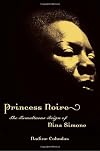
The sections on her childhood and early career were lively and illuminating and deepened my appreciation of Simone's talent. I learned a lot from later sections, too, but I stopped enjoying the book well before I was halfway done; it's probably related to the types of sources avaialble on Simone's later years, but it felt like the book devolved into a catalog of bad behavior and upsetting events, with little insight to offer.
Awards


You May Also Like


Statistics
- Works
- 5
- Members
- 275
- Popularity
- #84,338
- Rating
- 3.4
- Reviews
- 7
- ISBNs
- 18
- Languages
- 1