

Robert Gordon (1) (1961–)
Author of Can't Be Satisfied: The Life and Times of Muddy Waters
For other authors named Robert Gordon, see the disambiguation page.
About the Author
Robert Gordon has written for major publications in the U.S. and England, and has contributed to several books. He produced the Al green CD box set, "Anthology", for which his liner notes were Grammy nominated. As a filmmaker, he directed the award-winning blues documentary "All Day and All Night", show more and his music video work has appeared on MTV, BET, and CMT. He is the author of a forthcoming biography of Muddy Waters, and director of the companion documentary. He lives in Memphis with his wife and two daughters. (Bowker Author Biography) show less
Works by Robert Gordon
Tagged
Common Knowledge
Members
Reviews
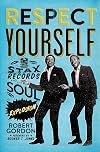
This comprehensive history tells the story of how Stax Records, an independent record company from Memphis, rose to prominence by creating and popularizing soul music. Stax was founded around the same time as Detroit's Motown, a company founded by a Black man with the goal of creating music that would crossover to white audiences. Conversely, Stax was founded by a pair of white people who ended up creating music that was more beloved within the Black community and on the R&B charts. The show more brother and sister team of Jim Stewart and Estelle Axton hadn't intended to make their record company a powerhouse of Black music. But when they moved their studio into a former movie theater in a predominately Black neighborhood of Memphis, it became a community center of sorts for talented local musicians and songwriters.
The Stax story detailed here parallels the Civil Rights and integration movements happening in Memphis and across the country in the 1960s and 1970s. While community activists fought to support the the predominately Black sanitation workers and to integrate schools, Black and white musicians came together in peace within the Stax studios. The name of the integrated Stax house band, the MGs, has alternately been explained to mean "Memphis Group" or "Mixed Group" (among other things). Stax soon began to have big hits from artists such as Booker T. & the MGs, Carla Thomas, Eddie Floyd, Sam & Dave, and Otis Redding. Black businessman Al Bell joined Stewart as co-owner of Stax furthering the integration of the company (although Axton would grow disgruntled with her role in the company and sell her shares a few years later).
Otis Redding's stunning performance at the Monterey Pop festival in June 1967 energized a crowd of West Coast hippies with Southern soul signaled another breakthrough for Stax. But several tragedies would soon follow. Redding and most of the members of the young house band Bar-Kays died in a plane crash in December 1967. In early 1968, Stax ended a distribution deal with Atlantic Records, inadvertently losing their master recordings and Sam & Dave in the process. Then in April 1968, Martin Luther King, Jr. was assassinated in Memphis at the Lorraine Motel, a place that was a popular hangout for Stax staff and artists.
Al Bell challenged this adversity with what he called the "Soul Explosion," releasing a flood of new recordings and kickstarting the careers of several emerging artists including Isaac Hayes, The Staples Singers, The Dramatics, Luther Ingram, and a re-formed Bar-Kays. Stax artists were phenomenally successful on the R&B charts with pop success as well. Once again, a festival in California would be a highpoint for Stax success, the Wattstax concert of 1972. Stax began branching out into other ventures such as filmmaking.
While Stax was making a lot of money the expenses were also high. The company started accruing massive debts and facing lawsuits from various creditors. A new distribution deal with CBS Records also quickly went sour. There also was quite a bit of crime: payola and physical intimidation at radio stations, piracy of Stax records, fraud, and illegal drugs. Gordon takes note that these problems were rife within the music industry of the 1970s, but that the legal cases against Stax always made note of them likely due to fear of a Black economic power in Memphis at the time. Just as quickly as Stax rose, the company foundered and declared bankruptcy in early 1976 (although the Stax label name has been revived since).
This book took me an unusually long time to read but I was fascinated by the details and the unique history of this record company. It's amazing how much terrific music was made in such a short period of time by this dedicated group of people. Gordon's book is definitely worth a read for anyone interested in popular music and the Civil Rights Era. show less
The Stax story detailed here parallels the Civil Rights and integration movements happening in Memphis and across the country in the 1960s and 1970s. While community activists fought to support the the predominately Black sanitation workers and to integrate schools, Black and white musicians came together in peace within the Stax studios. The name of the integrated Stax house band, the MGs, has alternately been explained to mean "Memphis Group" or "Mixed Group" (among other things). Stax soon began to have big hits from artists such as Booker T. & the MGs, Carla Thomas, Eddie Floyd, Sam & Dave, and Otis Redding. Black businessman Al Bell joined Stewart as co-owner of Stax furthering the integration of the company (although Axton would grow disgruntled with her role in the company and sell her shares a few years later).
Otis Redding's stunning performance at the Monterey Pop festival in June 1967 energized a crowd of West Coast hippies with Southern soul signaled another breakthrough for Stax. But several tragedies would soon follow. Redding and most of the members of the young house band Bar-Kays died in a plane crash in December 1967. In early 1968, Stax ended a distribution deal with Atlantic Records, inadvertently losing their master recordings and Sam & Dave in the process. Then in April 1968, Martin Luther King, Jr. was assassinated in Memphis at the Lorraine Motel, a place that was a popular hangout for Stax staff and artists.
Al Bell challenged this adversity with what he called the "Soul Explosion," releasing a flood of new recordings and kickstarting the careers of several emerging artists including Isaac Hayes, The Staples Singers, The Dramatics, Luther Ingram, and a re-formed Bar-Kays. Stax artists were phenomenally successful on the R&B charts with pop success as well. Once again, a festival in California would be a highpoint for Stax success, the Wattstax concert of 1972. Stax began branching out into other ventures such as filmmaking.
While Stax was making a lot of money the expenses were also high. The company started accruing massive debts and facing lawsuits from various creditors. A new distribution deal with CBS Records also quickly went sour. There also was quite a bit of crime: payola and physical intimidation at radio stations, piracy of Stax records, fraud, and illegal drugs. Gordon takes note that these problems were rife within the music industry of the 1970s, but that the legal cases against Stax always made note of them likely due to fear of a Black economic power in Memphis at the time. Just as quickly as Stax rose, the company foundered and declared bankruptcy in early 1976 (although the Stax label name has been revived since).
This book took me an unusually long time to read but I was fascinated by the details and the unique history of this record company. It's amazing how much terrific music was made in such a short period of time by this dedicated group of people. Gordon's book is definitely worth a read for anyone interested in popular music and the Civil Rights Era. show less

Maybe one of the best musicians biography ever wrote and certainly the definitive look into McKinley Morganfield's life.
After reading the boring, cliché foreword by Keith Richards and getting a few pages into the first chapter we immediately notice how much time and effort the author invested, doing a great work of investigation that becomes obvious when you see its almost 200 pages of appendixes, notes and bibliography.
This book discovered me some recordings that I, for some reason, show more managed to miss and many aspects of Muddy's life that I never heard of, Muddy's and many of his friends and "blues colleages" (Jimmy Rogers, Little Walter, Otis Spann and many more), because this book isn't only about Muddy, it's about the Blues and everything that come with it: about black people, musical legacy, the racist south, life in the delta, the Great Migration, industrial Chicago... etc. Also this biography talks not only about the character but the music as well. This may appears as a somehow dumb observation but, sadly, it's a very common practice in this kind of books to center exclusively in the persona and completely ignore the music, which is a main aspect in their lives.
I finished the book loving even more Muddy's legacy and with a renewed opinion about the character.
The only (small) thing I can complain about is the small amount of photos. show less
After reading the boring, cliché foreword by Keith Richards and getting a few pages into the first chapter we immediately notice how much time and effort the author invested, doing a great work of investigation that becomes obvious when you see its almost 200 pages of appendixes, notes and bibliography.
This book discovered me some recordings that I, for some reason, show more managed to miss and many aspects of Muddy's life that I never heard of, Muddy's and many of his friends and "blues colleages" (Jimmy Rogers, Little Walter, Otis Spann and many more), because this book isn't only about Muddy, it's about the Blues and everything that come with it: about black people, musical legacy, the racist south, life in the delta, the Great Migration, industrial Chicago... etc. Also this biography talks not only about the character but the music as well. This may appears as a somehow dumb observation but, sadly, it's a very common practice in this kind of books to center exclusively in the persona and completely ignore the music, which is a main aspect in their lives.
I finished the book loving even more Muddy's legacy and with a renewed opinion about the character.
The only (small) thing I can complain about is the small amount of photos. show less

Memphis is one of a handful of US cities that can claim its own sui generis music. Gordon tells an unfamiliar story of a group of acquaintances who blur the lines, rearrange the pieces, and create entirely new sounds and visuals across the second half of the 20th c.: rockabullies, hippies, folkies, bluesmen, noise freaks, jazzbos, photographers, painters, puppeteers and punks, drinking from the same bottle and breathing the same funky air. We are all the better for what they did. A great book.
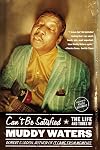
I love Muddy Waters and his music, "Mannish Boy" is timeless. Gordon's biography, unhappily, simply tells me more than I care to know about the day-to-day details of Waters' life. The context of Muddy's origins and the environment of the growth of the Chicago blues genre is welcome. I now know enough about fish fries in the Muddy Waters household to last me for the rest of my life, and beyond. Sadly, I didn't finish the book.
Lists
Awards


You May Also Like


Associated Authors
Statistics
- Works
- 17
- Members
- 684
- Popularity
- #36,990
- Rating
- 4.0
- Reviews
- 9
- ISBNs
- 197
- Languages
- 8
- Favorited
- 2