
James P. Delgado
Author of Across the Top of the World: The Quest for the Northwest Passage
About the Author
James P. Delgado has led or participated in shipwreck expeditions around the world. He led the first detailed archaeological study of a shipwreck in the Arctic on the sunken remains of Roald Amundsen's exploration ship Maud. He is executive director of the Vancouver Maritime Museum in Vancouver, show more British Columbia. Previously, he was the head of the U.S. government's maritime preservation program and was the maritime historian for the U.S. National Park Service. Delgado is actively involved in the preservation of shipwreck sites and is a member of the International Commission on Monuments and Sites (ICOMOS) committee on underwater cultural heritage. A Fellow of the Royal Geographical Society and a Fellow of the Explorers' Club, Delgado is the author or editor of twenty books. show less
Works by James P. Delgado
War at Sea: A Shipwrecked History from Antiquity to the Twentieth Century (2019) 34 copies, 1 review
Misadventures of a Civil War Submarine: Iron, Guns, and Pearls (Ed Rachal Foundation Nautical Archaeology Series) (2012) 13 copies
The Curse of the Somers: The Secret History behind the U.S. Navy's Most Infamous Mutiny (2022) 11 copies
The Lost Submarines of Pearl Harbor (Ed Rachal Foundation Nautical Archaeology Series) (2016) 8 copies, 1 review
Shipwrecks at the Golden Gate: A History of Vessel Losses from Duxbury Reef to Mussel Rock (1989) 7 copies
Clotilda: The History and Archaeology of the Last Slave Ship (Maritime Currents: History and Archaeology) (2023) 6 copies
The Log of Apollo Joseph Perkins Beach's Journal of the Voyage of the Ship Apollo from New York to san Francisco 1840 (1986) 4 copies
Guidelines for evaluating and documenting historic aids to navigation (SuDoc I 29.76/3:34) (2017) 4 copies
Associated Works
Gold, silk, pioneers & mail : the story of the Pacific Mail Steamship Company (2007) — Foreword — 6 copies
Tagged
Common Knowledge
- Canonical name
- Delgado, James P.
- Legal name
- Delgado, James Preston
- Other names
- Delgado, Jim
- Birthdate
- 1958-01-11
- Gender
- male
- Education
- San Jose State University
San Francisco State University (BA)
East Carolina University (MA|1985)
Simon Fraser University (Ph.D|2006) - Occupations
- maritime historian
- Organizations
- United States National Park Service
Vancouver Maritime Museum
Institute of Nautical Archaeology
NOAA Office of National Marine Sanctuaries
SEARCH, Inc. - Awards and honors
- Royal Geographical Society (Fellow)
Explorers' Club (Fellow)
Royal Canadian Geographical Society (Fellow)
Spanish Order of Civil Merit (Officer, 2014)
John Lyman Book Award (1999)
James L. Deetz Award (2011) - Nationality
- USA
- Birthplace
- San Jose, California, USA
- Associated Place (for map)
- California, USA
Members
Reviews
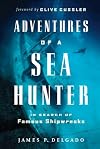
Q: Why is a book about underwater archaeology like a shipwreck?
A: Because both run the risk of having been looted of their content.
James Delgado is a trained archaeology who does most of his work investigating ships and shipwrecks, and he has produced several books on the subject -- often thematic, as when he examined the ships and sailors who searched for the Northwest Passage in the nineteenth century. Those books are often extremely interesting.
This, one of his later books, is again about show more underwater explorations -- but the only real theme is Delgado's presence at the sites he's explored. This is a genuine problem, because it prevents us from getting a real overview of what is going on. It's like sticking pins in a map and going there. Sometimes you'll see something great and interesting. Sometimes you'll visit -- New Jersey. (Or Toledo, or Kansas, or whatever is your personal version of The Really Boring Place.) And, because Delgado is always hopping around, you never learn much about any of the individual shipwrecks he discovers. Plus, far too much of it is about the actual task of diving -- interesting to some, maybe, but I'm in it for the history.
The result is very uneven -- although you'll probably find one or two accounts you'll find interesting (I was interested in the fate of Leopold McClintock's Fox), four or five pages later, you'll be involved in something else which is likely to be much less interesting.
If this book were four or five times as long, so that we could get all the history on each particular wreck, it might be truly fascinating. As it is, I really wanted to jump ship before it sank. show less
A: Because both run the risk of having been looted of their content.
James Delgado is a trained archaeology who does most of his work investigating ships and shipwrecks, and he has produced several books on the subject -- often thematic, as when he examined the ships and sailors who searched for the Northwest Passage in the nineteenth century. Those books are often extremely interesting.
This, one of his later books, is again about show more underwater explorations -- but the only real theme is Delgado's presence at the sites he's explored. This is a genuine problem, because it prevents us from getting a real overview of what is going on. It's like sticking pins in a map and going there. Sometimes you'll see something great and interesting. Sometimes you'll visit -- New Jersey. (Or Toledo, or Kansas, or whatever is your personal version of The Really Boring Place.) And, because Delgado is always hopping around, you never learn much about any of the individual shipwrecks he discovers. Plus, far too much of it is about the actual task of diving -- interesting to some, maybe, but I'm in it for the history.
The result is very uneven -- although you'll probably find one or two accounts you'll find interesting (I was interested in the fate of Leopold McClintock's Fox), four or five pages later, you'll be involved in something else which is likely to be much less interesting.
If this book were four or five times as long, so that we could get all the history on each particular wreck, it might be truly fascinating. As it is, I really wanted to jump ship before it sank. show less
“You don’t know till you go” is tried and true wisdom in the difficult task of shipwreck identification.”
~
James Delgado takes us under the sea in a collection of captivating tales of his dives on various sunken ships. He provides a brief history of these lost vessels, bringing them back from the depths and into the minds of the readers to share their stories so they may live on. Delgado also describes his dives and the feelings of seeing the sunken crafts, sometimes for the first show more time since they were lost. An informative, yet easier read, to bring some insight into the history of sunken ships. show less
~
James Delgado takes us under the sea in a collection of captivating tales of his dives on various sunken ships. He provides a brief history of these lost vessels, bringing them back from the depths and into the minds of the readers to share their stories so they may live on. Delgado also describes his dives and the feelings of seeing the sunken crafts, sometimes for the first show more time since they were lost. An informative, yet easier read, to bring some insight into the history of sunken ships. show less
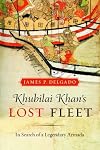
There is a bit of a sense that this book overreaches itself when it uses the kind of subtitle more at home in those block-buster movies, 'History's Greatest Naval Disaster'. All that is missing is the exclamation mark. Oddly enough though, this is the only fault I can find with this very well written look at what is known about the attempted Mongol invasions of Japan in the 13th Century. Delgado, a marine archaeologist, gives a workmanlike account of Mongol, Japanese and Chinese history show more during this period, and a very restrained account of what has been achieved so far in terms of revealing the sunken Mongol ships along the shores of Japan. On top of this, he leads the reader through a very well argued account of how the historiography and mythologising of those events has evolved over time. It comes as a surprise to learn that the story of the 'kamikaze' typhoon that purportedly wiped out the Mongol fleet at the instigation of the Japanese Emperor had very little currency in Japan until the 19th Century, or that during the period of Japanese isolation prior to the Meiji Restoration all mention of the Mongol Invasion attempt was suppressed. Delgado concludes his account with some observations about the evolution and potential of marine archaeology, noting that efforts to uncover the remnants of the Mongol fleet have fallen away as the Japanese economy has languished. What comes across, however, is Delgado's certain belief that major finds will be uncovered when the money, and the expertise, is available to search in deeper waters around Japan.
There are a few photographs in the book, but as in any paperback, they are limited. There is no doubt that there's a coffee-table sized book with rich illustrations hanging around this story somewhere in the future, but in the meantime there are resources on the Internet for those who'd seek them out, including this from Delgado and this from the Institute of Nautical Archaeology and a Japanese archaeologist's Thesis on the shipwrecks, and a journal article from the same writer. All of these links contain photographs of items mentioned in Delgado's books. A 'latest update' report contains details of the latest ship discovery and information about sites in Vietnam mention by Delgado. As for Delgado's book; well it ticked all the boxes for me. It didn't attempt more than the evidence (so far) warranted, it opened up other areas of interest, and it was thoughtful without requiring a huge mental effort. Highly recommended. show less
There are a few photographs in the book, but as in any paperback, they are limited. There is no doubt that there's a coffee-table sized book with rich illustrations hanging around this story somewhere in the future, but in the meantime there are resources on the Internet for those who'd seek them out, including this from Delgado and this from the Institute of Nautical Archaeology and a Japanese archaeologist's Thesis on the shipwrecks, and a journal article from the same writer. All of these links contain photographs of items mentioned in Delgado's books. A 'latest update' report contains details of the latest ship discovery and information about sites in Vietnam mention by Delgado. As for Delgado's book; well it ticked all the boxes for me. It didn't attempt more than the evidence (so far) warranted, it opened up other areas of interest, and it was thoughtful without requiring a huge mental effort. Highly recommended. show less
The topic is extremely interesting, but I don't think Delgado is a particularly captivating writer. After a while, all the stories faded in to one another - a history of the ship told in emotionally lurid detail, then a brief description of their dives down to see the wreck. I think I would have preferred more detail devoted to those second parts of the story, as that's what I find the most fascinating.
Awards


You May Also Like


Associated Authors
Statistics
- Works
- 50
- Also by
- 2
- Members
- 951
- Popularity
- #27,066
- Rating
- 3.6
- Reviews
- 14
- ISBNs
- 91
- Languages
- 2