
Antony Easthope (1939–1999)
Author of A Critical and Cultural Theory Reader
About the Author
Works by Antony Easthope
Tagged
Common Knowledge
- Canonical name
- Easthope, Antony
- Birthdate
- 1939-04-14
- Date of death
- 1999-12-14
- Gender
- male
- Short biography
- Professor Antony Easthope was born in Portsmouth in 1939. Educated at Christ's College, Cambridge, he taught at the University of Warwick and was Professor of English and Cultural Studies at Manchester Metropolitan University. He was Charter Fellow of Wolfson College, Oxford, in 1984/5, and held visiting posts at the University of Adelaide and the University of Virginia. His last book is The Unconscious, published in 1999.
- Nationality
- UK
- Associated Place (for map)
- UK
Members
Reviews
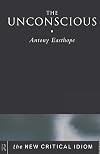
If you are looking for a book that gives you insights into the 'unconscious' workings of the mind, this is not it. If you are looking for a book that tells you how literary types use and exploit the concept invented or discovered (to your taste) by Freud, then this may be it.
It is really a book on Lacan's view of the unconscious with some glosses from a few other 'thinkers' (including Freud) and a number of examples from literature and history - workable from literature and cinema, not so show more much from history and politics where the analyses are laughable and simplistic.
I found it a little hackneyed and dull but then I have a problem with the endless re-cycling of dubious post-modern speculations about reality that seemed to make up the mind-world of the universities' intellectual class as the last century drew to a close.
The matter is not made easier by this emphasis on the 'thinking' of Jacques Lacan whose few genuine insights are elaborated to the point where one yearns for the solid simplicities of medieval scholasticism. I am being sarcastic!
Easthope is perhaps right to cast doubt on the viability of 'rights' as sound philosophy (any truly thinking human knows that rights theory is just so much nonsense, a bauble to keep society ticking along admiring its shine) but one has to ask - so what?
The real question is what is the use-value of 'rights theory' in the power struggles of interest that apply at this point in history and did in 1779 and 1789 and what we do with it in our interest or that of those we care about. We know it is nonsense but is it our or their nonsense?
Simply to point up human creations as false and unstable is telling us what is real below the level of the clash of Selves and society but where does it take us except to construct a new falsehood useful for new interests and classes - in the case of post-modernism, a flaccid intelligentsia.
What worries me about the mentality (or is it mentalite with an accent) is that the overthinking of lived reality by a class detached from that reality ends up with a denial of what it is to be human - a being whose thinking is a tool for a purpose beyond reason, a hunger for existence as a Self.
The politics and history in the book are jejune. A depressed moralism seems to enter into a 'discourse' (another favourite post-modern term) whose main aim is to deny all in a paradoxical and staggering lack of self awareness. The denial is just self-destruction, death instinct.
The thing about intellectuals like Lacan who are on the very edge of psychopathy in their reasoning is that they want their cake and to eat it. They want to assert something expressive of their own Selves while denying all else, detaching themselves entirely from the muddy business of living.
The 'unconscious' (which self-evidently is a fact on the ground from simple observation and where Freud had genuine insights) is analysed and re-analysed until it ceases to be what it is at all - it becomes the gloomy excuse for patrician pessimism, the normal state of our intelligentsia.
What we really need is patrician detachment. The appreciation of the intellectual claims as quite possibly true but on terms that state equally that their truth or falsehood is not relevant to their use-value, especially if the intellectual claim weakens that which it analyses.
It is at times like these that I see the point of the Athenian polity shoving hemlock into the hands of Socrates as perverter of the minds of the young. That might have made Plato angry but I find that Plato makes me angry and post-modernism angrier still.
Our intellectual class has given voice, uncritically, to minds whose own personal trauma at not being quite real to themselves has fed off normal doubts about such things in the young and created an entire generation or a class within that generation who have abandoned their own Selfhood.
There was a cosmic joke involved in reading this depressing book. I had actually ordered Alasdair Macintyre's book on 'The Unconscious' (which I still have to read) but a printer's blunder sent me Easthope's text wrapped in MacIntyre's cover.
Since the mistake had been made, I decided to read Easthope, partly because I have much liked one or two other books in the Routledge New Critical Idiom series. And so I doubled the error.
The disconnect between theories of life that can be applied (without possibility of proof or disproof) to things imagined and created and the actuality of life in real time (the essence of history and politics) is apparent in this book.
No, Nazism is not to be explained as irruptions of the unconscious! This is the lazy reading of men who take their narratives from wartime agit-prop and not men who study what it was like to live in Germany in the early twentieth century. The unconscious explains nothing. It misdirects.
The conservative pessimism about humanity expressed in a litany of atrocities undertaken by men against men is redundant because humanity is complex and has variation in its memes and genes. The intellectual is terrified by what he cannot understand and so invents an understanding.
I did not give up on the book but I learned very little from it, partly because I had no interest whatsoever in Lacan's existential pessimism and obscurantism. It is not and never will be a tool I can use. The unconscious only interests me as a working part of a Self that self-evidently exists.
Anything that denies the Self from overthinking and complexification is detaching us from reality and entering us into an imaginative realm that can be used to advantage and can give enjoyment (the account of Hitchcock's 'Psycho' was plausible) but, in itself, is never our lived reality.
The tragedy of the last half century is that our young have taken over-seriously this over-thinking of their own predicament and have ended up neutering themselves, unable to see the Self as the basis for action in the world where each narrative is unique, invented and real at the same time.
We are not shattered glass or mirrors reflecting mirrors. We are not pure constructions of the social without will or disconnected moments in which the present is always the future made past so that despair is the only option. We are Selves constructing reality where nothing else matters.
The Unconscious is thus something that exists and plays its role in our self-construction but too much analytical reason applied to it destroys that which analyses it. So, the book is fine for literary types who love the mind games of Lacan. Otherwise, a distraction. show less
It is really a book on Lacan's view of the unconscious with some glosses from a few other 'thinkers' (including Freud) and a number of examples from literature and history - workable from literature and cinema, not so show more much from history and politics where the analyses are laughable and simplistic.
I found it a little hackneyed and dull but then I have a problem with the endless re-cycling of dubious post-modern speculations about reality that seemed to make up the mind-world of the universities' intellectual class as the last century drew to a close.
The matter is not made easier by this emphasis on the 'thinking' of Jacques Lacan whose few genuine insights are elaborated to the point where one yearns for the solid simplicities of medieval scholasticism. I am being sarcastic!
Easthope is perhaps right to cast doubt on the viability of 'rights' as sound philosophy (any truly thinking human knows that rights theory is just so much nonsense, a bauble to keep society ticking along admiring its shine) but one has to ask - so what?
The real question is what is the use-value of 'rights theory' in the power struggles of interest that apply at this point in history and did in 1779 and 1789 and what we do with it in our interest or that of those we care about. We know it is nonsense but is it our or their nonsense?
Simply to point up human creations as false and unstable is telling us what is real below the level of the clash of Selves and society but where does it take us except to construct a new falsehood useful for new interests and classes - in the case of post-modernism, a flaccid intelligentsia.
What worries me about the mentality (or is it mentalite with an accent) is that the overthinking of lived reality by a class detached from that reality ends up with a denial of what it is to be human - a being whose thinking is a tool for a purpose beyond reason, a hunger for existence as a Self.
The politics and history in the book are jejune. A depressed moralism seems to enter into a 'discourse' (another favourite post-modern term) whose main aim is to deny all in a paradoxical and staggering lack of self awareness. The denial is just self-destruction, death instinct.
The thing about intellectuals like Lacan who are on the very edge of psychopathy in their reasoning is that they want their cake and to eat it. They want to assert something expressive of their own Selves while denying all else, detaching themselves entirely from the muddy business of living.
The 'unconscious' (which self-evidently is a fact on the ground from simple observation and where Freud had genuine insights) is analysed and re-analysed until it ceases to be what it is at all - it becomes the gloomy excuse for patrician pessimism, the normal state of our intelligentsia.
What we really need is patrician detachment. The appreciation of the intellectual claims as quite possibly true but on terms that state equally that their truth or falsehood is not relevant to their use-value, especially if the intellectual claim weakens that which it analyses.
It is at times like these that I see the point of the Athenian polity shoving hemlock into the hands of Socrates as perverter of the minds of the young. That might have made Plato angry but I find that Plato makes me angry and post-modernism angrier still.
Our intellectual class has given voice, uncritically, to minds whose own personal trauma at not being quite real to themselves has fed off normal doubts about such things in the young and created an entire generation or a class within that generation who have abandoned their own Selfhood.
There was a cosmic joke involved in reading this depressing book. I had actually ordered Alasdair Macintyre's book on 'The Unconscious' (which I still have to read) but a printer's blunder sent me Easthope's text wrapped in MacIntyre's cover.
Since the mistake had been made, I decided to read Easthope, partly because I have much liked one or two other books in the Routledge New Critical Idiom series. And so I doubled the error.
The disconnect between theories of life that can be applied (without possibility of proof or disproof) to things imagined and created and the actuality of life in real time (the essence of history and politics) is apparent in this book.
No, Nazism is not to be explained as irruptions of the unconscious! This is the lazy reading of men who take their narratives from wartime agit-prop and not men who study what it was like to live in Germany in the early twentieth century. The unconscious explains nothing. It misdirects.
The conservative pessimism about humanity expressed in a litany of atrocities undertaken by men against men is redundant because humanity is complex and has variation in its memes and genes. The intellectual is terrified by what he cannot understand and so invents an understanding.
I did not give up on the book but I learned very little from it, partly because I had no interest whatsoever in Lacan's existential pessimism and obscurantism. It is not and never will be a tool I can use. The unconscious only interests me as a working part of a Self that self-evidently exists.
Anything that denies the Self from overthinking and complexification is detaching us from reality and entering us into an imaginative realm that can be used to advantage and can give enjoyment (the account of Hitchcock's 'Psycho' was plausible) but, in itself, is never our lived reality.
The tragedy of the last half century is that our young have taken over-seriously this over-thinking of their own predicament and have ended up neutering themselves, unable to see the Self as the basis for action in the world where each narrative is unique, invented and real at the same time.
We are not shattered glass or mirrors reflecting mirrors. We are not pure constructions of the social without will or disconnected moments in which the present is always the future made past so that despair is the only option. We are Selves constructing reality where nothing else matters.
The Unconscious is thus something that exists and plays its role in our self-construction but too much analytical reason applied to it destroys that which analyses it. So, the book is fine for literary types who love the mind games of Lacan. Otherwise, a distraction. show less
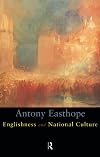
Today "nation" is probably the strongest of all forms of group identity. Over and above its expression in symbols such as flags, leaders, and cultural icons, national identity also works at a less visible, more insidious level--in the forms of discourse specific to a nation.
In this compelling study, Antony Easthope takes "Englishness" as an example and argues that this national identity is deeply informed by the empiricist tradition. He employs a wide array of examples from high and popular show more culture, ranging from philosophical and literary works through popular journalism and aspects of the English sense of humor. Englishness and National Culture asserts a profound continuity running from the seventeenth century until now. Today's journalists, novelists and politicians may imagine they are speaking for themselves, yet Easthope demonstrates the "ancestral voices" speaking through them.
Easthope breathes new life into what easily could have become another walk-through of the culture wars. This book is a stimulating and valuable contribution to investigations of Englishness. Easthope's discursive analyses broaden the field beyond only examining cultural texts explicitly forged in the colonial crucible. Similarly, by beginning to identify specific markers of Englishness (empiricism, classic irony, denigration of the body), Easthope also moves past the thematicisation of an identity founded throughout difference by instead offering the possibility that this dialectic might be located in the very rhetoric and form of the discourse itself. Furthermore, by looking at contemporary English expressions of nationness, this book opens up new ground for postcolonial criticism through the examination of post-imperial British texts whose very features betray the continuing legacy of Empire. show less
In this compelling study, Antony Easthope takes "Englishness" as an example and argues that this national identity is deeply informed by the empiricist tradition. He employs a wide array of examples from high and popular show more culture, ranging from philosophical and literary works through popular journalism and aspects of the English sense of humor. Englishness and National Culture asserts a profound continuity running from the seventeenth century until now. Today's journalists, novelists and politicians may imagine they are speaking for themselves, yet Easthope demonstrates the "ancestral voices" speaking through them.
Easthope breathes new life into what easily could have become another walk-through of the culture wars. This book is a stimulating and valuable contribution to investigations of Englishness. Easthope's discursive analyses broaden the field beyond only examining cultural texts explicitly forged in the colonial crucible. Similarly, by beginning to identify specific markers of Englishness (empiricism, classic irony, denigration of the body), Easthope also moves past the thematicisation of an identity founded throughout difference by instead offering the possibility that this dialectic might be located in the very rhetoric and form of the discourse itself. Furthermore, by looking at contemporary English expressions of nationness, this book opens up new ground for postcolonial criticism through the examination of post-imperial British texts whose very features betray the continuing legacy of Empire. show less

The "prick"ing of the male ego as displayed in every form of publishing, entertainment, attitudes and policies: This is not a book to be read by those males with a delicate regard for their manliness - - for those men and women wishing to revise their opinion of why a man really very rarely actually is able never mind manages to 'do' what traditional imagery suggests they should this a pleasingly erudite, informative and thought-provoking tome.
You May Also Like


Associated Authors
Statistics
- Works
- 14
- Members
- 329
- Popularity
- #72,115
- Rating
- 2.8
- Reviews
- 3
- ISBNs
- 55