
Allen Steele
Author of Coyote
About the Author
Image credit: Geoffrey A. Landis
Series
Works by Allen Steele
Doblin's Lecture {short story} 6 copies
The Madwoman of Shuttlefield 5 copies
Asimov's Science Fiction: Vol. 49, No. 5 & 6 [May/June 2025] — Contributor — 5 copies
The War Memorial [short story] 4 copies
Time Loves a Hero 4 copies
Thompson's Ferry 3 copies
Zwarte Piet's Tale {novelette} 3 copies
The good rat (novelette) 3 copies
Orbita Olympus 3 copies
The Garcia Narrows Bridge 3 copies
Incident At Goat Kill Creek 2 copies
Galaxy Blues 4 2 copies
The Long Wait 2 copies
The Children Of Gal 2 copies
Agape among the robots {novelette} 2 copies
Home Of The Brave 2 copies
Liberation Day 2 copies
Walking Star [novella] 2 copies
Shady Grove 2 copies
Glorious Destiny 2 copies
Galaxy Blues 1 2 copies
Benjamin the Unbeliever 2 copies
Lonesome And A Long Way From Home 2 copies
Martian Blood (Novelette) 2 copies
Captain Future: The Multiverse War 2 copies
Liberty Journals 2 copies
Across The Eastern Divide 2 copies
The War Of Dogs And Boids 2 copies
Trembling Earth {novella} 2 copies
Asimov's Science Fiction: Vol. 49, No. 11 & 12 [November/December 2025] — Contributor — 2 copies
Coyote 1 copy
The New Brighton Story 1 copy
Chronospace 1 copy
The Zoo Team 1 copy
The Great Galactic Ghoul 1 copy
The Recovery of Lemuria 7 1 copy
Starship Mountain 1 copy
Blues ufPetra Andělová,... en Steele,... kanýho kluka a další ; [z anglických originálů přeložila Petra Andělová] (1997) 1 copy
Tagging Bruno 1 copy
Barren Isle 1 copy
Fantastic Stories Presents: Science Fiction Super Pack #2: 5 (Positronic Super Pack Series) (2016) 1 copy
The Hunt For Lemuria 7 1 copy
The Lost Testament 1 copy
Oceanspace 1 copy
The Palace Of Dancing Dogs 1 copy
[No title] 1 copy
Orbital Decay 1 copy
Lemuria 7 Is Missing 1 copy
Apotheosis 1 copy
High Roller 1 copy
Carlos's Pizza 1 copy
Moreau^2 1 copy
Short Fiction Collection 1 copy
Coyote estrema frontiera 1 copy
Frogheads (novelette) 1 copy
Sugar's Blues {novelette} 1 copy
The Other Side Of Jordan 1 copy
Shepherd Moon 1 copy
Galaxy Blues 2 [short story] 1 copy
Beyond The Meridian Sea 1 copy
The Order Of The Eye 1 copy
True Religion 1 copy
A Man Of Constant Sorrow 1 copy
Will The Circle Be Broken 1 copy
Parson's Rebellion 1 copy
Quartet For Four Seasons 1 copy
Emissary To Earth 1 copy
The Black Mountains 1 copy
Galaxy Blues 3 1 copy
The Wayfaring Stranger 1 copy
Bridge Of Stars 1 copy
Her Own Private Sitcom 1 copy
Robowassailing 1 copy
The Boid Hunt 1 copy
Coming To Coyote 1 copy
Tranquility Alternative, The 1 copy
Associated Works
The Best Alternate History Stories of the 20th Century (2001) — Contributor — 617 copies, 10 reviews
The Year's Best Science Fiction: Nineteenth Annual Collection (2002) — Contributor — 556 copies, 6 reviews
The Year's Best Science Fiction: Thirteenth Annual Collection (1996) — Contributor — 454 copies, 4 reviews
The Year's Best Science Fiction: Twenty-Eighth Annual Collection (2011) — Contributor — 328 copies, 3 reviews
The Year's Best Science Fiction: Thirty-Second Annual Collection (2015) — Contributor — 204 copies, 8 reviews
The Year's Best Science Fiction: Thirty-First Annual Collection (2014) — Contributor — 203 copies, 3 reviews
The Year's Best Science Fiction: Thirty-Third Annual Collection (2016) — Contributor — 190 copies, 2 reviews
The Very Best of the Best: 35 Years of The Year's Best Science Fiction (2019) — Contributor — 182 copies, 1 review
Boarding the Enterprise: Transporters, Tribbles, and the Vulcan Death Grip in Gene Roddenberry's Star Trek (2006) — Contributor — 91 copies, 5 reviews
Solaris Rising 2: The New Solaris Book of Science Fiction (2013) — Contributor — 74 copies, 6 reviews
Short Things: Tales Inspired by "Who Goes There?" by John W. Campbell, Jr. (2020) 21 copies, 1 review
Asimov's Science Fiction: Vol. 31, No. 10 & 11 [October/November 2007] (2007) — Author — 18 copies, 1 review
Asimov's Science Fiction: Vol. 41, No. 9 & 10 [September/October 2017] (2017) — Contributor — 17 copies, 2 reviews
Isaac Asimov's Science Fiction Magazine: Vol. 14, No. 11 & 12 [November 1990] (1990) — Contributor — 16 copies
The Magazine of Fantasy and Science Fiction October/November 1993, Vol. 85, No. 4 & 5 (1993) — Author — 16 copies
Asimov's Science Fiction: Vol. 31, No. 12 [December 2007] (2007) — Contributor — 15 copies, 1 review
Asimov's Science Fiction: Vol. 35, No. 9 [September 2011] (2011) — Contributor — 14 copies, 2 reviews
Asimov's Science Fiction: Vol. 42, No. 1 & 2 [January/February 2018] (2018) — Contributor — 12 copies
Asimov's Science Fiction: Vol. 39, No. 4 & 5 [April/May 2015] (2015) — Contributor — 12 copies, 1 review
Analog Science Fiction and Fact: Vol. CXXX, No. 10 (October 2010) (2010) — Contributor — 12 copies, 1 review
Isaac Asimov's Science Fiction Magazine: Vol. 15, No. 14 [December 1991] (1991) — Contributor — 11 copies
Asimov's Science Fiction: Vol. 38, No. 10 & 11 [October/November 2014] (2014) — Contributor — 10 copies, 1 review
Asimov's Science Fiction: Vol. 41, No. 1 & 2 [January/February 2017] (2017) — Contributor — 7 copies
Asimov's Science Fiction: Vol. 43, No. 11 & 12 [November/December 2019] (2019) — Contributor — 5 copies
Asimov's Science Fiction: Vol. 44, No. 1 & 2 [January/February 2020] (2020) — Contributor — 5 copies
Starshipsofa Stories Vol 3 — Contributor — 4 copies
Eeriecon Chapbook #4 — Contributor — 3 copies
The Year’s Top Ten Tales of Science Fiction 6 — Contributor — 1 copy
Science Fiction Eye #08, Winter 1991 — Contributor — 1 copy
Tagged
Common Knowledge
- Legal name
- Steele, Allen Mulherin, Jr.
- Other names
- Steele, Alan M.
Mulherin, John - Birthdate
- 1958-01-19
- Gender
- male
- Education
- New England College (BA)
University of Missouri, Columbia (MA) - Occupations
- journalist
- Organizations
- Science Fiction and Fantasy Writers of America
- Agent
- Martha Millard
- Relationships
- Steele, Linda (wife)
Steele, Elizabeth (sister)
Edwards, Genevieve (sister) - Nationality
- USA
- Birthplace
- Nashville, Tennessee, USA
- Places of residence
- Nashville, Tennessee, USA
Whately, Massachusetts, USA - Associated Place (for map)
- USA
Members
Discussions
Allen M Steele in Science Fiction Fans (June 2011)
Reviews
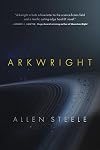
An ambitious story that pays homage to all the giants of SF that came before, while still looking ahead.
Unfortunately, in my limited view (I really don't read a lot of SF anymore, but I've read damn near every one of the authors namechecked in this book), this story suffers the fate of almost every multi-generational SF story I've ever read: that is, it almost has to work in shorthand, or summary. Characters need to meet and fall immediately in love for the plot to progress to their show more grandkids. So we get scenes where someone goes to interview an Arkwright Foundation member and, within pages, they've fallen in love and she becomes a member of Arkwright, both the family and the foundation, on the basis of being attractive. Or another scene where a young family member who's completely directionless until he meets a lovely woman finds everything he needs all in one package. But then, for the plot to progress, when we skip ahead ten years, he's done yet another abrupt about-face.
In perfect Asimov fashion, any person with a problem immediately meets someone else who will solve that problem.
My other concern is, there's no conflict here. Things all come relatively easy. The only disagreements come from belief - belief in technology or religion. When a disaster happens, it's not even remotely engaging because the solution is there.
Finally, when we get to the last bit of the book (which, truth be told, I thought was going to make up the bulk of the novel), we're fed yet another faith vs. science question. I don't think I spoil a damn thing when I say I wasn't shocked that science wins. Don't get me wrong, I'm no believer in religion, and have a lot of faith in science overall, but did it need to be so damn one-sided and heavy-handed? Every outcome in this novel is a foregone conclusion.
I know they're out there, but I wish I could find a hard-SF author who pays the same amount of attention to their characters as they do to their tech. And I wish they could be a little less biased.
Not a horrible book, but yet again, not one I'd hold up as a solid example of the genre. show less
Unfortunately, in my limited view (I really don't read a lot of SF anymore, but I've read damn near every one of the authors namechecked in this book), this story suffers the fate of almost every multi-generational SF story I've ever read: that is, it almost has to work in shorthand, or summary. Characters need to meet and fall immediately in love for the plot to progress to their show more grandkids. So we get scenes where someone goes to interview an Arkwright Foundation member and, within pages, they've fallen in love and she becomes a member of Arkwright, both the family and the foundation, on the basis of being attractive. Or another scene where a young family member who's completely directionless until he meets a lovely woman finds everything he needs all in one package. But then, for the plot to progress, when we skip ahead ten years, he's done yet another abrupt about-face.
In perfect Asimov fashion, any person with a problem immediately meets someone else who will solve that problem.
My other concern is, there's no conflict here. Things all come relatively easy. The only disagreements come from belief - belief in technology or religion. When a disaster happens, it's not even remotely engaging because the solution is there.
Finally, when we get to the last bit of the book (which, truth be told, I thought was going to make up the bulk of the novel), we're fed yet another faith vs. science question. I don't think I spoil a damn thing when I say I wasn't shocked that science wins. Don't get me wrong, I'm no believer in religion, and have a lot of faith in science overall, but did it need to be so damn one-sided and heavy-handed? Every outcome in this novel is a foregone conclusion.
I know they're out there, but I wish I could find a hard-SF author who pays the same amount of attention to their characters as they do to their tech. And I wish they could be a little less biased.
Not a horrible book, but yet again, not one I'd hold up as a solid example of the genre. show less
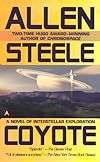
It took some thinking to decide whether to rate this three stars ("liked it") or four stars ("really liked it"), but ultimately its ability to draw me in and keep me glued was too inconstant for the fourth star. After a start that I found less than absorbing, but not bad, it began to really grab my attention. It cycled between high and low points of keeping my interest, where "low" was still a solid three star book overall, and ended on a very high point in terms of quality of storytelling show more and ability to keep me turning pages. I finished the last thirty or forty pages when I had intended to only read a few until a good stopping point while lying in bed, to give you an idea of how well it ended -- and, despite the fact it was an obvious set-up for the next book in the series, with things left undone, it still felt like a very good ending.
I'm fairly sensitive to political sensibilities in novels. Things that get too ideologically involved typically come across as caricatures in their presentation, smugly declaring some great Truths that will be unavoidably obvious to the reader if only he is willing to read, when the truth is they tend to be fatuous bloviations without a shred of convincing demonstration. While this novel has overtly political themes throughout much of the story especially in the beginning and end, with at least one subplot's temporarily dominating arc as a notable exception, it lies at neither traditional extreme in modern political discourse. It also seems to refuse to take the easy way out of ideological propagandizing represented by just settling in some kind of inoffensive, politically correct "center". It does not, however, stake out any specific nontraditional ideology either, at least explicity; only reading the following books might make me certain there is some ideological propagandizing at work. While "freedom" is a strong theme of the story, it does not come across as the propaganda-flavored Freedom with a Capital F, as defined by any major ideological orthodoxy.
Instead, the story comes across as simply chronicling the efforts of actual people who have escaped oppression, and may still face oppression in a new form, as bookends to their story, and they ultimately overcome their own ideological hang-ups to find an ethos that helps them all live together as peacefully and prosperously as their difficult circumstances allow. While Coyote could perhaps have been improved somewhat in its pacing, its presentation, and its editing, at least in some parts, it seems to promise that this series may be one of those that deserves to be called "important" for the meaning it conveys.
I have to offer a hat tip to the fact something like pre-singularity transhumanism appears in the story, and to the author's use of the simple fact that technology advances in ways many science fiction authors forget while plotting out their tales. That added a nice touch to a story where I was prepared to just shrug off the absence of something like that as a common failing of the genre, but the concession was not needed here, in a novel written more than a decade ago (judging by the dates listed in acknowledgements). show less
I'm fairly sensitive to political sensibilities in novels. Things that get too ideologically involved typically come across as caricatures in their presentation, smugly declaring some great Truths that will be unavoidably obvious to the reader if only he is willing to read, when the truth is they tend to be fatuous bloviations without a shred of convincing demonstration. While this novel has overtly political themes throughout much of the story especially in the beginning and end, with at least one subplot's temporarily dominating arc as a notable exception, it lies at neither traditional extreme in modern political discourse. It also seems to refuse to take the easy way out of ideological propagandizing represented by just settling in some kind of inoffensive, politically correct "center". It does not, however, stake out any specific nontraditional ideology either, at least explicity; only reading the following books might make me certain there is some ideological propagandizing at work. While "freedom" is a strong theme of the story, it does not come across as the propaganda-flavored Freedom with a Capital F, as defined by any major ideological orthodoxy.
Instead, the story comes across as simply chronicling the efforts of actual people who have escaped oppression, and may still face oppression in a new form, as bookends to their story, and they ultimately overcome their own ideological hang-ups to find an ethos that helps them all live together as peacefully and prosperously as their difficult circumstances allow. While Coyote could perhaps have been improved somewhat in its pacing, its presentation, and its editing, at least in some parts, it seems to promise that this series may be one of those that deserves to be called "important" for the meaning it conveys.
I have to offer a hat tip to the fact something like pre-singularity transhumanism appears in the story, and to the author's use of the simple fact that technology advances in ways many science fiction authors forget while plotting out their tales. That added a nice touch to a story where I was prepared to just shrug off the absence of something like that as a common failing of the genre, but the concession was not needed here, in a novel written more than a decade ago (judging by the dates listed in acknowledgements). show less
There's a lot that can be said about this book. Style is first and foremost: there's a certain ease to Steele's writing that blows me away and reminds me of my own and what I'd like it to be. He ignores conventions such as chapters, presenting the novel in chunks, and writes in all kinds of point of view: third person present, third person past, first person past...and it works. Amazingly, this works. Maybe it's because he was already an established writer when he pulled this sucker off, but show more Coyote will remain, to me, an example that you can do whatever the hell you want stylistically, and you can pull it off, as long as it's good.
And Coyote is so good. While my absolute favorite part was the first chuck, "Stealing Alabama", other chunks also gripped me: "Across the Eastern Divide" and "The Days Between" stand out particularly. But in truth, this book...gah, it's hard to articulate: it's a large cast list, but you're never confused, and all the characters just work. You never feel at a loss for connecting with a particular character, because that's how well drawn each and everyone of them is.
The politics. The world-builiding. Wow. Granted, thanks to Steele's lecture, I know the work that went into this novel, but even the political situation on Earth, which he didn't talk about in his lecture, blew me away. Maybe because it strikes close to home these days, on some level, but it was everything a dystopic society should be. And then there was hope. The only thing that actually threw me was the ending: it was the last thing I expected, even though Steele prepared me for it. And it didn't throw me in a bad way: I just didn't expect the direction, even though I had no idea how the book would end.
I would disagree with people who say this is actually more science fantasy than science fiction. Granted, the hard science stuff (or some soft science stuff) is solely and the beginning and the end, bookmarking the tale, but this is by no means a fantasy. Frontier fiction? Maybe. Ultimately, this is simply solid character-driven work that made me incredibly happy to read. People talk all the time about what they want out of their science fiction, and for my two cents, at least at this venture, I will be a very happy devil to get more science fiction like this. show less
And Coyote is so good. While my absolute favorite part was the first chuck, "Stealing Alabama", other chunks also gripped me: "Across the Eastern Divide" and "The Days Between" stand out particularly. But in truth, this book...gah, it's hard to articulate: it's a large cast list, but you're never confused, and all the characters just work. You never feel at a loss for connecting with a particular character, because that's how well drawn each and everyone of them is.
The politics. The world-builiding. Wow. Granted, thanks to Steele's lecture, I know the work that went into this novel, but even the political situation on Earth, which he didn't talk about in his lecture, blew me away. Maybe because it strikes close to home these days, on some level, but it was everything a dystopic society should be. And then there was hope. The only thing that actually threw me was the ending: it was the last thing I expected, even though Steele prepared me for it. And it didn't throw me in a bad way: I just didn't expect the direction, even though I had no idea how the book would end.
I would disagree with people who say this is actually more science fantasy than science fiction. Granted, the hard science stuff (or some soft science stuff) is solely and the beginning and the end, bookmarking the tale, but this is by no means a fantasy. Frontier fiction? Maybe. Ultimately, this is simply solid character-driven work that made me incredibly happy to read. People talk all the time about what they want out of their science fiction, and for my two cents, at least at this venture, I will be a very happy devil to get more science fiction like this. show less
Stalwart individualists (they're the "good guys" because they are all scientists and intellectuals) outsmart the mouth-breathing fascists (they're the "bad guys" because they're from the South and they give their space shuttles names like the "Jesse Helms") and make off with a prototype starship in order to establish an extrasolar colony founded on Peace! Freedom! and Liberty! The planet is named "Coyote" but given the author's obvious Libertarian sympathies it might as well be called "Stars show more 'n Stripes" or "Mom's Apple Pie". Even though it initially passed my sixty-page rule (if a book fails to grab me by page 61 it gets turfed) the facile plot, black and white politics, and paper thin characters made me give up at page 170. And judging from some of the like-minded reviews I've read, including eye-rolling spoilers, I made the right choice---for me at least. A great book for those who don't read a lot of sci-fi and/or are very forgiving when it comes to WTF? plot devices and questionable science.......a quick google search, for instance, will show you just how impossible Coyote is. I wonder when someone will get around to making it into a Netflix mini-series (which I will also avoid). show less
Lists
Awards


You May Also Like


Associated Authors
Statistics
- Works
- 151
- Also by
- 90
- Members
- 7,130
- Popularity
- #3,445
- Rating
- 3.5
- Reviews
- 213
- ISBNs
- 174
- Languages
- 6
- Favorited
- 13
