
Alexander L. George (1920–2006)
Author of Case Studies and Theory Development in the Social Sciences
About the Author
Alexander L. George is the Graham H. Stuart Professor of International Relations Emeritus at Stanford University.
Image credit: Stanford University
Series
Works by Alexander L. George
Associated Works
Leaders and Their Followers in a Dangerous World: The Psychology of Political Behavior (2004) — Foreword, some editions — 35 copies
Know Thy Enemy: Profiles of Adversary Leaders and Their Strategic Cultures (2003) — Contributor — 10 copies
Tagged
Common Knowledge
- Birthdate
- 1920-05-31
- Date of death
- 2006-08-16
- Gender
- male
- Education
- University of Chicago (PhD|Political Science|1958)
- Occupations
- political scientist
- Awards and honors
- Johan Skytte Prize in Political Science (1998)
- Nationality
- USA
- Birthplace
- Chicago, Illinois, USA
- Places of residence
- Chicago, Illinois, USA
- Place of death
- Seattle, Washington, USA
- Associated Place (for map)
- Illinois, USA
Members
Reviews
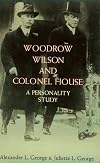
The work of Alexander and Juliette George represents a highly controversial attempt to explain why Wilson so impulsively sought control over the events he confronted. Writing a psychobiography of Wilson, the Georges sought to present a cohesive explanation for Wilson's seemingly irrational behavior. Though their work leads up to an explanation of Wilson's fatal intransigence over modifications in the League of Nations provisions of the Versailles treaty, their analysis applies equally well show more to Wilson's response to the "rising tide of revolution."
The Georges's argument is that Wilson's relationship with his hyper-critical, perfectionist father created latent anxieties in Wilson about his own self-worth and intellectual abilities. The need to be morally and intellectually superior, and constantly in control of his environment, was the result of this insecurity. Admittedly hypothetical, this explanation has the benefit of identifying a source for Wilson's utter irrationality in allowing Henry Cabbot Lodge to maneuver him into a defeat of his beloved League of Nations in the U. S. Senate. Appealing to an inner and subconscious logic, the Georges restored consistency to Wilson's behavior. The question remains whether restoring consistency is the historian's goal. show less
The Georges's argument is that Wilson's relationship with his hyper-critical, perfectionist father created latent anxieties in Wilson about his own self-worth and intellectual abilities. The need to be morally and intellectually superior, and constantly in control of his environment, was the result of this insecurity. Admittedly hypothetical, this explanation has the benefit of identifying a source for Wilson's utter irrationality in allowing Henry Cabbot Lodge to maneuver him into a defeat of his beloved League of Nations in the U. S. Senate. Appealing to an inner and subconscious logic, the Georges restored consistency to Wilson's behavior. The question remains whether restoring consistency is the historian's goal. show less
Awards


You May Also Like


Associated Authors
Statistics
- Works
- 20
- Also by
- 2
- Members
- 483
- Popularity
- #51,117
- Rating
- 3.9
- Reviews
- 2
- ISBNs
- 41
- Languages
- 1