
Gretel Ehrlich
Author of The Solace of Open Spaces
About the Author
Gretel Ehrlich is the author of "A Match to the Heart" among other works of nonfiction, fiction & poetry. She divides her time between California & Wyoming. (Bowker Author Biography)
Image credit: Gretel Ehrlich @Pantheon Books
Works by Gretel Ehrlich
Questions of Heaven: The Chinese Journeys of an American Buddhist (Concord Library) (1997) 90 copies, 3 reviews
A Journey Home 1 copy
Associated Works
For the Love of Books: 115 Celebrated Writers on the Books They Love Most (1999) — Contributor — 479 copies, 4 reviews
Sisters of the Earth: Women's Prose and Poetry About Nature (1991) — Contributor — 443 copies, 5 reviews
Arctic Adventure: My Life in the Frozen North (1935) — Introduction, some editions — 191 copies, 2 reviews
The Ends of the Earth: An Anthology of the Finest Writing on the Arctic and the Antarctic (2007) — Contributor — 138 copies, 8 reviews
Hildegard's Healing Plants: From Her Medieval Classic Physica (1999) — Introduction — 86 copies, 1 review
Antaeus No. 61, Autumn 1988 - Journals, Notebooks & Diaries (1988) — Contributor — 39 copies, 2 reviews
Antaeus No. 64/65, Spring/Autumn 1990 - Twentieth Anniversary Issue (1990) — Contributor — 14 copies
Tagged
Common Knowledge
- Other names
- EHRLICH, Gretel
- Birthdate
- 1946-01-21
- Gender
- female
- Education
- Bennington College
University of California, Los Angeles (Film School) - Occupations
- travel writer
novelist
non-fiction writer
poet
essayist
filmmaker - Awards and honors
- Whiting Writers' Award (1987);National Endowment for the Arts Creative Writing Fellowship, National Endowment for the Humanities grant, a Whiting Foundation Award, A Guggenheim Fellowship, and the Harold B Vurcell Award at the American Academy of Arts and Letters. She and the theatre director, Martha Clarke were awarded a Bellagio Fellowship.
- Relationships
- Conan, Neal (husband)
- Short biography
- Gretel Ehrlich was born on a horse ranch near Santa Barbara, California. She worked in film for ten years, then began writing fulltime in 1978 after the death of a loved one. She had been filming on a 250,000 acre sheep and cattle ranch in northern Wyoming at the time, and there she stayed. 1991 was the year Ehrlich was hit by lightning while taking a walk on her ranch. She was hospitalized and severly debilitated for several years. Having recovered from her lightning injuries, Ehrlich began traveling. In 1993, she went to the foothills of the Himalayas in western China. Intending to write a book on the four sacred Buddhist in China, she was so appalled by the stripping away of culture and humanity during the Cultural Revolution, that she found herself writing something altogether different. That same year, Ehrlich also began traveling north to Greenland. “I wanted to get above treeline, to see nothing but horizons. Once there, she fell in love with the Inuit people and traveled with subsistence hunters by dogsled for months at a time out on the sea ice.
- Nationality
- USA
- Birthplace
- Santa Barbara, California, USA
- Places of residence
- Hawi, Hawaii, USA
Wyoming, USA
Montana, USA - Associated Place (for map)
- USA
Members
Reviews
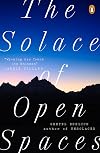
“In the Great Plains, the vistas look like music, like Kyries of grass, but Wyoming seems to be the doing
of a mad architect- tumbled and twisted, ribboned with faded, deathbed colors, thrust up and pulled down as if the place had been startled out of a deep sleep and thrown into pure light.”
“Everything in nature invites us constantly to be what we are. We are often like rivers: careless and forceful, timid and dangerous, lucid and muddied, eddying, gleaming, still.”
“Ranchers are show more midwives, hunters, nurturers, providers, and conservationists all at once. What we’ve interpreted as toughness—weathered skin, calloused hands, a squint in the eye and a growl in the voice—only masks the tenderness inside.”
In the late 1970s, Gretel Ehrlich traveled to Wyoming on a work assignment. She was also grieving over the death of her beloved partner. She became entranced by this wild and unruly place and decided to stay. These essays describe the wonder and the beauty that she discovered during her time there and she ended up purchasing an old, ramshackle ranch, that she fell in love with. Ehrlich is no city slicker or shrinking violet. She became a sheepherder and a cowboy, living in incredibly harsh conditions. One, tough scrappy woman. She even survives a lightning strike. She is also a very gifted writer. Fans of Terry Tempest Williams will love this excellent collection. This author is completely new to me but I think she deserves much more attention. show less
of a mad architect- tumbled and twisted, ribboned with faded, deathbed colors, thrust up and pulled down as if the place had been startled out of a deep sleep and thrown into pure light.”
“Everything in nature invites us constantly to be what we are. We are often like rivers: careless and forceful, timid and dangerous, lucid and muddied, eddying, gleaming, still.”
“Ranchers are show more midwives, hunters, nurturers, providers, and conservationists all at once. What we’ve interpreted as toughness—weathered skin, calloused hands, a squint in the eye and a growl in the voice—only masks the tenderness inside.”
In the late 1970s, Gretel Ehrlich traveled to Wyoming on a work assignment. She was also grieving over the death of her beloved partner. She became entranced by this wild and unruly place and decided to stay. These essays describe the wonder and the beauty that she discovered during her time there and she ended up purchasing an old, ramshackle ranch, that she fell in love with. Ehrlich is no city slicker or shrinking violet. She became a sheepherder and a cowboy, living in incredibly harsh conditions. One, tough scrappy woman. She even survives a lightning strike. She is also a very gifted writer. Fans of Terry Tempest Williams will love this excellent collection. This author is completely new to me but I think she deserves much more attention. show less
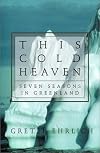
I learned so much from this book. Ehrlich writes of the time she spends in Greenland with the Inuit people and intersperses her experiences with those of Knud Rasmussen from the early twentieth century. Today, the Inuit are struggling to hang on to their old way of life as technology and economic pressures intrude. Ehrlich doesn't flinch from describing the horrors of child sex abuse and alcoholism that permeate the lives of the contemporary villagers, nor does she romanticize the lives of show more the hunters on the ice. What she does share, to great effect, is the beauty of the Far North, the changing nature of the ice and the desire of the Inuit hunters to retain their connections to their history. It's an extraordinary window into the shifting cultural patterns of Greenland at the end of the twentieth century and how life was like for these same people a hundred years ago. For anyone interested in polar history, this is a must read. show less
I read the title essay in a library in Madison WI over a year ago, and since, Ehrlich’s name has come up enough to make this reading seem overdue. Of course it’s good, and of course it romanticizes ranching in Wyoming but manages to make it seem realistically sparse, uncomfortable, and exhausting at the same time. Less than a month ago, I had a job offer from an editor in a reasonably small city in Wyoming, an offer to learn the shape of the state from a newspaper office, and declining show more it felt like closing a door. Nothing will tell me the stories that accepting it would have. I won’t know these places by heart and by hand like the ranchers and farmers Ehrlich describes, or even in the more remote acquaintance of a city slicker. The vividness of these stories, then, and their poetry, I’ve taken as a consolation gift. The state has a limited amount of history due to a limited population, but a somehow unlimited amount of environment.
The tone of the book is of the same tenor as Berry’s Unsettling of America, written in an urgent cultural moment where Americans had information about place clarified through simple language in poetic books just as they felt the nature of those places, as they had known them, slipping away. Ehrlich does not defend Wyoming the way Berry defends Kentucky, however, which may be an advantage of moving to a loved homeland later in life. It may also be a result of geography: where Berry is loving and fiercely protective and feels Kentucky, with its Midwest vitality and southern locale and abundant flow of water, can provide, Ehrlich is prepared to tally up the contributions and lacks of Wyoming and tell you the numbers straight. A state with eight total inches of rainfall, a state where the number of grazing animals and the amount of pasture available is precariously balanced, a state where relations with those around you is a matter of survival rather than a matter of keeping in good stead with the neighbors, this is the picture Ehrlich paints.
It’s a book of essays which dips into Ehrlich’s personal life, but her writing makes that palatable. She tells the history of the state with the same tone she uses for explaining the rodeo, the Sun Dance, and the way she married her husband. She gives the same poetry to the changes of the seasons that she does to grieving a dead lover. It’s believable not despite the vividness of the language, like with some sickeningly verdant nonfiction authors, but because of it. The beauty she sees in her life is the same kind of thing you see when your dog’s eyes catch the sun or when the flowers finally come up out back of the house in the spring. You get a sense, constantly, that she’s not making this up.
“Now I can only think of mud as being sweet.” (128) show less
The tone of the book is of the same tenor as Berry’s Unsettling of America, written in an urgent cultural moment where Americans had information about place clarified through simple language in poetic books just as they felt the nature of those places, as they had known them, slipping away. Ehrlich does not defend Wyoming the way Berry defends Kentucky, however, which may be an advantage of moving to a loved homeland later in life. It may also be a result of geography: where Berry is loving and fiercely protective and feels Kentucky, with its Midwest vitality and southern locale and abundant flow of water, can provide, Ehrlich is prepared to tally up the contributions and lacks of Wyoming and tell you the numbers straight. A state with eight total inches of rainfall, a state where the number of grazing animals and the amount of pasture available is precariously balanced, a state where relations with those around you is a matter of survival rather than a matter of keeping in good stead with the neighbors, this is the picture Ehrlich paints.
It’s a book of essays which dips into Ehrlich’s personal life, but her writing makes that palatable. She tells the history of the state with the same tone she uses for explaining the rodeo, the Sun Dance, and the way she married her husband. She gives the same poetry to the changes of the seasons that she does to grieving a dead lover. It’s believable not despite the vividness of the language, like with some sickeningly verdant nonfiction authors, but because of it. The beauty she sees in her life is the same kind of thing you see when your dog’s eyes catch the sun or when the flowers finally come up out back of the house in the spring. You get a sense, constantly, that she’s not making this up.
“Now I can only think of mud as being sweet.” (128) show less
A small book of essays about her life in Wyoming. She went from NYC to Wyoming to make a film on sheepherders. The man she loved was part of the film team as well, but unable to come as he had received a terminal illness diagnosis and died fairly soon thereafter. In her grief, Wyoming and ranching became her home. The essays are about the real and the nitty-gritty of Wyoming life.
“Not unlike emotional transitions—the loss of a friend or the beginning of new work—the passage of seasons show more is often so belabored and quixotic as to deserve separate names so the year might be divided eight ways instead of four.” (p71)
After writing of the Sun Dance and how the community supports the dancers through separation, initiation, and return, the author makes this observation:
“Sunday. Two American flags were raised over the Lodge today—both had been owned by war veterans. The dance apron of a man near me had U.S. Navy insignias sewn into the corners. Here was a war hero, but he’d earned his medal far from home. Now the ritual of separation, initiation, and return performed in Vietnam, outside the context of community, changes into separation, benumbment, and exile.” (p114)
“Leaves are verbs that conjugate the seasons.” (p130) show less
“Not unlike emotional transitions—the loss of a friend or the beginning of new work—the passage of seasons show more is often so belabored and quixotic as to deserve separate names so the year might be divided eight ways instead of four.” (p71)
After writing of the Sun Dance and how the community supports the dancers through separation, initiation, and return, the author makes this observation:
“Sunday. Two American flags were raised over the Lodge today—both had been owned by war veterans. The dance apron of a man near me had U.S. Navy insignias sewn into the corners. Here was a war hero, but he’d earned his medal far from home. Now the ritual of separation, initiation, and return performed in Vietnam, outside the context of community, changes into separation, benumbment, and exile.” (p114)
“Leaves are verbs that conjugate the seasons.” (p130) show less
Lists
Awards


You May Also Like


Associated Authors
Statistics
- Works
- 35
- Also by
- 27
- Members
- 2,810
- Popularity
- #9,137
- Rating
- 3.9
- Reviews
- 54
- ISBNs
- 76
- Languages
- 6
- Favorited
- 12

