
Sun Tzu (544–496)
Author of The Art of War
About the Author
Works by Sun Tzu
The Art of War: The Essential Translation of the Classic Book of Life (Penguin Classics Deluxe Edition) (2003) 630 copies, 2 reviews
The Book of War: Sun-Tzu's "The Art of War" & Karl von Clausewitz's "On War" (2000) 117 copies, 1 review
The Art of War: (Miniature book) 98 copies
The Way of the Warrior: Deluxe 3-Volume Box Set Edition (Arcturus Collector's Classics, 12) (2021) 26 copies
The Art of War from SmarterComics: How to be Successful in Any Competition (2011) 21 copies, 1 review
The Art of War Collection: Deluxe 7-Volume Box Set Edition (Arcturus Collector's Classics, 10) (2020) 20 copies
World Classics Library: Eastern Philosophy: The Art of War, Tao Te Ching, The Analects of Confucius, The Way of the Samurai, The Works of Mencius (Arcturus World Classics Library,… (2020) 17 copies, 1 review
Strategy Six Pack: The Art of War, The Gallic Wars, Life of Charlemagne, The Prince, On War and Battle Studies (2015) 15 copies
The Art of War (Deluxe Edition) (Compilation also including The Prince, On War, and Instructions to by Sun Tzu (2010-05-04) (2007) 15 copies
Fernöstliche Klassiker: 6 Bände im Schuber: Die Kunst des Krieges, Fünf Ringe, Hagakure, Bushido, Gespräche, Tao te king (2018) 7 copies
The Complete Strategy Collection: The Art of War, The Prince, The Book of Five Rings, On War and Arthashastra (2021) 7 copies
Thirty-Six Stratagems: Bilingual Edition, English and Chinese: The Art of War Companion, Chinese Strategy Classic, Includes Pinyin (2016) 6 copies
The Path of the Warrior Ornate Box Set: The Art of War, The Way of the Samurai, The Book of Five Rings (Arcturus Ornate Classics) (2022) 4 copies
Die Kunst des Krieges - Psychologie der Massen - Wege zu sich selbst - Der Fürst: Sunzi aus dem Chinesischen übersetzt (2014) 4 copies
ARTI I LUFTËS 4 copies
فن الحرب (Arabic Edition) 3 copies
The Art of War Landmark Edition: The Classic of Strategy with Historical Notes and Introduction by PEN Award-Winning Author Mitch Horowitz (2021) 3 copies
El arte de la guerra aplicado a la empresa : táctica y estrategia para hacer buenos negocios (2017) 2 copies
El arte de la guerra y la estrategia 2 copies
A Arte e os Princípios da Guerra 2 copies
The Spirit of the Warrior: 3-Book Paperback Boxed Set (Arcturus Classic Collections, 10) (2022) 2 copies
001 2 copies
Sun Tzu - Über die Kunst des Krieges - Mit psychologischen Kommentaren (RaBaKa-Pockets 1) (German Edition) (2011) 2 copies
The Art of War with Four Other Classics in the Ancient Warrior Tradition (Bushido, The Sword and the (2008) 2 copies
The art of war. Translation and commentary by Lionel Giles. Introduction by Jan Willem Honig... 1 copy
Hernaðarlistin 1 copy
Martial Arts Wisdom: the Ancient Bing-fa - Sun Tzu's The Art of War for Martial Artists (2012) 1 copy
Искуссртво жийны 1 copy
Sun Tzu: seni berperang 1 copy
$1!:[!:M!3)!G*(B 1 copy
L'arte della guerra i 6-5 1 copy
Seni Perang 1 copy
A arte da guerra - Planejamento estrategia e lideranca em 13 licoes (Em Portugues do Brasil) (2019) 1 copy
Binh Pháp Tôn Tử 1 copy
On the Art of War / On Guerilla Warfare — Author — 1 copy
El arte de la guerra + cartas (Oráculo): Un oráculo de estrategias para el éxito en la vida (Spanish Edition) (2023) 1 copy
The Art of War [Annotated] 1 copy
אמנות המלחמה 1 copy
යුද කලාව 1 copy
The ART Of War 1 copy
孫子・呉子 1 copy
Associated Works
Tagged
Common Knowledge
- Canonical name
- Sun Tzu
- Legal name
- Sun Wu
孫武 - Other names
- Sun Zi
Souen Tseu
Changqing (courtesy name)
Sun Tzu
孫子
長卿 (show all 7)
Ch'ang-ch'ing (style name) - Birthdate
- 544 BCE (circa)
- Date of death
- 496 BCE (circa)
- Gender
- male
- Occupations
- soldier
military strategist - Relationships
- Sun Pin (grandson)
- Short biography
- Sun Tzu (also rendered as Sun Zi) was a Chinese military general, strategist and philosopher who lived in the Spring and Autumn Period of ancient China. The name he is best known by is actually an honorific which means "Master Sun": His birth name was Sun Wu and he was known outside of his family by his courtesy name Changqing. He is traditionally credited as the author of The Art of War, an extremely influential ancient Chinese book on military strategy. Sun Tzu has had a significant impact on Chinese and Asian history and culture, both as the author of The Art of War and as a legendary historical figure.
- Nationality
- State of Qi
State of Wu - Places of residence
- China
- Map Location
- China
Members
Discussions
Three Chinese classics in Philosophy and Theory (January 18)
Reviews

Sun Tzu was legitimately a brilliant tactician but a bunch of his insight is shit like "if you think you might lose, avoid doing that", "being outnumbered is bad generally", and "consider lying."
In context, this was guide written by someone with experience for the heads of military who had never seen battle but were given command by right of birth-- basically a nepo baby's guide to not messing up the war for us.
Definitely part of my "so you want to rule the world" curriculum. I love it
In context, this was guide written by someone with experience for the heads of military who had never seen battle but were given command by right of birth-- basically a nepo baby's guide to not messing up the war for us.
Definitely part of my "so you want to rule the world" curriculum. I love it
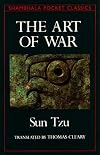
Keep in mind this book was written with Taoist ideals, so even though it is about “how to do war,” its guiding principle is that conflict, while sometimes unavoidable, is really the last resort. The author regards and often stresses that both the soldiers and the population in general are legitimate entities in their own right with lives and livelihoods, not simply a resource to be used as a means to an end. This is strange seeing as many politicians and business people have supposedly show more studied this book for nearly two thousand years yet most of them seem to have totally missed that point.
It’s not only relevant for literal war, either. It’s vague/adaptable enough to be applied to all sorts of situations, so it’s not ONLY useful to read if you’re trying to invade a neighboring country (though it couldn’t hurt your chances). Basically it encourages critical thinking, self-reflection, and objectivity, which, as great as they are, aren’t exactly trending lately. On the other hand, if the book was called “The Art of Stopping and Thinking for a Minute Before You End Up Doing Something Really Stupid,” it probably wouldn’t have been as popular. Seems Master Sun knew a bit about marketing as well. show less
It’s not only relevant for literal war, either. It’s vague/adaptable enough to be applied to all sorts of situations, so it’s not ONLY useful to read if you’re trying to invade a neighboring country (though it couldn’t hurt your chances). Basically it encourages critical thinking, self-reflection, and objectivity, which, as great as they are, aren’t exactly trending lately. On the other hand, if the book was called “The Art of Stopping and Thinking for a Minute Before You End Up Doing Something Really Stupid,” it probably wouldn’t have been as popular. Seems Master Sun knew a bit about marketing as well. show less

I read the 1910 translation by Lionel Giles, available for free on the internet. This edition was complemented with notes offering commentary by a wide range of Chinese near-contemporaries who offered their examples, corollaries, etc. The translator added further illumination throughout which added considerably to what I gleaned. What Sun Tzu seems to offer is the codifying of common sense, but that's easy for me to say. He covers all of his bases thoroughly in his opening chapter, outlining show more categories of consideration and then throwing in a paragraph noting that other considerations may also come into play, every battle is different, etc. Cynically, I feel this makes it easier to take a stand as the ultimate authority: "The general that hearkens to my counsel and acts upon it will conquer."
Sun Tzu is silent on the topic of avoiding war altogether (notwithstanding his advice to conquer without combat), as if the first diplomacy he prefers to resort to is raising an army. He also hasn't much to say about keeping an army supplied, only its necessity. His advice is entirely practical, unconcerned with any concept resembling honour, eschewing pride as weakness. The only advice that puzzled me was his recommendation to face the sun; I thought you want the sun to shine in your enemy's eyes? Everything points to his having been a man of experience, one who knew cost and consequence. I was more impressed as I read further, finding short precise sentences used to convey enormous meaning, and sometimes in multiple ways. show less
Sun Tzu is silent on the topic of avoiding war altogether (notwithstanding his advice to conquer without combat), as if the first diplomacy he prefers to resort to is raising an army. He also hasn't much to say about keeping an army supplied, only its necessity. His advice is entirely practical, unconcerned with any concept resembling honour, eschewing pride as weakness. The only advice that puzzled me was his recommendation to face the sun; I thought you want the sun to shine in your enemy's eyes? Everything points to his having been a man of experience, one who knew cost and consequence. I was more impressed as I read further, finding short precise sentences used to convey enormous meaning, and sometimes in multiple ways. show less
World Classics Library: Eastern Philosophy: The Art of War, Tao Te Ching, The Analects of Confucius, The Way of the Samurai, The Works of Mencius (Arcturus World Classics Library) by Sun Tzu
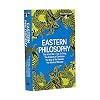
Do not waste your money. This looks like a nicely printed and bound, convenient, and inexpensive anthology of five major works of Chinese and Japanese philosophy, but in fact it must have been printed using Optical Character Recognition (OCR) software of some sort and then not properly proof-read. There are numerous instances in which a character like "b" is misread as an "h" (for example, he instead of be), which can prove annoyingly disconcerting but which also makes one skeptical of show more whether undetected errors are causing serious and undetected confusion in meaning.
Put the money into properly printed editions like Penguin. I'm finishing the "Mencius" text only because I don't have another edition of "Mencius" and I want to get it read for a Great Courses video I'm watching. As soon as I'm finished, this thing goes into the trash. show less
Put the money into properly printed editions like Penguin. I'm finishing the "Mencius" text only because I don't have another edition of "Mencius" and I want to get it read for a Great Courses video I'm watching. As soon as I'm finished, this thing goes into the trash. show less
Lists
el (2)
Overdue Podcast (1)
Best War Stories (1)
Awards


You May Also Like


Associated Authors
Statistics
- Works
- 153
- Also by
- 3
- Members
- 31,420
- Popularity
- #627
- Rating
- 3.8
- Reviews
- 322
- ISBNs
- 1,512
- Languages
- 32
- Favorited
- 20