
Gideon Rachman
Author of Easternisation: War and Peace in the Asian Century
About the Author
Works by Gideon Rachman
The Age of the Strongman: How the Cult of the Leader Threatens Democracy Around the World (2022) 113 copies, 4 reviews
A Era do Homem Forte 1 copy
Tagged
Common Knowledge
- Canonical name
- Rachman, Gideon
- Birthdate
- 1963
- Gender
- male
- Education
- University of Cambridge (BA Hons.|History|1984)
- Organizations
- The Economist
- Relationships
- Rachman, Tom (brother)
- Nationality
- United Kingdom
- Places of residence
- London, England, UK
- Map Location
- United Kingdom
Members
Reviews
The Age of the Strongman: How the Cult of the Leader Threatens Democracy Around the World by Gideon Rachman

Welp, this was depressing. It was also incredibly interesting and informative, and I would encourage everyone to read it. Rachman is the chief foreign correspondent for the Financial Times and his analysis is both trenchant and approachable.
I'm sure many of us would like to think of Trump as an aberration, but he's not. More and more, countries are turnig to "strongman" leaders, with predictable results. Rachman highlights not just Trump, but Erdogan, Modi, Orban, Xi, Bolsonaro, and a few show more others. The parallels among them are really something and important to understand the wider global context in which we find ourselves.
4.25 stars (probably 4.5 if I'd read it in print; the audio narrator was occasionally grating...) show less
I'm sure many of us would like to think of Trump as an aberration, but he's not. More and more, countries are turnig to "strongman" leaders, with predictable results. Rachman highlights not just Trump, but Erdogan, Modi, Orban, Xi, Bolsonaro, and a few show more others. The parallels among them are really something and important to understand the wider global context in which we find ourselves.
4.25 stars (probably 4.5 if I'd read it in print; the audio narrator was occasionally grating...) show less
The Age of the Strongman: How the Cult of the Leader Threatens Democracy Around the World by Gideon Rachman
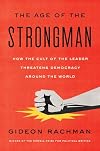
"The unspoken thought... was that Trump himself had introduced some of the habits of a dictatorship into the heart of the world's greatest democracies The president's wild rhetoric, his fondness for military parades, his tolerance for conflicts of interest, and intolerance for journalists and judges are all features of the "strongman style" in politics - a style that, until recently was thought to be alien to the mature democracies of the West." That introduction sets the book's tone, which show more goes on to describe some of the strongmen around the world who trump so respects. Putin tops the list, but also Turkey's Erdogan, China's Xi Jinping, India's Modi, Hungary's Orban, rumple-haired Boris Johnson, the Philipines' Duterte, and Israel's Netanyahu. The world seems to love its strongmen. For those of us who prefer democracy and thought we were immune politics has become a frightening business. show less
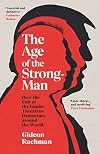
This is an easy read about authoritarian strongmen who have become the living embodiment of politics in their respective countries (Russia, China), and populist strongmen who have managed to get elected in democratic countries (US, Brazil, Turkey, Hungary) and tried to focus political life around their own person with varying degrees of success.
The author is a columinst for the Financial Times and this seems to have put some limits on his writing. He presents a biography of each strongman show more and his "accomplishments", but these presentations are quite brief. If you are a regular reader of the Economist, for example, you will already be very familiar with just about everything the author has to say. He just tells the same story which these magazines already told as it was happening.
Perhaps it is misguided to criticize a book for its omissions, but I think the book could clearly have been better if the author had drawn some general parallels or comparisons between how these leaders came to power. Or he could have explained what forms of patronage each leader has fostered to remain in power and control the institutions of the state. Or he could have offered some speculation on what kinds of institutions, people and actions might be needed for wresting power away from a strongman or preventing him from taking power in the first place.
In conclusion, if you have never heard of Viktor Orban or Rodrigo Duterte, this is probably a good book for you. But if you've already read dozens of articles about them, then this book will not teach you anything you didn't already know. I would in that case recommend that you instead catch up with the latest developments in the world of strongmen through the Financial Times or the Economist. show less
The author is a columinst for the Financial Times and this seems to have put some limits on his writing. He presents a biography of each strongman show more and his "accomplishments", but these presentations are quite brief. If you are a regular reader of the Economist, for example, you will already be very familiar with just about everything the author has to say. He just tells the same story which these magazines already told as it was happening.
Perhaps it is misguided to criticize a book for its omissions, but I think the book could clearly have been better if the author had drawn some general parallels or comparisons between how these leaders came to power. Or he could have explained what forms of patronage each leader has fostered to remain in power and control the institutions of the state. Or he could have offered some speculation on what kinds of institutions, people and actions might be needed for wresting power away from a strongman or preventing him from taking power in the first place.
In conclusion, if you have never heard of Viktor Orban or Rodrigo Duterte, this is probably a good book for you. But if you've already read dozens of articles about them, then this book will not teach you anything you didn't already know. I would in that case recommend that you instead catch up with the latest developments in the world of strongmen through the Financial Times or the Economist. show less
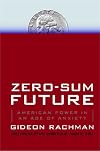
This is pretty good. Parts one and two are all review ( you could skip part one if you've been awake for the last 30 years )
Lists
Awards


You May Also Like


Statistics
- Works
- 7
- Members
- 322
- Popularity
- #73,504
- Rating
- 4.0
- Reviews
- 6
- ISBNs
- 33
- Languages
- 5