
Deb Olin Unferth
Author of Barn 8
About the Author
Works by Deb Olin Unferth
Likeable 1 copy
Les pondeuses de l'Iowa 1 copy
Associated Works
McSweeney's 23: Still Going Strong Like Castro (We Meant Ramón) (2007) — Contributor — 303 copies, 5 reviews
One Hundred and Forty Five Stories in a Small Box: Hard to Admit and Harder to Escape, How the Water Feels to the Fishes, and Minor Robberies (2007) — Contributor — 230 copies, 1 review
Significant Objects: 100 Extraordinary Stories about Ordinary Things (2012) — Contributor — 64 copies, 1 review
Tagged
Common Knowledge
- Birthdate
- 1968-11-19
- Gender
- female
- Education
- University of Colorado, Boulder (BA)
Syracuse University (MFA) - Occupations
- university professor
scholar of English language and literature - Organizations
- Wesleyan University
- Awards and honors
- Pushcart Prize
- Nationality
- USA
- Birthplace
- Chicago, Illinois, USA
- Associated Place (for map)
- Illinois, USA
Members
Reviews
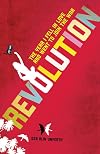
Compelling and very funny. Unferth writes with verve and a sort of rueful hindsight on her year in the 'revolution.' What is she looking for? What does she find? I related a lot to her desire to join a revolution, to be a part of something bigger and more important than herself. Like a lot of these narratives though, it ends up being all about the individual - the American out of her depth, the girlfriend slowly becoming disillusioned, the revolutionary realizing there's no such thing as show more what she's looking for. show less
 This review was written for LibraryThing Early Reviewers.
Near the start of this book, Unferth writes,
"My boyfriend and I went to join the revolution.
We couldn't find the first revolution.
The second revolution hired us on and then let us go.
We went to other revolutions in the area . . . "
I had close friends who were there in those days; I spent a lot of time wondering if they'd been killed. The CIA opened my mail routinely. (No kidding: they'd slash it open, tape it up & stamp it "Langley, VA -- they wanted me to know, were trying to scare me.) So show more this blithe tone made me a bit wary.
Soon, though, I was charmed. Unferth doesn't except herself from her irony (she refers to revolutionaries such as her boyfriend & herself as sandalistas) and allows this book to become a story less about political revolution, more about a personal one.
For instance, a ban on an opposition newspaper is lifted. Unferth tells the story wonderfully, then admits she's not sure it happened that way at all. But there's a quiet moment in her hostel that she has all the details for: "My coming of age story, if I had one, would be right here. It didn't involve a loss of innocence or man's inhumanity to man. . . . I just knew -- I wasn't who I would be. More of me was coming."
Unferth is likable as a narrator and as a character. Her writing is witty, wry, and compassionate. When she does deal with the politics of the time she can be devastatingly effective. If you're looking for a book about the Sandinistas, this wouldn't be the first I'd recommend. If you like smart, well-written books about being young, being female, just being human, then maybe you should check this out. I'll certainly be reading more of her work. show less
"My boyfriend and I went to join the revolution.
We couldn't find the first revolution.
The second revolution hired us on and then let us go.
We went to other revolutions in the area . . . "
I had close friends who were there in those days; I spent a lot of time wondering if they'd been killed. The CIA opened my mail routinely. (No kidding: they'd slash it open, tape it up & stamp it "Langley, VA -- they wanted me to know, were trying to scare me.) So show more this blithe tone made me a bit wary.
Soon, though, I was charmed. Unferth doesn't except herself from her irony (she refers to revolutionaries such as her boyfriend & herself as sandalistas) and allows this book to become a story less about political revolution, more about a personal one.
For instance, a ban on an opposition newspaper is lifted. Unferth tells the story wonderfully, then admits she's not sure it happened that way at all. But there's a quiet moment in her hostel that she has all the details for: "My coming of age story, if I had one, would be right here. It didn't involve a loss of innocence or man's inhumanity to man. . . . I just knew -- I wasn't who I would be. More of me was coming."
Unferth is likable as a narrator and as a character. Her writing is witty, wry, and compassionate. When she does deal with the politics of the time she can be devastatingly effective. If you're looking for a book about the Sandinistas, this wouldn't be the first I'd recommend. If you like smart, well-written books about being young, being female, just being human, then maybe you should check this out. I'll certainly be reading more of her work. show less
This review was written for LibraryThing Early Reviewers.I’ve had very good luck with nonfiction so far this year, including Sarah Bakewell’s biography of Montaigne, Joyce Carol Oates’s A Widow’s Story, Janet Malcolm’s Two Lives, Elizabeth Gilbert’s Committed, and now Deb Olin Unferth’s book Revolution: The Year I Fell in Love and Went to Join the War. I loved every moment of this all-too-short book (a very fast 200 pages). It’s exactly what a memoir should be: entertaining, thoughtful, smart, funny, self-reflective, and even show more self-critical, with exactly the right kind of self-absorption, the kind that manages to say interesting things about the writer but also about a whole lot more. It tells the story of how during her freshman year in college in the 1980s Unferth met and fell in love with George, an unusual young man, a Christian with counter-cultural leanings. The two of them dropped out of school to go to Central America and join the revolutions fomenting there.
The book is extremely well-written. I’ve been trying to put into words exactly what I like about its style, and it’s been hard. Somehow Unferth manages to say a lot more than just what’s on the page. Her sentences are short and simple, with hardly a word wasted. She’s great at moving towards a larger meaning, hinting at it, and then leaving you to take the final leap. I usually prefer a more maximalist, wordy style, but this version of minimalism worked for me because it managed to say more than it seemed to. The book is written in short chapters, sometimes only a page long, each telling a story or vignette or exploring an idea. It holds together as a coherent whole, but the short chapters give it a fractured feeling that somehow makes everything more believable. It’s not a seamless narrative, but instead the chapters offer glimpses of or angles into the story. It’s a method that doesn’t promise to fit everything together neatly, because such a thing is impossible.
Read the rest of the review at Of Books and Bicycles show less
The book is extremely well-written. I’ve been trying to put into words exactly what I like about its style, and it’s been hard. Somehow Unferth manages to say a lot more than just what’s on the page. Her sentences are short and simple, with hardly a word wasted. She’s great at moving towards a larger meaning, hinting at it, and then leaving you to take the final leap. I usually prefer a more maximalist, wordy style, but this version of minimalism worked for me because it managed to say more than it seemed to. The book is written in short chapters, sometimes only a page long, each telling a story or vignette or exploring an idea. It holds together as a coherent whole, but the short chapters give it a fractured feeling that somehow makes everything more believable. It’s not a seamless narrative, but instead the chapters offer glimpses of or angles into the story. It’s a method that doesn’t promise to fit everything together neatly, because such a thing is impossible.
Read the rest of the review at Of Books and Bicycles show less
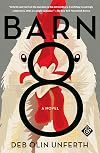
Barn 8 was overall a very fun and engaging read. The waxing poetic about chickens was so good and deeply weird. In terms of waxing poetic on the natural world the only way that I can compare it - it was like Richard Powers The Overstory but Chickens. I really wish there was more story / chapters from the pov of Bwuaaak. Barn 8 centers around the broken characters that make up loose group of animal rights activists whose lives line up to a singular event: Chicken Heist. Free the chickens from show more the farm. Along the way Deb Olin develops interesting and quirky characters from a wildly refreshing third-person angle. The novel is so original and well written and just a joy to read. Its a given you have got to be on the side of animals to enjoy this one. I cant really see someone coming from the other-side of the aisle really enjoying this book unless they are very open minded. But who cares what they think. The chickens don't. Deb Olin's Barn 8 Is fun, philosophical and beautiful. show less
Lists
Awards


You May Also Like


Associated Authors
Statistics
- Works
- 20
- Also by
- 12
- Members
- 755
- Popularity
- #33,681
- Rating
- 3.6
- Reviews
- 38
- ISBNs
- 24
- Languages
- 3
