
Kay Marshall Strom
Author of John Newton: The Angry Sailor (Preteen Biography)
About the Author
Kay Marshall Strom received her BA in Education and Literature from Westmont College and is a sought-after speaker at conferences, retreats, and special events. She has written more than 40 books including A Caregiver's Survival Guide: How to Stay Healthy When Your Loved One is Sick and Daughters show more of Hope: Stories of Witness and Courage in the Face of Persecution. She and her husband live in the Pacific Northwest. show less
Series
Works by Kay Marshall Strom
A Caregiver's Survival Guide: How to Stay Healthy When Your Loved One is Sick (2000) 59 copies, 1 review
The Second-Half Adventure: Don't Just Retire-Use Your Time, Skills, and Resources to Change the World (2009) 8 copies, 2 reviews
Seeking Christ: A Christian Woman's Guide to Personal Wholeness & Spiritual Maturity (Pen & Ink Devotionals) (1994) 6 copies
When Mom's Not a Believer 1 copy
triumph of grace, The 1 copy
Tagged
Common Knowledge
- Birthdate
- 1943-08-02
- Gender
- female
- Occupations
- freelance writer
Members
Reviews
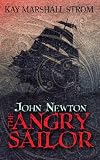
John Newton the Angry Sailor by Kay Marshall Strom was a very enjoyable book. John Newton’s father was a sailor and many times was gone from home for years at a time and because of this John spent all his time with his mother who bragged to friends that he would be a great preacher one day. John was reading when he was three, at four he had memorized entire chapters of the Bible, and at six he was studying Latin. A few days before John’s seventh birthday his mother died and he was cared show more for my neighbors. When his father finally came home he brought a new wife who cared nothing for John and convinced his father to send him to boarding school. John endured two years at the boarding school hating every minute and finally convinced his father that he should become a sailor.
John’s career as a sailor began in 1736 when he was eleven years old. He was initiated into the life of a sailor during a raging storm when he had to work the pump to keep the water off the deck of the ship. This terrible beginning was nothing compared to the trials that John would face for the next several years. He was the prisoner of a slave trader for quite a while and the outcome of that was that John himself became a slave trader and sailed his own ship filled with slaves. Even after being miraculously saved from death in a storm when he begged God for help, John did not give up being a slave trader. It took more interventions from God to finally get John to give up slave trading. At last John realized that slavery was wrong and that God had a plan for his life. Just as his mother had said so many years before, John became a great preacher. He also wrote one of the most beloved songs of all times, Amazing Grace.
The author did an excellent job writing this book for the characters and action scenes seemed to come to life on the pages of the book. The plot and dialogue was well thought out and held my interest so well that I read the book in one sitting. Even though the book was written mainly for adolescent boys I thoroughly enjoyed reading the book even though I am a woman and over seventy. I knew that John Newton was a slave trader, became a great preacher, and wrote Amazing Grace but that was the extent of my knowledge about the man. Thanks to the author, I now have an even greater respect for John Newton.
I recommend this book to anyone of any age who wants to know more about the life and times of John Newton.
I received a complimentary copy of this book from eChristian in exchange for an honest review. I was not required to give a positive review. The opinions I have expressed are my own. show less
John’s career as a sailor began in 1736 when he was eleven years old. He was initiated into the life of a sailor during a raging storm when he had to work the pump to keep the water off the deck of the ship. This terrible beginning was nothing compared to the trials that John would face for the next several years. He was the prisoner of a slave trader for quite a while and the outcome of that was that John himself became a slave trader and sailed his own ship filled with slaves. Even after being miraculously saved from death in a storm when he begged God for help, John did not give up being a slave trader. It took more interventions from God to finally get John to give up slave trading. At last John realized that slavery was wrong and that God had a plan for his life. Just as his mother had said so many years before, John became a great preacher. He also wrote one of the most beloved songs of all times, Amazing Grace.
The author did an excellent job writing this book for the characters and action scenes seemed to come to life on the pages of the book. The plot and dialogue was well thought out and held my interest so well that I read the book in one sitting. Even though the book was written mainly for adolescent boys I thoroughly enjoyed reading the book even though I am a woman and over seventy. I knew that John Newton was a slave trader, became a great preacher, and wrote Amazing Grace but that was the extent of my knowledge about the man. Thanks to the author, I now have an even greater respect for John Newton.
I recommend this book to anyone of any age who wants to know more about the life and times of John Newton.
I received a complimentary copy of this book from eChristian in exchange for an honest review. I was not required to give a positive review. The opinions I have expressed are my own. show less
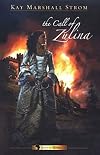
I’ve been a fan of Kay Marshall Strom’s work since reading Once Blind, her novelization of John Newton’s life from slave trader to abolitionist (think “Amazing Grace.”) Regardless of whether you read Strom’s works of fiction or non-fiction, her heart for freedom, justice, and the respect of persons from all nations shines through.
In The Call of Zulina, the first in a new series of historical fiction —Grace in Africa — Strom transports us to Africa in the late 1700s. Grace show more Winslow is the daughter of an English sea captain and African princess, caught between two cultures and living a sheltered life. Having come to age largely unaware of her family’s involvement in the slave trade and its harsh realities, Grace encounters it first hand at the slave fortress Zulina, following her escape from the family compound and an odious betrothal.
Swept into the midst of a desperate slave rebellion, Grace finds herself forced to confront both the tragedies of the slave trade in Africa, the complicity of her mother and other Africans, and her own unknowing contribution to the plight of her new companions. Strom’s writing is vivid and irresistible. The pacing is excellent, and, like Grace, I found myself inexorably pulled along by the action swirling around me as I read.
Some of the moments of high-drama seem a bit clichéd, but that sense of no-turning-back choices and intense declarations lend the book a big-screen movie production feel; I’d love to see this title appear on the big screen. Likewise, some of Strom’s characters seem a bit too typecast. Grace’s mother, for example, is pure evil, willing to sacrifice her child without a moment’s thought for her own purposes. As a mother I found it unbelievable that there wasn’t any conflict present in her choices, as there was in those of Joseph Winslow.
The Call of Zulina can certainly be classified as Christian fiction, but Strom integrates considerations of faith carefully, mainly questioning how those who claim to know God can live in ways that sanctify cruelty. The faith of the Winslow’s house slave Mama Muco and its influence on Grace’s perspective also play some role in the storyline, but there’s no clear presentation of the gospel.
While there are some very slight hints at romance as Grace’s admiration for the powerful leader Cabeto grows, the novel’s forward momentum is carried by the search for freedom that unites Grace with the Africans imprisoned at Zulina. The blending of a diverse array of African cultures lends authenticity and additional depth to The Call of Zulina.
It’s exciting to read a well-penned novel set outside of the typically European and American settings predominant in Christian historical fiction. Anyone with an interest in the history of slavery -– particularly at ground zero –- will find The Call of Zulina a passionately written title that keeps interest high from start to finish.
Reviewed at quiverfullfamily.com show less
In The Call of Zulina, the first in a new series of historical fiction —Grace in Africa — Strom transports us to Africa in the late 1700s. Grace show more Winslow is the daughter of an English sea captain and African princess, caught between two cultures and living a sheltered life. Having come to age largely unaware of her family’s involvement in the slave trade and its harsh realities, Grace encounters it first hand at the slave fortress Zulina, following her escape from the family compound and an odious betrothal.
Swept into the midst of a desperate slave rebellion, Grace finds herself forced to confront both the tragedies of the slave trade in Africa, the complicity of her mother and other Africans, and her own unknowing contribution to the plight of her new companions. Strom’s writing is vivid and irresistible. The pacing is excellent, and, like Grace, I found myself inexorably pulled along by the action swirling around me as I read.
Some of the moments of high-drama seem a bit clichéd, but that sense of no-turning-back choices and intense declarations lend the book a big-screen movie production feel; I’d love to see this title appear on the big screen. Likewise, some of Strom’s characters seem a bit too typecast. Grace’s mother, for example, is pure evil, willing to sacrifice her child without a moment’s thought for her own purposes. As a mother I found it unbelievable that there wasn’t any conflict present in her choices, as there was in those of Joseph Winslow.
The Call of Zulina can certainly be classified as Christian fiction, but Strom integrates considerations of faith carefully, mainly questioning how those who claim to know God can live in ways that sanctify cruelty. The faith of the Winslow’s house slave Mama Muco and its influence on Grace’s perspective also play some role in the storyline, but there’s no clear presentation of the gospel.
While there are some very slight hints at romance as Grace’s admiration for the powerful leader Cabeto grows, the novel’s forward momentum is carried by the search for freedom that unites Grace with the Africans imprisoned at Zulina. The blending of a diverse array of African cultures lends authenticity and additional depth to The Call of Zulina.
It’s exciting to read a well-penned novel set outside of the typically European and American settings predominant in Christian historical fiction. Anyone with an interest in the history of slavery -– particularly at ground zero –- will find The Call of Zulina a passionately written title that keeps interest high from start to finish.
Reviewed at quiverfullfamily.com show less
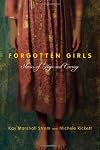
The world’s most oppressed people are mostly female. I’m not making this up. Kate Marshall Storm and Michele Rickett tell us that women and children make up:
80% of the world’s refugees.
70% of the poorest of the poor.
2/3 of the world’s illiterate.
4 million annual victims of human traffickers
80 percent of those who have never heard of Jesus Christ. (15)
Because women and girls are oppressed, focusing on bringing justice to them in their situation improves the lot of us all. Societies show more which champion justice for women and girls are more just societies than those who don’t. In Forgotten Girls: Stories of Hope and Courage Strom and Rickett share hopeful but heartbreaking and harrowing stories of women around the world. The newly updated edition (the book was originally published in 2009) is expanded and includes a discussion guide for each of the five parts: I. Physical Life, II. Educational Life, III. Sexual Protection for Life, IV. Freedom in Life, and V. Spiritual Life. These broad headings represent the issues that women and girls face in the two-thirds world. Each section tells stories of particular places and women, The discussion guide explores the stories, relevant Bible passages and provides suggestions for taking action.
Issues of global injustice are a big deal but we often like to leave things abstract. The statistics which I quoted above come from the introduction of this book. We hear statistics like these and we don’t know what to make of them. What could we possibly do? That or our eyes glaze over from one more statistic. One of the best things about Forgotten Girls is that Strom and Rickett lift these issues from the realm of abstraction and explores real women’s stories. We don’t just hear about ‘gendercide’ and gender inequity in regards to malnutrition, We hear about Beti’s abandonment and enslavement in Indonesia, and the abject poverty of Sonam and Pema in Tibet. We explore gender disparities in education through Mai Lin’s story as an AIDS orphan in China and Preethi’s experience in India (as an ‘untouchable’). We hear stories of girls breaking free from the sex trade, injustice and experiencing new life in Christ. There are seventeen places profiled and each tells stories of real-life struggles that women face across the nations. Thankfully these are stories of hope so we hear how these women and girls have found help and new life!
One thing I really appreciate about the study guide are the practical steps for action and prayer as we seek to combat injustice. This is a short book which will enlarge your heart for God’s justice to come. I give this book four-and-a-half stars. This is perfect for those wishing to understand the injustices women face across the globe. As the father of two young girls I am saddened and angered by those who would exploit the vulnerability of children, but this book made me grateful for the good work being done in the name of Christ. It also showed me ways to be a part of it! Great stuff.
Thank you to IVP for providing me a copy of this book in exchange for my honest review show less
80% of the world’s refugees.
70% of the poorest of the poor.
2/3 of the world’s illiterate.
4 million annual victims of human traffickers
80 percent of those who have never heard of Jesus Christ. (15)
Because women and girls are oppressed, focusing on bringing justice to them in their situation improves the lot of us all. Societies show more which champion justice for women and girls are more just societies than those who don’t. In Forgotten Girls: Stories of Hope and Courage Strom and Rickett share hopeful but heartbreaking and harrowing stories of women around the world. The newly updated edition (the book was originally published in 2009) is expanded and includes a discussion guide for each of the five parts: I. Physical Life, II. Educational Life, III. Sexual Protection for Life, IV. Freedom in Life, and V. Spiritual Life. These broad headings represent the issues that women and girls face in the two-thirds world. Each section tells stories of particular places and women, The discussion guide explores the stories, relevant Bible passages and provides suggestions for taking action.
Issues of global injustice are a big deal but we often like to leave things abstract. The statistics which I quoted above come from the introduction of this book. We hear statistics like these and we don’t know what to make of them. What could we possibly do? That or our eyes glaze over from one more statistic. One of the best things about Forgotten Girls is that Strom and Rickett lift these issues from the realm of abstraction and explores real women’s stories. We don’t just hear about ‘gendercide’ and gender inequity in regards to malnutrition, We hear about Beti’s abandonment and enslavement in Indonesia, and the abject poverty of Sonam and Pema in Tibet. We explore gender disparities in education through Mai Lin’s story as an AIDS orphan in China and Preethi’s experience in India (as an ‘untouchable’). We hear stories of girls breaking free from the sex trade, injustice and experiencing new life in Christ. There are seventeen places profiled and each tells stories of real-life struggles that women face across the nations. Thankfully these are stories of hope so we hear how these women and girls have found help and new life!
One thing I really appreciate about the study guide are the practical steps for action and prayer as we seek to combat injustice. This is a short book which will enlarge your heart for God’s justice to come. I give this book four-and-a-half stars. This is perfect for those wishing to understand the injustices women face across the globe. As the father of two young girls I am saddened and angered by those who would exploit the vulnerability of children, but this book made me grateful for the good work being done in the name of Christ. It also showed me ways to be a part of it! Great stuff.
Thank you to IVP for providing me a copy of this book in exchange for my honest review show less
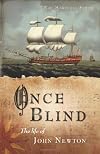
In a new addition to the body of works dealing with the abolitionist movement in 18th century Britain, Once Blind: The Life of John Newton is marked with gritty sin, slavery, God’s grace, redemption, and abolition. Following the film Amazing Grace and print biographies covering the life of William Wilberforce, Once Blind reveals the life of another key character in the movement to end slavery, John Newton. Famous for penning the hymn “Amazing Grace”, we are now introduced to his life show more as a sinner, conversion to a saint, and his subsequent efforts to abolish slavery. Kay Marshall Strom draws on Newton’s own letters and her own previous work exploring his life — John Newton: The Angry Sailor, a biography written for pre-teens — to present us with a cohesive, highly readable and moving story of this man’s life.
Strom introduces us to Newton as a young boy, already serving on the deck of his father’s ship. A sensitive boy, unable to earn his father’s approval, he quickly slides down into a life of sullenness, disobedience, rebellion, and rowdy behaviour. Strom fully develops the character of Newton as a young man - surly, blasphemous, an enemy of God, and of nearly everyone else who knows him. Strom is able to portray Newton’s indulgence in swearing and blasphemy by utilizing asterisks, dollar signs and other symbols throughout his conversations, without actually inserting the curse words. She is able to thoroughly depict the extent of Newton’s sin without divulging needlessly graphic details.
Due to his difficult nature and unhidden disdain for authority, Newton is transferred from ship to ship throughout his career. He serves for a time on a navy ship through enforced service during wartime (kidnapped at the docks). Readers of naval fiction will enjoy the authentic descriptions of life aboard a navy vessel, both from the lowly position of common seaman, and privileged position of midshipman. As we watch Newton descend into the darkest depths of his sin, some of the scenes we encounter are nightmarish, and nearly unbelievable, particularly after he leaves the navy. Some seem so far from our day-to-day experiences that they seem almost hallucinatory in nature.
When a disastrous storm strikes the ship that Newton is aboard he finally surrenders to God, and the transformation is abrupt and amazing. Like all conversions it is almost impossible to recognize the new man that Newton has become, though some traces are still present. Oddly enough, Newton enters into slave trading only after his conversion, and we are able to watch God’s grace continue to work in his life, transforming him and eventually moving him out of the slave trade and into the ministry with his loyal wife beside him. He eventually pens his well-known hymn, and many others — a fairly new form of worship in his day — and comes to speak out publicly against slavery, while making known his own testimony and involvement in the trade.
Unlike other Newton biographies, Strom ties the history of the British abolitionist movement together with current day human rights issues – effectively, modern day slavery, that she outlines in the epilogue. She briefly explains some of the primary ways we find slavery enacted today. Also provided is a list of human rights organizations that we can partner with to learn more about these injustices, and work together with to eliminate them.
Written in an easy-to-read, narrative style, Once Blind is a rapid, yet comprehensive assay into the life, conversion and work of John Newton. Readers will stand in awe at the transformative power of God’s grace in the work of all sinners who throw themselves on His mercy. The redemptive power of God is clearly shown, and I for one, love a good testimony! Highly accessible and recommended to both those seeking to learn more about this period in history, and those longing to know John Newton better as a man.
Reviewed for http://quiverfullfamily.com/blog show less
Strom introduces us to Newton as a young boy, already serving on the deck of his father’s ship. A sensitive boy, unable to earn his father’s approval, he quickly slides down into a life of sullenness, disobedience, rebellion, and rowdy behaviour. Strom fully develops the character of Newton as a young man - surly, blasphemous, an enemy of God, and of nearly everyone else who knows him. Strom is able to portray Newton’s indulgence in swearing and blasphemy by utilizing asterisks, dollar signs and other symbols throughout his conversations, without actually inserting the curse words. She is able to thoroughly depict the extent of Newton’s sin without divulging needlessly graphic details.
Due to his difficult nature and unhidden disdain for authority, Newton is transferred from ship to ship throughout his career. He serves for a time on a navy ship through enforced service during wartime (kidnapped at the docks). Readers of naval fiction will enjoy the authentic descriptions of life aboard a navy vessel, both from the lowly position of common seaman, and privileged position of midshipman. As we watch Newton descend into the darkest depths of his sin, some of the scenes we encounter are nightmarish, and nearly unbelievable, particularly after he leaves the navy. Some seem so far from our day-to-day experiences that they seem almost hallucinatory in nature.
When a disastrous storm strikes the ship that Newton is aboard he finally surrenders to God, and the transformation is abrupt and amazing. Like all conversions it is almost impossible to recognize the new man that Newton has become, though some traces are still present. Oddly enough, Newton enters into slave trading only after his conversion, and we are able to watch God’s grace continue to work in his life, transforming him and eventually moving him out of the slave trade and into the ministry with his loyal wife beside him. He eventually pens his well-known hymn, and many others — a fairly new form of worship in his day — and comes to speak out publicly against slavery, while making known his own testimony and involvement in the trade.
Unlike other Newton biographies, Strom ties the history of the British abolitionist movement together with current day human rights issues – effectively, modern day slavery, that she outlines in the epilogue. She briefly explains some of the primary ways we find slavery enacted today. Also provided is a list of human rights organizations that we can partner with to learn more about these injustices, and work together with to eliminate them.
Written in an easy-to-read, narrative style, Once Blind is a rapid, yet comprehensive assay into the life, conversion and work of John Newton. Readers will stand in awe at the transformative power of God’s grace in the work of all sinners who throw themselves on His mercy. The redemptive power of God is clearly shown, and I for one, love a good testimony! Highly accessible and recommended to both those seeking to learn more about this period in history, and those longing to know John Newton better as a man.
Reviewed for http://quiverfullfamily.com/blog show less
Lists
You May Also Like


Statistics
- Works
- 38
- Members
- 1,212
- Popularity
- #21,185
- Rating
- 3.8
- Reviews
- 20
- ISBNs
- 74
- Languages
- 3
- Favorited
- 1