
Kim Todd
Author of Chrysalis: Maria Sibylla Merian and the Secrets of Metamorphosis
About the Author
A former newspaper reporter, Kim Todd holds a B.A. from Yale University & an M.F.A. from the University of Montana. She lives in Missoula, Montana. (Bowker Author Biography)
Works by Kim Todd
Associated Works
Tagged
Common Knowledge
- Gender
- female
- Education
- University of Montana
Yale University - Short biography
- Kim Todd writes about science and the natural world. Her most recent book, Sparrow, part of Reaktion Books' Animal Series, explores the natural and cultural history of the much loved, much reviled, house sparrow, the most widespread wild bird in the world. A recent review in the Guardian called it a "charming celebration" (though the book discusses the negative impact of the house sparrow in the U.S. as well as other kinds of sparrows).
Her second book, Chrysalis, Maria Sibylla Merian and the Secrets of Metamorphosis (Harcourt 2007) looks at the life of a pioneering explorer/naturalist who traveled to South America in 1699 to study insect metamorphosis. The story also traces ideas about metamorphosis through time. The New Yorker called it a "spellbinding biography" and Kirkus Reviews lauded it as "a breathtaking example of scholarship and storytelling." It was selected as a Montana Book Award honor book, as one of the best science/technical books of 2007 by the Library Journal, and as a "Book to Remember" from 2007 by the New York Public Library.
Todd’s first book, Tinkering with Eden, a Natural History of Exotics in America (W.W. Norton 2001), tells the stories of non-native species and how they arrived in the United States. Species covered range from pigeons, brought over by some of the earliest colonists, to starlings, imported by a man who wanted to bring all the birds mentioned in Shakespeare to Central Park. The book explores our developing understanding of exotic species as we become more aware of the potential problems they may pose for native ecosystems. Tinkering with Eden received the PEN/Jerard Award and the Sigurd Olson Nature Writing Award and was selected as one of Booklist’s Top Ten Science/Technical Books for 2001.
Her articles and essays have appeared in Orion, Sierra Magazine, California Wild and Grist, among other places. She has taught environmental and nature writing at the University of Montana, the University of California at Santa Cruz extension, and the Environmental Writers Institute. She currently teaches in the MFA program at the University of Minnesota, Minneapolis, and is a senior fellow with the Environmental Leadership Program.
Todd has given talks at the Harvard Museum of Natural History, the New England Aquarium, the Getty Museum, the Commonwealth Club, Yale University, Bowdoin College, Wellesley College, the University of California (Davis), and many other venues. She has an MFA in creative nonfiction and an MS in environmental studies, both from the University of Montana, and BA in English from Yale.
http://www.kimtodd.net/index.htm
Members
Reviews
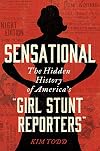
"Sensational" tells the story of the “girl stunt reporters” of the late 19th century, and the print culture that they helped shape. Nellie Bly started the trend by going undercover at a women’s insane asylum to report on the treatment there, but the book doesn’t stop there. We get to hear about the lives and works of many trailblazing women who shaped the conversations in their culture.
During the 1880s and 1890s, having a “girl reporter” was an asset and it provided a place for show more women at newspapers. Their articles were sensational, revealing, and told in an engaging first-person voice. A personality in writing and guts to do anything outrageous were valued above formal education, although the women eventually felt the pressure of the precedent which demanded that they do dangerous stories. The “girl stunt reporter” often became the heroine of the story she was covering, and readers followed her work as one would a movie star.
It’s sometimes hard to keep track of who is who, but I appreciate that Kim Todd weaves together the major headlines and stories of the years she covers, rather than simply highlighting one woman per chapter. Sensational lived up to its name and it is one of my favorite books of the year. show less
During the 1880s and 1890s, having a “girl reporter” was an asset and it provided a place for show more women at newspapers. Their articles were sensational, revealing, and told in an engaging first-person voice. A personality in writing and guts to do anything outrageous were valued above formal education, although the women eventually felt the pressure of the precedent which demanded that they do dangerous stories. The “girl stunt reporter” often became the heroine of the story she was covering, and readers followed her work as one would a movie star.
It’s sometimes hard to keep track of who is who, but I appreciate that Kim Todd weaves together the major headlines and stories of the years she covers, rather than simply highlighting one woman per chapter. Sensational lived up to its name and it is one of my favorite books of the year. show less
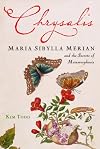
Earlier in the year I read a nonfiction book about butterflies that referenced Maria Sibylla Merian, and I immediately knew I wanted to know more detail about this 17th century woman's life. Kim Todd's biography of Merian is fantastic - delving into what is known of Merian's life and solidly placing her in context of the world and times she lived in. It's also a beautiful book that includes Merian's artwork throughout.
Merian was a German woman whose father was a printer. From early in show more childhood she was involved in printing and engraving, which set the stage for her forays into portraying the life cycles of the caterpillars she was obsessed with. She published 3 books with colored plates depicting the life cycle of butterflies, based on her detailed and laborious work studying the insects. As an adult, Merian was part of a Labadist movement - a religious sect that encouraged a direct connection of each person with the Bible and God and tried to remove the distractions of possessions. The Labadists had connections with a colony in Surinam in South America and at the grand age of 52, Merian decided to make a trip there with her daughter to study the insects and animals of the region. While she was there, she ran up against many problems, one being the sheer volume of insects. Also, it was dangerous to spend time in the rain forest collecting and observing. There was also the excessive heat, enslaved people in revolt, and disease to contend with. Nonetheless, she collected many specimens, created many notebooks and journals of observations and studies, and spent time with the native people learning from them what they already knew of the wildlife of the region. After two years she returned to Europe and put together another book, based on her studies in Surinam.
Merian was a trail blazer in the idea of studying insects in their own environments and following one insect through its life cycle. Her exquisite art work generally shows all stages of the insect's life. She'll draw the plant it feeds on, show the caterpillar munching away, include the pupa, larvae, and emerged butterfly as well. This was not something that others in the field were doing. In the last chapters, Todd explores why Merian's work has been discounted and overlooked and how that is beginning to change.
I really enjoyed this biography and high recommend it. show less
Merian was a German woman whose father was a printer. From early in show more childhood she was involved in printing and engraving, which set the stage for her forays into portraying the life cycles of the caterpillars she was obsessed with. She published 3 books with colored plates depicting the life cycle of butterflies, based on her detailed and laborious work studying the insects. As an adult, Merian was part of a Labadist movement - a religious sect that encouraged a direct connection of each person with the Bible and God and tried to remove the distractions of possessions. The Labadists had connections with a colony in Surinam in South America and at the grand age of 52, Merian decided to make a trip there with her daughter to study the insects and animals of the region. While she was there, she ran up against many problems, one being the sheer volume of insects. Also, it was dangerous to spend time in the rain forest collecting and observing. There was also the excessive heat, enslaved people in revolt, and disease to contend with. Nonetheless, she collected many specimens, created many notebooks and journals of observations and studies, and spent time with the native people learning from them what they already knew of the wildlife of the region. After two years she returned to Europe and put together another book, based on her studies in Surinam.
Merian was a trail blazer in the idea of studying insects in their own environments and following one insect through its life cycle. Her exquisite art work generally shows all stages of the insect's life. She'll draw the plant it feeds on, show the caterpillar munching away, include the pupa, larvae, and emerged butterfly as well. This was not something that others in the field were doing. In the last chapters, Todd explores why Merian's work has been discounted and overlooked and how that is beginning to change.
I really enjoyed this biography and high recommend it. show less
Loved this nonfiction look at “girl reporters” in the late 1800s. Their efforts in investigative & stunt reporting helped create the genre we now call creative nonfiction. I can’t believe all these women went through just to be journalists. It makes me value my job all the more. The reporters who worked in factories or spent time in asylums to researched a story were brave and inspiring.
“You thought I was part of your story, but really you are part of mine.”
“You thought I was part of your story, but really you are part of mine.”
Years ago, I bought a copy of this book for my insect-obsessed sister, then promptly forgot all about it. Then, recently, I heard about Maria Sibylla Merian again and decided i needed to know more about her. I ended up rediscovering this book and putting it on my library hold list. It's actually part of what inspired my new Women in Science phase -- after that I looked up several other biographies of female scientists and added them to my to-read list as well.
Merian's topic was show more metamorphosis, at a time when spontaneous generation was just starting to be disproven. In fact, Merian's work contributed to the refutations in a significant way. She was interested in metamorphosis in general, but in caterpillars in particular. Her medium was watercolor. (At a time when she was actually barred from painting in oils by artists guilds because she was a woman.) She raised hundreds of caterpillars, hoping to watch and document their transformations. Friends brought and sent her caterpillars. She sought permission to explore nearby gardens in the hopes of finding new caterpillars. She kept careful notes of dates, observations, sketches. And then she published. Books of watercolors with caterpillar/pupa/moth or butterfly on the same page. Perhaps more importantly, on their host plant. At first, she represents this work lightly -- telling stories designed to amuse of she and her friends in their fine dresses on country strolls, scrambling after insects. Suggesting her watercolors be used as inspirational patterns for embroidery. But she must have taken her work more seriously as time went on, because at the turn of the 18th century, she and her daughter sailed to Surinam to document metamorphosis there, quite possibly the first cross-Atlantic expedition for purely scientific reasons.
I could go on and on and on, but I'm going to try to rein it in. Things I want to particularly note: Merian was a contemporary of Leeuwenhoek! I think right now I am in love with turn of the 18th century Amsterdam. The hobbyist scientists. The salons full of new ideas. The crazy collections of artifacts and the birth of museums. Also, a chapter in the end about her enduring influence discusses how her work was held to some higher standard: she was dismissed entirely for decades because she was wrong about a few things, despite the significance of her gaffes being largely in line with those of her contemporaries. (Always my favorite example: Leeuwenhoek was sure that the entire germ for a new being came from the sperm. The egg was just a house to be filled.)
Also, I need to acknowledge that the author admits a dearth of primary sources about Merian's inner world. Very well recorded is what she saw, what she painted. But very little record remains of what she felt. About anything, ever. Todd is pretty transparent about this, and I thought she did an admirable job of both filling in the blanks and also directly stating what she is basing these speculations on as she makes them.
Recommended to those interested in insects, women in science and/or art, ecology, or turn of the 18th century worldviews. show less
Merian's topic was show more metamorphosis, at a time when spontaneous generation was just starting to be disproven. In fact, Merian's work contributed to the refutations in a significant way. She was interested in metamorphosis in general, but in caterpillars in particular. Her medium was watercolor. (At a time when she was actually barred from painting in oils by artists guilds because she was a woman.) She raised hundreds of caterpillars, hoping to watch and document their transformations. Friends brought and sent her caterpillars. She sought permission to explore nearby gardens in the hopes of finding new caterpillars. She kept careful notes of dates, observations, sketches. And then she published. Books of watercolors with caterpillar/pupa/moth or butterfly on the same page. Perhaps more importantly, on their host plant. At first, she represents this work lightly -- telling stories designed to amuse of she and her friends in their fine dresses on country strolls, scrambling after insects. Suggesting her watercolors be used as inspirational patterns for embroidery. But she must have taken her work more seriously as time went on, because at the turn of the 18th century, she and her daughter sailed to Surinam to document metamorphosis there, quite possibly the first cross-Atlantic expedition for purely scientific reasons.
I could go on and on and on, but I'm going to try to rein it in. Things I want to particularly note: Merian was a contemporary of Leeuwenhoek! I think right now I am in love with turn of the 18th century Amsterdam. The hobbyist scientists. The salons full of new ideas. The crazy collections of artifacts and the birth of museums. Also, a chapter in the end about her enduring influence discusses how her work was held to some higher standard: she was dismissed entirely for decades because she was wrong about a few things, despite the significance of her gaffes being largely in line with those of her contemporaries. (Always my favorite example: Leeuwenhoek was sure that the entire germ for a new being came from the sperm. The egg was just a house to be filled.)
Also, I need to acknowledge that the author admits a dearth of primary sources about Merian's inner world. Very well recorded is what she saw, what she painted. But very little record remains of what she felt. About anything, ever. Todd is pretty transparent about this, and I thought she did an admirable job of both filling in the blanks and also directly stating what she is basing these speculations on as she makes them.
Recommended to those interested in insects, women in science and/or art, ecology, or turn of the 18th century worldviews. show less
Lists
Awards


You May Also Like


Associated Authors
Statistics
- Works
- 5
- Also by
- 2
- Members
- 510
- Popularity
- #48,630
- Rating
- 4.0
- Reviews
- 23
- ISBNs
- 20
