
Larry E. Morris
Author of The Fate of the Corps: What Became of the Lewis and Clark Explorers After the Expedition
About the Author
Larry E. Morris is the author of The Fate of the. Corps, which was named a Top Academic Title by Choice and a History Book Club selection.
Works by Larry E. Morris
The Fate of the Corps: What Became of the Lewis and Clark Explorers After the Expedition (2004) 85 copies, 2 reviews
Oliver Cowdery: Scribe, Elder, Witness: Essays from BYU Studies and Farms (2006) — Editor; Contributor — 13 copies
Associated Works
Revelations in Context: The Stories Behind the Sections of the Doctrine and Covenants (2016) — Contributor — 101 copies, 3 reviews
Dialogue: A Journal of Mormon Thought - Volume 52, Number 2 (Summer 2019) (2019) — Contributor — 1 copy
Tagged
Common Knowledge
- Legal name
- Morris, Larry Eugene
- Birthdate
- 1951-10-26
- Gender
- male
- Education
- Brigham Young University (BA|Philosophy)
Brigham Young University (MA|American Literature) - Occupations
- historian
editor
freelance writer - Organizations
- The Church of Jesus Christ of Latter-day Saints
Brigham Young University
Joseph Smith Papers Project (senior editor)
Novell (senior editor)
Ensign magazine (assistant editor)
Neal A. Maxwell Institute (senior editor) - Relationships
- Morris, Deborah (wife)
- Birthplace
- Idaho Falls, Idaho, USA
- Places of residence
- Idaho Falls, Idaho, USA
Salt Lake City, Utah, USA - Associated Place (for map)
- USA
Members
Reviews
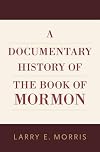
Larry E. Morris has written books on the exploration of the American West as well as several papers on Oliver Cowdery and the other witnesses of the Book of Mormon. He also served as an editor of the Joseph Smith Papers Project. He gave a presentation at the 2007 FAIR Conference and he will be speaking at the upcoming FairMormon Conference on August 8.
In this book, Morris brings together for the first time a single volume collection of primary source documents pertaining to the production of show more the Book of Mormon. The documents are annotated and introductory essays are included that give us the context. He draws on the work of authors such as Richard Bushman, Terryl Givens, D. Michael Quinn, Fawn Brodie, Dan Vogel, Richard Van Wagoner, Grant Palmer, and Dale Morgan, where applicable, while not hesitating to also provide critiques on their work as necessary.
The book is divided into eleven sections, with each section covering specific events, such as the appearance of Moroni, the receipt of the plates, various phases of the translation, the witnesses, and the publication of the Book of Mormon. A very useful chronology is given from September 21, 1823, when Moroni first appeared to Joseph Smith, up to April 6, 1830, when the church was officially organized.
As an example of what is included in the section introductions, here are some details that are not well known about the translation, from chapter 4:
There are separate sections covering the three witnesses and the eight witnesses. Regarding what has been said about Martin Harris, it is pointed out that “The ironic thing is, most critics – both nineteenth-century and modern – who interpret Harris’s mention of ‘spiritual eyes’ to mean he likely imagined the plates are the same people who do not believe in heavenly visions or visitations in the first place and are unfazed by Whitmer’s unequivocal account of seeing the plates with physical eyes.” [page 371] In the section on the eight witnesses, he spends several pages discussing problems with the work of Brodie, Morgan, Van Wagoner, and Palmer.
One of the documents gives an interesting second-hand description of the breastplate, from a letter:
This book is important not just because it’s a one-volume collection of documents pertaining to the Book of Mormon, but also because it points out the strengths and weaknesses of published interpretations of the documents. Morris writes with an engaging style that makes it a pleasure to read. And he has selected a very interesting collection of documents. Anyone wanting to learn more about the history of the Book of Mormon should definitely consider this book. show less
In this book, Morris brings together for the first time a single volume collection of primary source documents pertaining to the production of show more the Book of Mormon. The documents are annotated and introductory essays are included that give us the context. He draws on the work of authors such as Richard Bushman, Terryl Givens, D. Michael Quinn, Fawn Brodie, Dan Vogel, Richard Van Wagoner, Grant Palmer, and Dale Morgan, where applicable, while not hesitating to also provide critiques on their work as necessary.
The book is divided into eleven sections, with each section covering specific events, such as the appearance of Moroni, the receipt of the plates, various phases of the translation, the witnesses, and the publication of the Book of Mormon. A very useful chronology is given from September 21, 1823, when Moroni first appeared to Joseph Smith, up to April 6, 1830, when the church was officially organized.
As an example of what is included in the section introductions, here are some details that are not well known about the translation, from chapter 4:
In 1828, when Harris acted as Joseph’s scribe, the commandment was still in force that no one beside Joseph be allowed to see the plates, Urim and Thummim, or other objects preserved in Moroni’s cache. A curtain or screen was therefore used to separate the two men, a detail first mentioned in The Reflector, a Palmyra newspaper, on March 29, 1831. …Once Joseph switched from the spectacles to the seer stone, a screen was no longer necessary, which Harris made quite evident in his recollection of how he once tested the translation process by replacing Joseph’s stone with another. [page 251]
There are separate sections covering the three witnesses and the eight witnesses. Regarding what has been said about Martin Harris, it is pointed out that “The ironic thing is, most critics – both nineteenth-century and modern – who interpret Harris’s mention of ‘spiritual eyes’ to mean he likely imagined the plates are the same people who do not believe in heavenly visions or visitations in the first place and are unfazed by Whitmer’s unequivocal account of seeing the plates with physical eyes.” [page 371] In the section on the eight witnesses, he spends several pages discussing problems with the work of Brodie, Morgan, Van Wagoner, and Palmer.
One of the documents gives an interesting second-hand description of the breastplate, from a letter:
I have not heard but one sermon since we have been in this place and that by Hyrum Smith. As he was moving to Missouri he tarried with us a little while. His discourse was beautiful. We were talking about the Book of Mormon, [of] which he is one of the witnesses. He said he had but two hands and two eyes. he said he had seen the plates with his eyes and handled them with his hands and he saw a breast plate and he told how it was made. It was fixed for the breast of a man with a hole in [the] stomach and two pieces upon each side with a hole through them to put in a string to tie it on, but that was not so good gold as the plates for that was pure. Why I write this is because they dispute the Book so much. [page 443]
This book is important not just because it’s a one-volume collection of documents pertaining to the Book of Mormon, but also because it points out the strengths and weaknesses of published interpretations of the documents. Morris writes with an engaging style that makes it a pleasure to read. And he has selected a very interesting collection of documents. Anyone wanting to learn more about the history of the Book of Mormon should definitely consider this book. show less
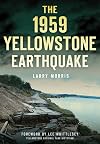
Mr. Morris' account of the 1959 Yellowstone earthquake was absolutely fascinating. He pulls together the events of that night using official records, and newspaper and eye-witness accounts. I have passed through and visited the slide area several time over the years, but never had a full understanding of what really happened that nigh. Mr. Morris' book filled in the gaps in my knowledge. It is a quick read and I would highly recommend it to anyone who has visited or is planning to visit the show more Yellowstone area. show less
This was a short book telling the personal stories of those affected by the 1959 Yellowstone earthquake. While interesting, it would have been nice to have a little more objective history of what really happened and not just what people thought happened.
Wow! The confusion after a disaster is amazingly well shown in the first several chapters of this book. Conflicting reports continued through the night and even after daylight.
“I really do think I was intended to be there,” Tootie said decades later. “I don’t think we plan our lives. Our lives are planned for us.” (Ch 4) (She was one of the two nurses at or near Rescue Point.)
“It was about 11:38 (PM) when the quake struck.” August 17, 1959, magnitude 7.5.
“The confusion of the show more scene could hardly be comprehended.” (Ch 5)
“the West Yellowstone Airport, which soon would be the busiest small airport in the United States.” (Ch 5)
At the Earthquake Lake Visitor’s Center it was identified as the best book on the subject. The gift shop was closed that afternoon, so I had to borrow it from the library. It is very well written, but I don’t intend to read this book again. Thus it only gets 4 stars. show less
“I really do think I was intended to be there,” Tootie said decades later. “I don’t think we plan our lives. Our lives are planned for us.” (Ch 4) (She was one of the two nurses at or near Rescue Point.)
“It was about 11:38 (PM) when the quake struck.” August 17, 1959, magnitude 7.5.
“The confusion of the show more scene could hardly be comprehended.” (Ch 5)
“the West Yellowstone Airport, which soon would be the busiest small airport in the United States.” (Ch 5)
At the Earthquake Lake Visitor’s Center it was identified as the best book on the subject. The gift shop was closed that afternoon, so I had to borrow it from the library. It is very well written, but I don’t intend to read this book again. Thus it only gets 4 stars. show less
Lists
You May Also Like


Associated Authors
Statistics
- Works
- 13
- Also by
- 7
- Members
- 255
- Popularity
- #89,876
- Rating
- 3.9
- Reviews
- 7
- ISBNs
- 26