
Christopher Petit
Author of The Psalm Killer
About the Author
Series
Works by Christopher Petit
Radio On 9 copies
Agathie Christie's Miss Marple: A Caribbean Mystery [and] Agathie Christie's Miss Marple: The Mirror Crack'd From Side to Side [Videorecording] (2006) — Director — 9 copies
Agatha Christie Classic Mystery Collection (Murder Is Easy/Caribbean Mystery/Murder with Mirrors/Thirteen for Dinner/Dead Man's Folly/Murder in Three Acts/Sparkling Cyanide/The… (2013) — Director — 5 copies
Radio On [Blu-ray] 3 copies
The Agatha Christie Crime Anthology Collection — Director — 2 copies
Great Detectives Anthology (Poirot / Miss Marple / Sherlock Holmes) — Director — 1 copy
Miss Marple: A Carribean Mystery (Agatha Christie Marple- The Classic Mysteries Collection) (DVD) 1 copy
Mister Wolf 1 copy
The Falconer 1 copy
Associated Works
Tagged
Common Knowledge
- Birthdate
- 1949-06-17
- Gender
- male
- Occupations
- film maker
novelist - Nationality
- UK
- Birthplace
- Worcestershire, England, UK
- Places of residence
- London, England, UK
- Associated Place (for map)
- England, UK
Members
Reviews
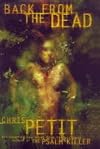
Detective thriller about a rockstar receiving stalker letters. Really good, its a bit weird that the detective stuff actually tends to come as a relief, because the personal lives of the characters are somehow more disturbing ;) .
The author can do a lot with a little, very short chapters. A lot of deadends or things which technically arn't connected to the main mystery but it all adds to the atmosphere and sense of realism, life is never neat :) .
I could never quite settle with this one, show more everything was just a little off. Changes of character perspective, changes in tone, it kept me constantly offbalance, which while not a pleasant feeling is probably what you would want from something like this :) .
Some knowledge of the Manson murders, the Rosemary's Baby film, and the death of John Lennon might all be useful. show less
The author can do a lot with a little, very short chapters. A lot of deadends or things which technically arn't connected to the main mystery but it all adds to the atmosphere and sense of realism, life is never neat :) .
I could never quite settle with this one, show more everything was just a little off. Changes of character perspective, changes in tone, it kept me constantly offbalance, which while not a pleasant feeling is probably what you would want from something like this :) .
Some knowledge of the Manson murders, the Rosemary's Baby film, and the death of John Lennon might all be useful. show less
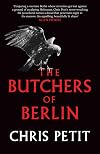
The Butchers of Berlin – A Dark Wartime Thriller
Chris Petit has often been compared to fellow writers such as Robert Harris, David Peace and Joseph Kanon, all of which means that Petit is one hell of a writer. The Butchers of Berlin reminds me of writers of an early vintage, such as Ernst Haffer, Hans Fallada, Alfred Doblin and Erich Maria Remarque. My reasoning being is that he has captured the paranoia, the darkness, the evocative horror of the time and the absolute fear of those German show more writers from an earlier age.
The Butchers of Berlin is an SS procedural thriller that is investigating murder and financial irregularities during wartime, when the Germans were starting to feel the reversal in their fortunes on the battlefield. This is now a society that has been so far cut off from its leadership that rumours abound all over Berlin, where still having some money means a better chance of surviving events that others.
This is a society that now has three different security forces policing then from the regular police, Gestapo and the dreaded SS who had more power than the others together, the black uniforms striking terror wherever they went.
It is August 1943 and the prematurely white haired detective August Schlegel, a detective in financial crimes is appointed by his chief to investigate a murder. When he gets to the murder scene he finds that a block warden has been murdered by an old Jewish soldier who in then turned the gun on himself. To complicate matters the Gestapo are waiting to clear the block of the Jewish residents and take them for transportation to the East.
More bodies are turn up, some showing the effects of torture before they are killed all are Jewish, but Schlegel still investigates their murders even though nobody actually cares. This is not helped because Goebbels has demanded that Berlin becomes Judenfrei quickly so is not pleased when things are not going his way.
When Schlegel find an SS Officer in his office sat smoking, he explains he is there to help him, and not to worry. Schlegel worries more when he finds that the SS Office, Eiko Morgen, is an SS Judge who is not the most popular man with the leadership.
Things become more complicated when fake money turns up on the bodies of those murdered and the Gestapo never seem too far away from what is happening. Everyone just wants the murders squared away and blamed on a people that are being hounded out of Berlin.
Things take a turn for the worst for Schlegel when he also happens to look a little too closely at the Berlin wartime economy, at the agents that are being used to hunt for remaining Jews and how close to the leadership things appear to be. Also in 1943 the Allied Bombers were making frequent visits over Berlin and dropping their payload on the city, things would never be the same again.
The Butchers of Berlin is evocative of that time during the war when the city was running on empty, paranoia and fear ran hand in hand. Who you could trust was not just a question of the Jewish population but for all the citizens of Berlin, keeping a low profile was always a help. The City was naked of its German males many of whom were on the Eastern Front, and those still there were either injured or managed to get out of war service.
Chris Petit has written a highly enjoyable, dark and very readable thriller, set when Berlin was at its most pessimistic The Butchers of Berlin is evocative of earlier writers. The Butchers of Berlin also happens to be one of the best researched novels that I have read in a long time and some of the characters are real leave a reminder of those darker times.
Highly enjoyable historical crime thriller where nobody escapes unscathed, and that includes the reader. show less
Chris Petit has often been compared to fellow writers such as Robert Harris, David Peace and Joseph Kanon, all of which means that Petit is one hell of a writer. The Butchers of Berlin reminds me of writers of an early vintage, such as Ernst Haffer, Hans Fallada, Alfred Doblin and Erich Maria Remarque. My reasoning being is that he has captured the paranoia, the darkness, the evocative horror of the time and the absolute fear of those German show more writers from an earlier age.
The Butchers of Berlin is an SS procedural thriller that is investigating murder and financial irregularities during wartime, when the Germans were starting to feel the reversal in their fortunes on the battlefield. This is now a society that has been so far cut off from its leadership that rumours abound all over Berlin, where still having some money means a better chance of surviving events that others.
This is a society that now has three different security forces policing then from the regular police, Gestapo and the dreaded SS who had more power than the others together, the black uniforms striking terror wherever they went.
It is August 1943 and the prematurely white haired detective August Schlegel, a detective in financial crimes is appointed by his chief to investigate a murder. When he gets to the murder scene he finds that a block warden has been murdered by an old Jewish soldier who in then turned the gun on himself. To complicate matters the Gestapo are waiting to clear the block of the Jewish residents and take them for transportation to the East.
More bodies are turn up, some showing the effects of torture before they are killed all are Jewish, but Schlegel still investigates their murders even though nobody actually cares. This is not helped because Goebbels has demanded that Berlin becomes Judenfrei quickly so is not pleased when things are not going his way.
When Schlegel find an SS Officer in his office sat smoking, he explains he is there to help him, and not to worry. Schlegel worries more when he finds that the SS Office, Eiko Morgen, is an SS Judge who is not the most popular man with the leadership.
Things become more complicated when fake money turns up on the bodies of those murdered and the Gestapo never seem too far away from what is happening. Everyone just wants the murders squared away and blamed on a people that are being hounded out of Berlin.
Things take a turn for the worst for Schlegel when he also happens to look a little too closely at the Berlin wartime economy, at the agents that are being used to hunt for remaining Jews and how close to the leadership things appear to be. Also in 1943 the Allied Bombers were making frequent visits over Berlin and dropping their payload on the city, things would never be the same again.
The Butchers of Berlin is evocative of that time during the war when the city was running on empty, paranoia and fear ran hand in hand. Who you could trust was not just a question of the Jewish population but for all the citizens of Berlin, keeping a low profile was always a help. The City was naked of its German males many of whom were on the Eastern Front, and those still there were either injured or managed to get out of war service.
Chris Petit has written a highly enjoyable, dark and very readable thriller, set when Berlin was at its most pessimistic The Butchers of Berlin is evocative of earlier writers. The Butchers of Berlin also happens to be one of the best researched novels that I have read in a long time and some of the characters are real leave a reminder of those darker times.
Highly enjoyable historical crime thriller where nobody escapes unscathed, and that includes the reader. show less
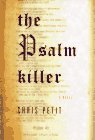
Christopher Petit's 'The Psalm Killer' works on several levels--as a historical novel, political novel and as crime thriller. The setting is Belfast Northern Ireland and the time it covers ranges loosely from the early 70's to the mid 80's. On its surface RUC Detective Cross (a Catholic Englishman married into a Protestant Northern Irish family) and his younger female partner Westerby are trying to track down a serial killer (Candlestick--Francis Albert Evans and an Englishman himself) show more originally planted by one of Britain's intelligence services MI 5 assisting Protestant paramilitaries in their war against the Catholic population. MI 5 and Britain's other intelligence service MI 6 are at odds ends--one (MI 5) determined to keep the country divided--the other MI 6 having the idea of bringing the country together--South and North into one country and both sending operatives in to gain their own ends. Around these cross purposes much of the action of this work revolves. Candlestick working with MI 5 is the agent showing loyalist members belonging to the Shankill Butchers how to torture and murder Catholics unfortunate enough to fall into their hands. He is also well versed in the comings and goings of one John McKeague--a Prostestant extremist homosexual bigot who has control of an orphanage--one in which he prostitutes young Catholic boys to well heeled Northern Irish protestants and British aristocrats (name dropping we have former British prime minister Edward Heath and a member of Britain's royal family Lord Louis Mountbatten--later assassinated by the Provisional IRA) and civil servants--Petit having the habit here of seguing real events and real people into his novel--the Kincora School boys scandal, the Shankill Butchers being two of the major events. Later on though Candlestick switches sides and becomes a hitman for the Official IRA (not to be confused with the Provisional IRA). In fact one thing that makes this book so intriguing to me it how Petit unravels and differentiates the different groups on all sides--on the Catholic--the Official IRA (aka the Stickies), the Provisional IRA (aka the Provos) and the INLA (the Marxist orientated Irish National Liberation Army)--these groups often feuding with and sometimes killing each other and on the Protestant side--the RHC (Red Hand Commandos--from which the Shankill Butchers sprung), the UDA (Ulster Defense Association) the UVF (Ulster Volunteer Force) and UFF (Ulster Freedom Fighters) also with the habit of feuding and murdering each other--the British Military including the Special Forces SAS, Army Intelligence, MRF (Mobile Reconnaissance Force) the UDR--the Ulster Defense Regiment (almost all Protestant--a kind of National Guard) the state security forces of the RUC (Royal Ulster Constabulary--who Cross and Westerby work for--again almost entirely protestant) and Special Branch--the whole apparatus of security forces--the policy of shoot to kill and their tendency to blame the IRA (convenient for them to have a bete noir) for crimes they've committed themselves. Petit outlines and differentiates all these groups pretty well--the conflicts even within their own sides--working in facts about a completely internalized society and the apalling incidence of domestic violence against women and children that fuels the murderous violence constantly making the news.
Beyond that the crime part of the novel revolving around the sinister Candlestick--himself abused by his father as a child--and intent on murdering so many people with the idea that all sides will eventually stop murdering each other and confess up to their crimes. It is well paced and very intriguing--well worth reading just as way of seeing someone sort out in an intelligent way (for once) what actually went on--and it's all incorporated into a so-called 'work of fiction'. FWIW that is quite a lot and I think Petit should be commended. I have a quibble though--and it's the ending doesn't do justice to the rest of the book--is rather too conventionally worked out. Not a fatal flaw it does however take away a chunk of the impact this book had for me up to that point. Other than that IMO this book would have been a masterpiece. show less
Beyond that the crime part of the novel revolving around the sinister Candlestick--himself abused by his father as a child--and intent on murdering so many people with the idea that all sides will eventually stop murdering each other and confess up to their crimes. It is well paced and very intriguing--well worth reading just as way of seeing someone sort out in an intelligent way (for once) what actually went on--and it's all incorporated into a so-called 'work of fiction'. FWIW that is quite a lot and I think Petit should be commended. I have a quibble though--and it's the ending doesn't do justice to the rest of the book--is rather too conventionally worked out. Not a fatal flaw it does however take away a chunk of the impact this book had for me up to that point. Other than that IMO this book would have been a masterpiece. show less
I enjoy the occasional thriller, and the idea of letters from a girl long dead intrigued me enough to pick up this (inherited) novel, but I can’t claim to have liked this. The style is wandering with characters I find difficult to bring into focus. There’s no one here to root for, which is usually a requirement for a memorable protagonist. This book seems to comprise despicable, chameleon people who act pleasant, savage, angry, happy, miserable… a different way with each other each show more turn of the page. Undoubtedly deliberate, this makes the story feel surreal. Yet the author is well-acclaimed and has written a slew of novels. This, an earlier work, is perhaps the art of honing one’s craft. I liked the parts where the story tied in with actual events, something the author appears known for, and the total package certainly sets discordant threads thrumming in the reader’s mind. Not for those with a dislike of the need to pay close attention, and ultimately it’s a grim experience with the lead as obsessive as the wretched people who hire him. My feelings are ambiguous as this will stick in my mind a while where I would prefer it not to. show less
Awards


You May Also Like


Associated Authors
Statistics
- Works
- 33
- Also by
- 3
- Members
- 627
- Popularity
- #40,190
- Rating
- 3.5
- Reviews
- 15
- ISBNs
- 81
- Languages
- 3
- Favorited
- 2