

Ephraim Radner
Author of Leviticus (Brazos Theological Commentary on the Bible)
About the Author
Ephraim Radner is Professor of Historical Theology, Wycliffe College at the University of Toronto. An Anglican priest, he has worked in several parts of the world. His books include The End of the Church: A Pneumatology of Christian Division in the West (1998), A Brutal Unity: The Spiritual show more Politics of the Christian Church (2012), and A Time to Keep: Theology, Mortality and the Shape of the Christian Life (2016). show less
Works by Ephraim Radner
Reclaiming Faith: Essays on Orthodoxy in the Episcopal Church and the Baltimore Declaration (1993) 29 copies, 1 review
Associated Works
Tagged
Common Knowledge
- Canonical name
- Radner, Ephraim
- Birthdate
- 1956
- Gender
- male
- Education
- Yale University (Ph.D.)
Yale Divinity School (M.Div.)
Dartmouth College (B.A.) - Occupations
- university professor
priest
Members
Reviews
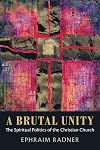
A Brutal Unity by Ephraim Radner, B&C review 3-4/13
Beginning with the Bible's Jerusalem Council, A Brutal Unity offers a small church history in and of itself, moving through Gregory the Great's Pastoral Rule, the Conciliar Movement, and into early modernism. Radner finds a workable model of church unity only in the pre-Nicene era, making the villain of his story Ephiphanius of Salamis (d. 403), who listed heresies and distanced the church from her enemies, especially the Jews.
Can we not show more see, argues Radner, that divisions have rendered Christian churches useless in evaluating human interaction?
Division, furthermore, "is the central part of the history of the Church as a whole and in its parts."
And one verse from the New--interpreted figurally--seems to summarize Radner's thrust, whether applied to our own fractured churches (of whatever comunion) or to the liberal state itself: "Paul said to the centurion and the soldiers, 'Unless these men stay in the ship, you cannot be saved' (Acts 27:31)." show less
Beginning with the Bible's Jerusalem Council, A Brutal Unity offers a small church history in and of itself, moving through Gregory the Great's Pastoral Rule, the Conciliar Movement, and into early modernism. Radner finds a workable model of church unity only in the pre-Nicene era, making the villain of his story Ephiphanius of Salamis (d. 403), who listed heresies and distanced the church from her enemies, especially the Jews.
Can we not show more see, argues Radner, that divisions have rendered Christian churches useless in evaluating human interaction?
Division, furthermore, "is the central part of the history of the Church as a whole and in its parts."
And one verse from the New--interpreted figurally--seems to summarize Radner's thrust, whether applied to our own fractured churches (of whatever comunion) or to the liberal state itself: "Paul said to the centurion and the soldiers, 'Unless these men stay in the ship, you cannot be saved' (Acts 27:31)." show less
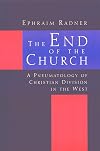
Or maybe not.. David S. Cunningham has a persuasive review/response/critique in the Anglican Theological Review (83:89-100).

You May Also Like


Associated Authors
Statistics
- Works
- 18
- Also by
- 1
- Members
- 798
- Popularity
- #31,947
- Rating
- 3.7
- Reviews
- 4
- ISBNs
- 42
