
Mario Vargas Llosa (1936–2025)
Author of The Feast of the Goat
About the Author
Mario Vargas Llosa was born in Arequipa, Peru on March 28, 1936. He studied literature and law at the National University of San Marcos and received a Ph.D from the University of Madrid in 1959. He is a writer, politician, and journalist. His works vary in genre from literary criticism and show more journalism to comedies, murder mysteries, historical novels, and political thrillers. His books include The Time of the Hero, The Green House, Conversation in the Cathedral, Aunt Julia and the Scriptwriter, The Feast of the Goat, and The War of the End of the World. He has received numerous awards including the Rómulo Gallegos International Novel Prize, the Premio Leopoldo Alas in 1959, the Premio Biblioteca Breve in 1962, the Premio Planeta in 1993, the Miguel de Cervantes Prize in 1994, the Jerusalem Prize in 1995, and the Nobel Prize in Literature in 2010. (Bowker Author Biography) show less
Disambiguation Notice:
Surname is Vargas Llosa, not Llosa
Image credit: Mario Vargas Llosa pose pour une photo lors d'une cérémonie d'intronisation à l'Académie française le jeudi 9 février 2021
Works by Mario Vargas Llosa
Un bárbaro en París: Textos sobre la cultura francesa / A Barbarian in Paris. Wr itings about French Culture (Spanish Edition) (2023) 19 copies
Obra reunida/ Compiled Theatrical Works: Teatro (Biblioteca Mario Vargas Llosa) (Spanish Edition) (2001) 13 copies
El fuego de la imaginación: Libros, escenarios, pantallas y museos: Obra periodística I (Hispánica) (1922) 10 copies
9 asedios a García Márquez — Author — 7 copies
Aunt Julia and the Scriptwriter | Dora, Doralina | One Hundred Years of Solitude | One Day of Life (1980) 6 copies
El país de las mil caras: Escritos sobre el Perú / A Country of a Thousand Faces: Writings about Peru (OBRA PERIODÍSTICA) (Spanish Edition) (2024) 6 copies
El fuego de la imaginación: Libros, escenarios, pantallas y museos. Obra periodística. 1 (2023) 6 copies
Conversacin̤ en La Catedral . vol. I 4 copies
Conversation in the Cathedral | The Perpetual Orgy: Flaubert and Madame Bovary | Captain Pantoja and the Special Service (1978) 4 copies
Conversación En La Catedral. Vol. I 4 copies
Diario de viaje. Recorrido de Mario Vargas Llosa por el Congo e Irlanda tras las huellas de Roger Casement (2010) 4 copies
Las guerras de este mundo : sociedad, poder y ficción en la obra de Mario Vargas Llosa (2008) 4 copies
A Orgia Perpétua 3 copies
Ansprachen aus Anlaß der Verleihung des Friedenspreises des Deutschen Buchhandels 1996. Text teils in deutsch und spanisch. (1996) 3 copies
ELOGIO DE LA MADASTRA 3 copies
Mario Vargas Llosa: The green house 3 copies
batismo de fogo 2 copies
Los Cachorros 2 copies
Je vous dédie mon silence 2 copies
La orgía perpetua 2 copies
Sueño Del Celta El (B) 2 copies
The Dream of the Celt, Notebook 1 2 copies
Vientos, Los 2 copies
The Visitor 2 copies
The Culture That Was 2 copies
las travesuras de la niña mala 2 copies
Aunt Julia and the Scriptwriter | Death in the Andes | The Notebooks of Don Rigoberto (2003) 2 copies
A város és a kutyák Regény 1 copy
Wyzwanie 1 copy
Cuentos latinoamericanos 1 copy
Kdo zabil Palomina Molera? 1 copy
حفلة التيس 1 copy
Report of the Democracy Commission : an examination of the democratization process in Nicaragua one year after free elections (1991) 1 copy
PANTEALÓN Y LAS VISITADORAS 1 copy
Ii quaderni di Don Rigoberto 1 copy
Pantaljón og sérþjónustan 1 copy
Crocevia 1 copy
Zor Zamanlar 1 copy
sables y utopias aguilar 1 copy
Os chefes, os filhotes 1 copy
Pantaleón és a hölgyvendégek 1 copy
නිර්නාමික ඝාතකයා 1 copy
elogio da madastra 1 copy
Szeretem a mostohámat 1 copy
CIVILIZACION DEL ESPECTACULO 1 copy
VAJZA E PRAPË 1 copy
Elebaşılar/Hergeleler 1 copy
Cartas a um Jovem Escritor 1 copy
a festa do bode 1 copy
o herói discreto 1 copy
ELOGIO À MADRASTA 1 copy
YUZBASI VE KADINLAR TABURU 1 copy
A Orgia Perpétua 1 copy
Matusa Julia si Condeierul 1 copy
Pětinároží 1 copy
Volání kmene 1 copy
විසේකාරි 1 copy
තරුණ නවකතාකරුවෙකු වෙත 1 copy
os cachorros, os chefes 1 copy
Tempos Duros 1 copy
Um Brasil 1 copy
Lituana Nos Andes 1 copy
1997 1 copy
Nov 21 1 copy
pantaleon 1 copy
hablador 1 copy
5 esquinas 1 copy
madrastra 1 copy
travesuras 1 copy
Los jefes 1 copy
Războiul sfârşitului lumii 1 copy
Město a psi 1 copy
Priče o kugi 1 copy
Obras Completas 25 Tomos 1 copy
El llamado del abismo 1 copy
El sombrío fulgor 1 copy
Un mundo sin novelas 1 copy
Narrativa Completa I 1 copy
Narrativa Completa II 1 copy
Narrativa Completa III 1 copy
Narrativa Completa VI 1 copy
La novela 1 copy
Entre la libertad y el miedo 1 copy
Ediciones Definitivas 1 copy
My Intellectual Journey 1 copy
Artículos 1 copy
1987 1 copy
En torno a la poesía 1 copy
El elogio de la madrastra 1 copy
Zelený dům 1 copy
Odiseo y Penélope 1 copy
La Ciudad y los perros 1 copy
Город и псы. Зеленый Дом 1 copy
المدينة والكلاب 1 copy
Sang Pengoceh 1 copy
Žali namai: romanas 1 copy
Fićfirići 1 copy
Posvećujem vam svoju tišinu 1 copy
Sablje i utopije 1 copy
Riba u vodi 1 copy
Razgovor na Princetonu 1 copy
By Mario Vargas Llosa El pez en el agua (Narrativa (Punto de Lectura)) (Spanish Edition) [Paperback] (2010) 1 copy
Candaules, King of Lydia 1 copy
The Grandfather 1 copy
Premios Planeta 1993-1994 1 copy
The Younger Brother 1 copy
The Chiefs [short story] 1 copy
Conversa na Catedral 1 copy
Los vientos 1 copy
حلم السلتي 1 copy
خمس زوايا 1 copy
Associated Works
The Art of the Tale: An International Anthology of Short Stories (1986) — Contributor — 381 copies, 3 reviews
Kingdom of Olives and Ash: Writers Confront the Occupation (2017) — Contributor — 165 copies, 5 reviews
A Thousand Forests in One Acorn: An Anthology of Spanish-Language Fiction (2014) — Contributor — 51 copies
Introducción a la literatura hispanoamericana : de la conquista al siglo XX (1997) — Contributor — 23 copies
And We Came Outside and Saw the Stars Again: Writers from Around the World on the COVID-19 Pandemic (2020) — Contributor — 16 copies
Nueva Novela Latinoamericana 1 — Contributor — 6 copies
Het continent van de eenzaamheid reportages en beschouwingen over Latijns-Amerika (1992) — Contributor — 6 copies
Confesiones de escritores, escritores latinoamericanos : los reportajes de The Paris Review (1996) — Contributor — 5 copies
Tales of the Magicians: Gabriel García Márquez, Julio Cortázar, Miguel Ángel Asturias, Jorge Luis Borges, Mario Vargas Llosa, Miguel Otero Silva and… (2002) — Contributor — 3 copies
La lengua y la palabra : trescientos años de la Real Academia Española : [Biblioteca Nacional de España, entre el 27 de septiembre de 2013 y el 26 de enero de… (1999) — Contributor — 2 copies
Victor Hugo en el Perú — Contributor — 1 copy
Lecciones y maestros: II Cita internacional de la literatura en español — Contributor — 1 copy
Conferencias presidenciales de Humanidades — Contributor — 1 copy
Audio Libro: Cortazár, Borges, Vargas LLosa, Allan Poe — Contributor — 1 copy
20世紀ラテンアメリカ短篇選 — Contributor — 1 copy
ユリイカ 詩と批評 1990年 04月号 特集 バルガス=リョサ — Contributor — 1 copy
ユリイカ 詩と批評 1979年 07月号 特集=ラテンアメリカの作家たち — Contributor — 1 copy
カイエ 1978年 11月号 特集・ボルヘスとラテンアメリカ文学 — Contributor — 1 copy
Tagged
Common Knowledge
- Canonical name
- Vargas Llosa, Mario
- Legal name
- Vargas Llosa, Jorge Mario Pedro
- Other names
- Vargas Llosa, Jorge Mario Pedro, 1st Marquis of Vargas Llosa
- Birthdate
- 1936-03-28
- Date of death
- 2025-04-12
- Gender
- male
- Education
- National University of San Marcos
Complutense University of Madrid - Occupations
- novelist
politician
journalist
essayist - Organizations
- American Academy of Arts and Letters (Foreign Honorary, Literature, 1986)
- Awards and honors
- Biblioteca Breve (1962)
Premio Príncipe de Asturias (1986)
T. S. Eliot Award (1991)
Premio Miguel de Cervantes (1994)
Jerusalem Prize (1995)
Friedenspreis des Deutschen Buchhandels (1996) (show all 11)
PEN/Nabokov Award (2002)
Irving Kristol Award (2005)
Ovid Prize (2005)
Man Booker International Prize Finalist (2009)
Nobel Prize (Literature, 2010) - Relationships
- Vargas Llosa, Álvaro (son)
Llosa, Luis (cousin) - Nationality
- Spain (passport)
Peru (birth) - Birthplace
- Arequipa, Peru
- Places of residence
- Arequipa, Peru
Lima, Peru
England
USA
Madrid, Spain
Cochabamba, Bolivia - Place of death
- Lima, Peru
- Map Location
- Peru
- Disambiguation notice
- Surname is Vargas Llosa, not Llosa
Members
Discussions
Group Read, March 2017: The Feast of the Goat in 1001 Books to read before you die (April 2017)
Vargas Llosa: The war at the end of the world in Folio Society Devotees (November 2012)
Aunt Julia and the Scriptwriter in Author Theme Reads (February 2012)
The Bad Girl in Author Theme Reads (September 2011)
The Feast of the Goat in Author Theme Reads (September 2011)
MVL: In Praise of the Stepmother/Notebooks of Don Rigoberto in Author Theme Reads (July 2011)
The War at the End of the World in Author Theme Reads (June 2011)
MVL: The Time of the Hero/La Ciudad y Los Perros in Author Theme Reads (March 2011)
The Way to Paradise in Author Theme Reads (February 2011)
Conversación en la catedral (Conversation in the Cathedral) in Author Theme Reads (February 2011)
MVL: Who Killed Palomino Molero? in Author Theme Reads (January 2011)
Understanding Mario Vargas Llosa in Author Theme Reads (January 2011)
Reviews
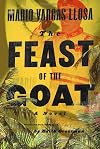
Brutal. Absolutely brutal. That is really the only way to describe the events portrayed in The Feast of the Goat, a work of historical fiction that records the turbulent end of the Trujillo dictatorship in the Dominican Republic. In graphic and meticulous detail, Vargas Llosa does a truly masterful job of weaving the history of the 31-year reign of terror and social progress that marked Rafael Trujillo’s stranglehold on the country alongside the riveting tension associated with his last show more several hours on earth. This is grim and gritty writing that never shies away from chronicling every bit of the murder, torture, dismemberment, sexual violation, and humiliation that were “The Goat’s” primary means of subjugating the population.
In what turns out to be an effective literary device, the story is told from three perspectives and two different time frames in alternating chapters. Urania Cabral, a successful lawyer visiting her homeland for the first time after living in the United States for 35 years, has returned to confront her father and the ghosts of the past that she buried when she left the island just weeks before Trujillo’s assassination. The other two narratives take place in 1961 and focus on the Generalissimo as he progresses through the day on which he is killed as well as several of the “executioners” involved in the murder plot.
While the tale of Urania and her father, Senator Augustin Cabral, is pure fiction (i.e., they did not really exist), those centered on Trujillo, his sadistic comrades, and his assassins are embellished accounts based on factual occurrences. In fact, the historical portions of the novel work far better than the parts set in the modern day; in tone and substance, Urania’s story seemed a little disjoint from the other accounts and was almost a distraction. Regardless, The Feast of the Goat is a powerful meditation on how absolute power truly does corrupt absolutely, irrespective of whether the original intentions were noble and just (and sanctioned by both the Church and the U.S. government). With few heroes and very little hope, this is a book that was, at times, very difficult to read. Nevertheless, it is also an important work that deserves all of the acclaim it has received. show less
In what turns out to be an effective literary device, the story is told from three perspectives and two different time frames in alternating chapters. Urania Cabral, a successful lawyer visiting her homeland for the first time after living in the United States for 35 years, has returned to confront her father and the ghosts of the past that she buried when she left the island just weeks before Trujillo’s assassination. The other two narratives take place in 1961 and focus on the Generalissimo as he progresses through the day on which he is killed as well as several of the “executioners” involved in the murder plot.
While the tale of Urania and her father, Senator Augustin Cabral, is pure fiction (i.e., they did not really exist), those centered on Trujillo, his sadistic comrades, and his assassins are embellished accounts based on factual occurrences. In fact, the historical portions of the novel work far better than the parts set in the modern day; in tone and substance, Urania’s story seemed a little disjoint from the other accounts and was almost a distraction. Regardless, The Feast of the Goat is a powerful meditation on how absolute power truly does corrupt absolutely, irrespective of whether the original intentions were noble and just (and sanctioned by both the Church and the U.S. government). With few heroes and very little hope, this is a book that was, at times, very difficult to read. Nevertheless, it is also an important work that deserves all of the acclaim it has received. show less
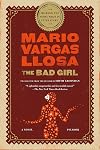
A teenage boy falls for a girl in 1950’s Peru, and their lives intertwine over the years in Paris, London, Japan, and Spain in the decades which follow. He’s masochistic in his devotion to her, whereas she’s cool, cruel, and calculating, essentially always looking out for a better situation for herself.
That may sound like a painful read, but it’s really not, or at least, it wasn’t to me. With that said, there may be times that, like someone who can’t control themselves in a show more movie theater, you find yourself actually wanting to call out a warning to the “good boy”, or at the very least, gritting your teeth at what seems like his stupidity. You may also wonder, along with him, whether or not her latest reconciliation to him will be lasting, because with maturity she’s finally recognized the warmth and generosity of his love.
This is a novel that explores the limits of unconditional love, which I suppose is one of our greatest strengths, as well as what happens when being true to oneself is destructive to others, or is self-destructive. Throughout it all, despite her outrageous behavior and his obsessive feelings, there is a calmness and intelligence that pervades their relationship, as well as humor. Vargas Llosa’s prose is also to the point but has the quality of being both spare as well as elegant, which is hard to pull off, and always impressive to me. show less
That may sound like a painful read, but it’s really not, or at least, it wasn’t to me. With that said, there may be times that, like someone who can’t control themselves in a show more movie theater, you find yourself actually wanting to call out a warning to the “good boy”, or at the very least, gritting your teeth at what seems like his stupidity. You may also wonder, along with him, whether or not her latest reconciliation to him will be lasting, because with maturity she’s finally recognized the warmth and generosity of his love.
This is a novel that explores the limits of unconditional love, which I suppose is one of our greatest strengths, as well as what happens when being true to oneself is destructive to others, or is self-destructive. Throughout it all, despite her outrageous behavior and his obsessive feelings, there is a calmness and intelligence that pervades their relationship, as well as humor. Vargas Llosa’s prose is also to the point but has the quality of being both spare as well as elegant, which is hard to pull off, and always impressive to me. show less
Urania returns to the Dominican Republic after leaving it 35 years ago. Back in 1961, the same year she left but just a little later, dictator Rafael Trujillo is going through his daily routine on what will be his last day on earth. And a group of men lie in wait, planning on assassinating him on the road outside the capital.
These three storylines interweave in a complex dance, building up to the actual assassination and its aftermath. The narrative is very descriptive without a lot of show more dialogue or action in the first half, and as someone who doesn't clearly visualize what I read, I had to really slow down to make sure that I didn't miss anything. It meant taking about two weeks to read the whole novel, but I never felt like the read was taking too long and didn't become impatient to get to the end. After a slow build, the narrative becomes increasingly intense in the second half. I didn't know a lot of the details of Trujillo's assassination and what little I knew of his dictatorship I learned from another fictional title, In the Time of the Butterflies. So much of the time I didn't know what to expect, and there are some really violent, brutal moments - based, mind you, on real events - that were difficult to read. But wow, what an incredible, masterful use of language and narrative to weave a powerful and heartbreaking story. show less
These three storylines interweave in a complex dance, building up to the actual assassination and its aftermath. The narrative is very descriptive without a lot of show more dialogue or action in the first half, and as someone who doesn't clearly visualize what I read, I had to really slow down to make sure that I didn't miss anything. It meant taking about two weeks to read the whole novel, but I never felt like the read was taking too long and didn't become impatient to get to the end. After a slow build, the narrative becomes increasingly intense in the second half. I didn't know a lot of the details of Trujillo's assassination and what little I knew of his dictatorship I learned from another fictional title, In the Time of the Butterflies. So much of the time I didn't know what to expect, and there are some really violent, brutal moments - based, mind you, on real events - that were difficult to read. But wow, what an incredible, masterful use of language and narrative to weave a powerful and heartbreaking story. show less
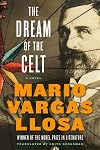
I don’t recall ever reading anything by Nobel Prize winner Vargas Llosa before, so I can’t compare this historical novel and thinly-disguised biography to his other work, but the subject--the life of Sir Roger Casement--is one which interests me deeply. Adam Hochschild’s 1998 book of the Congo, King Leopold's Ghost: A Story of Greed, Terror and Heroism in Colonial Africa, introduced me to the unforgettable figure of Roger Casement and I see Vargas Llosa was similarly captured. Casement show more was a man who harbored within him enormous contradictions and who struggled to live a life of meaning. Despite being hung for a traitor, he was a man of honor who stood up for his convictions, and who died for them.
Roger Casement (1864-1916) was born just outside of Dublin, Ireland, in a seaside location given variously as Sandycove or Kingstown. Though baptized as a child, Casement considered himself Protestant most of his life and embraced his Catholicism only shortly before his death. Much of what we know about him comes from his own journals in which he recorded his work, thoughts, travels, and sexual encounters. Vargas Llosa’s first section detailing Casement’s life and work in the Congo tracked so closely with Hochschild’s account that I realized both must have used the same source materials.
It is the second section, called Amazonia, which held my attention most closely. After Casement works with Protestant missionaries and the journalist and human rights activist E.D. Morel in the Congo disclosing the atrocities committed in the push to harvest rubber, he is dispatched by the British government to Peru to do the same there. He was not a well man by this time, for a white man in the tropics often developed debilitating illnesses that recurred with alarming frequency. Returning to the hot, humid environment of the Amazonian jungle caused his health to further fray. A photograph of Casement in Peru takes one aback; in it Casement looks positively skeletal.
Casement (on left) w/ Representative of Peruvian Amazon Company
Vargas Llosa describes Casement’s life in Peru with a verisimilitude and authenticity that makes those passages come alive. Casement had a nasty assignment, travelling to remote and dangerous outposts to conduct interviews and write detailed reports on atrocities. He couldn’t wait to be shot of it. But he persevered until he had enough damning evidence, only to find that the business interests trumped human rights in the Amazon, as they often did in colonial possessions.
Gradually Casement came to realize that freedom is something one must seize for oneself:
Vargas Llosa also captures the beauty and pathos of Casement’s homosexual encounters, for Casement was a gay man in a world constrained by its own harsh and corrupted morality. By the time he lived in Peru, Casement was increasingly indiscreet in his encounters and his recording of them in his journals. Vargas Llosa makes the point that Casement must have keenly felt his solitary, unmarried life. When Casement leaves the Amazon and returns to Europe via New York, he encounters a handsome young Slav, Eivind, for whom he falls heavily, thinking he is finally enjoying a mutual and adult relationship. Eivind will be his undoing, for he sells Casement’s secrets, including his determination to work for Irish independence, to the British.
Casement had been knighted after his work in Africa. When, in a roiled and pre-WWI Europe, he made the decision to go to a militarizing Germany to get aid for Irish rebels, the British felt sufficiently betrayed to try him for treason. While in Germany, Casement apparently considered every possible means to weaken the hold of the British on her colonies wherever they might be, strengthening the case by the prosecution and ensuring he would never be granted clemency. He was hung in 1916, a mere three months after his dawn capture April 21 at McKenna’s Fort in Ireland.
The last section of Vargas Llosa’s novel details the confusion of Casement’s botched return to Ireland and the support for his case, or lack of it, by longtime friends and admirers. Many old friends, including E.D. Morel, considered Casement seriously off base in his collaboration with the German machine against England, and so never responded to his letters. Though his hangman called him "the bravest man it fell to my unhappy lot to execute," even his Irish compatriots could not hail him wholeheartedly as a nationalist because rumors of his homosexuality offended their sense of moral right.
In the Epilogue, Vargas Llosa celebrates the return of Casement to the popular imagination:
In 1965, Casement’s bones were repatriated and rest now in Dublin’s Glasnevin cemetery.
a> show less
Roger Casement (1864-1916) was born just outside of Dublin, Ireland, in a seaside location given variously as Sandycove or Kingstown. Though baptized as a child, Casement considered himself Protestant most of his life and embraced his Catholicism only shortly before his death. Much of what we know about him comes from his own journals in which he recorded his work, thoughts, travels, and sexual encounters. Vargas Llosa’s first section detailing Casement’s life and work in the Congo tracked so closely with Hochschild’s account that I realized both must have used the same source materials.
It is the second section, called Amazonia, which held my attention most closely. After Casement works with Protestant missionaries and the journalist and human rights activist E.D. Morel in the Congo disclosing the atrocities committed in the push to harvest rubber, he is dispatched by the British government to Peru to do the same there. He was not a well man by this time, for a white man in the tropics often developed debilitating illnesses that recurred with alarming frequency. Returning to the hot, humid environment of the Amazonian jungle caused his health to further fray. A photograph of Casement in Peru takes one aback; in it Casement looks positively skeletal.
Casement (on left) w/ Representative of Peruvian Amazon Company
Vargas Llosa describes Casement’s life in Peru with a verisimilitude and authenticity that makes those passages come alive. Casement had a nasty assignment, travelling to remote and dangerous outposts to conduct interviews and write detailed reports on atrocities. He couldn’t wait to be shot of it. But he persevered until he had enough damning evidence, only to find that the business interests trumped human rights in the Amazon, as they often did in colonial possessions.
Gradually Casement came to realize that freedom is something one must seize for oneself:
"I have reached the absolute conviction that the only way the indigenous people of Putumayo can emerge from the miserable condition to which they have been reduced is by rising up in arms against their masters. It is an illusion devoid of all reality to believe…that this state will change when…there are authorities, judges, police to enforce the laws that have prohibited servitude and slavery in Peru since 1854…In this society the state is an inseparable part of the machinery of exploitation and extermination…If they want to be free they have to conquer their freedom with their arms and their courage…We Irish are like the Huitotos, the Boras, the Andoques, and the Muinanes of Putumayo. Colonized, exploited and condemned to be that way forever if we continue trusting in British laws, institutions, and governments to attain our freedom. They will never give it to us. Why would the Empire that colonized us do that unless it felt an irresistible pressure that obliged it to do so? That pressure can only come from weapons."
Vargas Llosa also captures the beauty and pathos of Casement’s homosexual encounters, for Casement was a gay man in a world constrained by its own harsh and corrupted morality. By the time he lived in Peru, Casement was increasingly indiscreet in his encounters and his recording of them in his journals. Vargas Llosa makes the point that Casement must have keenly felt his solitary, unmarried life. When Casement leaves the Amazon and returns to Europe via New York, he encounters a handsome young Slav, Eivind, for whom he falls heavily, thinking he is finally enjoying a mutual and adult relationship. Eivind will be his undoing, for he sells Casement’s secrets, including his determination to work for Irish independence, to the British.
Casement had been knighted after his work in Africa. When, in a roiled and pre-WWI Europe, he made the decision to go to a militarizing Germany to get aid for Irish rebels, the British felt sufficiently betrayed to try him for treason. While in Germany, Casement apparently considered every possible means to weaken the hold of the British on her colonies wherever they might be, strengthening the case by the prosecution and ensuring he would never be granted clemency. He was hung in 1916, a mere three months after his dawn capture April 21 at McKenna’s Fort in Ireland.
The last section of Vargas Llosa’s novel details the confusion of Casement’s botched return to Ireland and the support for his case, or lack of it, by longtime friends and admirers. Many old friends, including E.D. Morel, considered Casement seriously off base in his collaboration with the German machine against England, and so never responded to his letters. Though his hangman called him "the bravest man it fell to my unhappy lot to execute," even his Irish compatriots could not hail him wholeheartedly as a nationalist because rumors of his homosexuality offended their sense of moral right.
In the Epilogue, Vargas Llosa celebrates the return of Casement to the popular imagination:
"With the revolution in customs, principally in the area of sexuality, in Ireland, the name of Casement gradually, though always with reluctance and prudery, began to clear a path to being accepted for what he was: one of the greatest anticolonial fighters and defenders of human rights and indigenous cultures of his time, and a sacrificed combatant for the emancipation of Ireland. Slowly his compatriots became resigned to accepting that a hero and martyr is not an abstract prototype or a model of perfection but a human being made of contradictions and contrasts, weakness and greatness, since a man, as José Enrique Rodó wrote, ‘is many men,’ which means that angels and demons combine inextricably in his personality."
In 1965, Casement’s bones were repatriated and rest now in Dublin’s Glasnevin cemetery.
a> show less
Lists
Allie's Wishlist (1)
100 knjiga (1)
Reading Globally (1)
First Novels (1)
Global Mysteries (1)
1980s (1)
Read These Too (1)
Metafiction (2)
1970s (2)
1960s (2)
Latin America (4)
Folio Society (1)
A Novel Cure (1)
Latin America (1)
Awards


You May Also Like


Associated Authors
Statistics
- Works
- 386
- Also by
- 60
- Members
- 34,500
- Popularity
- #549
- Rating
- 4.0
- Reviews
- 816
- ISBNs
- 2,139
- Languages
- 39
- Favorited
- 84


