
Rebecca E. Hirsch
Author of Plants Can't Sit Still
About the Author
Rebecca E. Hirsch is a former biologist who now writes about science and nature for children and teenagers. One of her favorite topics is how animals survive in extreme places, including the Arctic.
Image credit: Rebecca E. Hirsch
Series
Works by Rebecca E. Hirsch
Trap-Door Spiders and Other Amazing Predators (Searchlight Books: Animal Superpowers) (2017) 67 copies
A Deathly Compendium of Poisonous Plants: Wicked Weeds and Sinister Seeds (2024) 30 copies, 3 reviews
Top 50 Reasons to Care about Polar Bears: Animals in Peril (Top 50 Reasons to Care about Endangered Animals) (2010) 9 copies
Thousand-Mile Fliers and Other Amazing Migrators (Searchlight Books: Animal Superpowers) (2017) 7 copies, 1 review
Garfield's ® Almost-as-Great-as-Naps Guide to Engineering (Garfield's ® Fat Cat Guide to STEM Breakthroughs) (2019) 5 copies, 1 review
Garfield's ® Almost-as-Great-as-Pizza Guide to Technology (Garfield's ® Fat Cat Guide to STEM Breakthroughs) (2019) 3 copies, 2 reviews
Space Stations in Action (An Augmented Reality Experience) (Space in Action: Augmented Reality (Alternator Books ® )) (2020) 2 copies
Space Gear in Action (An Augmented Reality Experience) (Space in Action: Augmented Reality (Alternator Books ® )) (2020) 2 copies
Garfield's ® Almost-as-Great-as-Doughnuts Guide to Math (Garfield's ® Fat Cat Guide to STEM Breakthroughs) (2019) 1 copy
Tagged
Common Knowledge
- Birthdate
- 1969-11-07
- Gender
- female
- Education
- University of Wisconsin-Madison
University of Massachusetts, Amherst - Occupations
- children's book author
science writer
botanist - Organizations
- University of Wisconsin-Madison
Pennsylvania State University - Nationality
- USA
- Birthplace
- Greensburg, Pennsylvania, USA
- Places of residence
- State College, Pennsylvania, USA
- Associated Place (for map)
- Pennsylvania, USA
Members
Reviews

Author Rebecca E. Hirsch and illustrator Mia Posada, who first collaborated on Plants Can't Sit Still, return in this second work of picture book natural history, this time examining the lives of the world's tallest trees. A simple narrative exploring how trees grow is paired with lovely collage artwork, while the afterword gives more detailed information about arboreal life and which species of tree—Sitka Spruce, Coast Douglas Fir, Coast Redwood, Giant Sequoia, Kashmir Cypress, Yellow show more Meranti, Southern Blue Gum, Australian Mountain Ash—grow the tallest...
As a tree lover, I enjoyed Rise to the Sky: How the World's Tallest Trees Grow Up immensely, appreciating its simple but descriptive text, and the lovely artwork, created using cut paper collage and watercolor. I think the simplicity of the text works very well in bringing in younger picture book audiences, while the afterword supplies more information for those who are ready for it. I appreciated some of the comparisons made, such as certain trees being taller than the Empire State Building, or as old as ancient Egypt, as this adds some additional fun to the text. Recommended to young tree and nature lovers, and to anyone seeking simple picture books about very tall trees. It would pair very nicely with Jason Chin's Redwoods, which is recommended in the list of further reading. show less
As a tree lover, I enjoyed Rise to the Sky: How the World's Tallest Trees Grow Up immensely, appreciating its simple but descriptive text, and the lovely artwork, created using cut paper collage and watercolor. I think the simplicity of the text works very well in bringing in younger picture book audiences, while the afterword supplies more information for those who are ready for it. I appreciated some of the comparisons made, such as certain trees being taller than the Empire State Building, or as old as ancient Egypt, as this adds some additional fun to the text. Recommended to young tree and nature lovers, and to anyone seeking simple picture books about very tall trees. It would pair very nicely with Jason Chin's Redwoods, which is recommended in the list of further reading. show less
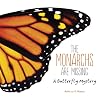
Say "butterfly" to a kid or adult and odds are good they will immediately think of a monarch butterfly. These gorgeous orange and black insects are known for their amazing migrations across the US to Mexico, the iconic pictures of trees covered in monarchs, and their distinctive striped black, white, and yellow-green caterpillars. But, like so many other creatures, the monarchs are in danger. In the winter of 2013/2014, historically low numbers were recorded at the wintering grounds in show more Mexico. Hirsch goes on a journey through the history of monarchs up to present-day scientists to solve the mystery.
Hirsch takes readers through the discovery of the monarchs' unique migration patterns; one large group, those to the west of the Rocky Mountains, migrated to California. Those east of the Rockies seemed to simply disappear. At the same time, small villages in the mountains of central Mexico welcomed floods of mariposas every year, without knowing where they came from. Finally, in the 1970s, scientists discovered the monarchs in a forest high in the mountains in Mexico. Hirsch continues through the scientific discoveries of the monarch's life cycle and migration, ending with their slow decline, beginning in the 90s.
Scientists discovered multiple factors affecting the monarchs; climate change and local habitat destruction was making the Mexican oyamel forests no longer a safe haven for the monarchs. Changes in weather patterns in Texas have also affected the monarchs. Milkweed was disappearing from the fields and tropical milkweed was disrupting the monarchs' migration patterns and possibly giving them diseases. Is there hope for the monarchs, threatened by many different elements? Hirsch explores the measures being taken to save monarchs, how readers can get involved, and the continuing work of scientists to protect these dazzling insects.
Verdict: This is an excellent introduction to a complicated scientific problem, one that kids can easily get involved in. A great point to start research or a school project, this is sure to be popular with teachers and students alike.
ISBN: 9781512452501; Published 2018 by Millbrook; Purchased for the library show less
Hirsch takes readers through the discovery of the monarchs' unique migration patterns; one large group, those to the west of the Rocky Mountains, migrated to California. Those east of the Rockies seemed to simply disappear. At the same time, small villages in the mountains of central Mexico welcomed floods of mariposas every year, without knowing where they came from. Finally, in the 1970s, scientists discovered the monarchs in a forest high in the mountains in Mexico. Hirsch continues through the scientific discoveries of the monarch's life cycle and migration, ending with their slow decline, beginning in the 90s.
Scientists discovered multiple factors affecting the monarchs; climate change and local habitat destruction was making the Mexican oyamel forests no longer a safe haven for the monarchs. Changes in weather patterns in Texas have also affected the monarchs. Milkweed was disappearing from the fields and tropical milkweed was disrupting the monarchs' migration patterns and possibly giving them diseases. Is there hope for the monarchs, threatened by many different elements? Hirsch explores the measures being taken to save monarchs, how readers can get involved, and the continuing work of scientists to protect these dazzling insects.
Verdict: This is an excellent introduction to a complicated scientific problem, one that kids can easily get involved in. A great point to start research or a school project, this is sure to be popular with teachers and students alike.
ISBN: 9781512452501; Published 2018 by Millbrook; Purchased for the library show less

Author Rebecca E. Hirsch and illustrator Mia Posada explore the movement of plant life in this engaging work of picture-book natural history. From roots growing down into the soil to stems and leave growing up toward the sun, from flowers that bloom at night to those that bloom during the day, from seeds which fly on the wind to those which use other species to migrate, plants are alive, and they simply can't sit still...
I initially decided to track down Plants Can't Sit Still because I so show more enjoyed the artwork of Mia Posada, in her own Summer Green to Autumn Gold: Uncovering Leaves' Hidden Colors, and wanted to see more of it. The title reminded me of the many excellent picture-books from Dianna Hutts Aston and Sylvia Long - A Seed Is Sleepy, A Rock Is Lively, etc. - that I have read, and sure enough, A Seed Is Sleepy is in the list of further reading here. I liked the idea of this book, to explore plant movement, and I liked the execution. Rebecca E. Hirsch's main narrative is descriptive, and fairly simple from a textual perspective, while her afterword discusses the specifics of each plant depicted. The accompanying artwork from Posada is just lovely, with a gorgeous color palette, and beautiful plant figures throughout. Recommended to all young would-be botanists and nature lovers, and to anyone who enjoys beautiful picture-book art. show less
I initially decided to track down Plants Can't Sit Still because I so show more enjoyed the artwork of Mia Posada, in her own Summer Green to Autumn Gold: Uncovering Leaves' Hidden Colors, and wanted to see more of it. The title reminded me of the many excellent picture-books from Dianna Hutts Aston and Sylvia Long - A Seed Is Sleepy, A Rock Is Lively, etc. - that I have read, and sure enough, A Seed Is Sleepy is in the list of further reading here. I liked the idea of this book, to explore plant movement, and I liked the execution. Rebecca E. Hirsch's main narrative is descriptive, and fairly simple from a textual perspective, while her afterword discusses the specifics of each plant depicted. The accompanying artwork from Posada is just lovely, with a gorgeous color palette, and beautiful plant figures throughout. Recommended to all young would-be botanists and nature lovers, and to anyone who enjoys beautiful picture-book art. show less

Well, this was just freakin' fascinating. But don't read it or listen to the audio when you're eating or if you're feeling squeamish, because some of this plants are downright vichyssoisse! (What I call vicious.)
The most fascinating to me is kudzu, which I didn't know much about before this book. I only knew it was invasive but I had no idea it could grow so fast, overtake cars or be made into a delicious jelly! Who knew?!
This book is suitable for adults and young scientists looking to show more learn more. I especially appreciate the author's note at the end. about how to be a respectful and conscientious plant person.
Note: Listened to via Netgalley's recent audiobook feature, with much gratitude. show less
The most fascinating to me is kudzu, which I didn't know much about before this book. I only knew it was invasive but I had no idea it could grow so fast, overtake cars or be made into a delicious jelly! Who knew?!
This book is suitable for adults and young scientists looking to show more learn more. I especially appreciate the author's note at the end. about how to be a respectful and conscientious plant person.
Note: Listened to via Netgalley's recent audiobook feature, with much gratitude. show less
Lists
Science: Earth (1)
Awards


You May Also Like


Associated Authors
Statistics
- Works
- 93
- Members
- 1,316
- Popularity
- #19,523
- Rating
- 4.2
- Reviews
- 47
- ISBNs
- 381
- Languages
- 1
