
Akinari Ueda (1734–1809)
Author of Tales of Moonlight and Rain
About the Author
An adopted child, Ueda ran the family business before he became a full-time writer. In writing Ugetsu Monogatari, the gothic tales for which he is probably best known, he drew on both Chinese and Japanese classical traditions and produced a work known for its elegant diction. He was also respected show more as a waka poet and as a scholar of ancient Japanese literature. (Bowker Author Biography) show less
Disambiguation Notice:
pseudonym of Ueda Senjiro
Works by Akinari Ueda
Ueda Akinari shū 1 copy
“Bewitched” 1 copy
Gótico Japonês 1 copy
Vyprávění za měsíce a deště 1 copy
Truyện tối trăng mưa 1 copy
De raad van de kookketel 1 copy
Associated Works
Partings at Dawn: An Anthology of Japanese Gay Literature (12th - 20th Century) (1996) — Contributor — 75 copies
Tales of Old Edo - Kaiki: Uncanny Tales from Japan, Vol. 1 (2009) — Contributor — 48 copies, 1 review
Tagged
Common Knowledge
- Birthdate
- 1734-07-25
- Date of death
- 1809-08-08
- Gender
- male
- Occupations
- merchant
short story writer
poet - Nationality
- Japan
- Birthplace
- Osaka, Japan
- Places of residence
- Osaka, Japan (birth)
Kyoto, Japan (death) - Place of death
- Kyoto, Japan
- Disambiguation notice
- pseudonym of Ueda Senjiro
- Associated Place (for map)
- Kyoto, Japan
Members
Reviews
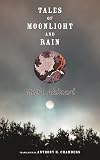
I enjoyed Akinari's Tales of Moonlight and Rain - eventually. Unfortunately, the translator's introduction is long and gives the impression that one simply will not possibly be able to understand or enjoy the tales unless one is a scholar of Japanese history and literature - if that's not bad enough, the intro also contains spoilers! This is a great shame because, while of course one will get more out of them if one has read the same texts as the author and has in mind the same history as show more readers of the day, they are perfectly accessible stories which can be enjoyed for their own sake.
If I may be so bold, I'd like to suggest a different order in which to read this book.
1)skip the book introduction and the introduction to each tale and go straight to the tales themselves (marked by a dark moon and a large, illustrated first letter) and read them for pure enjoyment, first. The footnotes that the translator supplies relate to notes at the end of each tale (not the notes at the bottom of the pages which are essentially language notes) and they provide plenty of information, if not a little too much, for pure enjoyment.
2)AFTER you have read each tale, read the translator's introduction to each one, they will give you historical notes etc... which will shed a little more light on what you've just read but will also make more sense to you after you've read the tale, and you'll also avoid spoilers.
3)After THAT, if you want to know more about the author and the place of the Tales in Japanese literature, read the introduction and the bibliography and throw yourself into an academic frenzy!
If you do enjoy the tales, then look for the works of Lafcadio Hearn :) show less
If I may be so bold, I'd like to suggest a different order in which to read this book.
1)skip the book introduction and the introduction to each tale and go straight to the tales themselves (marked by a dark moon and a large, illustrated first letter) and read them for pure enjoyment, first. The footnotes that the translator supplies relate to notes at the end of each tale (not the notes at the bottom of the pages which are essentially language notes) and they provide plenty of information, if not a little too much, for pure enjoyment.
2)AFTER you have read each tale, read the translator's introduction to each one, they will give you historical notes etc... which will shed a little more light on what you've just read but will also make more sense to you after you've read the tale, and you'll also avoid spoilers.
3)After THAT, if you want to know more about the author and the place of the Tales in Japanese literature, read the introduction and the bibliography and throw yourself into an academic frenzy!
If you do enjoy the tales, then look for the works of Lafcadio Hearn :) show less
Generally not as creepy as I expected from 'Japan's fines and most celebrated examples of the literature of the occult, even if in one story an abbot eats the rotten flesh of his dead boy lover.
Two of the stories were the basis of the 1953 Japanese black and white move 'Ugetsu,' which is definitely worth watching
Two of the stories were the basis of the 1953 Japanese black and white move 'Ugetsu,' which is definitely worth watching
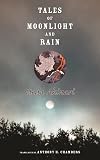
Ueda Akinari's Ugetsu monogatari is a collection of nine short stories of ghosts and the occult that was originally published in Japan in 1776. The classic as a whole has been translated into English several times and some of the individual tales have been translated as many as ten. The most recent of these translations is a study by Anthony H. Chambers first published in 2007 by Columbia University Press as part of its series Translation from the Asian Classics. With his translation of show more Ugetsu monogatari, titled Tales of Moonlight and Rain, Chambers aimed to provide th most accurate, comprehensive, and faithful English edition of the work, conveying the meaning of the text while still capturing Akinari's tone and style of writing. His efforts were rewarded with the 2007 Japan-U.S. Friendship Commission Prize for the Translation of Japanese Literature. The particular reason that Tales of Moonlight and Rain was brought to my attention was that Akinari was noted as being one of Yukio Mishima's favorite authors in his biography, Persona.
The nine stories in Tales of Moonlight and Rain--"Shiramine," "The Chrysanthemum Vow," "The Reed-Choked House," " The Carp of My Dreams," "The Owl of the Three Jewels," "The Kibitsu Cauldron," "The Serpent's Lust," "The Blue Hood," and "On Poverty and Wealth"--all deal with the mysterious and the strange. Ghosts make frequent appearances, demons cause terror and strife, spirits seek revenge, people are cursed or succumb to possession, and so on. All of the stories are set in provincial Japan which, as Chambers note in the introduction, would emphasize the strangeness and otherness of the tales for Akinari's original audience, a group mostly made up of people who lived in Japan's major cities. Additionally, all but one of the stories takes place before the Tokugawa shogunate was established in 1603, which also had a distancing effect. Today's readers are even further separated from the stories in Tales of Moonlight and Rain, but the tales are no less fascinating because of it.
In addition to Akinari's nine stories, Tales of Moonlight and Rain also includes extensive notes and analysis as well as a bibliography listing texts and commentaries, secondary resources, and previous English translations of Akinari's work. Chambers has written a lengthy introduction to the collection as a whole, but each of the stories has its own prefatory material which notes important details regarding the titles, characters, places, and time periods, explains useful background information and the stories' relationships and affinities to other works (both classic and contemporary), and provides additional commentary and any other observations. Chambers uses both footnotes and endnotes in Tales of Moonlight and Rain--the footnotes for points critical to the immediate understanding of the text and the endnotes for more in-depth information. In theory, this is an excellent idea, but in practice I found it rather annoying and cumbersome to have to look in two different places for the stories' notes. But this is really my only complaint about the volume and I consider it a minor one.
One of the most interesting things for me about the stories in Tales of Moonlight and Rain were all of the references and allusions that the collection contained to other classic works of Chinese and Japanese literature such as Murasaki Shikibu's The Tale of Genji and the collection of poetry Manyōshū. Having read translations of some of the older works being referred to, I particularly appreciated Akinari's use of them in Tales of Moonlight and Rain. However, it is not at all necessary to be familiar with the Chinese and Japanese literary classics in order to enjoy the collection. All of the stories stand completely on their own despite the borrowing and adapting that Akinari employs. I didn't realize it before reading Tales of Moonlight and Rain, but I was actually already familiar with some of the adaptations of Akinari's own work; Ugetsu monogatari was more influential than I knew. Personally, I enjoyed the entirety of Tales of Moonlight and Rain a great deal, including Chambers' commentary and analysis. The stories may be more than two centuries old, but perhaps in part because of that they remain both evocative and spellbinding.
Experiments in Manga show less
The nine stories in Tales of Moonlight and Rain--"Shiramine," "The Chrysanthemum Vow," "The Reed-Choked House," " The Carp of My Dreams," "The Owl of the Three Jewels," "The Kibitsu Cauldron," "The Serpent's Lust," "The Blue Hood," and "On Poverty and Wealth"--all deal with the mysterious and the strange. Ghosts make frequent appearances, demons cause terror and strife, spirits seek revenge, people are cursed or succumb to possession, and so on. All of the stories are set in provincial Japan which, as Chambers note in the introduction, would emphasize the strangeness and otherness of the tales for Akinari's original audience, a group mostly made up of people who lived in Japan's major cities. Additionally, all but one of the stories takes place before the Tokugawa shogunate was established in 1603, which also had a distancing effect. Today's readers are even further separated from the stories in Tales of Moonlight and Rain, but the tales are no less fascinating because of it.
In addition to Akinari's nine stories, Tales of Moonlight and Rain also includes extensive notes and analysis as well as a bibliography listing texts and commentaries, secondary resources, and previous English translations of Akinari's work. Chambers has written a lengthy introduction to the collection as a whole, but each of the stories has its own prefatory material which notes important details regarding the titles, characters, places, and time periods, explains useful background information and the stories' relationships and affinities to other works (both classic and contemporary), and provides additional commentary and any other observations. Chambers uses both footnotes and endnotes in Tales of Moonlight and Rain--the footnotes for points critical to the immediate understanding of the text and the endnotes for more in-depth information. In theory, this is an excellent idea, but in practice I found it rather annoying and cumbersome to have to look in two different places for the stories' notes. But this is really my only complaint about the volume and I consider it a minor one.
One of the most interesting things for me about the stories in Tales of Moonlight and Rain were all of the references and allusions that the collection contained to other classic works of Chinese and Japanese literature such as Murasaki Shikibu's The Tale of Genji and the collection of poetry Manyōshū. Having read translations of some of the older works being referred to, I particularly appreciated Akinari's use of them in Tales of Moonlight and Rain. However, it is not at all necessary to be familiar with the Chinese and Japanese literary classics in order to enjoy the collection. All of the stories stand completely on their own despite the borrowing and adapting that Akinari employs. I didn't realize it before reading Tales of Moonlight and Rain, but I was actually already familiar with some of the adaptations of Akinari's own work; Ugetsu monogatari was more influential than I knew. Personally, I enjoyed the entirety of Tales of Moonlight and Rain a great deal, including Chambers' commentary and analysis. The stories may be more than two centuries old, but perhaps in part because of that they remain both evocative and spellbinding.
Experiments in Manga show less
This book is brilliant, creepy and poetic at the same time. I cannot recommend it highly enough.
Lists
18th Century (1)
Reading Globally (1)
Awards


You May Also Like


Associated Authors
Statistics
- Works
- 20
- Also by
- 4
- Members
- 606
- Popularity
- #41,483
- Rating
- 3.8
- Reviews
- 9
- ISBNs
- 44
- Languages
- 11
- Favorited
- 2