
John Seidensticker
Author of Dangerous Animals
About the Author
Works by John Seidensticker
Riding the Tiger: Tiger Conservation in Human-Dominated Landscapes (1999) — Editor — 14 copies, 1 review
Tagged
Common Knowledge
- Gender
- male
Members
Reviews

Despite its cutesy cover image, this is a serious tome, written by (according to the back cover bio) the world's foremost cat expert. For example, in the section(s) about feeding habits, there is detailed info on the interaction of different cat species in areas where their ranges overlap, and how they change their diets in response to other competing cats, and possibly even become more diurnal or more nocturnal in feeding habits. There are also some grisly stats, such as (I'm almost show more positive I read this one in this book) the fact that about two thirds of bobcat deaths come at the jaws of mountain lions, and most of the remaining deaths are due to cars. There's a good section on prehistoric cats, such as the fabled Smilodon (saber-toothed cat) and the lesser-known Homotherium. By the way, if you're interested in that topic, check out www.prehistoric-wildlife.com/species/s/smilodon.html
Hopefully a longer, even more detailed edition of this book will be released someday. show less
Hopefully a longer, even more detailed edition of this book will be released someday. show less
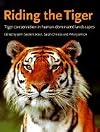
A rich and detailed, field-level account of the state of tiger populations the world over (in Asia, that is), by researchers and protagonists working at the cutting edge of scientific principles and technology, advocacy, administration and implementation. Provided with a number of images of tigers in the field, as well as maps, charts etc. that summarize the scientific data. The message coming through clearly is that the tiger can be conserved in the wild only if the 'source' or 'core', show more sufficient undisturbed habitat with a healthy population of prey animals is ensured, but equally, the interaction of dispersing individuals with human communities in the surrounding countryside, the 'sink' where surplus animals go to die, is managed with sensitivity and goodwill. show less

An older book, but still rich in material with good photographs. It is very factual, not many anecdotes... still, I learned a lot. Explains the evolutionary history of cats... I was intrigued by the details on how saber-toothed cats' social structure and hunting methods were deduced by the wear and damage of their skeleton remains. There is a series of illustrated plates showing all six big cats, the medium-sized clouded leopard and snow leopard, and then some thirty smaller wild cats- show more including bobcats, lynxes, servals, ocelots and quite a few others I hadn't heard of before- oncilla, kodkod, Iriomote cat. Following chapters are dedicated individually to the lion, tiger, leopard, jaguar, cheetah, snow leopard and pumas. Bobcats and lynxes are discussed in one same chapter, ocelots and servals together in the next. The rest of the wildcats are grouped in another chapter, mostly because little was known about them when this was published. Other parts of the book go into depth on wild feline communication, hunting methods and reproduction; conflicts with man and conservation efforts, and how big cats have featured in art and been revered in various cultures through history. All in all an impressive book. The contributing authors include thirty-eight biologists and scientists.
from the Dogear Diary show less
from the Dogear Diary show less
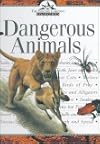
This book was an informational text that was filled with information on dangerous animals. It featured all kinds of dangerous animals and described many details about them. I thought this book was fascinating and extremely informational, I really enjoyed it. In particular I liked the layout of pages, the detailed writing, and the illustrations. The pages were laid out in a way that really grasped the reader’s attention. There was always a title and a chunk of crucial information, and then show more random facts and illustrations distributed throughout the page. For example on page 10 there was a title “Tusks, Horns, and Antlers: Elephants and Hippopotamuses” followed by a paragraph with basic information. I really loved the way they used photographs, illustrations, and diagrams dispersed throughout small facts and captions. This page layout gave the reader a lot of different things to focus on and learn about. I also loved the descriptive writing. The writing helped the reader really learn the details about these dangerous animals. On page 17 there is a small fact that says, “Did you know? The powerful owl hunts prey at night. Sometimes it holds any remains of the prey in its talons all day…” This sentence is a great example of the amazing descriptive writing that helps the readers imagine and learn about different aspects of dangerous animals. Lastly, I think the illustrations really made this book. Without the detailed, complex illustrations the reader may have become bored with the great amount of facts and information. It was a very good tactic to include illustrations and diagrams to match with the text so that readers could see a visual of the information. The main idea of this book was to teach readers about the different kinds of dangerous animals. I think this informational text was awesome! show less
Awards


You May Also Like


Associated Authors
Statistics
- Works
- 12
- Members
- 727
- Popularity
- #34,930
- Rating
- 4.1
- Reviews
- 7
- ISBNs
- 40
- Languages
- 6