
Robert Tombs
Author of The English and Their History
About the Author
Robert Tombs is Reader in French History at the University of Cambridge, and Fellow and of St. John's College, Cambridge.
Works by Robert Tombs
That Sweet Enemy: The French and the British from the Sun King to the Present (2006) 227 copies, 2 reviews
Associated Works
Tagged
Common Knowledge
- Birthdate
- 1949-05-08
- Gender
- male
- Short biography
- Research Interests
Robert Tombs's main area of research has been nineteenth-century French political history in a broad sense, and especially popular political culture. He has been particularly concerned with the Paris Commune of 1871 and with French nationalism from the 1830s to 1914. His most recent work has been on the history of the relationship between the French and the British, from the end of the seventeenth century to the present day, including the cultural and economic as well as the political and military spheres.
He is presently finishing a book on the English and their past, but continues to work and publish on French history and on French attitudes to Britain.
Research Supervision
Franco-British relations since the eighteenth century. Most aspects of modern and contemporary French history, including politics and political ideas; cultural identities (national, gender, religious etc); cultural representations; war.
Teaching
Modern European history in general (from 1789 to the present); with particular (though not necessarily research-based) interest in nationalism and revolution. He teaches a Part II specified subject, 'France and the British problem', which covers French attitudes and policies towards Britain over the past three centuries (online course material).
Key Publications
The War Against Paris 1871 (Cambridge: CUP, 1981), pp. 256.
Thiers 1797-1877: A Political Life, with J.P.T. Bury (London: Allen & Unwin, 1986), pp. 307.
Nationhood and Nationalism in France before the Great War (London: Harper Collins, 1991), pp. 286.
France 1814-1914 (London: Longman, 1996), pp. 590
La guerre contre Paris, 1871 (Paris: Aubier, 1997), pp. 380
The Paris Commune, 1871 (London: Longman, 1999) pp. 244
Cross-Channel Currents: 100 Years of the Entente Cordiale (London, Routledge, 2004), co-editor
That Sweet Enemy: The French and the British from the Sun King to the Present, with Isabelle Tombs (London: W. Heinemann, 2006) pp. 780
La France et le Royaume-Uni: Des ennemis intimes, with Isabelle Tombs (Paris, Armand Colin, 2012)
Britain and France in Two World Wars: Truth, Myth and Memory, ed. with Emile Chabal (London, Bloomsbury, 2013)
http://www.hist.cam.ac.uk/directory/r... - Nationality
- UK
- Associated Place (for map)
- UK
Members
Reviews

"By the standards of humanity as a whole, England over the centuries has been among the richest, safest and best governed places on earth…" (pg. 890)
"… the English, for good and ill, made a permanent impact on the common life of humanity…" (pg. 417)
It probably isn't on to offer a reader a long, exhaustive review before or after reading such a long, exhaustive tome as Robert Tombs' The English and Their History, but even though I'm conscious of keeping my thoughts on this short, it's show more hard to do so with any real brevity. Any single-volume history of England must be ambitious, encompassing more than a thousand years of detailed, academic history in a thousand pages, but Tombs' is especially so. Not only is that academic detail deeper than most modern histories I've read, but Tombs also accomplishes the scarcely believable feat of making his book keenly readable (it may be exhaustive but it's never exhausting). He also destroys more than a few deep-seated myths and political narratives about our English past.
The latter point was a particular surprise for me. I had expected Tombs' book would be merely an academic achievement, a book lauded for being a comprehensive and sober history rather than for any bold or original approach. But what Tombs proves to do over his one thousand pages is provide a counter-revisionist masterclass. His arguments – meticulously sourced – refute both the contemporary orthodoxy of 'declinism' (namely, the idea that Britain was once great but is now an ever-diminishing shell of its former self) and the pervasive 'Whig' idea of history (that is, one of Progress with a capital 'P', of the masses struggling to achieve more rights and education against the deadening hand of aristocracy, superstition and vested interests). In fact, the Whig mode of history writing is so pervasive in our culture that you don't realise it until Tombs soberly deconstructs it and provides a counter-view. Consequently, his weighty history tome becomes a liberating lungful of fresh air.
It's not only the grand Whig and declinist narratives of our complacent historical orthodoxy that are diminished by Tombs' arguments and research, but innumerable other events of our history. Tombs provides provocative takes on, for example, the English Civil War ("the proportion of noble colonels on the parliamentary side was twice that on the king's" (pg. 223)), civil liberties (the 1832 Reform Act actually removed the rights of some women to vote (pg. 438)), the slave trade and the real foundations of the British Empire's strength. He points out things we should know but too easily overlook (the World War One battles of the Somme and Passchendaele were each a bloodbath greater than Stalingrad (pg. 622), whilst Oliver Cromwell did not turn down the kingship out of principle, but because a king's powers were well defined and limited, whilst a Lord Protector "existed in a dangerous legal vacuum" (pp247-8)).
Tombs points out that, contrary to what contemporary learning and pop-culture tells us, Britain was not a junior partner (to either the USA or the USSR) in World War Two; his impressive chapter on the war shows Britain to be an equal power to both of those later superpowers, which mobilised its Empire excellently (Britain did not 'go it alone' in 1940-41) and was both the greatest contributor on D-Day (in both command and in manpower) and throughout the northern European campaign of 1944-45. In fact, the British war of 1939-45 saw the country mobilise against three major world powers – two of them extremely formidable martial countries – in multiple theatres around the world – something "more than it had ever tried to do in the past, and more than any other state in history has ever tried to do" (pg. 753). For six years. And it won. We already know this, of course, but it being framed in a wider history really brings the point home. Similarly, Tombs shows that the early Saxon kingdom in England was far from a European backwater, but instead was one of the richest and most industrious countries in the world (pp35, 41), something that has consistently been the case throughout our unbroken millennia of history. This forms a key point in Tombs' argument against 'declinism'. I could go on and on and on, but you get the point: each event in England's past comes under Tombs' withering historical gaze, and the reader gets a robust account that suffers neither from complacency nor cant.
Further to that last point, Tombs has come under some criticism for allegedly showing his political 'colours' in this account: namely, that he is a conservative, a Tory, a reactionary or some other such thing. Certainly, he doesn't apologise for Empire, he admires the personal role of Churchill in World War Two and he is sceptical of Progress with a capital 'P'. This apparently marks him out as a Tory snake in our culture; it seems not to matter to such critics that his book focuses as much on (if not more on) welfare and political freedoms and the lower classes as it does kings and battles. In truth, Tombs' book is not a nostalgic paean to English nationalism, nor a duplicitous hagiography of our 'long island story'. He's not even that political: I can easily imagine, for example, that Tombs would be just as withering on Tony Blair if Blair had been an eighteenth-century Whig; it is, alas, our misfortune that he's a much more recent malignancy. There has been plenty that's happened since Tombs published his book in 2014: Brexit, Grenfell, terror attacks, the collapse of the 'Red Wall' in the 2019 general election, and, of course, the Covid pandemic – but, crucially, these events don't date the book but instead seem an extension of it, suggesting Tombs' analysis is fundamentally sound. When you read Tombs' analysis of Britain's relationship with Europe, you get the sense that Brexit, when it came (or, at least, was voted for) two years later, was not a surprise to him. Whatever his political views might be, he doesn't let them form his narrative; it is great professional history writing on offer here, and a healthy tonic to the shoehorned, agenda-driven histories of race or class or gender which are so fashionable nowadays.
I all but promised a short review, and I've failed at that, but suffice to say that Tombs' book unlocks a great many thoughts in the reader. It is long and slow but it never feels like hard work; in fact, the book energises the reader by showing that what we thought was well-trodden ground is in fact grass that is fresh and rich. Tombs' narrative and his historical judgments are bold and lucid; and he occasionally introduces a flourish to his writing (on the relative lack of political violence in Stuart Britain, he says "there were more dead bodies at the end of a performance of Hamlet than after any political disturbance" (pp215-16), whilst on the 2008 recession he writes that "never in financial history was so much owed by so many due to the recklessness of so few" (pg. 860)). His mythbusting, if I may call it that, is rational and provocative whilst never becoming combative or divisive. Nor, perhaps most commendably, does he make it his Unique Selling Point or his raison d'être. When the orthodoxy is correct, he is more than happy to acknowledge it.
Tombs is, above all, concerned with creating a cracking academic history accessible to all, and he has done it. His success is nothing short of remarkable: he embraces more than a thousand years of English history (which ends up spanning the entire world) in a readable account, and in a way that gets his points and personality across in force whilst still treating class, race, gender and cultural and generational divides with an even hand. His success in all this, whilst also exposing the myth of English 'decline', also shows us the lamentable failure of history teaching and culture in the post-war period; a failure which Tombs' formidable efforts have gone a long way to correct.
"We like to think that liberty is fought for. Judging by occasional comments in the media and by politicians, a widespread belief is that liberty was won during the [English] Civil War. The reality is different: the war almost destroyed liberty. Only when the country rejected fighting, and zealots had to abandon their visions of a compulsory New Jerusalem, was liberty possible… Combining these seemingly conflicting principles produced characteristics of English political culture: suspicion of Utopias and zealots; trust in common sense and experience; respect for tradition; preference for gradual change; and the view that 'compromise' is victory, not betrayal. These things stem from the failure both of royal absolutism and of godly republicanism: costly failures, and fruitful ones." (pp260-1) show less
"… the English, for good and ill, made a permanent impact on the common life of humanity…" (pg. 417)
It probably isn't on to offer a reader a long, exhaustive review before or after reading such a long, exhaustive tome as Robert Tombs' The English and Their History, but even though I'm conscious of keeping my thoughts on this short, it's show more hard to do so with any real brevity. Any single-volume history of England must be ambitious, encompassing more than a thousand years of detailed, academic history in a thousand pages, but Tombs' is especially so. Not only is that academic detail deeper than most modern histories I've read, but Tombs also accomplishes the scarcely believable feat of making his book keenly readable (it may be exhaustive but it's never exhausting). He also destroys more than a few deep-seated myths and political narratives about our English past.
The latter point was a particular surprise for me. I had expected Tombs' book would be merely an academic achievement, a book lauded for being a comprehensive and sober history rather than for any bold or original approach. But what Tombs proves to do over his one thousand pages is provide a counter-revisionist masterclass. His arguments – meticulously sourced – refute both the contemporary orthodoxy of 'declinism' (namely, the idea that Britain was once great but is now an ever-diminishing shell of its former self) and the pervasive 'Whig' idea of history (that is, one of Progress with a capital 'P', of the masses struggling to achieve more rights and education against the deadening hand of aristocracy, superstition and vested interests). In fact, the Whig mode of history writing is so pervasive in our culture that you don't realise it until Tombs soberly deconstructs it and provides a counter-view. Consequently, his weighty history tome becomes a liberating lungful of fresh air.
It's not only the grand Whig and declinist narratives of our complacent historical orthodoxy that are diminished by Tombs' arguments and research, but innumerable other events of our history. Tombs provides provocative takes on, for example, the English Civil War ("the proportion of noble colonels on the parliamentary side was twice that on the king's" (pg. 223)), civil liberties (the 1832 Reform Act actually removed the rights of some women to vote (pg. 438)), the slave trade and the real foundations of the British Empire's strength. He points out things we should know but too easily overlook (the World War One battles of the Somme and Passchendaele were each a bloodbath greater than Stalingrad (pg. 622), whilst Oliver Cromwell did not turn down the kingship out of principle, but because a king's powers were well defined and limited, whilst a Lord Protector "existed in a dangerous legal vacuum" (pp247-8)).
Tombs points out that, contrary to what contemporary learning and pop-culture tells us, Britain was not a junior partner (to either the USA or the USSR) in World War Two; his impressive chapter on the war shows Britain to be an equal power to both of those later superpowers, which mobilised its Empire excellently (Britain did not 'go it alone' in 1940-41) and was both the greatest contributor on D-Day (in both command and in manpower) and throughout the northern European campaign of 1944-45. In fact, the British war of 1939-45 saw the country mobilise against three major world powers – two of them extremely formidable martial countries – in multiple theatres around the world – something "more than it had ever tried to do in the past, and more than any other state in history has ever tried to do" (pg. 753). For six years. And it won. We already know this, of course, but it being framed in a wider history really brings the point home. Similarly, Tombs shows that the early Saxon kingdom in England was far from a European backwater, but instead was one of the richest and most industrious countries in the world (pp35, 41), something that has consistently been the case throughout our unbroken millennia of history. This forms a key point in Tombs' argument against 'declinism'. I could go on and on and on, but you get the point: each event in England's past comes under Tombs' withering historical gaze, and the reader gets a robust account that suffers neither from complacency nor cant.
Further to that last point, Tombs has come under some criticism for allegedly showing his political 'colours' in this account: namely, that he is a conservative, a Tory, a reactionary or some other such thing. Certainly, he doesn't apologise for Empire, he admires the personal role of Churchill in World War Two and he is sceptical of Progress with a capital 'P'. This apparently marks him out as a Tory snake in our culture; it seems not to matter to such critics that his book focuses as much on (if not more on) welfare and political freedoms and the lower classes as it does kings and battles. In truth, Tombs' book is not a nostalgic paean to English nationalism, nor a duplicitous hagiography of our 'long island story'. He's not even that political: I can easily imagine, for example, that Tombs would be just as withering on Tony Blair if Blair had been an eighteenth-century Whig; it is, alas, our misfortune that he's a much more recent malignancy. There has been plenty that's happened since Tombs published his book in 2014: Brexit, Grenfell, terror attacks, the collapse of the 'Red Wall' in the 2019 general election, and, of course, the Covid pandemic – but, crucially, these events don't date the book but instead seem an extension of it, suggesting Tombs' analysis is fundamentally sound. When you read Tombs' analysis of Britain's relationship with Europe, you get the sense that Brexit, when it came (or, at least, was voted for) two years later, was not a surprise to him. Whatever his political views might be, he doesn't let them form his narrative; it is great professional history writing on offer here, and a healthy tonic to the shoehorned, agenda-driven histories of race or class or gender which are so fashionable nowadays.
I all but promised a short review, and I've failed at that, but suffice to say that Tombs' book unlocks a great many thoughts in the reader. It is long and slow but it never feels like hard work; in fact, the book energises the reader by showing that what we thought was well-trodden ground is in fact grass that is fresh and rich. Tombs' narrative and his historical judgments are bold and lucid; and he occasionally introduces a flourish to his writing (on the relative lack of political violence in Stuart Britain, he says "there were more dead bodies at the end of a performance of Hamlet than after any political disturbance" (pp215-16), whilst on the 2008 recession he writes that "never in financial history was so much owed by so many due to the recklessness of so few" (pg. 860)). His mythbusting, if I may call it that, is rational and provocative whilst never becoming combative or divisive. Nor, perhaps most commendably, does he make it his Unique Selling Point or his raison d'être. When the orthodoxy is correct, he is more than happy to acknowledge it.
Tombs is, above all, concerned with creating a cracking academic history accessible to all, and he has done it. His success is nothing short of remarkable: he embraces more than a thousand years of English history (which ends up spanning the entire world) in a readable account, and in a way that gets his points and personality across in force whilst still treating class, race, gender and cultural and generational divides with an even hand. His success in all this, whilst also exposing the myth of English 'decline', also shows us the lamentable failure of history teaching and culture in the post-war period; a failure which Tombs' formidable efforts have gone a long way to correct.
"We like to think that liberty is fought for. Judging by occasional comments in the media and by politicians, a widespread belief is that liberty was won during the [English] Civil War. The reality is different: the war almost destroyed liberty. Only when the country rejected fighting, and zealots had to abandon their visions of a compulsory New Jerusalem, was liberty possible… Combining these seemingly conflicting principles produced characteristics of English political culture: suspicion of Utopias and zealots; trust in common sense and experience; respect for tradition; preference for gradual change; and the view that 'compromise' is victory, not betrayal. These things stem from the failure both of royal absolutism and of godly republicanism: costly failures, and fruitful ones." (pp260-1) show less
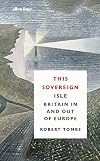
"… what Milan Kundera called political kitsch, something the EU has been brilliant at creating. The reality is a rather cynical system in which some social groups, some interests and some countries gain hugely, and others lose hugely." (pg. 156)
When I read Robert Tombs' peerless The English and Their History last year, I wrote in my review that there had been plenty that had happened since its publication in 2014, not least Brexit. I wrote, however, that such events didn't date the book show more but instead seemed an extension of it, suggesting Tombs' analysis was fundamentally sound. When Brexit came, I wrote, you get the sense it wasn't a surprise to him.
And certainly, that's the case in This Sovereign Isle, Tombs' self-described "appendix" to The English and Their History (pg. vii). Continuing his refutation of the cultural orthodoxy of 'declinism' – the elitist view that England is a poky little country that should be ashamed of its past and hitch on to whatever supranational movement will take it – Tombs patiently outlines Britain's history with Europe and its 'odd couple' role vis-à-vis European centralization. The book then goes into a blow-by-blow narrative of the Brexit years – the referendum, Chequers, the outrageously-named "People's Vote", proroguing Parliament, all of that – and ends with speculation on Covid and where Britain may go next.
It is a lucid and welcome addition to the tapestry of English history Tombs wove in his earlier book. Brexit made historical, economic and political sense, not least because Britain has never been as weak as its post-war ruling class believes it is. Tombs describes the end of Britain's membership of the EU as the "denouement of a forty-year illusion" (pg. 58), showing how Britain has and will continue to be a global nation. The English and Their History took as one of its dominant themes the peculiar development of English liberty, the 'Magna Carta tradition' that sees the fundamental decisions made by the people and which the rulers obey, which is in complete contrast to the historical European tradition of monarchs, emperors and 'enlightened' elites shaping their countries, to which the people are merely called on to endorse after the fact (pg. 70). In his narrative of the Brexit years, Tombs is particularly alarmed by the extra-legal shenanigans undertaken to try and reverse the vote. This began with insulting but harmless denigration of Leavers (the Remainers' "monotonous pessimism… an ungenerosity of spirit towards the majority of their fellow countrymen, whom they hardly seemed to know and to whom they willingly ascribed the worst of motives. People proud of their open-minded cosmopolitanism seemed unable to sympathize with their neighbours" (pg. 95)) and ended chaotically, with Remainer elements seizing the reins of the Parliamentary agenda with the connivance of duplicitous ministers and a disgraced Speaker. This led to the absurd situation of opposition MPs and Remainer Tories rejecting government law and administration yet also refusing a vote of no confidence and a general election, the better to delay Britain's exit from the EU (pp121-2).
It is perhaps well for Tombs to write without venom of this contemptible display, but in my view the actions of this Shameful Parliament will go down as one of the most unedifying episodes in modern British history. It was unpleasant to witness at the time, and Tombs' narrative peters out almost in distaste and exhaustion, which is much the same as it felt for all of us who watched it unfold day by day. To learn, as an Englishman, that your vote may not matter – may be outright refused and gleefully circumvented by kept men – was an unprecedented experience. People outside England – and many inside it who don't know their own history – won't be able to realize how dangerous things became in that moment. As Tombs writes, this was, ironically, far more damaging to the UK than any economic uncertainty related to leaving or remaining in the EU (pg. 121).
Tombs does well to take the venom out of these years and write with a distinct lack of sensationalism in his prose. He writes critically of the EU's many failings, but never polemically, and when he notes that "economic fear has become the tightest bond of the European Union" (pg. 79), it's not done with any ideological glee. He points out that many voters are dissatisfied across the EU; the only difference is that Britain, with its strong trading links outside Europe and its provident refusal to commit to the single currency, was able to leave, in a way that the more unfortunate are not. Even the most committed Remainer, 'ashamed' of their country, wouldn't swap places with a Greek.
Tombs also writes that Britain, throughout its history, has never felt inclined to ally itself with the continental hegemon of the time ("It was the only major European state that never became an ally or a willing satellite of either Napoleon or Hitler" (pg. 19)), but such statements are never tub-thumping. Tombs writes that the EU corpocracy has always been hard on the poorest of its subject peoples: across all European countries, "wherever and whenever people had been allowed to vote, the working classes and the less privileged – the excluded, the unemployed and simply the less well off – voted against the EU" (pg. 61). The British were not possessed of any great foresight, integrity or national exceptionalism when they voted to Leave; discontent across Europe in the EU is such that "the British, paradoxically, voted as typical Europeans" (pg. 67). And, despite the efforts of the Shameful Parliament, they were in a position to actually act on such a vote.
Tombs' book is not without its flaws – or, rather, its missed opportunities. He correctly notes that one of the reasons the British establishment pursued European membership back in the Sixties and Seventies was that, racked by scandal and by its own decline (rather than the country's), such a top-down shackle on bottom-up forces in the country could "regild the prestige of its elite" (pg. 31). Outsourcing sovereignty could keep the grubby hands of the proles away from the levers of power. Tombs, however, does not bite at this dangerous piece, despite the material in question legitimising a class-based analysis (the Remainer dismissal of 'thick' Leaver 'bigots' who "didn't know what they were voting for"; the afore-mentioned objection of the working-classes across Europe to EU policies; the EU treatment of Ireland, Italy and particularly Greece almost as failed 19th-century colonies). Tombs lets it lie, instead making slightly confusing statements like "the idea that a deep and pre-existing cultural divide had been revealed by the 2016 referendum is an exaggeration" (pg. 77) and "the Brexit controversy did not expose a previously unrecognized gulf between two nations: it opened one" (pg. 96). For an author who weaved discussion of class so adroitly into his narrative in The English and Their History, and without rancour or ideology, this was a disappointment in This Sovereign Isle.
There are other minor missed opportunities. Tombs is reluctant to opine on prospects of Scottish independence (despite the popular narrative being that Brexit will lead to the end of the Union) and gets a bit soft-headed when discussing Covid (pg. 127). This is understandable, for any trained historian will have a natural aversion to opining with any authority on current events. There's an old joke in historians' circles where a professor is asked by a student, "What was the importance of the assassination of Julius Caesar in 44 B.C.?" To which the professor thinks for a moment and then replies, "It's too soon to say." Given such a necessarily circumspect attitude among those trained in the subject, it's understandable that Tombs doesn't want to be drawn too closely on events that are still developing.
That said, seeing the Brexit years put into a historical context, and by one of our most astute historians, is an education. Tombs – a bilingual Leave voter married to a Frenchwoman, coming from a social and academic background which is strongly pro-Remain – is no polemicist, no John Bull, and no opportunist. This is a sober, methodical and agenda-free attempt to make sense of some of the most turbulent years in post-war British history. It is not only a useful appendix to his masterful tome The English and Their History, which everyone should read, but a useful monograph in its own right. Tombs patiently refutes some of our most complacent narratives, not least that of British decline, and shines light on some basic analyses that are uncomfortable and inconvenient truths, such as EU mismanagement of its poorer societies, or Germany's disquieting and destabilising economic surplus with its neighbours (pg. 51), some of which seem little more than 19th-century vassal states. Tombs concludes that the dominant theme of the story is "perennial mistrust of democracy" (pg. 157), whether that is EU treatment of its subject peoples, the top-down pursuit of European integration by the elites at the expense of the poor, or Remainer and Parliamentary attempts (almost successful) to reverse the 2016 referendum vote. The British, at least as far as the European Union is concerned, have put the worst of that mistrust behind them. Far from retreating into nostalgia and reactionism, they have reasserted their democratic values and stolen a march on history. The rest of the Europeans seem not to have even begun to realize they have another fight against authoritarianism on their hands. show less
When I read Robert Tombs' peerless The English and Their History last year, I wrote in my review that there had been plenty that had happened since its publication in 2014, not least Brexit. I wrote, however, that such events didn't date the book show more but instead seemed an extension of it, suggesting Tombs' analysis was fundamentally sound. When Brexit came, I wrote, you get the sense it wasn't a surprise to him.
And certainly, that's the case in This Sovereign Isle, Tombs' self-described "appendix" to The English and Their History (pg. vii). Continuing his refutation of the cultural orthodoxy of 'declinism' – the elitist view that England is a poky little country that should be ashamed of its past and hitch on to whatever supranational movement will take it – Tombs patiently outlines Britain's history with Europe and its 'odd couple' role vis-à-vis European centralization. The book then goes into a blow-by-blow narrative of the Brexit years – the referendum, Chequers, the outrageously-named "People's Vote", proroguing Parliament, all of that – and ends with speculation on Covid and where Britain may go next.
It is a lucid and welcome addition to the tapestry of English history Tombs wove in his earlier book. Brexit made historical, economic and political sense, not least because Britain has never been as weak as its post-war ruling class believes it is. Tombs describes the end of Britain's membership of the EU as the "denouement of a forty-year illusion" (pg. 58), showing how Britain has and will continue to be a global nation. The English and Their History took as one of its dominant themes the peculiar development of English liberty, the 'Magna Carta tradition' that sees the fundamental decisions made by the people and which the rulers obey, which is in complete contrast to the historical European tradition of monarchs, emperors and 'enlightened' elites shaping their countries, to which the people are merely called on to endorse after the fact (pg. 70). In his narrative of the Brexit years, Tombs is particularly alarmed by the extra-legal shenanigans undertaken to try and reverse the vote. This began with insulting but harmless denigration of Leavers (the Remainers' "monotonous pessimism… an ungenerosity of spirit towards the majority of their fellow countrymen, whom they hardly seemed to know and to whom they willingly ascribed the worst of motives. People proud of their open-minded cosmopolitanism seemed unable to sympathize with their neighbours" (pg. 95)) and ended chaotically, with Remainer elements seizing the reins of the Parliamentary agenda with the connivance of duplicitous ministers and a disgraced Speaker. This led to the absurd situation of opposition MPs and Remainer Tories rejecting government law and administration yet also refusing a vote of no confidence and a general election, the better to delay Britain's exit from the EU (pp121-2).
It is perhaps well for Tombs to write without venom of this contemptible display, but in my view the actions of this Shameful Parliament will go down as one of the most unedifying episodes in modern British history. It was unpleasant to witness at the time, and Tombs' narrative peters out almost in distaste and exhaustion, which is much the same as it felt for all of us who watched it unfold day by day. To learn, as an Englishman, that your vote may not matter – may be outright refused and gleefully circumvented by kept men – was an unprecedented experience. People outside England – and many inside it who don't know their own history – won't be able to realize how dangerous things became in that moment. As Tombs writes, this was, ironically, far more damaging to the UK than any economic uncertainty related to leaving or remaining in the EU (pg. 121).
Tombs does well to take the venom out of these years and write with a distinct lack of sensationalism in his prose. He writes critically of the EU's many failings, but never polemically, and when he notes that "economic fear has become the tightest bond of the European Union" (pg. 79), it's not done with any ideological glee. He points out that many voters are dissatisfied across the EU; the only difference is that Britain, with its strong trading links outside Europe and its provident refusal to commit to the single currency, was able to leave, in a way that the more unfortunate are not. Even the most committed Remainer, 'ashamed' of their country, wouldn't swap places with a Greek.
Tombs also writes that Britain, throughout its history, has never felt inclined to ally itself with the continental hegemon of the time ("It was the only major European state that never became an ally or a willing satellite of either Napoleon or Hitler" (pg. 19)), but such statements are never tub-thumping. Tombs writes that the EU corpocracy has always been hard on the poorest of its subject peoples: across all European countries, "wherever and whenever people had been allowed to vote, the working classes and the less privileged – the excluded, the unemployed and simply the less well off – voted against the EU" (pg. 61). The British were not possessed of any great foresight, integrity or national exceptionalism when they voted to Leave; discontent across Europe in the EU is such that "the British, paradoxically, voted as typical Europeans" (pg. 67). And, despite the efforts of the Shameful Parliament, they were in a position to actually act on such a vote.
Tombs' book is not without its flaws – or, rather, its missed opportunities. He correctly notes that one of the reasons the British establishment pursued European membership back in the Sixties and Seventies was that, racked by scandal and by its own decline (rather than the country's), such a top-down shackle on bottom-up forces in the country could "regild the prestige of its elite" (pg. 31). Outsourcing sovereignty could keep the grubby hands of the proles away from the levers of power. Tombs, however, does not bite at this dangerous piece, despite the material in question legitimising a class-based analysis (the Remainer dismissal of 'thick' Leaver 'bigots' who "didn't know what they were voting for"; the afore-mentioned objection of the working-classes across Europe to EU policies; the EU treatment of Ireland, Italy and particularly Greece almost as failed 19th-century colonies). Tombs lets it lie, instead making slightly confusing statements like "the idea that a deep and pre-existing cultural divide had been revealed by the 2016 referendum is an exaggeration" (pg. 77) and "the Brexit controversy did not expose a previously unrecognized gulf between two nations: it opened one" (pg. 96). For an author who weaved discussion of class so adroitly into his narrative in The English and Their History, and without rancour or ideology, this was a disappointment in This Sovereign Isle.
There are other minor missed opportunities. Tombs is reluctant to opine on prospects of Scottish independence (despite the popular narrative being that Brexit will lead to the end of the Union) and gets a bit soft-headed when discussing Covid (pg. 127). This is understandable, for any trained historian will have a natural aversion to opining with any authority on current events. There's an old joke in historians' circles where a professor is asked by a student, "What was the importance of the assassination of Julius Caesar in 44 B.C.?" To which the professor thinks for a moment and then replies, "It's too soon to say." Given such a necessarily circumspect attitude among those trained in the subject, it's understandable that Tombs doesn't want to be drawn too closely on events that are still developing.
That said, seeing the Brexit years put into a historical context, and by one of our most astute historians, is an education. Tombs – a bilingual Leave voter married to a Frenchwoman, coming from a social and academic background which is strongly pro-Remain – is no polemicist, no John Bull, and no opportunist. This is a sober, methodical and agenda-free attempt to make sense of some of the most turbulent years in post-war British history. It is not only a useful appendix to his masterful tome The English and Their History, which everyone should read, but a useful monograph in its own right. Tombs patiently refutes some of our most complacent narratives, not least that of British decline, and shines light on some basic analyses that are uncomfortable and inconvenient truths, such as EU mismanagement of its poorer societies, or Germany's disquieting and destabilising economic surplus with its neighbours (pg. 51), some of which seem little more than 19th-century vassal states. Tombs concludes that the dominant theme of the story is "perennial mistrust of democracy" (pg. 157), whether that is EU treatment of its subject peoples, the top-down pursuit of European integration by the elites at the expense of the poor, or Remainer and Parliamentary attempts (almost successful) to reverse the 2016 referendum vote. The British, at least as far as the European Union is concerned, have put the worst of that mistrust behind them. Far from retreating into nostalgia and reactionism, they have reasserted their democratic values and stolen a march on history. The rest of the Europeans seem not to have even begun to realize they have another fight against authoritarianism on their hands. show less
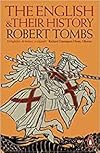
After reading Pepys diaries I wanted to know more about the background of English history in the 1600s, so I picked up this one volume history of England. Excellent decision, it turned out to be. Really coming to understand the ebbs and flows of English history is so helpful - it connects one's understanding of the country that is part of every Australian's heritage. Understanding how much religious zealotry the Puritans surfaced in England during the Civil War, as well as the supercilious show more attitude of monarchs such as Charles the first and second, helps me to more deeply appreciate how the 1688 Glorious Revolution got us onto a new path to the modern Western, liberal world, a world where you didn't cry 'Thou shalt break them with a rod of iron' as you rode into religious war, or where you didn't just cancel parliament because you thought you as the big man in the palace knew best. In the twenty first century with things like the Salman Rushdie affair on the one hand and Trump's stating that he is really only beholden to his own moral judgement in his actions as President, such study of 1600s English history is not irrelevant to the present moment.
With a deeply learned, yet not dull or pedantic, guide such as Tombs, this history is an enjoyable read. I'm glad that 2026 was the year I read comprehensive histories of England and Australia, the two countries that I am a product of. If you don't know your history, the collective story of your culture, you are not a fully formed member of your society. And your story should celebrate its high points as well as its low points, without duplicity or delusion, and this book and the other Australian history do this. show less
With a deeply learned, yet not dull or pedantic, guide such as Tombs, this history is an enjoyable read. I'm glad that 2026 was the year I read comprehensive histories of England and Australia, the two countries that I am a product of. If you don't know your history, the collective story of your culture, you are not a fully formed member of your society. And your story should celebrate its high points as well as its low points, without duplicity or delusion, and this book and the other Australian history do this. show less
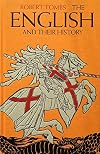
DNF pg.364. I had to stop reading due to all the revisionism. And the smug superiority. This isn't a history. It's propaganda and lies (okay, they're usually the same thing but in this case they're both the same and separate). The dismissal of events, the glossing over over of violence and deaths or the outright revamping the numbers downward, and he inclusion of certain people without explaining who they were or not including relevant people, and the deliberate lies and/or over show more simplification about why events happened just grated. This isn't history; it's a personal agenda to rewrite history to his own bias (a huge no-no among historians) to cover up certain events and truths while granting greater importance to minor or even trivial events. Like I said, propaganda. show less
Lists
Awards


You May Also Like


Associated Authors
Statistics
- Works
- 17
- Also by
- 1
- Members
- 1,140
- Popularity
- #22,523
- Rating
- 4.3
- Reviews
- 15
- ISBNs
- 47
- Languages
- 2
- Favorited
- 1

