
Phillis Wheatley (1753–1784)
Author of Phillis Wheatley: Complete Writings
About the Author
Seized in Senegal/Gambia, West Africa by slave traders, Phillis Wheatley arrived in Boston when she was about seven years old. Purchased as a domestic in 1761, by Susanna and John Wheatley, Phillis Wheatley was frail and asthmatic. Perhaps because of her delicate constitution, she was excused from show more the most tiring aspects of her domestic duties. Instead, she was taught to read and write and was instructed in the Bible and the classics. Before she was thirteen, Wheatley was writing poetry that gained quick and widespread acclaim; in 1770 she published her first poem---"An Elegiac Poem on the Death of that Celebrated Divine, and Eminent Servant of Jesus Christ, the Reverend and Learned George Whitefield"---a work that touched on the terrible conditions of her own Atlantic crossing. By 1772 Phillis Wheatley had compiled a collection of verse. Unfortunately, despite the best efforts of John and Susanna Wheatley, no publisher within the colonies was willing to print literature written by an African. Nonetheless, the Wheatleys persisted in their search, and through the intervention of Benjamin Franklin and various British sympathizers, including the abolitionist Earl of Dartmouth, they succeeded in finding a publisher for the work. Poems on Various Subjects, Religious and Moral was printed in London in 1772; it is the first collection of poetry written by an African American to be published. Three months before Susanna Wheatley died in 1774 she manumitted (freed) Phillis Wheatley. But with Susanna's death, the Wheatley family disintegrated, and Phillis Wheatley suffered from severe financial difficulties during the Revolutionary War. Despite the voiced misgivings of her friends, Phillis Wheatley married John Peters in 1778. Their marriage was troubled by penury and sickness; in 1784, John Peters was confined to jail because of debt. Wheatley bore three children. Of these, two died in infancy and the third outlived her mother by only a few days. Desperate for assistance, Wheatley worked as a charwoman and maid. Destitute, sick, and alone, Phillis Wheatley died in 1784; she was barely thirty. Wheatley wrote approximately 145 poems, including the 64-line work "Liberty and Peace," published as a pamphlet under the name of Phillis Peters. Criticized during the early part of this century for not more openly addressing the theme of slavery, Wheatley's work combines Christian imagery and classical typology with an undeniably elegiac tone. Recent scholarship suggests that her Biblical allusions and metaphors demonstrate an antipathy to slavery and that her elegant and educated verse served to undermine colonial institutions of power. (Bowker Author Biography) show less
Image credit: Frontispiece engraved by Scipio Moorhead, 1773
(LoC Prints and Photographs Division,
LC-USZC4-5316)
(LoC Prints and Photographs Division,
LC-USZC4-5316)
Works by Phillis Wheatley
Phillis Wheatley: Poems on Various Subjects, Religious and Moral and A Memoir of Phillis Wheatley, a Native African and a Slave (2020) 5 copies
On Being Brought from Africa to America and Other Poems [Squid Ink Classics Edition] (2017) 5 copies
Memoir and Poems of Phillis Wheatley, a Native African and a Slave. Also, Poems by a Slave. (1977) 1 copy
Selected Poems 1 copy
Wheatley Poetry 1 copy
Wheatley, Phyllis Archive 1 copy
Letters 1 copy
Associated Works
The Making of a Poem: A Norton Anthology of Poetic Forms (2000) — Contributor — 1,469 copies, 9 reviews
The Norton Anthology of African American Literature {2nd edition} (2003) — Contributor, some editions — 282 copies, 2 reviews
The Heath Anthology of American Literature, Volume 1 (1990) — Contributor, some editions — 252 copies, 1 review
African American Poetry: 250 Years of Struggle and Song (2020) — Contributor — 233 copies, 4 reviews
Daughters of Africa: An International Anthology of Words and Writings by Women of African Descent from the Ancient Egyptian to the Present (1992) — Contributor — 187 copies
American Antislavery Writings: Colonial Beginnings to Emancipation (2012) — Contributor — 145 copies
In Search of Color Everywhere: A Collection of African-American Poetry (1994) — Contributor — 107 copies
The Penguin Book of Migration Literature: Departures, Arrivals, Generations, Returns (2019) — Contributor — 96 copies
The Heath Anthology of American Literature, Concise Edition (2003) — Contributor — 72 copies, 1 review
Black Writers of the Founding Era: A Library of America Anthology (2023) — Contributor — 60 copies, 1 review
Poemhood: Our Black Revival: History, Folklore & the Black Experience: A Young Adult Poetry Anthology (2024) — Contributor — 57 copies, 2 reviews
Unchained Voices: An Anthology of Black Authors in the English-Speaking World of the Eighteenth Century (1996) — Contributor — 45 copies
The Serpent and the Fire: Poetries of the Americas from Origins to Present (2024) — Contributor — 16 copies
Early Black British Writing: Olaudah Equiano, Mary Prince, and Others (2003) — Contributor — 9 copies
African American Literature: A Concise Anthology from Frederick Douglass to Toni Morrison (2009) — Contributor — 1 copy
Tagged
Common Knowledge
- Other names
- Peters, Phillis Wheatley
- Birthdate
- 1753-05-08
- Date of death
- 1784-12-05
- Gender
- female
- Occupations
- poet
domestic
slave - Relationships
- Peters, John (husband)
Wheatley, John (owner/benefactor)
Wheatley, Susanna (owner/benefactor) - Short biography
- Phillis Wheatley was the first African American and one of the first women to publish a book of poems in the USA.
At age eight, she was kidnapped from her home in West Africa by slave traders and brought to America, where she was sold to John Wheatley in Boston, Massachusetts. Her first name derived from the slave ship she had traveled on.
Phillis was permitted by the Wheatleys to be educated, and quickly learned to read and write English. She studied the Bible, Greek and Latin classics, British literature, astronomy, and geography. At age 13, she began to write poetry, publishing her first poem in 1767. Her poem "On the Death of the Celebrated Divine Rev. Mr. George Whitefield,” which appeared in 1770, brought her national fame. In 1771, she traveled with the Wheatley's son Nathaniel to visit London, where she was well received and there published her first collection of poems, Poems on Various Subjects, Religious and Moral. Back in Boston, following the death of the elder Wheatleys, Phillis had to support herself and worked as a seamstress. It's unclear when she was emancipated from slavery, although it may have been between 1774 and 1778. In 1776, she wrote a letter and poem praising the appointment of George Washington as the commander-in-chief of the Continental Army, although she continued to use her pen to oppose slavery.
In 1778, she married John Peters, a free Black man from Boston who owned a grocery store, and the couple had three children, none of whom survived infancy. Phillis had great difficulty publishing further poetry, and, abandoned by her husband, worked as a servant. She died in poverty at age 31 in 1784. Two collections of her works were issued posthumously, Memoir and Poems of Phillis Wheatley (1834), with a preface and short biography by Margaretta Matilda Odell, a collateral descendant of the Wheatleys; and Letters of Phillis Wheatley, the Negro Slave-Poet of Boston (1864). - Nationality
- USA
- Birthplace
- West Africa
- Places of residence
- Gambia
Boston, Massachusetts, USA
London, Middlesex, England, UK
Wilmington, Massachusetts, USA - Place of death
- Boston, Massachusetts, USA
- Burial location
- Copp's Hill Burying Ground, Copp's Hill, Boston, Massachusetts, USA
- Associated Place (for map)
- Massachusetts, USA
Members
Reviews
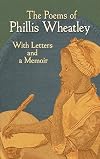
The first book ever published by an African American. Wheatley’s technically brilliant, but considering the appalling state of 18th Century English poetry, is ham-strung by her models. The book’s more interesting as a historical document than as poetry. The 1834 edition (and its reprints) has a very useful memoir of her.
Briefly, she was stolen in Africa and exported to New England where she was bought by the Wheatleys. When they realised she was clever, Mrs Wheatley had her educated and show more kept as a sort of pet. She appears to have used Wheatley’s poetic ability for social clout, taking her round to people’s parties and having her perform her tricks. The son appears to have used her in a similar way, taking her to England with him when he was looking for a wife.
Reading around a bit online I found the suggestion that because she was kept segregated from the other slaves she may not have understood the true nature of the situation she was in. I’m not convinced by this theory. I think the poetry reveals a very clever young lady who knew her audience very well and knew how to tell them what they wanted to hear. See for example the opening line of ‘On Being Brought From Africa to America’: “’T was mercy brought me from my pagan land”. Most of the poems have a religious element to them and she hardly ever tells us anything personal about herself. Though I might point out that one of the longest poems is a retelling of David and Goliath, the triumph of the underdog. Her stock-in-trade is elegies on the recently deceased, presumably written on request. In these she frequently presents herself as some sort of psychopomp. The Europeans must have thought there to be something unnatural about her, and many did not believe her existence to be within the bounds of reality. I think that she tried to use these poems to secure her position in white society as some sort of psychic figure. She didn’t have a good hand, but she played it as well as she could.
She puts me in mind of a real life version of Pamphila from Terence’s play The Eunuch. Of course, this is a tragedy. Despite professing to like her so much, when Mrs Wheatley died she had not taken the opportunity to formally manumit her and had made absolutely no provision for her in her will. What kind of a person buys a trafficked child, uses them like that and then abandons them? Without an owner to take her into white peoples homes she no longer had access to her market. Wheatley died a few years later in squalor and poverty, having seen the death of her children. Have a good day. show less
Briefly, she was stolen in Africa and exported to New England where she was bought by the Wheatleys. When they realised she was clever, Mrs Wheatley had her educated and show more kept as a sort of pet. She appears to have used Wheatley’s poetic ability for social clout, taking her round to people’s parties and having her perform her tricks. The son appears to have used her in a similar way, taking her to England with him when he was looking for a wife.
Reading around a bit online I found the suggestion that because she was kept segregated from the other slaves she may not have understood the true nature of the situation she was in. I’m not convinced by this theory. I think the poetry reveals a very clever young lady who knew her audience very well and knew how to tell them what they wanted to hear. See for example the opening line of ‘On Being Brought From Africa to America’: “’T was mercy brought me from my pagan land”. Most of the poems have a religious element to them and she hardly ever tells us anything personal about herself. Though I might point out that one of the longest poems is a retelling of David and Goliath, the triumph of the underdog. Her stock-in-trade is elegies on the recently deceased, presumably written on request. In these she frequently presents herself as some sort of psychopomp. The Europeans must have thought there to be something unnatural about her, and many did not believe her existence to be within the bounds of reality. I think that she tried to use these poems to secure her position in white society as some sort of psychic figure. She didn’t have a good hand, but she played it as well as she could.
She puts me in mind of a real life version of Pamphila from Terence’s play The Eunuch. Of course, this is a tragedy. Despite professing to like her so much, when Mrs Wheatley died she had not taken the opportunity to formally manumit her and had made absolutely no provision for her in her will. What kind of a person buys a trafficked child, uses them like that and then abandons them? Without an owner to take her into white peoples homes she no longer had access to her market. Wheatley died a few years later in squalor and poverty, having seen the death of her children. Have a good day. show less
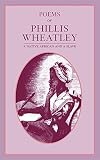
I looked this up many years ago after learning the brief history of one of our public schools (obviously named Phillis Wheatley. While her poems are very much in a certain style of the time, they are as good or better than any others in that genre and should be lauded just for that, on top of her activism and story.
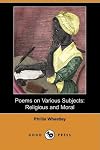
Gambia.
I learned little about Gambia, but, I think, much about colonization. The precocious Wheatley writes rhyming religious verse with occasional reference to being torn from her home as a child. I'm sure this was considered laudable and charming in its era. Reading it from this perspective, it's a testament to cultural overthrow and puts me strongly in mind of Anderson's [b:Octavian Nothing: The Pox Party|169762|The Pox Party (The Astonishing Life of Octavian Nothing, Traitor to the show more Nation, #1)|M.T. Anderson|http://photo.goodreads.com/books/1172369018s/169762.jpg|577024]. You can write prettily in Latin, and this may avail you some, but you're still a slave. show less
I learned little about Gambia, but, I think, much about colonization. The precocious Wheatley writes rhyming religious verse with occasional reference to being torn from her home as a child. I'm sure this was considered laudable and charming in its era. Reading it from this perspective, it's a testament to cultural overthrow and puts me strongly in mind of Anderson's [b:Octavian Nothing: The Pox Party|169762|The Pox Party (The Astonishing Life of Octavian Nothing, Traitor to the show more Nation, #1)|M.T. Anderson|http://photo.goodreads.com/books/1172369018s/169762.jpg|577024]. You can write prettily in Latin, and this may avail you some, but you're still a slave. show less
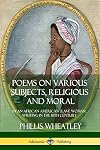
Not amazing, but historically significant. I find Phillis Wheatley's place in American literary history to be exceptionally interesting and nuanced, a slave turned artist turned prop turned forgotten tragedy. This book has some great writing in it, albeit clearly marked by it's era and not necessarily transcendent of that era's tendencies and shortfalls.
Poetically it isn't enough to stand on it's own, but the context is incredibly important. Worth owning and knowing about, moreso than worth show more reading and analyzing. show less
Poetically it isn't enough to stand on it's own, but the context is incredibly important. Worth owning and knowing about, moreso than worth show more reading and analyzing. show less
Lists
Awards


You May Also Like


Associated Authors
Statistics
- Works
- 29
- Also by
- 28
- Members
- 716
- Popularity
- #35,435
- Rating
- 3.9
- Reviews
- 11
- ISBNs
- 56
- Favorited
- 2


